General Information
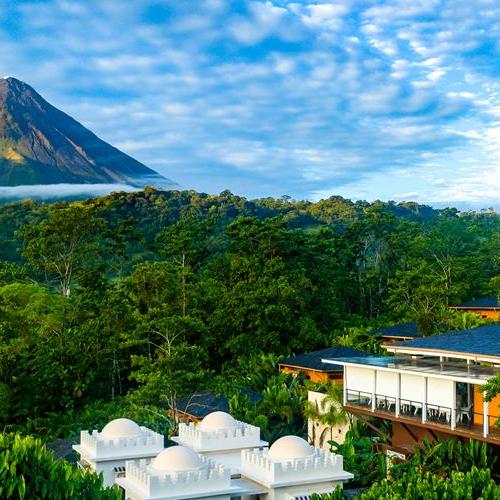
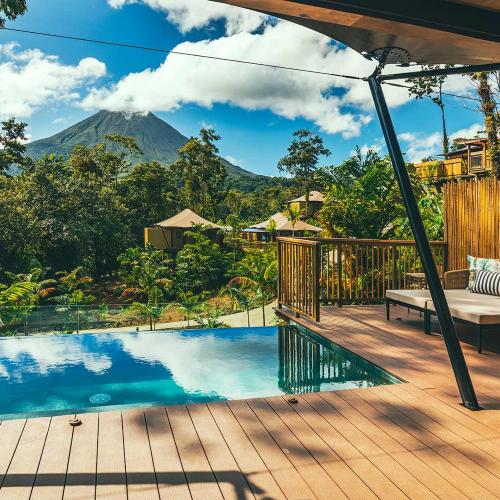
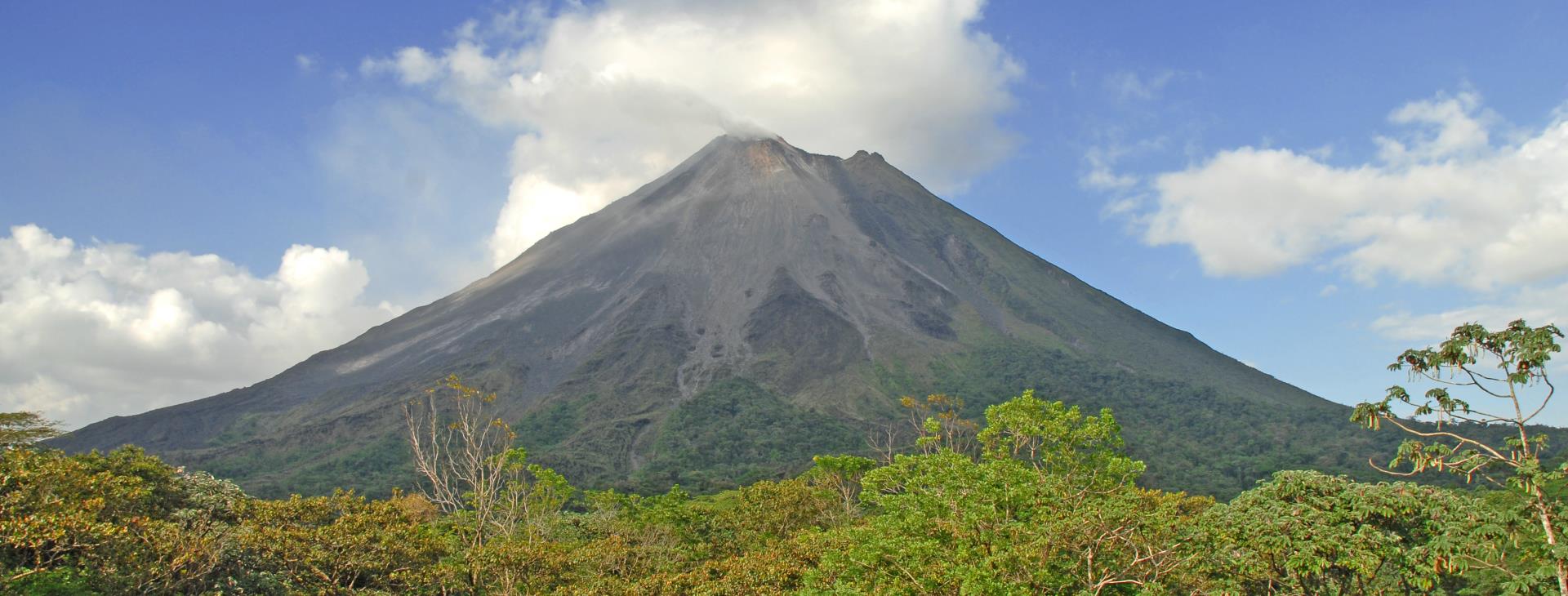
The beautiful, symmetrical cone of the Arenal volcano rises above the dense tropical forest to a height of 1633 m. It is the youngest and until recently one of the most active volcanoes in the world. Although currently dormant, only a few years ago it was spewing lava flows from its interior, having a huge impact on the region's economy and its resources. Arenal National Park offers endless opportunities for exploration, active tourism, and relaxation in hot springs heated by volcanic heat. The park area is an excellent base for extreme sports - you will find here rushing mountain rivers ideal for rafting, canyons and caves, hiking and horseback trails, and installations enabling extreme zip-lining between the canopies of the tropical cloud forest. Nearby is the fascinating Cano Negro reserve, which offers travelers unlimited opportunities to observe wild animals: caimans, iguanas, monkeys and many species of water birds, while the picturesque Rio Fortuna waterfalls, located between rolling hills, and lush green forests, combined with fantastic climatic conditions and fertile volcanic soil, have created excellent conditions for growing Costa Rican coffee.
Volcano Arenal National Park – Useful Information
Arenal Volcano National Park is located in the central part of Costa Rica and is part of the Arenal Huetar Norte Protected Landscape Area, which covers 204 hectares. It is also home to the country's most active volcano, which gives the park its name, and the smaller, dormant Chato volcano. The park's terrain is very diverse in terms of geology and biology; you can find a variety of plant and animal species here, and there are numerous hiking trails. It is worth going on a light but spectacular trek here, as well as trying your hand at extreme sports, such as rafting, canyoning or abseiling.
What is worth seeing in Volcano Arenal?
Arenal Volcano – Key Information
Against the backdrop of vast, lush green plains rises the beautiful, symmetrical cone of the Arenal volcano, 1633 m above sea level. Arenal is the most active of Costa Rica's volcanoes and also the youngest (of course in terms of the age of volcanoes...) - its first eruption took place 7 thousand years ago, and during the last one, in 1968, a stream of toxic gas spread for 12 km, destroying the cities of Pueblo Nuevo and Tabacon, and also contributed to the death of 87 people. The volcano is currently dormant. Lava with a temperature of over 900 °C still flows from its slopes, and pyroclastic material erupts from the crater. For this reason, tragic accidents occur in the vicinity of the volcano, in which daredevils who disregard the power of nature lose their lives. Climbing to the top of the volcano is very dangerous and can have tragic consequences, so it is best to observe the volcano from a safe distance - the view is still extremely impressive.
Lake Arenal - Costa Rica's largest lake
The largest lake in Costa Rica covers about 80 km² and the depth of the water ranges from 30 to 60 m, depending on the season. Arenal is an artificial reservoir, created in 1979 after the construction of a hydroelectric dam, and from the very beginning it was used to produce electricity. Currently, it is one of the main sources of hydroelectric production in the country, but it also has a recreational function: you can practice various water sports here, such as water skiing, windsurfing, fishing or sailing. People who do not prefer water activities can spend a nice time here, admiring the beautiful views.
La Fortuna Waterfall
La Fortuna is located in the central part of Costa Rica, near the Arenal Volcano and Lake Arenal, near the tourist town of La Fortuna. The waterfall is about 70 m high and is best admired from a viewpoint. At its base is a pool where you can take a dip in the water.
Mystical hanging bridges
The Mistico Arenal Hanging Bridges Park is one of the best places in Costa Rica to explore and admire the rainforest – you can find monkeys, various birds, frogs, snakes and sloths here. It is best to start the trip early in the morning, as this gives you the chance to see as many different animals inhabiting the forest as possible. The trail is 3,2 km long and consists of 16 hanging, suspension bridges.
When to go?
Gallery