General Information
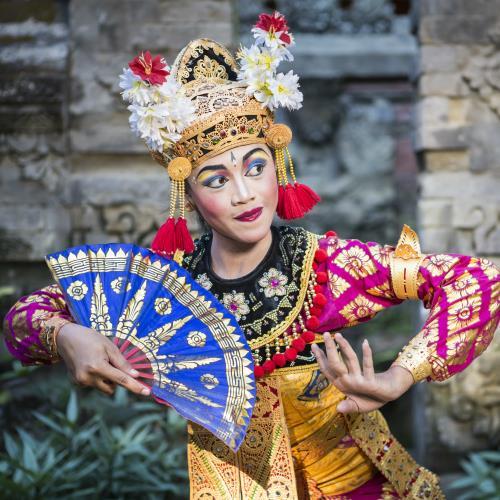
Known from the film "Eat, Pray, Love", the town of artists and art, the cultural capital of Bali. You can walk around Ubud for hours to admire the works of street artists, visit local galleries and art workshops, watch the traditional Balinese kecak dance performed by a hundred Balinese around a bonfire and listen to Balinese music - gamelan. The greatest advantage of Ubud is its symbiosis with the surrounding countryside - you can walk among real rice terraces, and 15 minutes later enjoy the flavors of the best Balinese restaurants and relax in the spa and massage parlors. Among the lush vegetation, you can find remnants of old times: Hindu and Buddhist temples look picturesque against the background of rice fields and bustling farmers.
Sightseeing in Ubud – what is worth seeing?
Ubud, a charming town set amidst the evergreen forests, hills, valleys and rice fields of central Bali, is inhabited mainly by people engaged in tourism and culture. The history of the city dates back to around the 8th century AD, when a Javanese monk came to the place where two rivers meet to meditate. A temple was then built there and the practice of rites and rituals began, which are still performed today. Ubud was also a center of natural medicine at that time. The area is very rich in medicinal herbs and other plants.
At the end of the 60th century, before the arrival of Europeans, Balinese feudal lords settled there, who were fond of art. This was the beginning of Ubud's emergence as the cultural capital of Bali. At the beginning of the XNUMXth century, the news spread overseas and artists from Europe began to arrive, including celebrities of the time. The XNUMXs were a time of very intensive development of the city and the beginning of the creation of a wide range of accommodation and tourist attractions.
Despite its popularity among visitors, Ubud still retains its charm. It is full of galleries, cafes and workshops that stretch along narrow streets marked out between palm trees and colorful bushes. There are also several museums there. In small shops you will find many beautiful handicrafts - antiques, wooden sculptures, fabrics, paintings and jewelry. Here and there you can see richly decorated temples, after all Bali is the heart of Hinduism in Indonesia.
Weather in Ubud – when to go on holiday?
Ubud enjoys a tropical savanna climate, with a dry winter, in which the average annual maximum temperature is 29°C (from 27°C in July to 30°C in November). Annual rainfall is 2708 mm, of which a minimum of -60 mm falls in August and a maximum of 382 mm - in December. The best months to travel to Ubud are June, July, August, September and October, when the temperature fluctuates between 27°C and 36°C, while the average rainfall is around 167 mm. We definitely do not recommend visiting in January, when you can expect rainfall for up to 21 days, there is also a lot of rain in February, November and December, but at this time you can also count on quite a lot of sunshine, and the rain-watered tropical vegetation grows lush. In a word - the best weather in Ubud falls in July, August, September and October, which, however, results in the largest number of tourists choosing this time for their Balinese vacation.
How to get to Ubud?
Ubud is located in the center of Bali. If you arrive by plane to the island, i.e. at the Denpasar Bali airport, which is located on the southern tip of the island, you can rent a car or travel by bus. Bali is not very large, but due to the terrain and the fact that not all roads are well-paved, getting to Ubud can take some time. In Ubud itself, to move around the town and its surroundings, you can rent bikes or scooters. However, when setting off on a trip to Bali with Planet Escape, you don't have to worry about transport issues - a private driver will be waiting for you at the airport, who will efficiently and without any problems take you to your hotel in Ubud.
Attractions, monuments in Ubud – holiday guide
Pura Saraswati
The magnificent temple dedicated to the goddess of art, knowledge and speech was built in the 50s by Balinese sculptor Gusti Nyoman Lempad. The most captivating view of the temple and pond is from the Lotus Cafe restaurant, which opens onto the street. In the evenings, on selected days, traditional Balinese kecak dance shows are organized.
Puri Saren Agung
In the very center of Ubud there is a palace, where the royal family still lives. In the northern part there is a beautifully decorated gate and a private temple. Unfortunately, it is not always possible to visit it inside, as the royal family very rarely opens it to tourists.
Art market
Located in the heart of town, where farmers once sold vegetables and produce from their own farms, and now mainly selling clothes, jewellery and souvenirs, this market is a must-see during your stay in Ubud. Be sure to try the regional delicacy sate, which you can get from one of the many vendors.
Monkey forest
The Monkey Forest, home to several hundred cheerful but sometimes overly playful macaques, is one of the places that Ubud is invariably associated with. The monkeys are used to the presence of people and are not afraid to come close enough to snatch food, a bag or a camera from your hand. The more courageous ones jump on your shoulders and eat calmly, searching for more food in the pockets of tourists! Be careful, because some monkeys can be very cheeky and determined to get what they want. For this reason, we strongly encourage women to take out their earrings and hide other loose jewelry that may attract the attention of these animals before delving into the nooks and crannies of the Monkey Forest.
Unique places around Ubud
Tirta Empul Temple
The faithful have been coming to this temple in Tampaksiring since the 10th century to purify themselves in the holy spring, which still bubbles in the temple courtyard. According to legend, these springs are the work of the god Indra, who wanted to bring back to life the army poisoned by the evil king Mayadenawa. He struck the ground with his staff, causing the elixir of immortality to gush out. This is where the name of the temple comes from - Tirta Empul literally translates to Temple of Water Flowing from the Earth. Nowadays, the Balinese come here to take a ritual cleansing bath, so expect crowds.
Gunung Kawi Temple
A temple carved into the rock, consisting of stone monuments, which according to one legend were carved by King Udayan when he decided to become a hermit. Another legend tells of the mythical giant Kebo Iwo, who carved tombs in the rock in one night with his fingernails. In reality, it is primarily a huge mausoleum of the royal family and cells of monks carved into the rock. For the Balinese, it is a special place, because it contains a sacred pool from the 10th century, fed by water cascading down the rocky cliff. The water in the pools is said to have the power to heal the body and soul.
Cuisine in Ubud – what is worth eating on your trip?
Often referred to as the culinary capital of Bali, Ubud offers Balinese, Indonesian and international dishes to suit every palate and every budget. While the dishes served here are not very different to those you can eat elsewhere in Bali, it is definitely worth taking a culinary journey around Ubud and sampling its specialities. We recommend the bebek goreng, crispy duck, served with a refreshing but slightly spicy green bean salad and sambal (sauces) for dipping, such as sambal matah (with chilli, kaffir lime leaves and shrimp paste), tomato sambal (with tomatoes) or the Bali sambal, the ingredients of which remain a secret. Another great choice is the mixed satay with beef, chicken and shrimp, grilled in finely chopped peanuts. Also try the grilled Jimbaran tuna, Thai duck curry, sweet potato chips and avocado salad. And for dessert… Bubur Injin – black rice sweetened with dark palm sugar and then drizzled with coconut milk, sometimes served with ice cream and banana!
When to go?
Gallery