General Information
The City of the Rising Dragon, the Eastern Capital, the Venice of the East, the City among the Rivers – the capital of Vietnam owes its many names over the centuries to ancient legends, ruling dynasties and its geographical location in the Red River Delta. We are most fond of the term “old lady of the Orient”.
Colonial elegance combined with Asian color makes Hanoi unrivaled among Far Eastern capitals. Contrasts are visible at every turn - French tenement houses, luxury shops, charming squares and parks stand out against the chaotic background of the capital. It is worth sitting in an old atmospheric cafe and contemplating the city traffic, getting lost in the tangle of narrow streets to find the true spirit of the city. We recommend joining Vietnamese retirees practicing tai chi on the shores of the mystical Hoan Kiem Lake, visiting the mausoleum of Ho Chi Minh's uncle and the impressive Temple of Literature. In the evening, there will be time for water games in Vietnamese style, i.e. a show of Hanoi water puppets.
Attractions and monuments in Hanoi – check what is worth seeing!
Hanoi, a city situated in the Red River Delta. Loud, colourful, unable to decide which era to stay in. Here, tradition mixes with the times of French colonisation, which the yellow art deco houses remember. Modernity steps in sideways, flaunting the sign of a popular burger restaurant. There are five million motorbikes in the city. Crossing the street borders on a miracle. Once you decide to enter the sea of scooters and horns, just walk and don't stop. Go to the Old Quarter and the Ho Chi Minh Mausoleum. Include the Temple of Literature and the incredibly interesting museums of Hanoi on your route. Such attractions are important not only to look at, but also to understand the fascinating Vietnamese culture. And apart from that, enjoy everything that is untidy, imperfect and thoroughly local. Good morning Vietnam!
Hanoi – what to see, what to experience, what is worth trying? Below we have included a small essential for Hanoi. A guide that will take you to the most interesting corners of the capital of Vietnam.
Hanoi Old Quarter – Old Town
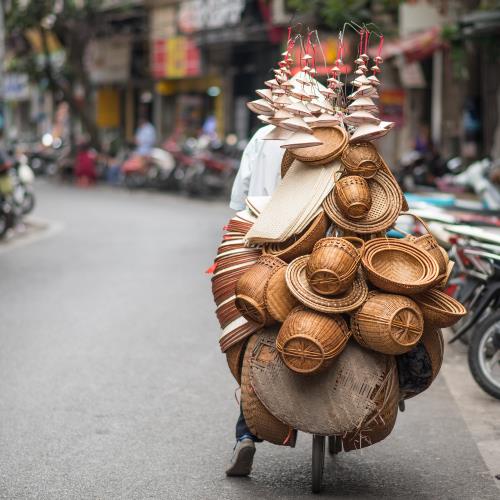
“Hanoi has thirty-six streets and guilds,” goes an old Vietnamese saying. Wait a minute… where’s the rest, it’s a big city! Well, the heart of Hanoi is one, beating in the Old Quarter on the historic 36 streets. The history of the district dates back to 1010, when King Ly Thai To chose Thang Long as the capital of the country, which means that the streets have almost a thousand years of history. Probably even then, each had its own specialization. Artisans of a specific field would gather in one street and the street would be named after the craft they practiced. Pho Hang Ma Street means paper products, Pho Hang Bac means silver, etc. Does it remind you of anything? And here in the old towns, we often find names like Rzeźnicza or Garncarska. But the uniqueness of the Old Quarter is that this tradition has continued to this day. Hang Ma sparkles with decorations and gift wrappings, Hang Quat sells colourful flags for festivals and religious celebrations, and Lan Ong Street smells of aromatic herbs from afar. Be sure to take a leisurely stroll through this charming corner of the capital. While you’re there, catch a performance at the Thang Long Water Puppet Theatre, visit the largest cathedral in the city, which bears a striking resemblance to the French Notre Dame, and drop by for a bit of shopping at Dong Xuan Market.
Ho Chi Minh Mausoleum
He signed documents with the name Nguyen Ai Quoc, meaning "Nguyen who loves his country," and in about 50 other ways. He had so many pseudonyms. However, he went down in history as Ho Chi Minh, meaning "Bringer of Light," and the former Saigon was named after him. What did he do so well? He was the founder and leader of the Indochina Communist Party and president of Vietnam. He fought for his country's independence for most of his life, and although he did not live to see it, the memory of "Uncle Ho" is very vivid in Vietnam. Ho Chi Minh's body was not cremated, as he had requested, but embalmed and interred in the Mausoleum.
Hoan Kiem Lake
Long ago, Emperor Le Loi fished out a metal rod from the lake and turned it into a sword, which served him well in his fight against the Chinese oppressors. After winning the battle and making peace, the emperor went to the lake again and saw a large turtle there. The turtle explained to him that the sword belonged to his master, the Dragon King, and it was time for Le Loi to return the sword. Le Loi did so without hesitation, and the lake was then named Hoan Kiem, which means "Lake of the Returned Sword." This place is famous not only for its beautiful history. Hanoi residents meet here for morning exercises and afternoon relaxation, while tourists come to see the Jade Temple and the charming red Rising Sun Bridge, which looks especially impressive in the evening. In the middle of the lake is a small island with the Turtle Tower. Until recently, a turtle lived here, which was believed to be the animal from the famous legend.
Vietnamese Museum of Ethnology
The museum is located on the outskirts of the city, but it is worth the effort to get there. It is a real treat for lovers of cultural curiosities and fans of all kinds of open-air museums. Two buildings house exhibits documenting the customs, beliefs and daily life of all 54 ethnic groups of Vietnam. But the most interesting things can be found in the garden adjacent to the museum. Here you will see traditional houses, including those of the Dao and H'mong groups, stilt houses belonging to the Tay and Viet tribes, and the towering Bahnar meeting house. You can look into all of them. You can treat a visit to the museum as paving the way for your own exploration and discovery of the traditional Vietnamese world.
Halong Bay
"If you haven't visited Ha Long Bay, you haven't been to Vietnam yet," wrote the Chinese poet Xiao San. Thousands of tiny rocky islands, angularly silhouetted against the horizon, have been carved by the water over thousands of years, creating something fantastic. You can read their shapes like fanciful clouds in the sky. And everyone sees a different story in them. There's something magical about this image when everything is covered in mist or drowned in the light of the setting sun. Ha Long Bay has been a UNESCO World Heritage Site since 1994, and in 2023, the inscription was expanded to include the Cat Ba archipelago. To see it, you have to book a cruise on one of the cruise ships. There are plenty to choose from, from simple boats to exclusive five-star cruise ships with glass-walled cabins, from which you can admire the bay from the comfort of your bed. During your trip, be sure to visit Bo Hon Island, home to the enormous Sung Sot Cave, also known as the Cave of Surprises. Alternatively, take a kayak trip to the magical Luom Bo Lagoon and enjoy the cool breeze and breathtaking views.
Ba Vi National Park
Located 60 km from Hanoi, the national park is the perfect place to relax from the hustle and bustle of the capital and the heat. The lush tropical rainforest is home to numerous Buddhist temples and remnants of the colonial era. An interesting attraction is the cactus garden, which is home to over 1200 species of cactus plants. For fans of more strenuous challenges, there are trekking trails. Mountain peaks are often hidden in the clouds, and the paths can be wet and slippery, so when going on a trip, remember to wear comfortable sports shoes, check the weather forecast to avoid rain, and consider hiring a local guide who will lead you on an interesting route full of unique scenery. You can get to Ba Vi National Park by scooter or taxi. There is also bus no. 214 from Yen Nghia Station (Ha Dong District, Hanoi) to Xuan Khanh (Son Tay) and buses no. 71,74 from My Dinh Station to Xuan Khanh.
Hanoi Weather
Vietnam is a country with a very diverse climate. Typical features include high humidity, periodic monsoons and typhoons, and high temperatures. If you are thinking about traveling to Hanoi and also want to visit other places in northern Vietnam, such as Ha Long Bay or Sapa, choose the period from mid-September to mid-December or March-April. During these periods, you will avoid the oppressive temperatures, and the rains will not be as intense as in winter. In summer, temperatures reach 40°C, and due to the humidity and lack of wind, it will seem to you that it is even hotter. However, if you are in Hanoi at this time, remember to drink plenty of fluids and take a siesta at noon, preferably with a plate of local delicacies.
Cuisine in Hanoi – what is worth eating?
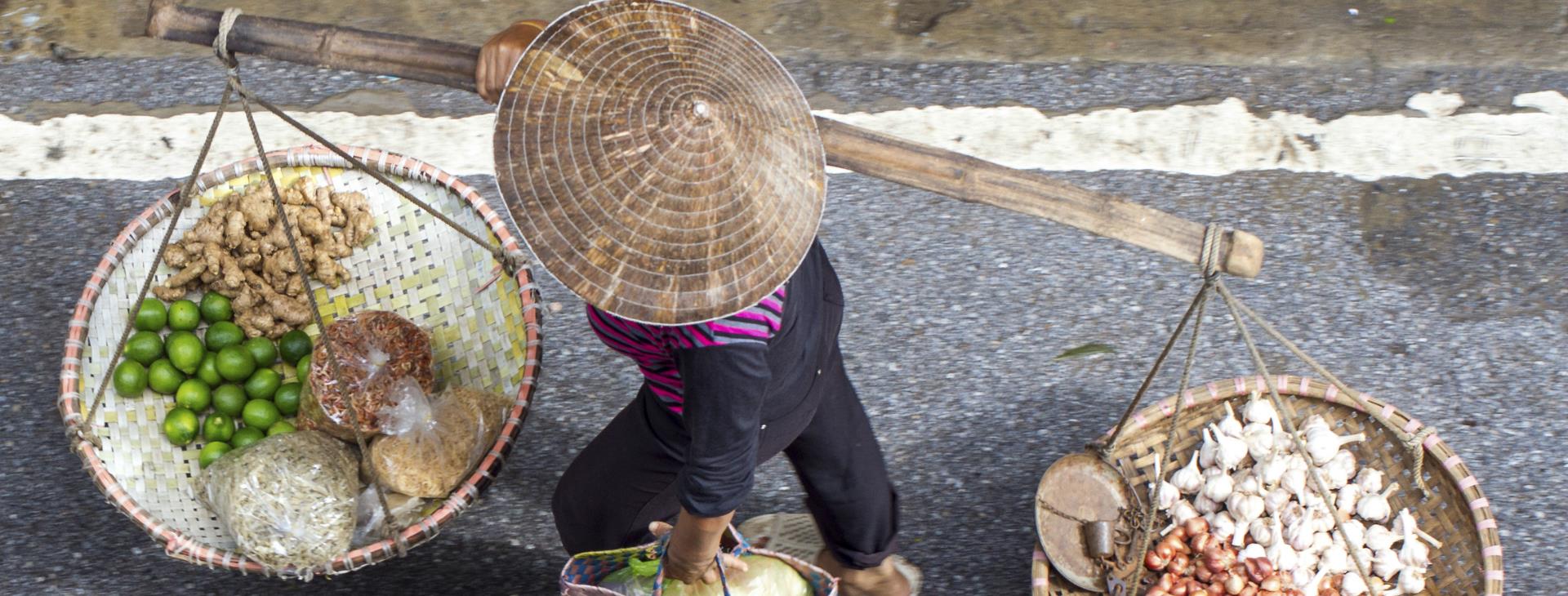
Vietnamese cuisine is rich and tasty. You will quickly realize that you are measuring time by meals. The number of restaurants, local pubs, bars and street food can make your head spin. In Hanoi, places where you can compose your own meal from ingredients that you choose according to your own taste are popular, it is also worth literally looking "into the pots" in local kitchens and deciding on what seems most appetizing to you. But if you do not want to experiment, we offer a few proven options. You absolutely cannot leave the city without tasting bun cha. It is a culinary symbol of the city. It seems like nothing... grilled pork with broth, but in combination with additives and spices creates a dish that is exceptionally pleasant to the palate. Pho soup - the most popular in all of Vietnam. Try it here for the first time or compare it with its variations from other parts of the country. What does it have inside? Rice noodles, lots of fresh herbs, meat (or tofu for a vegan version), egg and dumplings. Fried spring rolls or fresh spring rolls stuffed with Chinese noodles, vegetables and herbs are always a good choice. If you want to get to know the French flavors in Vietnam, decide on bun oc, or snail soup, and banh mi pate – baguettes with Vietnamese pâté. You can also get some with grilled chicken in honey marinade. Bread was brought to Vietnam by French colonizers and today you can get a fresh baguette on almost every street. In the morning, stop by one of the local cafes for an aromatic coffee, and end your tour of Hanoi with a glass of bia hoi – a one-day, cheap beer. Be sure to sit on a small, plastic stool, necessarily on a noisy street. Take a look at local life for a while.
Why is Hanoi called the Paris of the East?
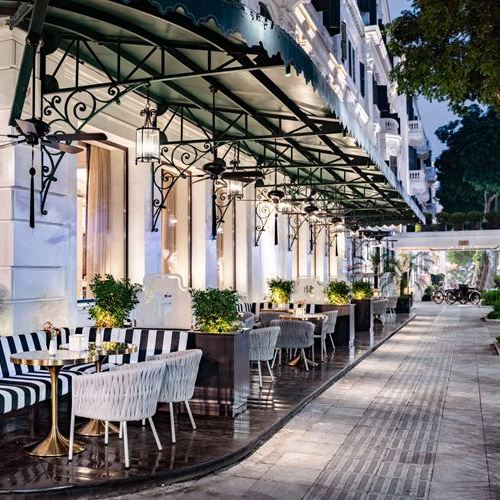
We could spend a long time discussing the French colonization in a separate article, speculating on the good and bad the French left behind in Hanoi and the entire region. The development of French Indochina was to be rapid, intensive, and focused on maximum exploitation of the land in a short period of time. Railways, highways, ports, bridges, and canals were built to support the necessary industry and transportation. Public buildings and magnificent villas were also constructed, primarily in the so-called French Quarter, or Ba Dinh. Tree-lined streets were laid out, parks with picturesque lakes were established, and receptions were held in opulent villas and palaces painted with ochre. An opera house modeled on the Palais Garnier in Paris was designed for the French elite. The magnificent Grand Hotel Métrople (today's Sofitel) welcomed guests from Europe in its exclusive interiors. The old Vietnamese city acquired a modern, European look. An Asian spirit, local materials, including bamboo, exotic woods, and fabrics, combined with French architectural thought, created the unique Dong Duong style. Today, tourists rush between these buildings, rushing to the Vietnamese Women's Museum or Hoa Lo Prison. The latter doesn't have a pleasant or pleasant history. Political prisoners were held in appalling conditions and subjected to torture, and the death penalty was meted out by guillotine. The prison became a symbolic place for the Vietnamese against the French occupation and the fight for freedom. As we know from history, freedom ultimately triumphed in Hanoi. Colonial monuments and all that was French and refined were buried under the local commotion. Walk a few streets away from the yellow buildings, and you'll reach the area around the famous Hanoi Train Street. Several times a day, a train passes literally beneath the apartment windows, squeezing through the incredibly narrow street. Until recently, tourists gathered here with cameras in hand, watching the daily life of local residents momentarily come to a standstill. Today, however, access to the tracks is officially restricted for safety reasons, and police conduct inspections and remove tourists who enter the prohibited area. While the site still attracts attention, it should not be considered a public tourist attraction.
When to go?
Gallery