
1 PLN = 0,27 USD
EUR 1 = USD 1,08

Practical information
Visa information and airport fees
People with a valid tourist visa to the USA in their passport do not have to register in the ESTA system. People who have traveled to North Korea, Iraq, Iran, Syria, Sudan, Libya, Somalia and Yemen after March 11, 2011 will not be issued an electronic permit to enter the USA. In such a situation, you should contact the US embassy in Poland in person.
The Travel Agency is not responsible for failure to obtain a visa for the country where the tourist event is held, or for transit countries. Obtaining a visa is 100% the responsibility of the participants of the trip.
Vaccinations
Tips
Food prices
Food
Hawaiian cuisine is invariably associated with a certain juicy, incredibly sweet and delicious fruit – pineapple. In European pizzerias, it is not without reason that pizza with this unique addition and chicken is most often called Hawaiian. The sweet-spicy or sweet-salty combination is the domain of the Hawaiians, whose ancestors were subjected to influences from various parts of the world, thanks to which the contemporary cuisine on the islands can boast a unique shape. The creation of today's delightful mixture was contributed to by Polynesians, visitors from America, Europe, China, Portugal, Japan and the Philippines.
What does this mean for you – food lovers coming from overseas? First of all, unlimited access to fresh fish, from which, for example, lomi salmon is prepared, i.e. salmon in a chilled salad of fresh tomatoes, with chili and other additions. Tuna is equally popular, and among other products, coconut, sweet potatoes and breadfruit. It is on these islands that you will have the opportunity to try ingredients that are hard to find in a regular shop in Europe. Do you want to see what taro or moluccan tung taste like? Thanks to travelers from Portugal, you will try sweet bread and other tasty sweets from the Iberian Peninsula in Hawaii, of course in a modified version.
There is one more element of Hawaiian cuisine that cannot be forgotten – drinks. What would sweet laziness on the beach be without a refreshing cocktail with a palm tree! Blue based on curacao liqueur and pineapple juice, slightly sour with rum and orange juice, creamy with the addition of coconut milk… You can choose from a variety!
Interesting facts
- The US Constitution, the world's first, was adopted in 1787 and is still in force. It has been amended 27 times, but the document itself has never been replaced.
- Black Thursday, the day of the crisis in 1929, is the day with the highest number of suicides in human history
- Around 1000, the first Europeans arrived in America – the Vikings.
- In various states, you can find laws that have not been repealed, even though they have become somewhat outdated. For example, in California, people without a hunting license are prohibited from even setting mouse traps, and in Washington, it is illegal to have sex with a virgin
- The country's flag was designed by Robert G. Heft. He was 17 years old at the time and it was his homework, which was graded 4= at school.
- Benjamin Franklin, one of the founding fathers, invented the lightning rod and also the rocking chair. He was the first person in the world to propose in writing the introduction of daylight saving time. He did it in a witty article, which is why it was not taken seriously.
- The Hawaiian language consists of only twelve letters of the Latin alphabet known to us, making it the shortest alphabet in the world.
- The President of the United States, Barack Obama, was born in Hawaii, as well as the popular Hollywood actress, Nicole Kidman.
- Steven Spielberg's famous adventure film "Jurassic Park" was filmed on the oldest island of Hawaii, Kauai. Hawaii was also the location for another popular production, namely "Raiders of the Lost Ark" from the Indiana Jones series by the same director.
- The Hawaiian archipelago consists of almost 140 islands, but only less than 10 are inhabited.
- Before joining the United States, Hawaii was a separate, independent state, the Kingdom and later the Republic of Hawaii, which existed until 1898.
- The American naval base Pearl Harbor, which was attacked by the Japanese in 1941, is located in Hawaii, on the island of O'ahu
- The indigenous inhabitants of the islands probably came from the islands of present-day French Polynesia, such as Bora Bora and Raiatea.
- The European discoverer of Hawaii was the English navigator James Cook.

Learn details about the country USA
History
In 1492, Christopher Columbus sailed to the islands of the American continent. Shortly afterwards, John Cabot, a Venetian sailor serving England, sought passage to India, along the Canadian and American coasts. This expedition became the basis for England's claims to the lands of North America. In 1565, the first permanent European settlement was established on the American continent. It was St. Augustine, in Florida, the settlement was founded by the Spanish. In the 1585th century, people began to talk about these lands as New Spain. Meanwhile, the first British colony was established in 1607. The Roanoke settlement, on an island off the coast of Virginia, did not survive. Only the founding of Jamestown in 102 was successful. One of the founding myths of the USA was the expedition of 1620 people on the Mayflower ship in 1793. The men participating in it signed an agreement on the principles of a new social order. At that time, these territories began to be called New England. In the 130th century, France, the Netherlands and Sweden also took part in the colonial race to America. New York was called New Amsterdam at the beginning of its existence. European powers treated the colonies as a cheap market, as penal colonies, as a reservoir of natural resources. Meanwhile, successive generations of people of European origin lived here, governed by English governors who did not know the realities and did not feel a sense of community with their subordinates. The crisis moment, the spark of ignition, was the event known as the "Boston Tea Party" in 19. 1775 men destroyed a cargo of tea brought from England, which was to be sold without duties and taxes, with great damage to the colony's economy. The event was carried out quickly, without resorting to any violence, and no cargo, apart from the tea, was damaged. However, this episode became a breakthrough, showing the conflict of interests of England and the colonies. On April XNUMX, XNUMX, the Battle of Lexington took place. It was the first armed confrontation between the colonists and the English army. Various newcomers from Europe took part in the War of Independence. The American side was actively supported by, among others, Tadeusz Kościuszko and Kazimierz Puławski.
The Second Continental Congress, on July 4, 1776, issued the United States Declaration of Independence. It formally broke with European leadership. The author of the declaration was Thomas Jefferson, and its signatories were called the Founding Fathers. Adopted in 1787, the constitution, maintained in the spirit of the Enlightenment, is in force (with amendments) to this day.
The first inhabitants of Hawaii were most likely Polynesian settlers who came here from the islands belonging to today's French Polynesia. The volcanic islands were discovered for Europe by the explorer from Great Britain James Cook - Hawaii was then called the Sandwich Islands, in honor of the 4th Earl of Sandwich. As a result of the arrival of Europeans to Hawaii, the then inhabitants of the island, who had no immunity to diseases common in Europe, died en masse from, among others, influenza and smallpox.
As a result of the clashes between the chiefs of the Hawaiian islands, Kamehameha I took over the archipelago. The dynasty of the ruler who united Hawaii ruled uninterruptedly until 1874. In 1887, there was a revolution led by white immigrants. The then king was forced to adopt the so-called Bayonet Constitution, which disenfranchised citizens with insufficient income or land investments, which in practice meant dominating the political activities of the native Hawaiians. Then Queen Lydia Lili'uokalani took the throne - the ruler wanted to regain the voting rights of the proper citizens of Hawaii. Her plans were not liked by the Europeans and Americans, who led to the abdication of the queen. The Republic of Hawaii was proclaimed in 1894. Inequalities still prevailed in the country, especially hitting the native Hawaiian population. The anti-American resistance movement tried to restore the former queen's power, but in July 1898 the United States officially occupied the country, annexing it to its territories. In 1959, Hawaii was added to the United States as the 50th state.
Location
The Hawaiian archipelago consists of almost 140 islands, of which eight main are inhabited, including: Hawai'i, Maui, Kaho'olawe, Lana'i, Moloka'i, O'ahu, Kaua'i and Ni'ihau. Hawaii is located over 3000 km from the United States. The highest mountain is Mauna Kea, 4205 m above sea level, but if it were measured from its base at the bottom of the Pacific Ocean, it would be higher than Mount Everest, currently the highest peak in the world. Each of the islands was formed from volcanic rocks from a so-called hot spot. Active volcanoes are currently located in the south of the island of Hawai'i. Thanks to volcanic activity over the centuries, Hawaii has developed a wonderful, unique landscape. The islands are also characterized by the occurrence of endemic species of fauna and flora. There are two national parks in Hawaii: Haleakala on the island of Maui and Hawai'i Volcanoes National Park on the island of the same name. The islands have a tropical climate with two seasons - dry and rainy.
Culture and Religion
In terms of religion, Christianity dominates (80% of the population). There are various churches, including local ones. The worship is quite similar in each of them. The belief that God loves people regardless of their behavior is deeply rooted, even among people who are not very religious. Similarly, it is said that "God is like his priests."
The culture that developed in Hawaii was first shared by Polynesians who arrived here, and then by colonizers, mainly from Great Britain, and later by immigrants from North America. The polytheistic beliefs of the newcomers from the islands of present-day French Polynesia began to intertwine with Christianity preached by missionaries from the Old Continent, which can be seen in handicrafts, such as sculptures intended to represent ancient deities.
An inseparable element of Hawaiian culture is also the hula dance, which comes from the tradition and cultural activity of the Polynesians. Usually, the dance is performed to the sounds of songs - mele. A dance group or school of hula is called hālau. Hula changed with the entry into the 20th century, when tourism began to develop on the islands and the dance began to be used in a more commercial way.
In Hawaii, on June 11 each year, the holiday of Kamehameha is celebrated, one of the former leaders of the Hawaiian kingdoms, who led to the unification of the islands in 1810 and was the first ruler of the dynasty ruling in Hawaii until 1874. King Kamehameha opened Hawaii to foreign trade with the United States and Europe.
Trip to the USA
Holidays in the USA
A vacation in the USA is a journey through a country that captivates with its diversity, sprawling cities, breathtaking landscapes, and rich culture. If you're looking for a place where you can experience the dynamic life of a metropolis, discover natural wonders, and enjoy countless attractions, the United States will surely meet your expectations. This country offers not only New York with its impressive skyscrapers and world-class museums, but also the picturesque landscapes of Yellowstone National Park, the Grand Canyon, and the majestic beaches of California and Florida.
The vast diversity of the USA allows you to tailor your vacation to your preferences—you can explore the bustling streets of Los Angeles and discover the secrets of Hollywood, or escape into nature, discovering the renowned beauty of national parks. For culture and history buffs, there are numerous destinations, such as Washington, D.C., with its Capitol Building and Smithsonian museums, or historic cities on the East Coast, where you can feel the spirit of America's past.
Outdoor activities are virtually limitless in the USA. You can choose to hike in national parks, kayak on the Great Lakes, rafting on the swift Potomac River, or relax on the sunny beaches of Miami and Malibu. For winter sports enthusiasts, the US offers world-class ski resorts in Colorado and Utah. American cuisine is another reason to visit – the variety of flavors, from classic burgers and steaks to fusion cuisine and regional specialties, will delight even the most discerning palates.
Whether you're looking for exciting city adventures or the tranquility of nature, a vacation to the USA offers everything you need to create memories. It's a country that inspires, delights, and invites you to rediscover yourself every day.
Why is it worth going on holiday to the USA?
The United States is a mosaic of extraordinary places and experiences that create a unique picture of a dream vacation. Every corner of the country offers something special—from vast deserts to lush rainforests, from endless beaches to monumental works of nature. If you love travel full of contrasts and excitement, the USA will surely surprise you.
Imagine yourself standing on the edge of the Grand Canyon, where every view is a powerful lesson in geology and natural beauty. Or hiking in Zion National Park, where the gorges reflect the sun's rays and the silence enveloping the rocks allows you to forget your daily routine. Equally enticing are the sunny beaches of Miami, where the blue ocean combines with a tropical lifestyle and endless opportunities for water sports.
Hawaii is a true oasis for those who want to combine beach relaxation with contact with nature – active volcanoes, hundreds of waterfalls, and fragrant exotic vegetation invite you to explore. And if you're in the mood for a bit of urban madness, Las Vegas – though perhaps a bit different from nature – is an entertainment oasis that attracts with world-class concerts, casinos, and spectacular shows. It's a place of different experiences, perfect for combining exploring nature with nightlife.
Visiting the USA – what is worth seeing?
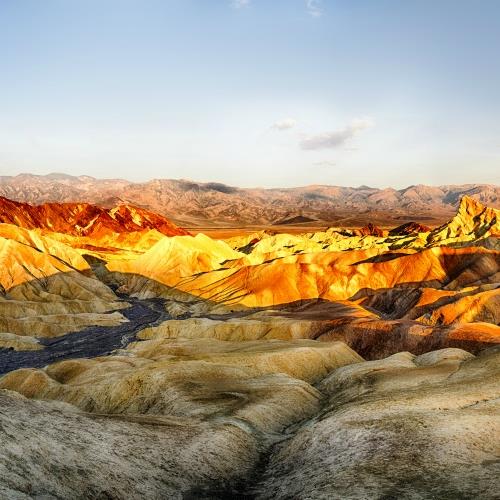
When planning a trip to the United States, you can explore less obvious destinations that showcase the country's diversity. Instead of heading to well-known resorts, it's worth planning your route to see unique national parks and cities that best capture the character of the USA. You can start your journey in California, where Death Valley National Park is located. It's the largest park in the United States, famous for its incredibly hot climate and rugged landscape. Badwater Basin boasts the lowest point in North America, and you'll also see vast deserts, dry lake beds, and colorful rock formations. Death Valley is also one of the best places for stargazing, making even evenings spent in the desert a worthwhile experience.
Your next stop on your journey might be Alaska and Denali National Park. This destination attracts visitors primarily with its vast expanse and wildlife. The biggest attraction is Mount Denali, the highest peak in North America, visible from afar. During your visit to the park, you'll have the opportunity to see animals in their natural habitat, such as moose, caribou, and grizzly bears. Trekkers can explore numerous hiking trails, while less active visitors can take a bus tour through the park.
Petrified Forest National Park is located in Arizona. It's characterized by ancient tree stumps that, through mineralization, have transformed into colorful rocks. The park's area is small compared to others, but it allows for leisurely exploration and a deeper understanding of geological processes. Trails lead through areas of intense red and orange hues, further enhancing the experience.
In Nevada, Great Basin National Park is worth a visit. It's rarely visited by mass tourists, making it a more tranquil place than the more established parks. Attractions include the Lehman Caves, the Snake Range, and trails through diverse landscapes. The park is also known for its exceptionally clear skies, which is why it hosts astronomy shows and stargazing festivals.
California has another park you shouldn't miss – Yosemite. It's known for its monumental rock walls and numerous waterfalls. Yosemite Valley offers numerous hiking trails, from short hikes to challenging climbs. The park also boasts giant sequoias, among the oldest and tallest trees in the world.
As you head north, you'll reach Yellowstone, the world's first national park. It boasts numerous hot springs and geysers, the most famous of which is Old Faithful. In addition to geothermal phenomena, the park offers scenic valleys, waterfalls, and a wide variety of wildlife. Encountering bison on the Yellowstone plains is a memorable experience for every visitor.
After exploring nature, it's worth heading to the East Coast to experience a completely different side of the USA. New York is the country's largest city and a global metropolis, offering a wealth of attractions. Here, you can stroll through Central Park, admire the skyline from the Empire State Building, visit the financial district from Wall Street, or catch a Broadway show. Many museums and galleries are free or open on select days of the week, allowing you to experience the city's culture without additional costs.
By visiting these places, you'll discover the diverse facets of the United States—from the desert valleys and mountainous expanses of Alaska, the colorful deserts of Arizona, and the tranquil reaches of Nevada, to the verdant forests of California and the geysers of Yellowstone. New York, on the other hand, will show you what life is like in America's largest metropolis. A trip planned this way will allow you to witness the contrasts that best reflect the character of this country.
Holidays in the USA – practical information
The most important consideration when vacationing in the United States is finances. It's most convenient to bring US dollars, which are the official currency. ATMs are available almost everywhere, but they charge fees ranging from $2 to $5 per withdrawal, and there's often a fee from the home bank. Credit and debit cards are accepted almost everywhere—from supermarkets to the smallest service points. However, it's worth remembering that in some smaller towns or at local festivals, cash is still king, so it's a good idea to have some cash on hand.
When traveling to the USA, be aware of customs regulations. Bringing fresh food, plants, seeds, and animal products is strictly prohibited. Exporting certain items (e.g., valuable antiquities or archaeological artifacts) is also restricted. Cash must be declared on your customs declaration if its value exceeds $10.
In terms of safety, the USA is considered a relatively safe country for tourists, but it's worth following some basic rules. Avoid flaunting large amounts of cash or expensive jewelry, especially in large cities. If you're robbed, the safest option is to not resist and hand over your belongings. Many metropolitan areas have neighborhoods that are best avoided after dark – it's worth checking out the information about your destinations beforehand.
When visiting American national parks, it's important to remember safety rules when interacting with wildlife. Encounters with bears, bison, and coyotes are more common than you might think. These animals are majestic but can be dangerous – the rule is: admire from a distance, do not feed. Parks have strict opening hours, usually from early morning until dusk, and overnight stays are only possible at designated campsites.
It's also worth remembering the infrastructure. The voltage in the US is 120V, and outlets have flat pins – an adapter for European appliances will be necessary. Water in most places is safe to drink, although in many regions it has a noticeable chlorine taste – which is why many tourists choose bottled water. Restaurants and bars have a tipping system: the standard tip is 15–20% of the bill. Furthermore, prices in shops and restaurants are often quoted excluding sales tax, which is added at checkout – the amount of this tax varies by state and can range from a few to a dozen or so percent.
Traffic in the US is well-organized, but there are a few rules to keep in mind. Laws vary slightly from state to state, and speed limits are strictly enforced. If stopped, police expect drivers to remain in the car with their hands on the wheel—it's worth knowing this rule to avoid misunderstandings. Alcohol can only be carried in the trunk of a car, and driving under the influence carries severe penalties.
From an organizational perspective, it's good to remember that the USA is a vast country, and distances between attractions can be enormous. Therefore, it's worth planning your trip in advance and checking the opening hours of museums, parks, and galleries—many of them close earlier than in Europe.
USA attractions – holiday guide
Road trip on Route 66
A journey along legendary Route 66 is a journey that immerses you in the heart of the American myth of freedom, adventure, and the endless road. The route, which runs from Chicago to Los Angeles, through eight states and over 3800 kilometers, symbolizes road travel in its purest form. Beginning your adventure in Chicago, you'll find yourself at the beginning of a road that, in the 20s, served as a thoroughfare connecting East and West. Here, in the "Windy City," you can enjoy the sight of modern skyscrapers before heading towards America's wilder and more unique landscapes.
The first few kilometers will take you through Illinois, Missouri, and Kansas. In St. Louis, be sure to stop at the famous Gateway Arch, a monumental gateway symbolizing the opening of the West. The route continues through small towns filled with neon signs, classic diners, and old gas stations that look as if they've been transported straight from the 50s and 60s. It's here that you'll experience the atmosphere of bygone journeys, before highways obliterated this route. Entering Oklahoma, Texas, and New Mexico, you'll discover a completely different landscape – wide plains, prairies, and endless expanses. In Amarillo, Cadillac Ranch awaits you, an art installation with half of its cars buried in the ground, on which travelers leave their graffiti. It's one of the most recognizable and photogenic spots along the route. In Santa Fe and Albuquerque, on the other hand, you'll experience the Spanish-Indian atmosphere as you stroll through the colorful streets and admire the adobe architecture that characterizes the region.
Arizona offers the most spectacular views. Here, you can detour to see the Grand Canyon—one of the world's natural wonders. Route 66 itself passes through picturesque towns like Seligman and Kingman, considered the spiritual capital of the route. Here, you'll find souvenir shops, retro restaurants, and locals cherishing the memories of the golden age of the highway.
The journey concludes in California, where the landscape changes from desert to metropolitan. The final stretch leads through the Mojave Desert, finally reaching Los Angeles. The symbolic end of Route 66 is at the Santa Monica Pier, where the ocean meets the road, and where you can end your journey watching the sunset.
National Parks of the West
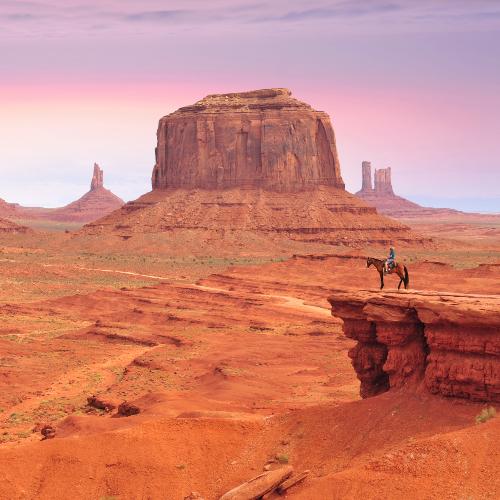
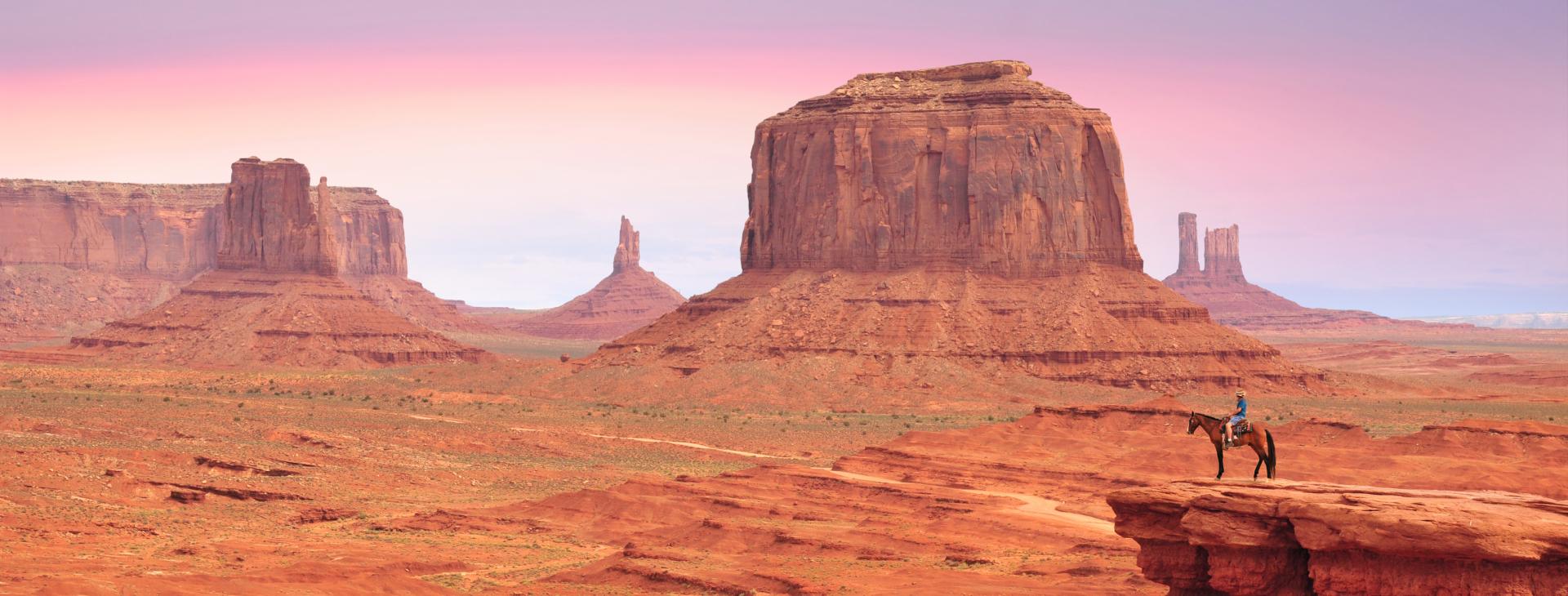
A journey through the national parks of the American West is an encounter with landscapes that seem almost unreal – each park has its own unique character, and their diversity makes you feel as if you've traversed several continents in a single journey. Starting in Utah, you'll arrive at Zion National Park, where you'll find massive, red canyon walls and popular hiking trails. The most famous, Angels Landing, leads to an overlook with a panoramic view of the entire valley. If you prefer an easier route, The Narrows allows you to walk along a section of the Virgin River surrounded by steep cliffs. Several dozen kilometers further on, Bryce Canyon awaits. The park is famous for its thousands of rock spires, known as hoodoos, that form a natural amphitheater. The best viewing spots are Sunrise Point and Sunset Point, where you'll see the rocks change color depending on the time of day. A walk down to the amphitheater offers the opportunity to see these formations up close. The next stop is Arches National Park. There are over two thousand natural rock arches, the most popular of which is Delicate Arch, visible on Utah state license plates, among others. Landscape Arch, one of the longest rock arches in the world, is also worth seeing. The park offers both short walks and day-long hikes. Not far from Arches lies Canyonlands. This park is divided into several sections by rivers – the most accessible is Island in the Sky, with viewpoints overlooking the vast canyons. Mesa Arch at sunrise is one of the most photographed sites in the entire region. Traveling further, you'll reach Arizona and the Grand Canyon, one of the most famous destinations in the USA. The most attractions are located on the South Rim, where numerous viewpoints and trails have been established, including the Bright Angel Trail leading deeper into the canyon. It's worth planning a full day here to fully appreciate the scale and color of this place. Monument Valley, an area administered by the Navajo Nation, is nearby. You're probably familiar with the red rock formations from movies and commercials. You can drive through the valley or take a tour with a local guide. At the end of the tour, it's worth visiting Yosemite in California. The park is famous for its waterfalls, the granite walls of El Capitan and Half Dome, and its giant sequoia forests. The best viewpoints are Glacier Point and Tunnel View, which offer panoramic views of the entire valley.
New Orleans and Southern Culture
A trip to New Orleans and immerse yourself in the culture of the American South is a great option for those who want to combine sightseeing, music, and exceptional cuisine. New Orleans is a great base for your trip – a city with an immediately distinctive atmosphere. Strolling through the French Quarter, you'll see distinctive buildings with balconies adorned with iron railings. The most famous street is Bourbon Street, full of bars, clubs, and live music. Here, you'll hear jazz on almost every corner and understand why New Orleans is considered the cradle of the city. Jackson Square, the city's central square, surrounded by St. Louis Cathedral and colonial buildings, is worth a stop. It's a great place to soak up the city's atmosphere and watch the street performers. The French Market is also a must-see, where you can sample local specialties and pick up souvenirs. Sample gumbo, jambalaya, and fried beignets served with generous amounts of powdered sugar at the famous Cafe du Monde. A visit to the city wouldn't be complete without an evening spent at one of the jazz clubs on Frenchmen Street, where the atmosphere is less touristy than Bourbon Street and the music is top-notch.
Southern culture, however, extends beyond the city itself. From New Orleans, you can take a tour of the surrounding bayou. A boat trip offers the opportunity to see alligators and Louisiana's unique wildlife. It's also a chance to learn more about the lives of the wetlands' inhabitants, who have been connected to the Mississippi River for centuries. Historic plantations along the Great River Road are also worth visiting. Oak Alley Plantation and Laura Plantation offer insights into the region's history, including its difficult past related to slavery. Touring these residences will take you through beautiful oak avenues, elegant homes, and the lives of the people who lived and worked here.
Hawaii – an island paradise
A vacation in Hawaii offers a chance to combine beach time, active recreation, and immersion in local culture all in one place. The archipelago consists of several main islands, each offering different attractions. Starting in Oahu, you'll arrive in Honolulu, home to the famous Waikiki Beach. It's a great place to begin your adventure – you can try surfing, relax on the sand, or listen to live music in the evenings at the seaside bars. Pearl Harbor is also worth a visit, home to the USS Arizona World War II museum and memorial. Maui, the next island, is perfect for those who appreciate variety. Here, you'll find beaches considered among the most beautiful in the world, as well as scenic mountain trails. One of the main attractions is the Hana Highway – a winding route along the coast with hundreds of hairpin bends, waterfalls, and viewpoints. On Maui, you can also witness the sunrise on Haleakala Volcano – one of those places that impresses with its scale and views. The Big Island, the largest island in the archipelago, offers the opportunity to see active volcanoes. In Volcanoes National Park, you can walk along paths among craters and lava fields, and see places where the earth is still "working." Additionally, Big Island offers black and green sand beaches and the opportunity to observe sea turtles. This is the island where Hawaii's natural power is best demonstrated. And if you're looking for a more peaceful destination, choose Kauai. It's the greenest of the islands, nicknamed the "garden island." Its biggest attraction is Waimea Canyon, often referred to as the "Grand Canyon of the Pacific." The Na Pali Coast boasts steep cliffs and views best accessible by boat or on longer treks. It's a good place to combine relaxation with outdoor activities. On each island, you'll also learn about Hawaiian culture. A traditional luau—a dinner complete with hula dancing and music—is definitely worth attending. Hawaiian cuisine combines Polynesian, American, and Asian influences, so you can try dishes like poke, kalua pig, and fresh tropical fruits.
New York and the East Coast
A trip to New York and along the East Coast of the USA is perfect for those who enjoy intense sightseeing, big cities, and important historical sites. The first stop on your itinerary is New York, the city that never sleeps. Starting in Manhattan, you should visit Times Square – the heart of entertainment, filled with lights and screens. Central Park offers a moment of respite, and a stroll along Fifth Avenue will allow you to see the city's most famous shops and skyscrapers. Be sure to visit a vantage point, such as the Empire State Building or Top of the Rock, from where you can admire the entire city panorama. Another attraction is the Statue of Liberty, which you can reach by ferry from Battery Park. The World Trade Center, One World Observatory, and the moving museum commemorating the events of September 11th are also worth visiting. Museums are another important part of a stay in New York. The Metropolitan Museum of Art, the Museum of Modern Art, and the American Museum of Natural History showcase the city's cultural richness. In the evening, it's worth saving time for a Broadway show or a stroll through neighborhoods like SoHo or Chinatown.
After busy days in New York, you can head south. Your first stop is Philadelphia. Here, you'll see the Liberty Bell – a symbol of freedom – and Independence Hall, where the Declaration of Independence was signed. The city is also famous for its signature Philly cheesesteak, which is worth trying. Then, you'll head to Washington, D.C., the nation's capital. It's a city brimming with monuments, museums, and state buildings. Top attractions include the White House, the Capitol Building, and the National Mall with the Lincoln and Washington Monuments. Along the avenue, you'll find numerous Smithsonian museums, including the National Air and Space Museum and the Museum of Natural History. All offer free admission, so you can spend a full day exploring the topics that interest you most. And if you have more time, it's worth including Boston, located north of New York City and one of the oldest cities in the US. A walk along the Freedom Trail takes you past key sites associated with the American Revolution. The city also has a unique academic atmosphere, thanks to its proximity to Harvard and MIT.
Hotels in the USA
Hotels in the USA are incredibly diverse, and it is this diversity that ensures everyone will find something suitable for themselves. You can stay in luxurious five-star properties with a full range of amenities, or choose simple roadside motels, perfect for a one-night stay during a road trip. There are also atmospheric lodges available in national parks, which may not impress with their décor or number of attractions, but they compensate for this with their location in the heart of nature and proximity to main tourist trails. This wide selection means that when planning a trip to the United States, you can fully tailor the standard of accommodation to your travel style, budget, and expectations. If you are looking for elegance and the highest comfort, Planet Escape offers unique five-star hotel options. NoMad Las Vegas is a place that stands out with its elegant European-style interiors, great location and extensive entertainment facilities. Here you can enjoy the swimming pool, casino and restaurants run by renowned chefs. An equally luxurious choice is The Cosmopolitan of Las Vegas, modern and full of attractions. It offers over three thousand rooms, three swimming pools, a spa, a casino and 27 restaurants, making it one of the most comprehensive hotels in the city. On the west coast, check out The Surfrider Malibu, a boutique beachfront hotel with a laid-back surf atmosphere. Although it has only 20 rooms, it stands out for its unique atmosphere, rooftop terrace with ocean views and proximity to the beach, which will be especially appreciated by those seeking relaxation. In Santa Barbara, the Hotel Californian awaits, combining Spanish-Moroccan style with modern design. This is the perfect place for those of you who want to combine beach time with exploring an elegant seaside town. If you are going to national parks, you can still find high-standard facilities. The Grand Hotel at the Grand Canyon is a luxury, mountain-estate-style hotel located just two kilometers from the South Entrance to the Grand Canyon. It has an indoor heated pool, fitness center, and restaurant, allowing you to comfortably unwind after a day on the trails. Glacier National Park is home to the Glacier Park Lodge, a rustic property built in 1913. Although some of the rooms are modestly furnished, the building itself and the atmosphere of this place are unique. This is a great base if you are planning some hiking and want to stay overnight in the heart of the wilderness. Another interesting nature option is the Best Western Plus Zion Canyon Inn, located right at the entrance to Zion National Park. This is a newer, three-star hotel with a swimming pool, jacuzzi, balconies in the rooms and – a rarity in the US – breakfast included in the price. This allows you to start your day hiking in the park in a simple and convenient way. When choosing a hotel in the USA, you need to remember a few practical issues. In many properties, even five-star ones, breakfast is not included in the price and you have to pay extra for it. Local tax is almost always added to the price of accommodation, usually ranging from 10 to 15 percent. In cities and near national parks, parking fees are also standard, often reaching several dollars per day. Therefore, when planning your travel budget, it is worth taking these costs into account right away to avoid surprises at check-out. The USA offers you a full range of accommodations – from modern, luxurious complexes in large cities, through pleasant motels along the routes, to historic lodges in national parks. This allows each of you to plan your accommodation to suit both your expectations and the nature of your trip.
Which region to choose for your trip to the USA
A trip to the United States is a challenge even at the planning stage, because the country is huge and very diverse. The region you choose depends on your interests and expectations, and each part of the USA offers completely different experiences. When considering where to go, you should consider the climate, distances, availability of attractions and the type of travel you prefer. If you dream of a true adventure, there's no better destination than Alaska. This is a state for lovers of nature and wild spaces. Denali National Park awaits you here, with the highest peak in North America – Mount McKinley (officially Denali). You can go on a cruise during which, from the deck of the ship, you will see huge blocks of ice breaking off and falling into the ocean. Alaska is also an ideal place to observe wildlife – bears, moose and bald eagles. If you like quiet and untouristy places, this is where you will find space and silence that are hard to find anywhere else. A completely different atmosphere prevails in California, which combines a big-city lifestyle with nature and beaches. In Los Angeles you can visit Hollywood, Beverly Hills and famous beaches like Santa Monica and Venice Beach. San Francisco, on the other hand, will delight you with the Golden Gate Bridge, steep streets and unique atmosphere. California is also a great choice for people who want to see national parks. Yosemite with its granite monoliths El Capitan and Half Dome, the Giant Sequoias in Sequoia National Park, and the desert landscape of Death Valley offer a complete cross-section of nature. If you're interested in a combination of relaxation, city attractions, and nature, California is the perfect choice. For those of you who dream of the American Wild West, a trip through states such as Arizona, Utah or Nevada will be the perfect choice. This is where the most famous national parks are located: Grand Canyon, Zion, Bryce Canyon and Arches. The characteristic red rocks, rock arches and monumental spaces make this region look like a set for Western movies. Cities, e.g. Las Vegas adds contrast in the form of entertainment, casinos and neon lights. Such a journey will allow you to feel true diversity – from the silence of the desert to the hustle and bustle of the world's gambling capital. Another, less obvious destination is Montana – a state associated with wide plains, mountains and the atmosphere of an authentic American interior. This is where Glacier National Park is located, with hundreds of kilometers of trails, crystal-clear lakes and glaciers. Montana is also an ideal base for trips to Yellowstone, the oldest national park in the US. Geysers, colorful hot springs and wildlife are the attractions that make this region unique. If you are looking for contact with nature and less touristy places, Montana is a great choice. When traveling around the USA, it is impossible to ignore the role of national parks. There are over 60 of them, and many of them are located in the West and Alaska. Each park is a unique adventure – from the desert landscapes of Arches to the green valleys of Yosemite and the majestic peaks of Denali. When choosing this destination, you should expect active recreation: trekking, nature photography or camping. This is an option for those of you who want to experience the USA in its most natural form.
USA Travel Offers


Hotels in the USA










USA – places worth seeing





When to go to the USA?
Hawaii is located in the tropical zone. The dry season (summer) lasts from April to October, the rainy season (winter) from November to March. It rains all year round (a little more during the rainy season), but no more than a few hours a day. The temperature fluctuates between 25 and 30 ͦ C throughout the year. The least wind is on the south and west coasts, which means the air is warmer and drier.
The proximity of the ocean means that the weather in New York is quite diverse. In the summer, temperatures can reach up to 40ͦ C, while in the winter, snowstorms with heavy snowfall and low temperatures are common. Spring and autumn are the best times of year to visit and travel to New York – temperatures are optimal and it is not too muggy.
Florida has two climate zones: subtropical in the north and tropical in the south. It is the warmest and sunniest state in the USA. There are high temperatures, violent storms and hurricanes. Air humidity reaches up to 90%. In the summer, especially in the south (Key West), temperatures are between 30 and 40 ͦC. The north is much colder and drier. Winters, in relation to other seasons, are drier and milder, although warm - the temperature reaches about 25 ͦC.
California is a place that attracts holidaymakers all year round, thanks to a climate that appeals to both sun worshippers and winter sports enthusiasts. Much of California has a Mediterranean climate, with warm, dry summers and mild, wet winters. On the coast, the average daily temperature is around 21°C, but can rise to 27°C or more on the hottest summer days. Frosts are rare, even in winter, but the coast is often shrouded in thick fog. Inland, summers are hot and dry, and winters are wet and sometimes frosty. At higher elevations, there are the classic four seasons, with beautiful summers, golden autumns and frosty, snowy winters.
USA – travel inspirations

The oldest national park in the world – Yellowstone


White House

Miami Beaches

Pearl Harbor

Trekking and Waterfalls in Kaua'i

Surfing in Hawaii

Night diving in Hawaii

Waikiki Beach