
1 EUR – 19,34 NAD
1 PLN – 4,07 NAD
The current exchange rate can be checked on the NBP website: https://nbp.pl/statystyka-i-powiedziałosc/kursy/tabela-a/

Practical information
Visa information and airport fees
In the case of travel to Namibia by both parents with a minor child, it is necessary to have the original birth certificate of the child or a notarized copy thereof, together with a translation into English. In the case of travel with only one parent, it is necessary to have written consent for travel from the other parent together with a copy of the identity card. This letter should be translated into English and notarized.
The Travel Agency is not responsible for failure to obtain a visa for the country where the tourist event is held, or for transit countries. Obtaining a visa is 100% the responsibility of the participants of the trip.
Vaccinations
Tips
Food prices
Sample prices:
Mineral water – 15 NAD
Local beer – 20 NAD
Imported beer – 30 NAD
Wine – 60 NAD
Coffee – 25 NAD
Coca Cola – 10 NAD
Meal at a local restaurant – 180 NAD
Meal at a restaurant – 140–600 NAD
Food
In addition, Namibians are very keen on grilled sausages, and beef is the most popular meat. The most popular type of sausage is Boerewors, whose name comes from the Afrikaans language. In this part of Africa (also in Zimbabwe and Botswana), dried beef or antelope meat, appropriately seasoned with pepper or coriander, is also popular. In Namibia, you can also eat such unusual meats for Europeans as ostrich and crocodile steaks, which, however, are not to everyone's taste. Seafood is most often eaten on the coast. A huge advantage of Namibian cuisine is its organic nature - the products eaten in this country practically do not contain preservatives, are fresh and prepared on an ongoing basis. Unprocessed fruit and vegetables play an important role in the Namibian diet. Some ethnic groups have unconventional delicacies in their daily menu, e.g. regional worms, moth larvae - gonibrasia belina. Dairy products are often prepared at home, and Namibians also commonly drink milk.
Interesting facts
- The Namib is considered the oldest desert in the world, with an estimated age of 80 million years. The Namib Desert is also the driest desert on Earth, with only 14 mm of rain falling annually.
- The largest dune in the world is located in the Namib Naukluft National Park – Dune 7, i.e. Dune No. 7 is 340 meters high!
- Namibia is home to the world's largest known meteorite and the largest naturally occurring piece of iron. The meteorite is estimated to weigh 60 tons. No one knows how it was possible for the meteorite to fall to Earth practically unscathed. It is believed that due to its flat shape, the meteorite slid across the surface of the atmosphere, much like a stone bounces off water.
- The country is home to the largest population of cheetahs, which currently numbers 3 individuals.
- The oldest inhabitants of Namibia are the Bushmen. Interestingly, they are considered one of the oldest races on earth.
- Etosha National Park is one of the largest nature reserves in the world. The park is home to wild animals such as African elephants, black rhinos, giraffes, zebras, cheetahs, leopards, and antelopes.
- The largest underground lake in the world, Dragons Breath, is located in northern Namibia.
- The distinguishing mark of the Herero women is their Victorian dress (adopted from German colonizers) and headgear – horned turbans – related to the tradition of cattle breeding.
- It is in Namibia that rock paintings considered to be among the oldest in all of Africa were found. They were probably made 25-27 thousand years ago, so in the Stone Age.
- The second largest canyon in the world, Fish River Canyon, is located in southern Namibia.
- Namibia has rich deposits of diamonds, uranium and gold.
- The first European to reach Namibia was the Portuguese Diogo Cao in 1485.
- In the city of Swakopmund, in western Namibia, in 2006, Angelina Jolie and Brad Pitt's daughter, Shiloh Nouvel Jolie Pitt, was born.

Learn more about the country of Namibia
History
In the early 80s, a German merchant, Franz Adolf Eduard Lüderitz, began to seek an understanding with the local tribes and thus led to Germany establishing its protectorate over part of the country. This resulted in an influx of German settlers into Namibia and later in the independence uprisings of the indigenous population, the suppression of which resulted in bloodshed. In 1908, diamond deposits were discovered here, which led to a real boom in European settlement in Namibia. During the First World War, the country was occupied by the Union of South Africa, which contributed to the defeat of the Germans in African lands.
In 1973, the UN and the Organisation of African Unity recognised SWAPO (South-West African People's Organisation) as the sole representative of the Namibians, but this did not stop the actions of South Africa, which established a rival Democratic Turnhalle Alliance to SWAPO and organised general elections not accepted by the UN. The South-West African People's Organisation waged an armed struggle, which was largely enabled by the Soviet Union, other communist states and aid from Angola. The historic event took place in 1988 after negotiations between South Africa, the USA, Angola and Cuba. It was agreed that Cuban troops would be withdrawn from Angola and that general elections would be held in Namibia under UN supervision. SWAPO won the majority in the elections. A constitution was adopted in 1990. President Sam Nujoma proclaimed the independent Republic of Namibia, which from then on became part of the British Commonwealth and UN member states.
In 1992, an agreement was reached with South Africa regarding a common border. In the late 1999th century, a separatist movement called the Caprivi Liberation Army began to operate in Namibia, in agreement with the Angolan organization UNITA. In 1995, a state of emergency was introduced in the southeastern part of the country, and the Angolan and Namibian armies opposed UNITA. Nujoma was re-elected president in 2000 and 2015, and SWAPO continued to win parliamentary elections in subsequent years, with land reform being a priority, also to include white landowners. In XNUMX, SWAPO member Hage Geingob became president of Namibia.
Location
Culture and Religion
Namibia is also inhabited by the following peoples: the Owambo who speak languages similar to Bantu, the Herero consisting of about 100 thousand representatives, the Kolored who speak Afrikaans, the Afrikaners, i.e. white inhabitants of Africa who are descendants of settlers from Holland, Germany and France. The indicator of wealth among the Herero people is particularly interesting, where the level of wealth is determined by the number of cows they own. The importance of cows for these people is also evidenced by the fact that women of these tribes wear a head covering resembling cow horns.
Among the various fields of artistic expression, literature was the least developed here, but music, dance, visual arts and architecture deserve great admiration. In architecture, great credit goes to German colonialists, who in the 19th century adapted their own traditions to the conditions prevailing in Namibia. The most beautiful examples of Namibian architecture can be admired in cities such as Lüderitz (named after a German merchant, about whom more in the chapter "History"), Swakopmund, Windhoek and Jugendstil.
In Namibia, the dominant religion is Christianity. The majority of its followers are the Evangelical Lutheran Church, while the second largest is the Catholic Church. Together, followers of Christian churches constitute a group that constitutes over 80% of the population of Namibia, with Protestant churches accounting for about 60% of the population. Smaller denominations include the Dutch Reformed Church, the Protestant Unity Church of Oruuano, the Seventh-day Adventist Church, and the Anglican Church.

Trip to Namibia
Holidays in Namibia
If you are looking for a holiday destination that is different from the typical destinations, Namibia may be the perfect choice. This is a country that offers something different - more space, more peace and more contact with nature. No crowds, no rush - the perfect option for those who want to slow down for a moment and truly relax. Namibia is a destination for people who are curious about the world, open to new experiences. You don't have to be a traveller with many years of experience to feel at home here - all you need is a desire to experience something authentic. A trip to Namibia is not only a change of scenery, but also a way to break away from everyday life, gain distance and find balance. This is a place that allows you to look at many things from a different perspective. Resting here is not about fulfilling a plan from morning to night - it is rather about freedom, spontaneity and openness to what the day will bring. You can simply be here and now, without pressure, without schedules. If you need a holiday that will really give you a breather - both physically and mentally - Namibia is a good choice. It is a quiet, safe place that surprises and stays in your memory for a long time.
Why is it worth going on holiday to Namibia?
If you're looking for a vacation that's truly unlike any other, Namibia is a destination worth considering. It's a country of immense contrasts and incredible diversity—ideal for those who want to combine relaxation with adventure and truly explore the world. Search for "Namibia tours" and you'll quickly realize there's no other place quite like it. From golden dunes to rocky wilderness, from wildlife to colonial towns, Namibia surprises at every turn. One of this country's greatest strengths is its diversity. In a single trip, you can see places so diverse that it's hard to believe they lie within the same country: to the south, the rugged River Fish Canyon, the world's second largest, awaits you—monumental and almost lunar in its landscape. Further north, the Sossusvlei dunes in the Namib-Naukluft National Park offer a view that looks like something from another planet—red sand mountains contrasting against the blue sky and dry valleys. You'll experience a completely different atmosphere on the Atlantic coast, in the town of Swakopmund, where German influences combine with a coastal climate and modern lifestyle. And even further north, to the northwest, stretches the wild and desolate Kaokoland, inhabited by the Himba people, where you can encounter a culture completely different from everyday European life. Namibia is also a safe and travel-friendly country. A well-developed tourist infrastructure and relatively few visitors make Namibia a comfortable yet intimate experience. You can travel independently or choose an organized tour – there are many options, depending on your needs. So if you dream of something more than a standard vacation – a place where every day is a new experience – "Namibia tour" is the perfect place to start. This country offers you everything: space, diversity, and captivating experiences that will stay with you for a long time.
Visiting Namibia – what is worth seeing
This extraordinary country in southwest Africa is a true paradise for nature lovers, photography enthusiasts and those who enjoy traveling off the beaten track. Trips to Namibia guarantee diversity – from desert dunes and wild coastlines to vibrant national parks and the unique cultures of local tribes. During your trip to Namibia, your first stop should be the Namib Desert, considered the oldest desert in the world. The most famous place is Sossusvlei, a huge valley surrounded by red sand dunes – the highest in the world. This place is breathtaking, especially at sunrise when the colors of the sand change every few minutes. Nearby is Deadvlei, the Dead Valley, with its dried-out black acacia trees standing on white clay – a surreal image that is hard to compare to anything else. Your trip to Namibia won't be complete without a visit to the Skeleton Coast. It's a place with an ominous name, full of shipwrecks, fog and wildlife. While it may not sound appealing, it is actually fascinating and unique. There you will find, among other things: Cape Cross, home to one of the largest colonies of Cape fur seals in the world – an unusual sight and an opportunity for great photos. For balance, it is worth stopping in Swakopmund – a seaside town with colonial buildings that combines German architecture with an African atmosphere. It's the perfect place to relax, sample local cuisine and admire the ocean. If you like activities, you can try sandboarding, quad biking over the dunes, or a scenic flight over the desert. In the central part of the country, it is worth visiting Spitzkoppe, an impressive rock formation called the "Matterhorn of Namibia". It's a great place for trekking, climbing, and stargazing, as the sky here is one of the clearest in the world. Also nearby is Twyfelfontein, an archaeological site with hundreds of rock paintings and carvings, which has been added to the UNESCO list. One of the highlights of any trip to Namibia should be Etosha National Park – one of the largest and most diverse nature reserves in Africa. During your safari, you have the chance to see elephants, giraffes, lions, rhinos, as well as numerous species of antelope and birds. It is a unique experience to observe animals at watering holes, especially during the dry season, when all life revolves around them. If you are interested in local culture, be sure to visit the villages of the Himba and Herero tribes. This is an opportunity to get to know the traditional lifestyle, handicrafts and rituals of people who have lived in harmony with nature for generations. Meeting locals often proves to be the most memorable part of a trip. Another interesting place is the Petrified Forest, where there are remains of trees dating back over 250 million years. A visit there allows you to realize how rich and old the history of this region is. In the southern part of the country, Luderitz is also waiting for you – a town with visible traces of German colonization and the nearby abandoned diamond mine in Kolmanskop, where nature has reclaimed the space once built by humans.
Holidays in Namibia – practical information
Namibia is a safe, hospitable country with unique landscapes, but it is worth being well prepared to ensure your trip is comfortable and free from surprises. A holiday in Namibia is not only the adventure of a lifetime, but also a logistical challenge – here's what you should know before you hit the road. First, the issue of safety. The people of Namibia are friendly towards tourists, and the country is considered one of the safest in Africa. However, as everywhere, caution should be exercised, especially in large cities and poorer neighborhoods. It is worth avoiding carrying valuable items in plain sight and always locking your car. A much greater threat than humans may be posed by… animals and the road. Especially during the rainy season, potholes and mud appear on the roads, which can make driving very difficult. Remember that in Namibia, traffic drives on the left side of the road, and driving at night is strongly discouraged – animals often wander onto the road at night, which poses a real danger. If you are going on safari, use common sense. You are not allowed to get out of your car in national parks, even if you don't see any animals nearby - lions, elephants or rhinos can be surprising. The entry fee to the parks must be paid on site, usually in cash. On safari, be sure to bring sunglasses, high-SPF sunscreen, a baseball cap, light clothes for the day and warmer clothes for the night – including a fleece and a raincoat. The days may be hot, but the nights can be really cool. If you plan to stay overnight at a campsite, you don't have to take all your equipment with you - camping vehicles contain everything you need: tents, a gas cylinder, dishes, and chairs. However, you will need your own thin sleeping bag (preferably designed for temperatures of 10–15°C) and one pair of comfortable, closed shoes. Namibia is a country with long distances, so plan your logistics in advance. It's worth having some cash on hand, as ATMs aren't available everywhere. Although VISA and MasterCard are accepted, you may have trouble using them in smaller towns. It is best to take USD or EUR with you, including banknotes of lower denominations. Please remember that only newer editions of dollars are accepted at exchange offices and the bank commission is approx. 1,5%. You can also exchange money in hotels, although the rates may be less favorable. If you want to avoid stomach problems, drink only bottled water and use boiled or purified water for daily hygiene. It is worth carrying water purification tablets and a well-stocked first aid kit: painkillers, disinfectants, burn ointment, sunscreen, anti-diarrheal medication and refreshing wipes. An interesting fact that many travelers confirm is the use of a small amount of strong alcohol on an empty stomach - it helps eliminate bacteria and strengthen the immunity of the digestive system. Internet and contact with the outside world may be limited – Wi-Fi in lodges is very slow, and at campsites it is often non-existent. The cost of a call to Poland via roaming is approx. PLN 10 per minute of conversation and PLN 2 per SMS – the best solution will be to buy a local SIM card, which will allow you to save money and have access to the network in larger cities. Don't forget about the technical aspects either - the voltage in the sockets is 240 V and the plugs are type M (three round pins in the shape of a triangle), so you will need an adapter. Also, make sure to protect your electronic equipment – dust and dirt are ubiquitous in Namibia, especially on gravel roads.
Namibia Attractions - Holiday Guide
Dream Safari in Etosha National Park
If you've ever dreamed of a true African safari, Etosha will more than fulfill your expectations – it's one of the best places in Africa for wildlife viewing. During a few days' stay, you'll have the chance to see lions, elephants, rhinos, giraffes, zebras, as well as dozens of species of antelope and birds. The park is perfectly equipped for tourists – you can drive along designated routes, stopping at waterholes where animals gather, especially during the dry season. Importantly, this safari is also available for those traveling independently. Simply rent a car (preferably a 4x4), stock up on food, water, and fuel, and set off to conquer the savannah. You'll find well-equipped campsites and lodges within the park. It's the perfect inspiration for nature lovers and photographers – the moment you come face-to-face with an elephant on the road is unforgettable.
A journey through the desert – the magic of dunes and silence
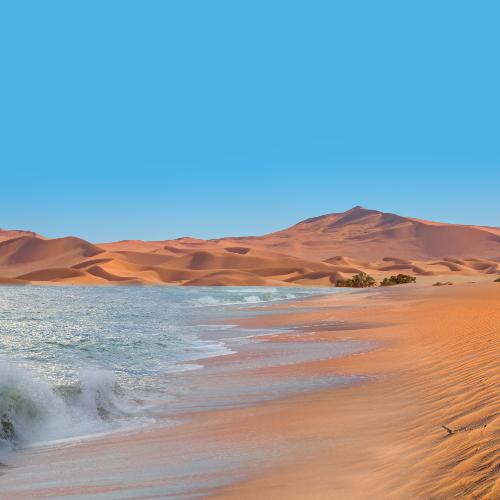
The Namib Desert is one of the most characteristic and photogenic places in the world. If you are looking for something completely different, something that allows you to disconnect from civilization and immerse yourself in absolute silence for a moment - this is your trip. It is especially worth visiting Sossusvlei, with red dunes up to 300 meters high. Climbing one of them - for example the famous Dune 45 - at sunrise is an experience that is difficult to compare to anything else. In turn, Deadvlei, a dead valley with dead trees and contrasting colors of clay and sand, looks like a surreal painting. This is a place that you absolutely have to see with your own eyes. You can travel through the desert in an off-road vehicle, and plan your accommodation in lodges or campsites. Away from the city lights, the night sky delights with a million stars - ideal conditions for observing the Milky Way and night photography.
Culture and history
Namibia is not only nature, but also a fascinating culture. During the trip, you can visit tribal villages that still maintain their traditional lifestyle. One of the most inspiring forms of the trip is meeting the Himba people - their red costumes, decorations and lifestyle in harmony with nature make a huge impression. However, this is not just a photo opportunity - if you approach these meetings with respect, you will have a chance to really talk and understand what everyday life looks like in a completely different world. Namibia's colonial history is equally interesting - in cities such as Luderitz or Swakopmund you will see German architecture and traces of former European rule. A particularly interesting place is Kolmanskop - an abandoned city where diamonds were once mined, and which is now gradually being swallowed by the desert. Walking through the deserted buildings covered with sand is like traveling back in time.
4×4 expedition – through mountains, wilderness and wild coast
For those seeking freedom and independence, a great idea is to rent a 4x4 with a rooftop tent and embark on a multi-week adventure across the country. Namibia offers excellent conditions for self-drive safaris. Many routes lead through absolutely untamed areas – through Damaraland, Kaokoland, the Skeleton Coast, the Fish River Canyon, and the Caprivi Strip. This type of trip requires more preparation, but it offers an unparalleled sense of freedom. Along the way, you can stay overnight at campsites, encounter wildlife, visit hot springs, and stop wherever you please. This type of trip is the true essence of adventure and a way to see the real Namibia – not just the one in the guidebooks.
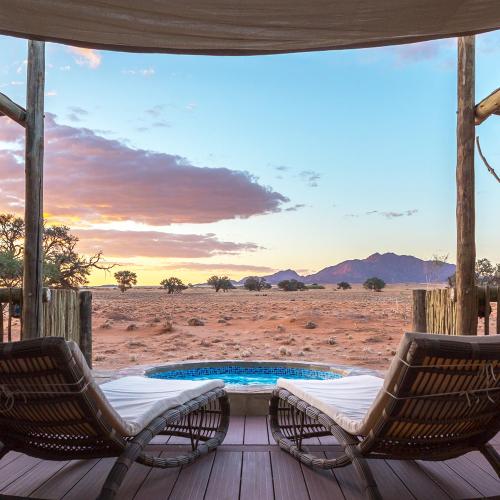
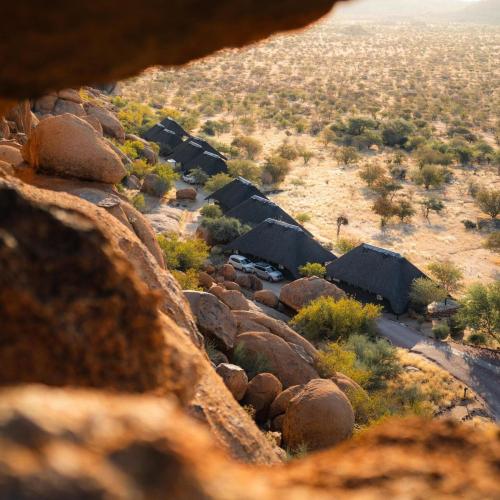
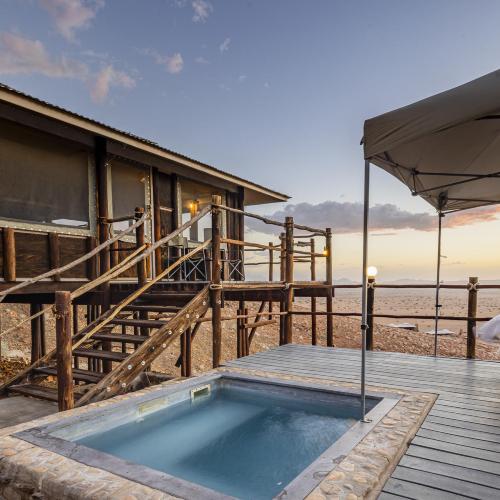
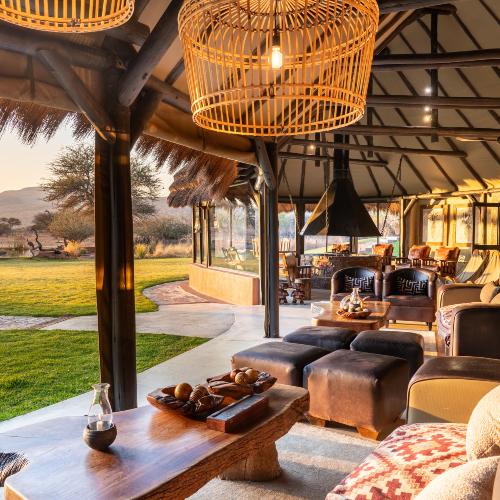
Hotels in Namibia
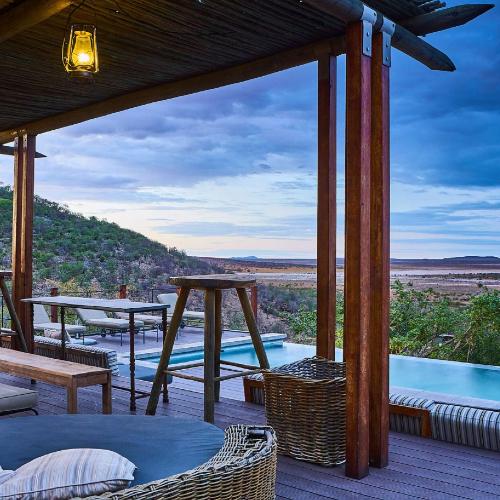
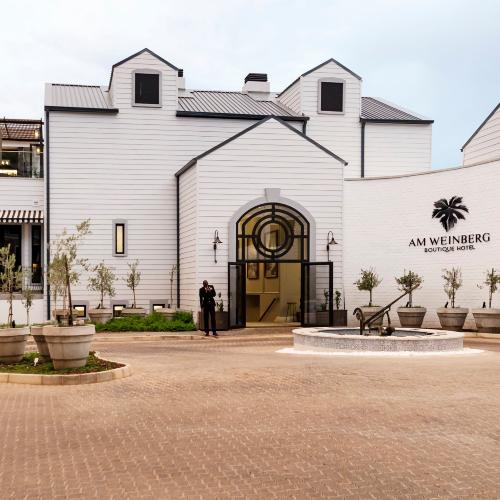
Namibia is a country created for those who dream of an authentic, unique adventure, so when planning your trip, it's worth paying special attention to local accommodation options – they'll help you truly immerse yourself in the atmosphere of this African land. Namibia is dominated by charming lodges – properties immersed in nature, often without official star ratings, but offering high comfort and a unique atmosphere. One such place is Palmwag Lodge & Camp, located in the rugged yet beautiful Damaraland region. This property, situated right on the Uniab River, offers comfortable rooms and the option of overnight camping. Two swimming pools allow you to relax after a day of adventure, and the location is a great base for exploring the area and spotting wildlife. If you want to feel truly close to nature, choose Naankuse Lodge near Windhoek. Located in a private reserve, you can not only admire wildlife but also participate in conservation efforts. This place offers educational bush walks and unique safaris that will remain in your memory for a long time. Dreaming of staying at the foot of the famous Sossusvlei dunes? AndBeyond Sossusvlei Desert Lodge, nestled in the heart of the Namib Desert, is the perfect choice. This five-star resort in the Namib Naukluft Park is an oasis of luxury in a wild landscape. The price includes not only comfortable accommodations but also access to a pool and meals, along with a wealth of attractions at your fingertips. And if the ocean draws you, be sure to check out Shipwreck Lodge on the legendary Skeleton Coast. These shipwreck-style bungalows offer something truly exceptional – a unique atmosphere, comfort, a wide range of activities, and delicious food all included. This is one of those places that will be remembered for a long time. During your Namibian vacation, it's also worth staying at the elegant Mushara Lodge, right on the border of Etosha National Park. Just 8 kilometers from the park entrance, this lodge offers ideal conditions for a safari. Here you'll find stylish holiday cottages, decorated with a local touch, a cozy lobby with a fireplace, a restaurant, a bar with selected wines, and a library. A collection of African art and a lush garden with an outdoor pool, a haven of relaxation after a day full of excitement, complete the experience. Namibia is a place where luxury meets rugged nature, and lodge accommodations are an integral part of the adventure. Whether you choose a tent in the desert or a designer cottage by the ocean, each of these locations will allow you to truly experience the spirit of Africa and return home with a head full of memories.
Namibia – places worth seeing
Imagine a country where, in the space of a single day, you can admire lunar desert landscapes, climb mountain peaks, encounter wild animals, and meet people who live just as their ancestors did hundreds of years ago. Namibia not only meets these expectations – it exceeds them. This is a place where nature and culture go hand in hand, where every bend in the road hides something extraordinary, and the silence can be as loud as a lion's roar. You can begin your adventure in Damaraland, a harsh region where sun-baked rock formations create landscapes reminiscent of the surface of Mars. This is where the famous Twyfelfontein petroglyphs are located – thousands of years of history carved into the stone by the indigenous people. But it is not everything. Damaraland is also home to rare desert elephants that have evolved to survive in extreme conditions. From Damaraland you can head towards the Tiras Mountains, where the landscape begins to resemble a painted abstraction. Red rocks, golden grasses and endless space create a feeling of absolute freedom. It's the perfect place to slow down for a moment, sit on a rock and just watch. Sunsets here are like a spectacle that cannot be repeated or recreated. Every day looks different. Continuing northwest, you will come to Opuwo, the capital of the Kaokoland region. It is a city where two worlds meet – traditional Himba culture and modernity. Women in red ochre, adorned with beads and leather, stroll past phone shops. Meeting representatives of this people is an opportunity to get closer to African traditions without filters or guides. Delighted by the culture, head towards the Waterberg Plateau – a green bastion in the arid landscapes of Namibia. This is where you can go hiking, climb a cliff and see the country from a completely different perspective. Waterberg is also home to many rare species, including rhinos, which have a chance of survival here thanks to conservation programs. If you dream of a real safari, you can't miss the Erindi Private Reserve. This is one of the best-managed nature conservation areas in Africa, where you can set off to meet the Big Five, but without the crowds and while respecting the natural rhythm of the animals' lives. When you sip your coffee on the terrace in the morning and a herd of elephants passes by in the distance, you will understand what the magic of Namibia is. After encounters with wildlife, it is worth experiencing a completely different landscape – the Kalahari. This semi-desert with red sand and morning dew hiding in the grass surprises with its richness of life: walking among the acacias, you will have the opportunity to observe meerkats, oryxes and hundreds of species of birds. In turn, at the Okonjima Nature Reserve, famous for its work to protect predators, especially leopards, you not only have the chance to see these majestic cats up close, but you will also learn what real wildlife conservation looks like – from behind the scenes and with passion. In the far north await the Epupa Falls, one of Namibia's most surprising attractions. Surrounded by palm trees, cascades of water flowing over rocks in the heart of a semi-desert landscape look like an African paradise. During your trip to Namibia, plan to visit Walvis Bay – the country's coastal pearl. Cruising through the lagoon where dolphins play and seals lazily drift is pure joy. And if you're lucky, you might even see a whale emerge from the depths. In the background – thousands of flamingos creating a pink carpet over the water.
Which region to choose for a trip to Namibia?
If you're wondering which region of Namibia to choose for your first (or next!) African trip, the answer may not be so simple – because this country surprises with diversity at every turn. Every corner of Namibia offers completely different experiences, landscapes, and encounters. It's a bit like choosing between the ocean and the desert, between the silence of the mountains and the roar of a lion – whichever you choose, you'll be fine. But let's try to make it a little easier for you! If you dream of otherworldly landscapes, head south – to Sossusvlei and the Namib Desert. This is where the famous orange sand dunes are located, which at sunrise look like they were painted. Walking on the sands of the world's oldest desert, climbing Dune 45, and seeing the lifeless, white lake of Deadvlei with its dried-out acacia trees are almost mystical experiences. And if a safari is king of your plans, don't hesitate to head north – to Etosha National Park. This is the largest wildlife reserve in the country, where you'll easily spot elephants, giraffes, lions, and even the rare black rhino. A network of watering holes means the animals come to you on their own, and you can observe their lives almost up close from the comfort of your vehicle. For those who want to combine wildlife with local culture, the northwestern region of Kaokoland and the Opuwo area are a great choice. These areas are inhabited by the Himba tribe, who still live according to their ancient traditions. Dreaming of a truly remote adventure, surrounded by lunar rock formations and a silence broken only by the rustle of the wind? Choose Damaraland, where you can see desert elephants, unusual rock formations, and ancient rock carvings in Twyfelfontein. Don't forget the Kalahari Desert, red as fire and brimming with life – the perfect place for your first steps on Namibia's soil. And if you want to combine all of this, hit the road!
Namibia Travel Deals

Hotels in Namibia






When to go to Namibia?
Namibia is located in a tropical dry climate zone. Rainfall on the coast does not exceed 50 mm, increasing inland and reaching 500 mm in the eastern part of the country. You can travel to Namibia basically all year round.
The rainy season in Namibia lasts from January to early April (the most rainfall is in January and February), temperatures are around 30 degrees during this period during the day, at night from 19 to 14 degrees. When planning a trip during this period, remember that due to rainfall, there may be difficulties in driving on gravel roads and it is harder to meet animals that disperse to numerous watering holes. The advantages of traveling in Namibia at this time are: a more active ecosystem, because many species of plants start to bloom then, less bothersome temperatures that facilitate somewhat intensive sightseeing, and also - a significant decrease in the number of tourists.
The dry season begins in May and lasts until the end of October. This is the best time to visit, because of the possibility of observing animals, which are numerous at designated watering holes. During the dry season, temperatures hover around 40 degrees inland, at night the temperature can drop to 4 degrees. The Namibian coast, on the other hand, is characterized by constant temperatures, which are around 20 degrees during the day and around 10 degrees at night.
Namibia - travel inspirations

Namibia Safari

Self-drive around Namibia
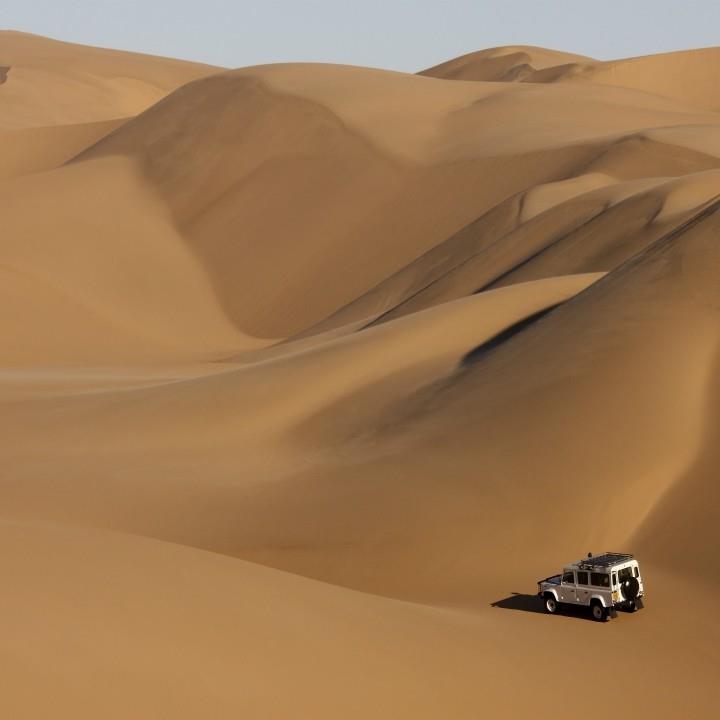
Jeep ride on the largest sand dunes in the world
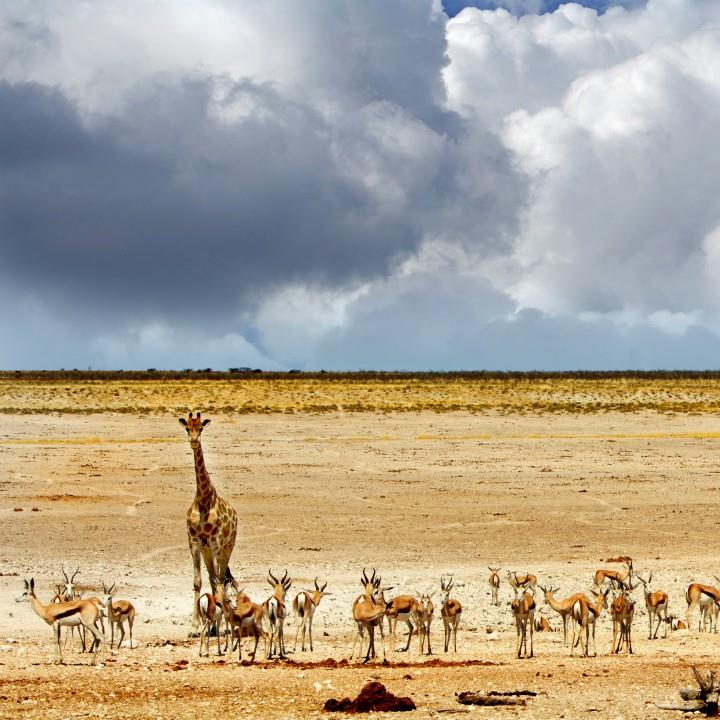
Safari in Africa's largest national parks

Visit to the Himba village

Namibia's Colonial Legacy

Cheetahs in Namibia
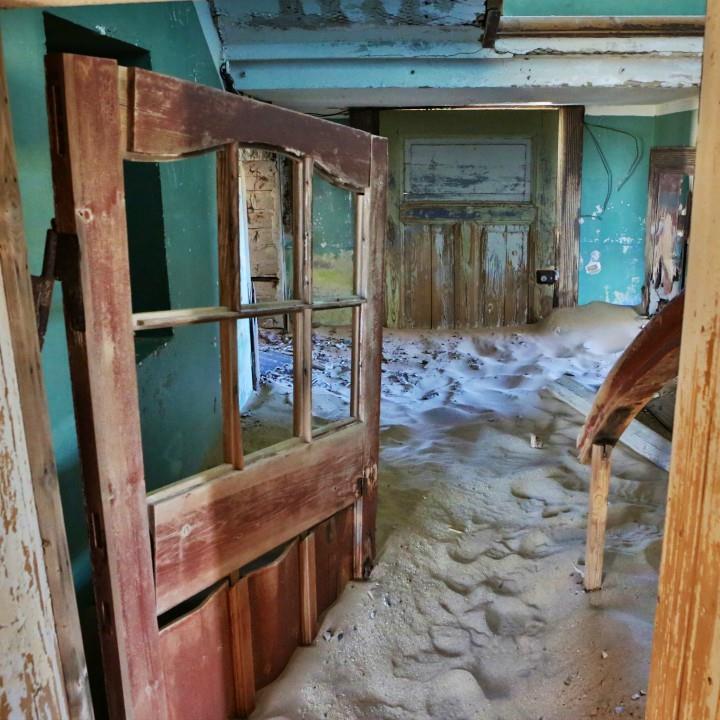
Namibia - the land of diamonds