Guadeloupe, known as the Island of Beautiful Waters for hundreds of years, delights with its heavenly beaches, fascinating history and beautiful landscapes! A luxury vacation in Guadeloupe is a great opportunity to discover one of the highest waterfalls in the Caribbean, get to know the local culture and taste new flavors in the culinary capital of the region!
Programmes
Hotels
Weather
Places
Information
Inspirations
General Information
Time zone
GMT-4
Chair
Basse Terre
Language
francuski
Currency
Euro (1 EUR is 100 cents). Banknotes come in denominations of 5, 10, 20, 50, 100, 200 and 500 euros, and coins in denominations of 1 and 2 euros and 1, 2, 5, 10, 20 and 50 cents.
1 USD - 0,85 EUR 1 PLN - 0,22 EUR
Surface
1628 km2
Population
396 000
Practical information
Visa information and airport fees
Polish citizens traveling to Guadeloupe are neither required to have visas nor are document checks conducted, as both countries are members of the European Union (Guadeloupe is an overseas territory of France). However, this does not exempt Polish citizens from the obligation to have a valid passport or identity card, which must be presented at the request of the appropriate authorities.
Vaccinations
Holidays in Guadeloupe do not require compulsory vaccinations, however, as with almost every trip, vaccinations against polio, diphtheria and tetanus (around PLN 150), typhoid (around PLN 230) and hepatitis A and B (around PLN 250 for each dose of vaccine) are recommended. Vaccination prices are given in accordance with the current price list of the Vaccination Centre of the John Paul II Specialist Hospital in Krakow.
Tips
The rules regarding tipping in Guadeloupe are the same as in France – tipping is not very common here, as the vast majority of restaurants and hotels already include a service charge, usually 10-15%, in the bill. All other tips are discretionary, but are not usually expected.
Food prices
The price level in Guadeloupe is considered average. It is much cheaper here than in Saint Berthelemy or Anguilla, but the prices of products can be up to 50% higher than in Aruba, the Dominican Republic or another French overseas territory - Martinique. Nevertheless, local products are relatively cheap here, of course by Caribbean standards.
Food
Guadeloupe is considered one of the culinary capitals of the entire Caribbean, and the local cuisine reflects the island's history. Local specialties combine the finesse of French cuisine with the spices of African dishes and the exotic recipes of Southeast Asia. There are over 200 restaurants here - some in luxury hotels, others in charming seaside settings, and still others on the verandas of local homes.
The flavors found on each of the islands of this small archipelago will surprise you with their diversity! Grande-Terre will welcome you with a refined culinary offer, Basse-Terre with a wide selection of Creole dishes, La Desirade with fresh seafood, Marie-Galante with natural products from local, organic farms, and Les Saintes with a sweet coconut cream Tourment d'amour. Due to its geographical location, the menu of each of the islands offers many fresh fish and seafood, of which we especially recommend trying balaou - a local species of small fish, blaff - seafood cooked in a spiced soup, chiquetaille - spicy cod served in small pieces or oursin - a sea urchin dish!
Among the Creole delicacies, look out for cassav – a kind of cassava pancake served savoury or sweet, most often with nuts or guava jam, and bokit, a bread similar to Indian naan bread served with meat, fish or vegetables. And of course, traditional coffee – after all, Guadeloupe was the oldest coffee region in the Americas – or delicious Caribbean rum! If you come to the island in August, you can also visit the local festival of cooks, who, dressed in traditional costumes, prepare the tastiest dishes from the Caribbean region.
Interesting facts
The island's capital covers an area of only 6 km² and has a population of less than 13 people.
Guadeloupe was originally called Karukera, which means Island of Beautiful Waters; Columbus gave it the name Santa Maria de Guadelupe, and today the locals often call it Gwada for short.
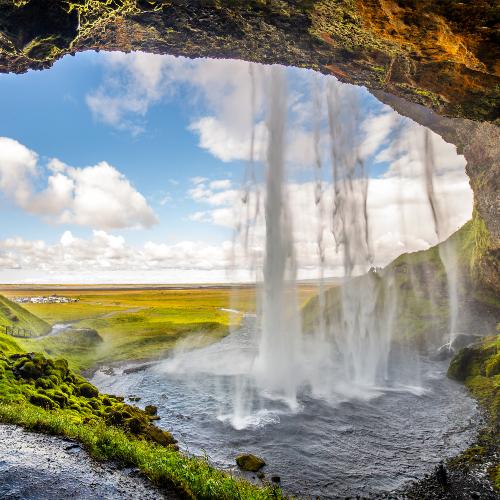
Guadeloupe is home to Carbet Falls, one of the highest waterfalls in the Caribbean.
As an overseas territory of France, the island is one of the most remote regions of the European Union.
On the island there is a museum of Saint John Perse, a French poet and diplomat.
Guadeloupe's most important exports are bananas, sugar and rum.
Located on the eastern part of the island, Saint-Francois is often called the local Saint-Tropez!
The traditional Caribbean residence of Zevallos, which at the end of the 19th century was the heart of the nearby sugar mills, was designed by Gustave Eiffel's studio.
The local Morne-a-Leau cemetery is one of the most incredible necropolises in the whole of the Antilles! Resembling a town of the dead, it fascinates above all with its black and white checkerboards covering each of the tombstones found here.
In the Des Roches Gravees Archaeological Park you can find over 200 paintings whose history dates back over 1500 years!
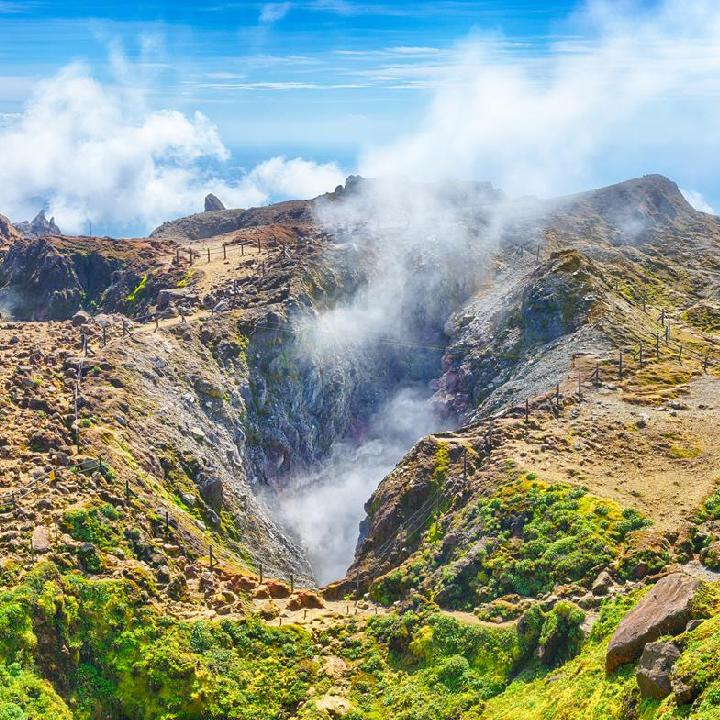
The mythical peak of Guadeloupe is the Soufiere volcano. There are several not very demanding hiking trails leading to its summit, and from the top there are picturesque panoramas of the island.
Throughout its history, Guadeloupe has been one of the largest coffee producers in the region. Today, during your holiday on the island, you can visit a small museum – Cafes Chaulet – with a traditional planter’s residence, several slave houses and a collection of machines necessary for coffee production.
There is one international airport in Guadeloupe – in Pointe-a-Pitre, with regular connections to Miami, New York, Paris, Brussels and several airports in the region.
In April, one of the local islands hosts the Goat Festival – Fete du Cabri – the highlight of which is… a goat fashion show!
Learn more about the country of Guadeloupe
History
Discovered in 1493 by Christopher Columbus, Guadeloupe resisted invasions by colonizers until 1626, but in the 1759th century, after a short period of Spanish rule, the French took over control of the island. At that time, the colonists fought with the tribal communities inhabiting Guadeloupe and began to import slaves to the Caribbean region en masse for local sugar and coffee plantations. For decades, the island was dependent on nearby Martinique, and in the years 1763–1810 the British ruled here, returning to the island also in the years 1816–8 after a slave revolt that had taken place eight years earlier. The final abolition of slavery took place in Guadeloupe in 1848, and almost 100 years later the island gained the status of a French department, which was later renamed a region of France.
After World War II, independence movements emerged on the island, but after de Gaulle's appeals, the local authorities only agreed to greater autonomy. Until 2007, the Guadeloupe region also included Saint Martin and Saint Berthelemy, but as a result of a referendum, the island became an independent overseas territory.
Location
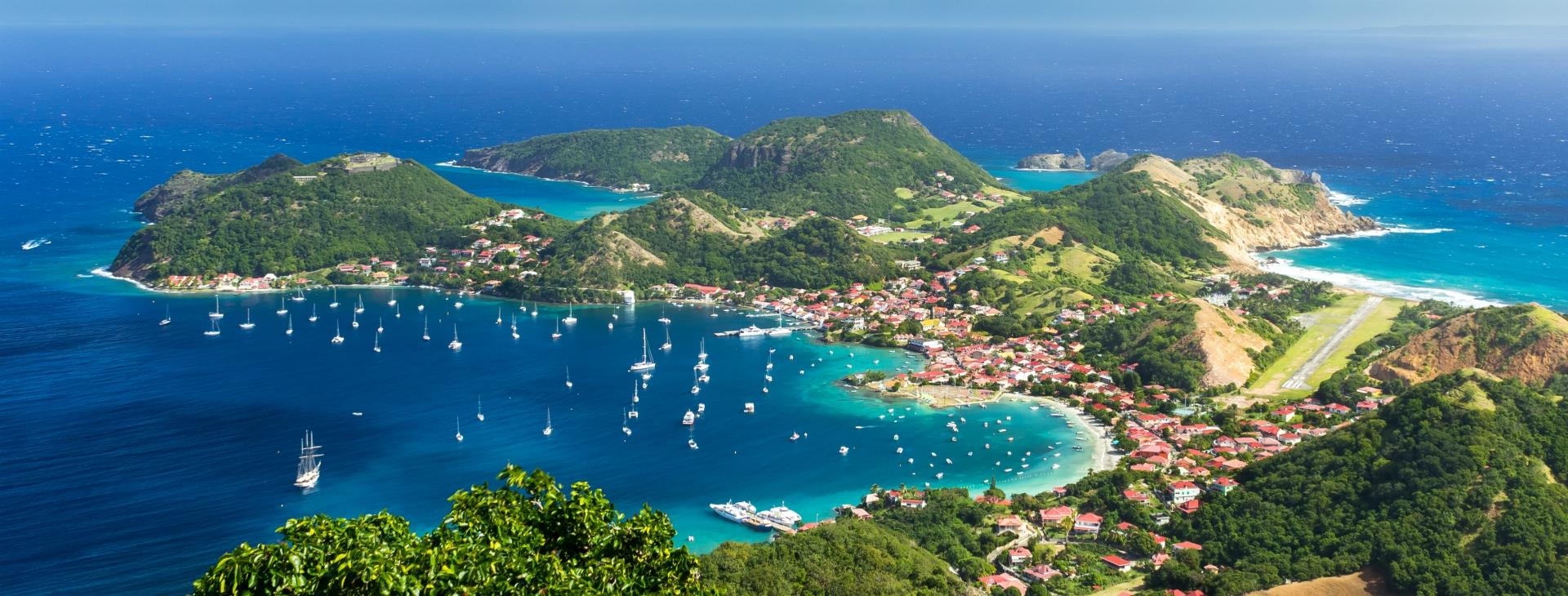
Guadeloupe is an overseas region of France consisting of five main islands: Basse-Terre, Grande-Terre, Marie-Galante, La Desirade and Iles des Saintes, as well as smaller, uninhabited islets. The islands are located about 30 km north of Dominica and about 50 km southeast of Montserrat, a British dependent territory. Basse-Terre, which makes up more than half of Guadeloupe's land area, is divided from north to south by a mountain range, the highest peak of which is the Soufriere volcano (1467 m above sea level). There are also some hot springs on the islands, and the coast here is intersected by bays and picturesque beaches. The other islands are almost flat.
The tropical climate of the island is moderated by the north-east trade winds. The temperature on the coast fluctuates between 25 and 28°C throughout the year, although in the mountains it can often drop to 15°C, and at the top of Soufriere – even to 0°C. The climate of the island is characterized by two seasons – dry, also known locally as the Creole Lent, lasting from December to April, and rainy – from July to the turn of September and October. In between, there are two transitional seasons, in which the temperature can be variable. Hurricanes occur here sporadically, but they are most likely to occur in the summer months – August and September.
Culture and Religion
Guadeloupe's population is mainly Creole, the vast majority of whom are of mixed African and European descent. The white population used to be the majority, but since the French Revolution, it has been in steady decline, now accounting for only about 2 percent of the population. Over 80 percent of the population is Catholic, with a large proportion of Jehovah's Witnesses and Protestants, and a small number of Muslims.
Local culture is also important in Guadeloupe, and you can still see plenty of traditional costumes on holiday on the island, including the unique madras et foulard – colourful, often plaid headscarves. A cross-section of local folklore can also be seen during the annual carnival, held before Lent, when the entire archipelago comes alive to the rhythm of Creole music and local folk dances.
Guadeloupe's climate is described as tropical, moderated by the north-east trade winds that blow through the region. The dry season on the island lasts from December to April or early May, while the rainy season falls in the summer months - from July to early October. During this time, hurricanes can also occur in the Caribbean region. The temperature on the coast fluctuates around 25-28°C throughout the year, although with increasing altitude on the largest of the islands, Basse-Terre, the mercury columns around the peak of Soufriere can drop to almost zero.
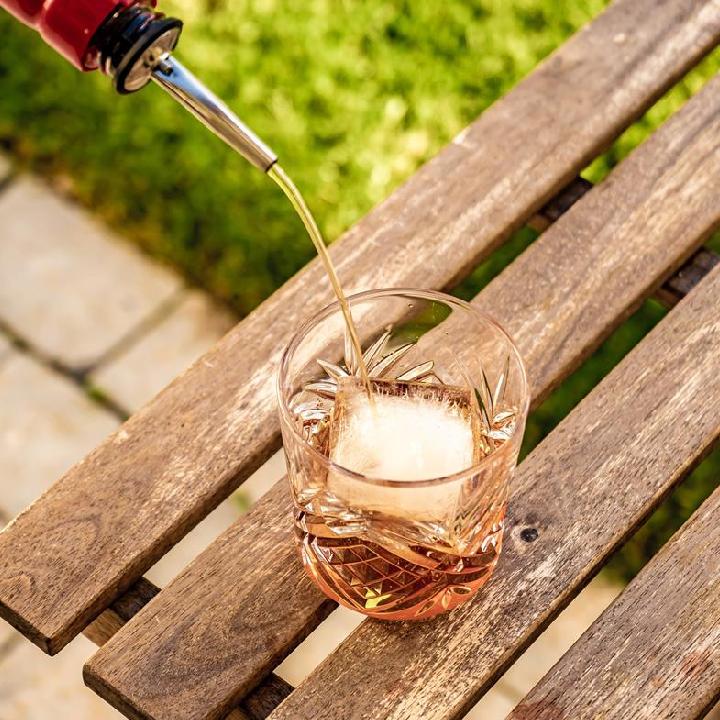
The basic association with the Caribbean? Sun, beach and... rum! And no wonder, as one of Guadeloupe's natural resources is sugar cane. The island's climate is conducive to its cultivation, which is why in Guadeloupe...
Active holidays in Guadeloupe? Of course! Conquer the highest peak in the Lesser Antilles – the Soufriere volcano, located in the southern part of Guadalupe National Park. It is a relatively young volcano (of course in terms of the age of the volcano:...
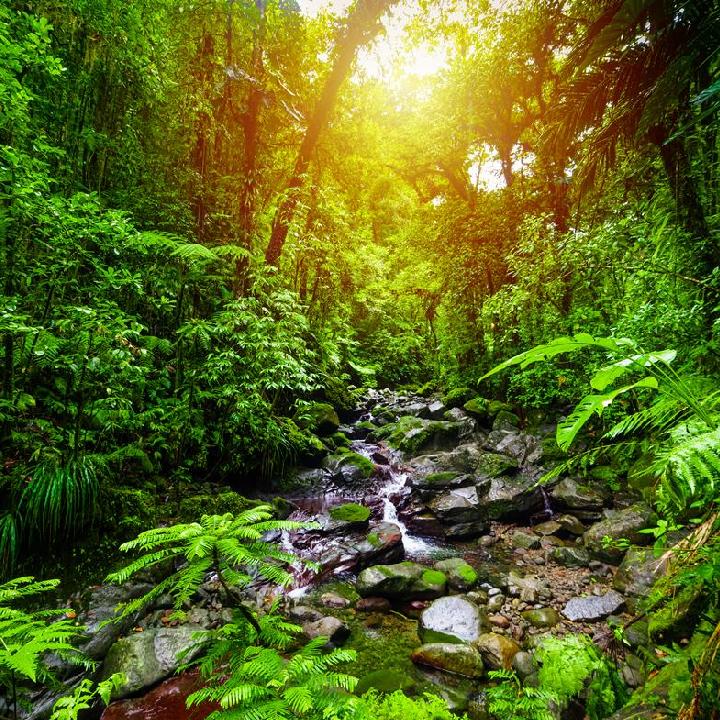
A trip to Guadeloupe is a great way to explore the unique Guadalupe National Park, located on the island of Basse-Terre. It is home to the largest rainforest in the Lesser Antilles, renowned for its biodiversity...
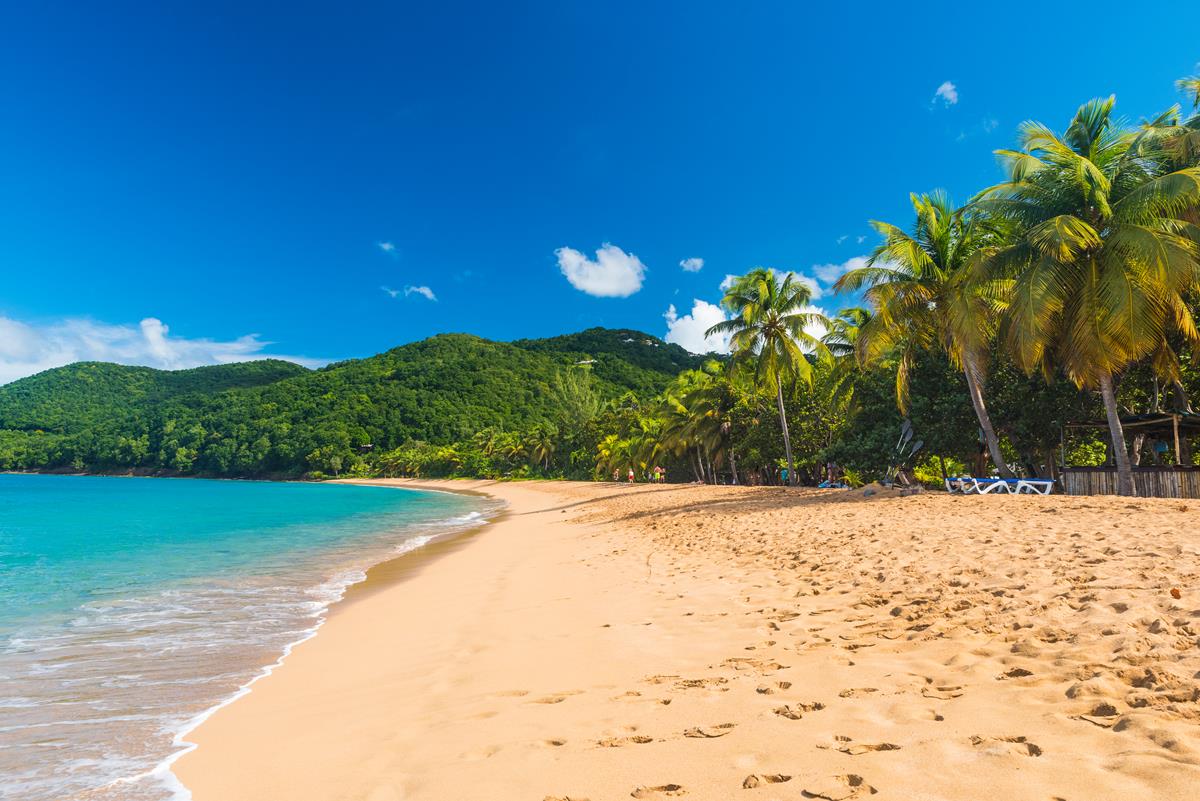
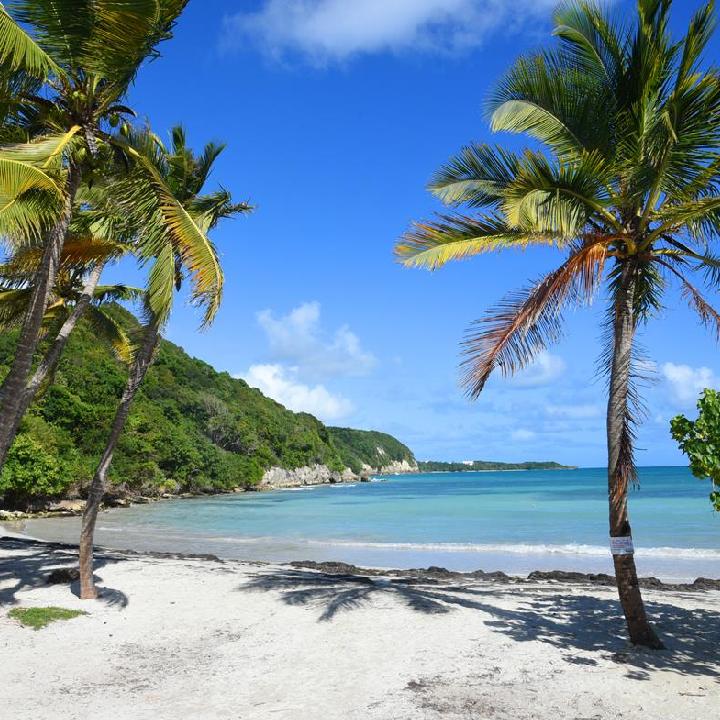
When looking for the best beaches in Guadeloupe, focus on the eastern part of the archipelago – the island of Grande-Terre. This is where you will find typical Caribbean beaches decorated with a chain of palm trees and azure ocean waters. Don't limit yourself...