


1 USD = PHP 58.35
1 EUR = 63,13 PHP
1 PLN = 14,84 PHP
The current exchange rate can be checked on the website of the National Bank of Poland: https://nbp.pl/statystyka-i-powiedziałosc/kursy/tabela-a/

Practical information
Visa information and airport fees
The Travel Agency is not responsible for not receiving a visa for the countries where the tourist event takes place and transit countries. Obtaining a visa is 100% on the side of the participants of the trip.
Vaccinations
Tips
Food prices
Food
Interesting facts
- The name Manila comes from the name of the flower "nilad" and means the place where nilads bloom.
- The Philippines is the world leader in coconut production, with over 2010 million tons of the fruit produced in 19.
- Most Filipinos are Christians, mainly Catholics, and the Philippines is the only Asian country where Christianity is the dominant religion.
- There are currently only 30 indigenous Negroid people living in the Philippines, out of a population of over 110 million.
- The rice terraces located in the northern part of the island of Luzon are often referred to as the eighth wonder of the world.
- The Philippines, especially Manila, is called the "text capital of the world" due to the number of text messages sent by Filipinos, which leaves far behind the United States and Europe.
- Surprisingly, karaoke was invented in the Philippines! It was a Filipino, Roberto del Rosario who came up with the idea of karaoke.
- The sweetest fruit in the world recorded in the Guinness Book of World Records is the Carabao Mango
- One of the smallest mammals in the world – the tarsier – is an endemic animal and occurs only on the Philippine island of Bohol.

Learn more about the country Philippines
History
Location
There are fourteen active volcanoes in the Philippines, the country is mostly mountainous, the highest peak on the islands called Apo is 2953 m above sea level. The islands have a dense river network, which is mainly due to heavy rainfall, and the longest river is the Mindanao with a length of 550 km. Tropical forests make up about 30% of the country's area, on the coast there are mangrove forests, and on the rivers gallery forests. In the lowlands there are also monsoon forests.
Among the animal species found in the Philippines, it is worth mentioning the Philippine sambar, Javan macaques and saltwater crocodiles. An endemic species is the Philippine eagle, one of the rarest and most endangered bird species. Nature conservation areas constitute only 2% of the country's surface.
Culture and Religion
Importantly, if someone is invited to a Filipino home for lunch or dinner, they must remember to bring a gift for the host, such as flowers or candy. Music is also an important part of Filipinos' everyday life, especially popular American music or Filipino rock. Two of the most popular traditional dances in the Philippines are the cariñosa and the tinikling, which were formed during the colonial period.
The Philippines is a decidedly Catholic country, where the Spanish conquistadors succeeded in adapting their religion to Asian conditions, a phenomenon unique on the continent. Catholics make up about 80% of Filipino citizens.

Trip to the Philippines
Holidays in the Philippines
The Philippines is an archipelago of over 7 islands that offer unforgettable holidays full of adventure and relaxation. A trip to the Philippines is a chance to discover not only fabulous beaches and crystal clear waters, but also a rich culture and extraordinary places, whose wildlife takes your breath away.
Why is it worth visiting the Philippines?
A holiday in the Philippines is a great idea due to its incredible natural diversity, wonderful beaches and rich culture. The archipelago offers countless opportunities for exploration, from the white sand beaches of Boracay to the exotic coral reefs around Palawan, perfect for diving and snorkeling. The country is also famous for the hospitality of its inhabitants and the rich history that can be discovered in cities such as Manila and Cebu. For adventure lovers, a trip to the Philippines offers the opportunity to enjoy many attractions, such as trekking on volcanoes, exploring caves or kayaking. Another reason to visit this country is its cuisine, offering unique flavors and traditional dishes that will delight every palate. The Philippines is also a place where you can feel true harmony with nature, enjoying the peace of tropical forests and crystal clear waters.
Sightseeing – what to see in the Philippines?
The territory of the Philippines includes over 7000 islands and islets scattered across the Pacific Ocean, of which only 880 are inhabited. So where to start your journey? The biggest magnet that attracts tourists to the Philippines are beautiful beaches and the surrounding fabulous ocean with a unique coral reef. The coast of the Philippines is full of uninhabited islets, which often delight with beautiful, sandy beaches or excellent places for snorkeling. That is why one of the most popular activities during a holiday in the Philippines is island hopping, i.e. swimming from island to island and simply taking in the charms of paradise places. Boracay regularly leads the rankings of the best beaches in the world, although the beaches on Bantayan, Apo, Panglao, Camiguin, Siargao, or Siquijor are in no way inferior to them. But the Philippines is not only palm trees and wonderful beaches. For fans of mountain hiking, we recommend trekking to the volcanoes of Pinatubo, Taal and Mayon. The approaches are not very demanding, so even beginners will be able to cope. The Philippines is the only Catholic country in Asia, so you will not find any Buddhist or Hindu temples here, but you can visit countless churches and cathedrals. If you are hungry for more thrills, it is worth visiting the small town of San Fernando around Easter, which is talked about all over the world at this time, to experience the local bloody spectacle of the Mystery of the Passion of the Lord first-hand.
Holidays in the Philippines - practical information
When planning a trip to the Philippines, it's worth considering the best time to travel, which falls during the dry season – from November to April, when the weather is most favorable. Flying to the Philippines usually requires a transfer, most often at one of the major Asian airports, such as Singapore or Hong Kong. It's important to remember to have a valid passport, and for stays longer than 30 days, a tourist visa is required. Local transportation, such as jeepneys and tricycles, is recommended. They are inexpensive and allow for an authentic experience of Filipino daily life. ATMs are available in larger cities and popular tourist destinations, but it's advisable to carry cash, especially in more remote areas. Protecting yourself from mosquito bites is important, especially in regions where mosquito-borne diseases may be prevalent, so don't forget repellent and appropriate clothing.
Philippines attractions – holiday guide
Rice Terraces and Hanging Coffins
Where can you find the oldest rice terraces in the world? In the Philippines! Built some 2 years ago, the Banaue rice terraces, located on the island of Luzon, are considered a national heritage site and, according to many Filipinos, the eighth wonder of the world. Although the journey to them isn't easy (it takes over 10 hours from Manila), the distance is certainly worth the effort. These terraces cover almost every inch of the surrounding hills, stretching endlessly in all directions. If you're interested in unusual and somewhat macabre experiences, near Banaue, in the village of Sagada, you can observe peculiar rock cemeteries. The coffins of the Igorot dead were placed on rock ledges, creating a kind of rock burial ground. This was accompanied by a series of funeral rituals that began while the deceased was still alive. Elderly people would craft their own coffins, in which they were later placed in the fetal position. The exact origins of this unusual form of burial remain unclear, but it is believed to date back several hundred years. The oldest preserved coffins are estimated to be over 100 years old. Today, however, this form of burial is gradually disappearing. So why were the deceased buried on rock faces? It was believed that the soul, upon leaving the body, was closer to heaven. Others believed that this special placement of coffins was a reward for a dignified life on earth and symbolized the deceased's high social status. Others also believed that placing coffins high on the rocks ensured peace and quiet for the deceased.
Thousands of paradise beaches
The recipe for a perfect holiday in the Philippines? Imagine a paradise beach with white sand washed by warm, turquoise waters. Relax on a comfortable lounger with a fascinating book in your hand, next to a coconut filled with refreshing water, or your favorite drink. If you are planning a trip to the Philippines, you cannot miss the opportunity to visit at least one of the idyllic islands to experience the bliss of doing nothing in the shade of the sun. Among the best places to relax on the beach, you can certainly not miss the islands of El Nido, Bohol, Camiguin, Pamilacan and, of course, Boracay. Each of these islands offers unique beauty and unforgettable views that will ensure a blissful rest. On the other hand, if you are a fan of spending your time actively, then Siargao Island is undoubtedly the number one for all surfing enthusiasts, which is why it is often referred to as the Surfing Capital of the Philippines.
Chocolate Hills and Tarsiers
We are cooling your enthusiasm, the Chocolate Hills are unfortunately not chocolate. They are conical limestone hills located on the island Bohol and cover an area of 50 km². It's not entirely clear how many hills there are on the island. It's estimated that there are around 1260 of them. Their name comes from the color the grass takes on during the dry season on brightly sunny days. They are most likely the result of the long-term weathering of limestone, but Filipino beliefs and legends explain their origins differently. It's said that the distinctive hills are the work of warring giants. Another story says that the hills are actually the tears of another giant who mourned the death of his beloved. You're probably familiar with small creatures with large, bulging eyes, somewhat reminiscent of gremlins, that watch the world closely (when they're not sleeping) from tree branches. These creatures are tarsiers, which can be observed in the Philippines in special reserves on Bohol. These places are dedicated to the protection of these small mammals and to conducting scientific research aimed at their conservation.
Hotels in the Philippines
There is something for everyone in the Philippines – from cozy and simple off-the-beaten-path facilities like La Cosita or Dolaron Beach Resort to luxury hotels of the highest category. If you want to relax in the Philippines in truly royal conditions, the small island of Boracay is the vestibule of luxury – it has excellent tourist infrastructure with numerous luxury hotels, ideal for blissful relaxation. Pay special attention to the Shangri La Boracay Resort & Spa, Astoria Boracay and Nay Palad on the paradise island of Siargao. For lovers of luxury relaxation, these places are a real paradise.
Unique places in the Philippines
The Philippines is an archipelago full of extraordinary places that amaze with their diversity and beauty. One of the most important points on the map is Palawan, often called paradise on earth, where the crystal clear waters and picturesque lagoons of El Nido offer great conditions for diving and snorkeling. In Banaue, there are rice terraces listed as a UNESCO site, which take your breath away with their intricate structure and green landscapes. Manila, the capital of the country, hides a wealth of history, including Intramuros - an old fort surrounded by walls, which takes visitors back in time to the colonial past. The island of Cebu offers not only beautiful beaches, but also unforgettable adventures, such as swimming with whale sharks in Oslob or hiking to the impressive Kawasan Falls. Mayon Volcano, known for its perfectly symmetrical cone, is a spectacular sight and a challenge for mountain hikers. On the island of Bohol, it is worth seeing Chocolate Hills, which gain a brown color during the dry season, and visit the tarsiers reserve, small primates with huge eyes. Finally, the paradise island of Boracay attracts tourists with its white sand beaches and vibrant nightlife, offering the perfect place to relax and have fun.
Which region to choose?
For a trip to the Philippines, the region is the perfect choice Palawan , known as paradise on earth. Palawan offers breathtaking landscapes, including crystal clear waters, picturesque lagoons and white sand beaches. El Nido and Coron are the main attractions of the region, offering great conditions for diving, snorkeling and exploring underwater caves. Puerto Princesa, the capital of the region, is famous for its underground river, a UNESCO World Heritage Site, which is one of the new seven wonders of nature. In the Palawan region, you can also encounter unique fauna and flora, learn about local culture and traditions. This region of the Philippines provides an unforgettable experience and is a great place for relaxation, adventure and contact with nature.
Philippines Travel Deals


Hotels in the Philippines


Philippines – places worth seeing


When to go Philippines?
The tropical climate of the Philippine archipelago is shaped by seasonal monsoons. In a large part of the Philippines, the dry season and the best time for relaxation falls between December and March. Rainfall is sporadic then, and the average temperature hovers around 25°C. The rainy season in the Philippines lasts from June to November. Extremely heavy tropical rains are felt most in the south of the archipelago. However, it should be remembered that there are often deviations from the generally accepted seasonality. The beginning and end of the rainy season shift from year to year. We advise avoiding the period from August to October, when tropical cyclones approach the Philippines.
Philippines – travel inspirations

Swimming with whale sharks in Oslob

Exploring Manila, Intramuros and the Philippines' Colonial Heritage

Surfing in Siargao

Mayon Volcano
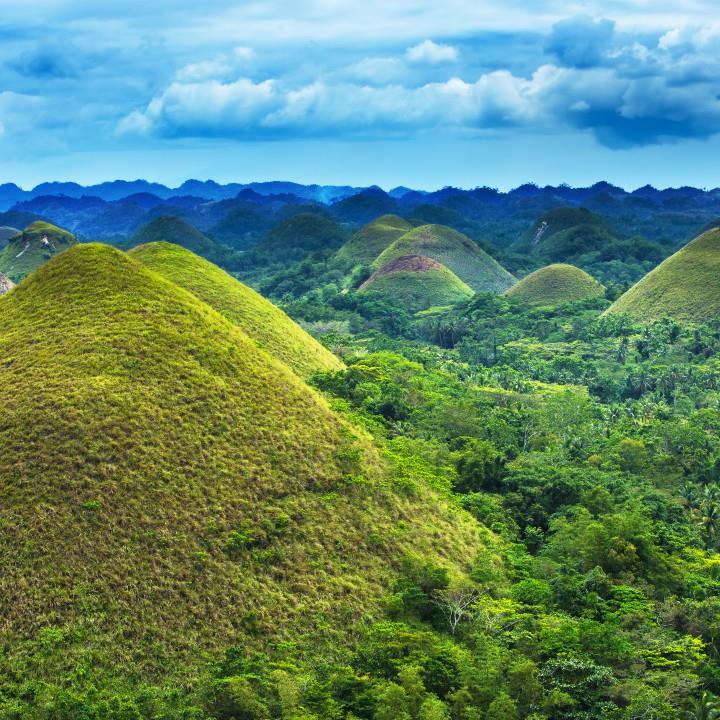
Tarsiers and the Chocolate Hills

Natural Wonders in Palawan
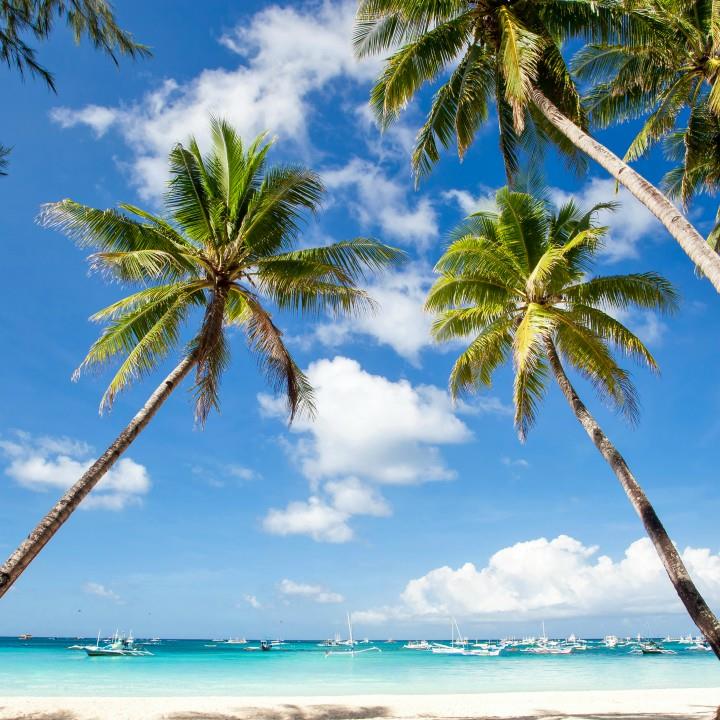
Relax on Boracay Beach

Island hopping in Palawan

Jeepney in Manila


