


1 USD - 48,55 EGP
1 EUR - 56,75 EGP
1 PLN - 13,35 EGP

Practical information
Visa information and airport fees
For arrivals at other airports, visas can be applied for prior to travel at an Egyptian diplomatic mission, online at www.visa2egypt.gov.eg, or directly at the airport in Egypt. A single-entry tourist visa costs USD 30, while a multiple-entry visa costs USD 60. A tourist visa allows for a stay in Egypt for up to 30 days. To obtain one, you must have a passport valid for at least six months beyond your intended return date from Egypt.
Vaccinations
Tips
Food prices
Meal in a cheap restaurant – 120 EGP
Dinner for two at a better place – 700 EGP
Local draft beer in a restaurant – 60 EGP
Coffee in a restaurant – 60 EGP
Mineral water 1,5 l – 8 EGP
Coca-Cola 0,33 l: 20 EGP
Imported beer 0,5 l – 100 EGP
Wine 0,7 l – 400 EGP
Bananas 1kg – 25 EGP
Apples 1kg – 50 EGP
Food
Egyptians do not eat pork for religious reasons, but dishes based on beef, poultry and lamb are available everywhere. A real delicacy is pigeon meat (hamam), which is served with spicy rice, although you can also find whole grilled or baked pigeons stuffed with groats. In some tourist spots, restaurants offer camel steak. The most famous dinner dish is kebab and kofta - a skewer of ground lamb, as well as shoarma - a pita filled with pieces of meat (usually lamb) with vegetables and sauce. Egyptian cuisine is full of soups, including ads (a thick bean soup), isan asfur (a beef broth with noodles), samak (fish soups) and chudar (vegetable broths).
Sweet desserts are an important part of Egyptian cuisine, especially those made from natural ingredients. Many recipes are borrowed from Mediterranean cuisine, including basbousa, which is semolina with sweet syrup and almonds, cut into rhombuses and served cold, baklava, made from crispy filo pastry and covered in honey and nuts, or ghoriba, sponge cakes made from shortcrust pastry with butter and a tea filling, resembling dumplings. Egyptians also love pancakes with sweet fillings or rice cooked in milk with the addition of fruit and cinnamon.
The national drink in Egypt is tea and coffee. Making tea is a real ritual – every Egyptian will always find time for it – while coffee is drunk very sweet and strong, sometimes spiced with cardamom, poured straight from the pot.
Interesting facts
- The pyramids of Giza were not built by slaves. They were built by workers paid by the pharaoh, for whom this work was a privilege. Builders who died during the work were buried in tombs near the pyramids.
- Cairo is the largest city in Africa and the Middle East, with a population of about 21 million.
- Egypt is one of the driest countries in the world, and most of its territory is desert – the Sahara and the Libyan Desert.
- In 2013, for the first time in 112 years, snow fell in Cairo. Scientists attribute this weather phenomenon to global warming. Many residents of the capital saw snow for the first time in their lives.
- The ancient Egyptians did not know the concept of sin and did not treat sex as a religious obligation. Both women and men had complete freedom in developing their sexual lives and any form of sexual activity was treated as a normal need. Moreover, it was believed that the soul after death also had the ability to have sex, which is why symbols of fertility were placed in the tombs of adults, including statues of women with wide hips or men with impressive genitals.
- Pharaohs were buried with their servants who would serve them in the afterlife.
- Scientists are still trying to solve the mystery of the creation of the Great Sphinx of Giza. The huge 20-meter-high and 57-meter-long sand statue was probably created around 2600 BC as a guardian of the pyramids. From an engineering perspective, erecting such a structure is extremely difficult, if not impossible - even in the XNUMXst century and using the most modern architectural techniques. So who built this mysterious statue? Some scientists claim that the building was created by... a small civilization that once existed in Antarctica, which colonized unknown lands, including the Nile region.
- The first team games in the world were played on the Nile. We also owe the principle of fair play to ancient athletes.
- It is impossible to count all the achievements of the ancient Egyptians. They invented hieroglyphs ("divine words" that were to be used in prayer) and the irrigation system, contributed to progress in astronomy (they created a calendar divided into 365 days), mathematics (mainly geometry), medicine (in surgery and anatomy) and in the technique of mummification of corpses.
- Of the 1400 gods worshiped by the ancient Egyptians, the most important was Ra, the Sun god, who was depicted with the head of a falcon.
- In ancient Egypt, when a cat died, its owners would shave its eyebrows as a sign of mourning. Killing the animal was punishable by death.
- Zabbaleen is often called the “City of Garbage Collectors” because it is where the capital’s garbage ends up. Cairo residents produce close to 13 tons of garbage every day.
- Pyramids are the undeniable symbol of Egypt, but there are more of them in Sudan!
- According to historical records, Queen Cleopatra the Great was not a symbol of feminine beauty – she was said to have average facial features and a prominent nose. It was not her beauty, but her extraordinary charm, intelligence and charismatic personality that distinguished Cleopatra from other influential women of ancient Egypt.
- The Library of Alexandria was the largest library in the ancient world and had a collection of over 400 books, but unfortunately, along with a large part of the collection, it burned down during Julius Caesar's attack. In 1974, in order to commemorate the ancient Library of Alexandria, it was "rebuilt" into the Bibliotheca Alexandrina, which currently boasts a collection of over 8 million books and archived websites since 1996.

Learn more about the country of Egypt
History
Cleopatra VII was the last representative of the Lagid dynasty and the ancient world. After her death, in 395 CE, Egypt was annexed to the Roman Empire. Modern times and the rule of the imperial prefect were kind to the country - the Egyptians supplied the Empire with grain, which was distributed to the poorest inhabitants. Any interruption in the supply threatened to cause riots, which is why the emperor treated Egypt in a special way, including not interfering in matters of the faith of the inhabitants - at least for a while. The development of Christianity influenced changes in the social structure and culture of the Egyptians until the Islamic conquest and the caliphate. Egypt remained in the caliphate for several centuries, until 1171. From the 1882th to the end of the 1914th century, the country was ruled by the Ottoman Turks, and later the Mamluks took over the rule. Egypt was not spared in Napoleon's plans to conquer India, conquering it for three years, but the Ottoman Empire quickly demanded the lands it had taken. From 1953 to 2013, Egypt was occupied by the British, focusing mainly on the Suez Canal. In the following years, the authorities and regimes changed dynamically: from the sultanate, through the independent Kingdom of Egypt, to the Arab Republic of Egypt introduced in 2014. In XNUMX, as a result of a political crisis, a coup took place in Cairo and President Muhammad Mursi was overthrown. As a result of this bloody event, thousands of people suffered or lost their lives. The current president, ruling since XNUMX, is the nonpartisan Abd al-Fattah al-Sisi, the highest-ranking Egyptian military officer.
Location
Deserts cover over 80% of Egypt. To the east is the Arabian Desert (also called the Eastern Desert), which is the area of the northeastern Sahara, passing into the Nubian Desert. Along the coast of the Red Sea runs the Atbai mountain range, with the highest peak being Jabal Uda (2259 m above sea level). To the west lies the Libyan Desert (Western Desert), with an area of over 2 million km². It includes the Great Sand Sea and the Siwa Oasis. The highest peak in Egypt is Gabal Katrine (2642 m above sea level), which is located on the Sinai Peninsula, also largely covered by desert.
Egypt lies in two climate zones: a dry tropical climate and a mild Mediterranean climate, which occurs locally on the narrow coast of the Mediterranean Sea. The Egyptian climate is characterized by little rainfall, high summer temperatures and low humidity. While temperatures can reach 40°C during the day, they drop drastically at night – even to 10°C. From May to March, there are strong sandstorms, and winter, which begins in November and ends in early February, can be quite cold.
Culture and Religion
In recent years, the population of Egypt has exceeded 100 million. The society is made up of descendants of Egyptians who practice Islam and unusual ethnic mixes: including Copts, considered the ethnic group most culturally similar to the ancients, Bedouins and Berbers, nomadic desert people, as well as Greek, Armenian, French and Italian minorities.
According to statistics, Islam in Egypt is practiced by about 89% of the population. As in every Muslim country, it celebrates Ramadan, a movable feast during which no food or drink is consumed from dawn to dusk. In less touristy places, restaurants are closed during the day. However, Egyptians are a modern society and women, especially in Cairo, can dress as they please and hold high positions at work.
Trip to Egypt
Holidays in Egypt
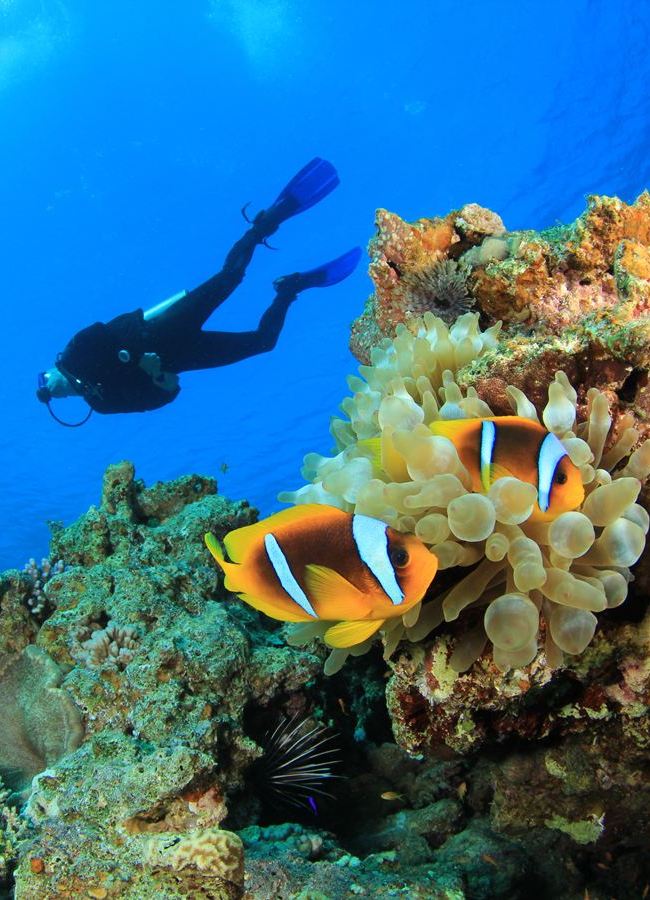
Egypt is a country that has been igniting imagination and tempting with exoticism for thousands of years – majestic pyramids rising above the desert, mysterious tombs in Valley of the Kings and golden beaches lapped by the crystal-clear waters of the Red Sea. This extraordinary place is where the powerful history of the ancient pharaohs meets the pulsating life of the modern Orient, creating a fascinating mosaic of traditions, scents, and sights. A trip to the Nile is a recipe for an unforgettable adventure – from Cairo's museums, home to priceless treasures, to charming resorts like Hurghada, Sharm el-Sheikh, and Marsa Alam. Here, you can admire breathtaking coral reefs, swim among colorful fish and sea turtles, or sail a traditional felucca at sunset. Or perhaps you long to feel the rhythm of the desert? Embark on a safari to experience Bedouin hospitality and spend an evening under the starry sky near windswept rocks.
For anyone dreaming of the perfect combination of blissful relaxation and fascinating sightseeing, a trip to these parts is a perfect choice. When planning your dream vacation on the African coast, you'll quickly discover that choosing Egypt will take on a whole new dimension. A relaxing getaway in a luxurious resort allows you to recharge your batteries and forget about your daily routine. If you dream of year-round sunshine and a complete reset, a vacation in Egypt will meet the expectations of even the most discerning traveler.
Egypt is also a true feast for the senses – from the aromatic spices in local bazaars, through sweet dates and fresh juices, to culinary classics like falafel and oven-baked dishes. Every day spent in this unique place brings new discoveries. Prepare for an exciting journey and let Egypt enchant you with its mystery, eternal sunny weather, and unique oriental charm!
Why is it worth going to Egypt?
Egypt is one of the most popular and sought-after holiday destinations. Besides wide, sandy beaches and warm seas, travelers will also find vibrant metropolises filled with monumental architecture and colorful markets, countless archaeological sites, and the familiar pyramids, temples, statues, and obelisks. Adventure lovers will also appreciate desert safaris, overnight stays in Bedouin settlements, and evening stories by the campfire under a magically starry sky.
Visiting Egypt – what is worth seeing?
Siwa oasis
This oasis, practically cut off from the world, gained recognition in the 80s with the construction of the first paved road. Decades of isolation have preserved its authentic character – a visit to Siwa provides an excellent opportunity to experience the Berber way of life, untouched by globalization. Old Berber customs, clothing, and locally made silver jewelry are still very much alive today, making fantastic souvenirs.
Luxor
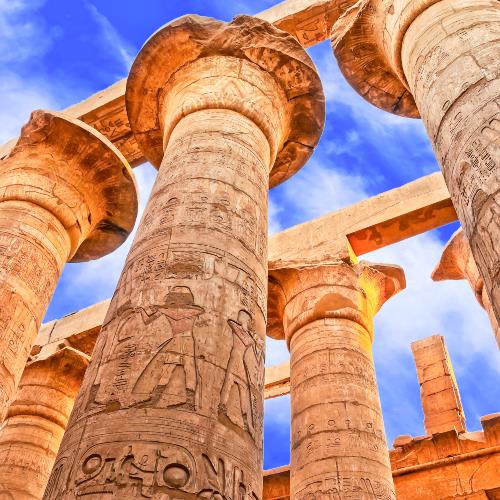
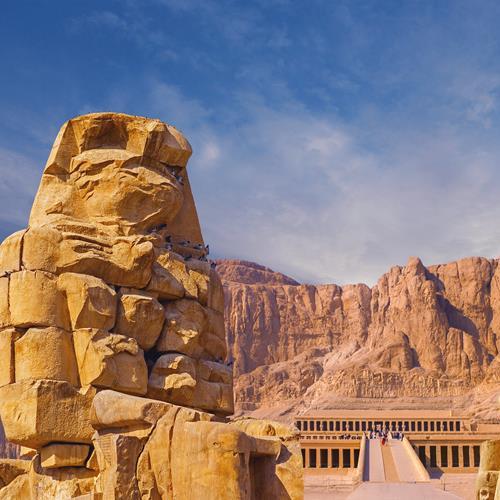
Luxor – a city in southern Egypt on the banks of the Nile, said to be the world's largest open-air museum. Indeed, tourists flocking here have the opportunity to admire the ruins of the former splendor of an ancient civilization. The site of former Thebes – the capital of the pharaohs at the height of their power from the 16th to 11th centuries BC – still holds a wealth of splendor from a distant era. It's easy to marvel at a city where time seems to have stood still, and the power of bygone kings still shines through the wealth of majestic temples, tombs, and monuments.
Kair
Kair, known as the "Mother of the World" or the "City of a Thousand Minarets," is the capital of Egypt and its largest city. The history of Cairo does not date back to antiquity – today's city was founded in 969 by Jawhar al-Sikilli of the Fatimid dynasty, who had previously conquered the territory of present-day Egypt. However, earlier, the Coptic city of Fustat existed on the same site, which grew around a Roman fort, the so-called Babylonian Fortress from the 2nd century AD, located in the present-day Coptic quarter. Today's Cairo is a fascinating place where you can experience both Muslim culture, especially in the historic Islamic quarter, and the traditions of the oldest Christian denomination, the Copts, who also own part of the city with its most valuable monuments – the Coptic quarter. On the outskirts of the city, you will visit the ancient capital of Egypt – Memphis – and the famous Pyramids of Giza. And although the first impression after arriving in crowded and noisy Cairo may be a bit discouraging, we are sure it will be worth it!
Alexandria
Alexandria, known as the "Pearl of the Mediterranean," is the second-largest city in the country, enchanting with a completely different, more Mediterranean atmosphere. Any trip to Egypt exploring the history of Egypt should include this place, as the city was founded in 331 BC by Alexander the Great himself and for centuries was one of the most important centers of learning and culture in the ancient world. It was here that the famous Library of Alexandria was located, as well as one of the Seven Wonders of the World – the lighthouse on the island of Pharos, on whose ruins the 15th-century Citadel of Qaitbay now stands. Today's Alexandria combines a rich Hellenistic, Roman, and Islamic legacy, offering tourists attractions such as the modern Library of Alexandria, a Roman amphitheater, and the atmospheric Corniche promenade. By choosing this destination for your Egyptian vacation, you will discover a fascinating side of the country, where ancient history blends with the sea breeze.
Aswan
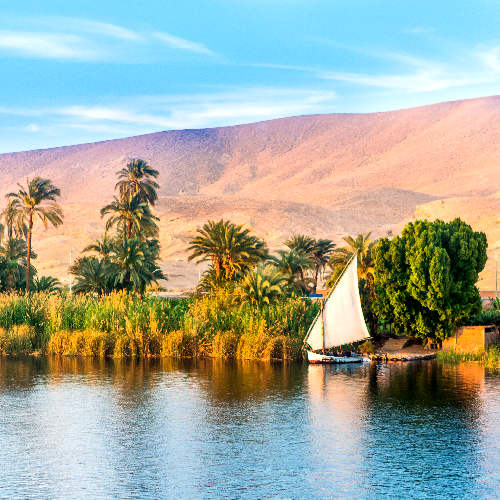
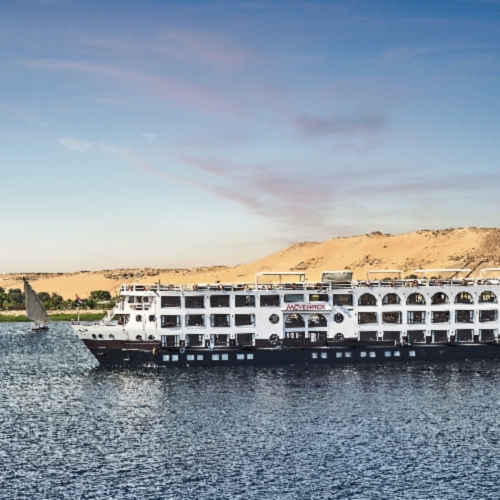
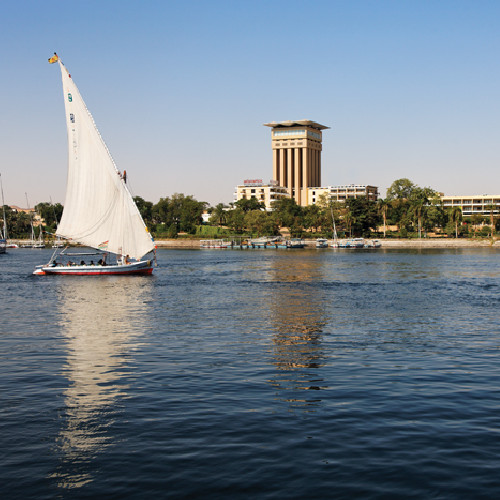
AswanPicturesquely situated on the Nile in the very south of the country, it is one of the most charming places to visit when planning a trip to Egypt. The ancient city of Svenet, which formed the southern border of the country in pharaonic times, has been a gateway to Sub-Saharan Africa and an important trading center for centuries. Today, Aswan is renowned for its unique, more relaxed pace of life, Nubian culture, and breathtaking landscapes, where desert dunes descend directly to the green banks of the river. It is an ideal base for visiting the Temple of Isis on Philae Island, the temple at Abu Simbel, or the famous Aswan Great Dam. By choosing organized trips to Egypt combined with a Nile cruise, in Aswan you will have the opportunity to sail a traditional felucca among the granite islands and experience the hospitality of the Nubian villagers.
El Gouna
El GounaOften called the "Egyptian Venice," El Gouna is a modern and exclusive tourist town located on the Red Sea coast, just a dozen or so kilometers north of Hurghada. Built from scratch in the 90s on a network of artificial lagoons and islands connected by charming bridges, El Gouna is renowned for its luxury hotels, elegant marinas, and environmentally friendly nature, making it a unique destination in the region. If you're planning a relaxing getaway, consider a vacation to Egypt here – El Gouna offers private beaches, ideal conditions for kitesurfing and windsurfing, world-class golf courses, and a wide selection of restaurants and cafes in the vibrant Abu Tig Marina district.
the quseir
the quseir This is one of the oldest towns on the Red Sea, dating back to ancient times, when it functioned under the name Myos Hormos as a key trading port connecting Egypt with India and East Africa. Unlike typical tourist resorts, El Quseir has retained its authentic, intimate character, with traditional architecture, a 16th-century Ottoman fortress, and the oldest mosques in the region. If you're dreaming of a peaceful vacation in Egypt away from the crowds, this town is the perfect choice. Here, you'll find intimate hotels, stunning, almost untouched coral reefs just offshore, and the unique atmosphere of a former port settlement.
Hurghada
HurghadaOriginally a small fishing village founded in the early 20th century, Hurghada is now one of the most important and popular tourist destinations in the world. If you're looking for a classic trip to Egypt, filled with sun, soft sand, and water activities, Hurghada offers several dozen kilometers of sandy coastline dotted with modern hotel complexes. The city is divided into several diverse areas: from the oldest, traditional El Dahar with its local markets, through the modern center of Sakkala with its elegant marina, to the extensive hotel zones. It's an excellent choice for a holiday in Egypt for both families with children and diving and snorkeling enthusiasts, guaranteeing easy access to the most beautiful underwater coral gardens in the Red Sea.
Holidays in Egypt – practical information
The primary currency in Egypt is the Egyptian pound, officially written as EGP, although the symbol LE is also commonly used. Before departing from Poland, it's best to stock up on US dollars or euros. It's crucial to bring cash in smaller denominations, which makes everyday payments much easier. Currency exchange should only be done at reputable locations, such as banks, currency exchange offices, and hotel receptions. While card payments are widely accepted in supermarkets, restaurants, and larger service outlets, and ATM withdrawals are easy (due to fees, it's best to withdraw larger amounts at a time), cash is the only acceptable form of payment in local markets and small shops.
Another technical issue is access to electricity and communications. Egyptian sockets operate at 230V (50Hz), but they use Type C sockets – the British three-pin type – which requires bringing an appropriate adapter. When it comes to staying connected, free Wi-Fi is available in most hotels, restaurants, and tourist spots in the capital and larger cities. However, it's worth purchasing a local SIM card from one of the operators, such as Vodafone, Etisalat, or Mobinil. The card itself costs around 50–100 EGP, while a 5GB data plan with mobile internet costs between 300 and 1000 EGP. It's worth remembering that the most efficient messaging app in Egypt is Viber, while the popular WhatsApp app only allows text messaging, as voice calls are blocked.
Health safety during your stay requires adherence to strict hygiene rules. Tap water is not suitable for consumption as it is desalinated seawater. Only bottled water should be drunk, and only used for brushing teeth and rinsing fresh vegetables and fruit. Ignoring these recommendations or consuming drinks with ice often leads to stomach upsets, known as "Pharaoh's Revenge." It's a good idea to bring appropriate antidiarrheal medication from Poland, and if necessary, visit a local pharmacy and ask for the effective Egyptian remedy Antinal.
Using modern transportation and delivery services is incredibly convenient in Egypt. Uber and the popular Careem app, which also allows for car and bike rentals, operate efficiently in larger cities. The Talabat app is also a very useful tool, allowing for 24-hour ordering of ready-made meals, groceries, and essential medications. Interestingly, although Fridays and Saturdays are public holidays in Egypt, this does not affect the operation of trade and services – shops are open seven days a week, and in the capital and tourist resorts, many operate 24/7.
Although the official language is Arabic (Egyptian Arabic), you'll easily communicate in English in resorts and tourist areas. To round off a successful vacation, it's worth considering unique souvenirs. Popular gifts and souvenirs from Egypt include local sweets, juicy dates, aromatic spices, traditional shisha, and cosmetics, as well as high-quality scarves, shawls, and traditional dresses.
Egypt Attractions - Holiday Guide
Welcome to magical Egypt – a land where ancient times intertwine with modernity, and adventure awaits at every turn! Here, amidst majestic pyramids, mysterious tombs, and the blue waters of the Red Sea, you will discover true travel treasures. Immerse yourself in history, relax on Egyptian beaches, or perhaps become an explorer by felucca into a world full of surprises! Prepare for an unforgettable adventure!
Felucca cruise
A felucca cruise on the Nile is a wonderful, unforgettable adventure! During this journey, you'll discover lesser-known and untouristy attractions of the Nile basin, swim in the river, admire stunning landscapes, and simply enjoy the peace, quiet, and closeness to nature. These boats are powered solely by the wind, so their speed depends on its strength. At any time, you can dock at any time, stop at a coastal beach, have a picnic, visit local villages, and shop for unique souvenirs.
Diving in the Red Sea
Hurghada is known for its famous coral reef, which lies just offshore in the warm Red Sea, creating a unique underwater environment. Stunning coral formations, rainbow-colored shells, and fish shimmering in a thousand colors create a true underwater paradise for divers. Diving during a holiday in Egypt is suitable not only for experienced divers but also for those just starting this incredible adventure. The most popular coral reef sites off the coast of Hurghada are Careless Reef, Gotta Abu Ramada, and Carlsons Corner. Idyllic El Quseir is renowned for its fantastic coral reef and excellent diving and snorkeling conditions. Many sites are accessible directly from the beautiful, sandy beach, so not only experienced divers but also beginners and children can enjoy the riot of coral colors and the schools of fish that inhabit them.
Visiting the Pyramids of Giza
There's a debate about which is Egypt's most magnificent monument – some point to the Valley of the Kings, others vehemently favor Luxor and the Temple of Amun at Karnak, and some timidly hint at St. Catherine's Monastery. However, everyone agrees that there's one place it would be a shame not to visit while on vacation in this extraordinary country – pyramids of GizaThis general name encompasses a complex of numerous structures, including two of the three tallest pyramids in Egypt – the Pyramid of Cheops and the Pyramid of Khafre, the slightly smaller Pyramid of Menkaure, and the famous Great Sphinx. It's a must-see for any visitor to the Nile Delta, with over 14 million visitors annually, making the entire complex one of the most popular tourist sites in the world.
The most famous tombs in the Valley of the Kings
One of the most famous sites in the Valley of the Kings is the tomb of Tutankhamun. Discovered intact in 1992, it brought fame to its owner. It was the first tomb not plundered by grave robbers. As a result, as many as 5 (!) valuable items were discovered here – including a golden throne, jewelry, and amulets, and the famous, ornate mask of Tutankhamun, weighing a staggering 10 kg. The sight of the outer coffin, made of gold, weighing 110 kg, is also awe-inspiring. The tomb of Pharaoh Ramesses III is beautiful, with its exquisitely preserved paintings. Here, you can find inscriptions from ancient Egyptian books depicting the afterlife – the Field of the Yar. The walls of the pharaoh's tomb are covered with polychromes depicting Ramesses III before deities and rows of hieroglyphs. The tomb is distinguished by side chambers containing paintings depicting foreign objects such as pottery, boats and harps.
One of the most recognizable tombs is that of Seti I. Along the corridors there are inscriptions from books and figures of the pharaoh before Egyptian deities. It is not as richly decorated as Tutankhamun's tomb, but it impresses with its complex layout of corridors and rooms. It is also one of the deepest and longest tombs discovered to date.
Beaches in Egypt
Egypt is a paradise for beach lovers. Regardless of the season, Egyptian beaches are bustling with life, offering warm seas and sunny days year-round. Their beauty is captivating, both in popular resorts and in more undiscovered areas. The beaches in Hurghada are sandy and shimmer with shades of gold. Beachgoers appreciate them for their gentle slopes and wide coastline.
Exclusive hotels in Egypt
For those who wish to combine the exploration of ancient monuments with the utmost comfort, we have selected several first-class hotels that will meet the expectations of even the most discerning guests. Sofitel Legend Old Cataract is the jewel in Aswan's crown. The property is a 19th-century palace converted into a luxury hotel, boasting four restaurants and bars serving a variety of cuisines – French, Middle Eastern, and Mediterranean. A blissful poolside retreat with stunning views of the Nile River is offered at the five-star hotel. Mövenpick Aswan ResortThe property is located on the island of Elephantine in the middle of the Nile. A five-star hotel Four Seasons Cairo At The First Residence is located in the center of Giza on the Nile River. It is an ideal base for exploring the surrounding area – it is close to attractions such as the Egyptian Museum, Cairo Tower, Cairo Zoo, and First Mall Cairo. This five-star hotel opened in November 2019. Casa Cook El Gouna This unique blend of timeless elegance and effortless luxury makes it the perfect place to relax and unwind. Surrounded by palm trees and nestled among the dunes, on the seafront, it welcomes adults only.
Unique places in Egypt
Your trip to Egypt won't be complete without visiting some amazing places hidden off the beaten track. Siwa oasis, located deep in the Libyan Desert, delights with its unique Berber culture, palm groves, and the ruins of the ancient Oracle of Amun, once visited by Alexander the Great himself. Walking through the picturesque settlement of Shali, built of kershef—a traditional mixture of clay and salt—you'll feel extraordinary peace, and swimming in the crystal-clear salt lakes will provide an unforgettable experience. If you dream of a magical trip to Egypt, White Desert will enchant you with a surreal landscape of chalk rock formations, which, under the influence of the wind, have taken the shapes of giant mushrooms and abstract sculptures. Spending the night under the starry sky in a traditional Bedouin camp among snow-white rocks is an incredible experience that will remain in your memory forever. Marsa Alam, located on the southern coast of the Red Sea, is a dream destination for nature lovers in Egypt for a peaceful holiday. The famous Abu Dabbab Bay attracts tourists with the opportunity to swim with sea turtles and rare dugongs. Trips to Egypt to this area allow you to discover almost pristine coral reefs. Sinai Peninsula It is worth climbing Mount Sinai (Mount Moses), where, according to tradition, Moses received the Ten Commandments. A night climb culminating in a spectacular sunrise over the rugged, desert peaks and a visit to the oldest functioning monastery of St. Catherine at the foot of the mountain constitute a spiritual and historical experience of the highest order. When planning a relaxing holiday in Egypt, it is also worth visiting the charming DahabThis former Bedouin village has transformed into a Mecca for surfers, divers, and digital nomads from around the world. Its unique, laid-back atmosphere, atmospheric waterfront restaurants, and proximity to the famous Blue Hole make this place sure to steal your heart.
Which region should you choose for your trip to Egypt?
Choosing the right region for your trip to Egypt depends on what you most want from your vacation. The country offers incredible diversity—from the vibrant north, through the monument-studded Nile Valley, to the dreamlike shores of the Red Sea and the stark beauty of the deserts. For history and culture enthusiasts, the best choice will be Nile Valley, encompassing Cairo, Luxor, and Aswan. Cairo is a vibrant metropolis where antiquity, represented by the Pyramids of Giza and the Egyptian Museum, intertwines with rich Muslim and Coptic culture. The Luxor-Aswan region, in turn, is the heart of ancient Egypt—ideal for those who dream of seeing the Valley of the Kings, the monumental Temples of Karnak, or cruising the Nile in a traditional felucca.
If your main goal is to relax in the sun, swim and admire the coral reefs, head to Red Sea RivieraThis region is divided into several distinct zones:
- Hurghada and surroundings (e.g. El Gouna, Makadi Bay): is an excellent option for families with children, water sports enthusiasts and people looking for rich tourist infrastructure, entertainment and wide, sandy beaches.
- Marsa Alam and El Quseir: Located further south, this region is ideal for those seeking peace, nature, and excellent diving. It is renowned for its nearly pristine coral reefs and the possibility of encountering sea turtles and dugongs.
- Sinai Peninsula (Sharm el-Sheikh, Dahab): Sharm el-Sheikh delights with luxurious resorts and great diving spots (e.g. Ras Muhammad National Park), while Dahab attracts digital nomads, surfers and people looking for a relaxed, intimate atmosphere.
For those seeking adventure and unusual experiences, this will be a perfect choice. Oases of the Western Desert (e.g. Siwa or Baharija) and the area White and Black DesertThese regions are ideal for off-roading, overnight stays in Bedouin camps under the starry sky, and experiencing the unique local culture away from mass tourism.
Egypt Travel Offers





Hotels in Egypt






Egypt – places worth seeing




When to go to Egypt?
Egypt has four types of climate: a tropical dry climate in the vast majority of the country, and a Mediterranean climate, which covers a narrow strip of coastline on the Mediterranean Sea (including Alexandria and Port Said). Egypt has two seasons: a mild winter from November to April and a hot summer from May to October. A trip to Egypt can be planned almost all year round, although the months at the turn of winter and summer and summer and winter are not recommended due to large temperature changes, which are most noticeable in desert areas. In summer, the temperature reaches up to 45°C, but the humidity is quite low, making the heat bearable and the so-called wall of heat not felt, especially in Upper Egypt and southern Sinai.


