1 USD – 888,65 CLP
1 EUR – 1041,67 CLP
1 PLN – 246,65 CLP
The current exchange rate can be checked on the NBP website: https://nbp.pl/statystyka-i-powiedziałosc/kursy/tabela-a/

Practical information
Visa information and airport fees
The Travel Agency is not responsible for failure to obtain a visa for the country where the tourist event is held, or for transit countries. Obtaining a visa is 100% the responsibility of the participants of the trip.
Vaccinations
Tips
Food prices
Sample prices:
Meal at an inexpensive restaurant – 5,000–15,000 CLP
Three-course meal in a mid-range restaurant – 25,000–65,000 CLP (for two people)
Local beer 0,5 l – 1,500–5,000 CLP
Imported beer 0,33 l – 2,000–5,500 CLP
A bottle of wine in a restaurant – 15,000–35,000 CLP
Coffee in a café (cappuccino) – 1,500–4,500 CLP
Water 1,5 l (in store) – 800–1,500 CLP
Fruit – 800–2,600 CLP per kg (depending on species and season)
Food
The local cuisine is characterized by a variety of flavors and ingredients, and the country's diverse geography and climate mean that the abundance of agricultural products, fruits and vegetables is impressive. The long coastline means that seafood, unique species of fish, mollusks, crustaceans and algae are readily available throughout the country. Chile is also one of the world's largest wine producers - both this alcohol and pisco, a type of grape brandy, are either an ingredient in many dishes or served with a meal.
The traditional cuisine of northern Chile is rich in protein. Here, they eat the almost unknown tubers of the potato-like tuberous sorrel, as well as llama and alpaca meat. It is especially worth trying asado, or grilled meat; chicharrón de papa, boiled and then fried llama and lamb meat and fat, served with potatoes and salad; or caldillo de congrio, a fish stew with eel and vegetables. On the coast and in the central part of the country, you will taste dishes that combine the flavors of the natives and European immigrants, such as sopa de mariscos, a seafood soup; or palta reina, an avocado stuffed with chicken salad, tuna or shrimp. The dishes of southern Chile are strongly influenced by the cuisine of the Mapuche and Chilote people. Of particular note here is the spice merkén, made from dried and smoked red chilies and coriander, ground into a fine powder, and kollongka, a hen that lays blue eggs. Also try the empanadas, a baked pastry filled with meat, onions and spices, and valdiviano, one of the oldest dishes in Chilean cuisine, named after the conquistador Pedro de Valdivia. This soup of strips of meat, onions and potatoes was one of the dishes eaten by the Spanish conquistadors.
Interesting facts
- Chile is the narrowest and longest country in the world – to get from the north to the south of the country you have to cover a distance of over 6 km, while the distance from the North to the South Pole is 12,7135 km – only twice as long.
- Here is the Atacama Desert, one of the driest places in the world.
- The area around the town of Vicuna is famous for having the clearest sky in the southern hemisphere – the number of stars visible here at night on a clear day is dizzying.
- The wine produced here is among the best in the world, especially in recent years its quality has improved significantly.
- As in other countries located in the southern hemisphere, Chilean seasons are the opposite to those in Europe.
- Chile is a country of incredible geographic diversity – from endless beaches (although we only recommend swimming for swimmers accustomed to cold water) to the soaring peaks of the Andes, from arid deserts to the glaciers of Patagonia – there is plenty to choose from.
- There are as many as 30 national parks in Chile.
- If you think that the oldest mummies in the world are in Egypt, you are wrong! Studies have shown that some remains found in the Arica region date back to 5000 BC and may be up to 7000 years old.
- Araucana hens, native to Chile, lay eggs that are... blue.
- The country's national bird is the condor (although the famous ballad El condor pasa comes from Peru).
- Chile has a town called Villa Las Estrellas in Antarctica. In summer, it has a population of about 120, and in winter, 40 fewer.
- The Swiss writer Erich von Däniken believed that extraterrestrial beings helped the islanders create and transport the mysterious statues on Easter Island.
- When the first Europeans arrived on the island, there were no trees at all – they had all been cut down to build houses, boats and platforms for transporting maoi.
- In the sea of Valparaiso lies the Juan Fernandez archipelago belonging to Chile. It was here that Alexander Selkirk's ship was wrecked in the early 18th century - the sailor who inspired Daniel Defoe to create the famous character of Robinson Crusoe. It is also here that (probably) a huge treasure is hidden, namely gold coins and jewels stolen from the Incas by the Spanish.

Learn more about the country of Chile
History
In 1891, a civil war broke out, resulting in the establishment of a parliamentary republic dominated by Congress, with a weak, powerless president. Over the following years, the country rapidly urbanized, the first trade unions were formed, and oil and gas production led to the enrichment of the southern regions. After World War II, left-wing parties ruled the country, and in 1970, the socialist Salvador Allende became president. Under his leadership, inflation and unemployment fell, wages increased, far-reaching social reforms were implemented that improved the situation of indigenous people, and taxes were reduced. However, his rule was met with fierce opposition from the right-wing opposition, resulting in strikes and the rise of terrorist organizations. In 1973, a coup d'état took place, during which the democratically elected President Allende was killed, and a dictatorial military regime led by Augusto Pinochet took power. Tens of thousands of political opponents were arrested, tortured, or killed, while many more were exiled. Pinochet dissolved Congress and eliminated all opposition, but by the 80s, regular guerrilla warfare had broken out. In 1989, the dictator lost the elections, and Patricio Aylwin Azócar of the opposition coalition Alliance for Democracy became president. In 2006, Michelle Bachelet of the Socialist Party of Chile became the first female president.
Location
Chile boasts a remarkable diversity of terrain: here you'll find snow-white glaciers and salt flats, the driest desert on the planet, and a multitude of forests, lakes, and active volcanoes. The terrain is mountainous—only one-fifth of Chile's surface is flat. The greatest changes in terrain are visible from east to west: this line encompasses the Pacific islands, the coast, the coastal belt with the Cordillera de la Costa, plains and valleys, and the majestic Cordillera de Los Andes. A stark contrast, of course, also stands out when traveling from north to south: the arid Norte Grande and Atacama Desert merge seamlessly into the Mediterranean Central Valley. Farther south, towards the Bio-Bio, Araucanía, and Lake District, the terrain is covered with dense rainforest, dotted with lakes and lagoons. Chile's southernmost point, Patagonia, is truly the end of the world: a dazzling explosion of islands, glaciers, icebergs and snow-capped peaks.
Chile also includes islands in the Pacific Ocean. These include Easter Island, located 3600 km from the coast of the continent, one of the most remote inhabited islands in the world, and the Juan Fernandez archipelago, which includes Robinson Crusoe Island, the place where the famous hero of Daniel Defoe's novel lived.
Due to the length of the country, Chile has four climate zones. While the north of the country has a tropical dry or extremely dry climate, with the lowest temperature of 20°C, the south of the country has a subpolar climate, where the temperature in summer only exceeds a few degrees.
Culture and Religion
The most important field of art is literature, especially poetry: the Nobel Prize (in 1945 and 1971, respectively) was won by two Chilean poets, Gabriela Mistral and Pablo Neruda, while the novels of Isabel Allende, written since the end of the XNUMXth century, have enjoyed enormous popularity not only in Latin America but also in Europe and the United States.

Trip to Chile
Holidays in Chile
Is there a country where you can walk through the world's driest desert one day, and a few days later stand before a glacier or trek among the granite peaks of Patagonia? Chile proves that such a journey is possible. Spanning thousands of kilometers, the country surprises with an extraordinary diversity of landscapes, cultures, and climate. It's this diversity that makes every trip to Chile unique. Whether you dream of an active holiday, tasting world-class wines, observing wildlife, or exploring off-the-beaten-path destinations, Chile offers much more than its narrow shape on the map suggests.
Why is it worth visiting Chile?
Chile is a country that encourages constant discovery. Each region has its own history, traditions, and pace of life, so traveling here feels like traveling between completely different worlds. You can spend a morning among the colonial architecture of Valparaiso, an afternoon at a family-run vineyard, and a few days later, set off on a trek along the deserted trails of Patagonia. Thanks to well-developed infrastructure and an extensive network of transport connections, traveling between remote regions is much easier than you might think. A trip to Chile also offers the opportunity to visit Easter Island – one of the most isolated inhabited places on Earth. For centuries, the monumental moai statues have remained one of the world's greatest archaeological mysteries, and the island's Polynesian culture clearly distinguishes it from the mainland. This place demonstrates just how extraordinary Chilean heritage can be. The sense of freedom that traveling this country offers is also significant. Well-maintained trekking trails, high-quality vineyards, modern cities, small fishing towns, and vast areas almost devoid of civilization mean everyone can create their own unique travel itinerary. This is why Chile so often becomes a destination to which people return not to see more, but to discover its new facets.
Visiting Chile – what is worth seeing?
Chile proves that an extraordinary journey doesn't always mean visiting multiple countries. Traverse this narrow strip of land stretching along the Andes to discover places that are distinct in almost every respect. Colonial cities, desert landscapes, majestic mountains, glaciers, and remote islands create a mosaic of attractions, ensuring that each stage of the journey brings a completely new experience. Alongside spectacular nature, there's a fascinating history, a culture shaped by the influences of indigenous peoples and European settlers, and cities that captivate with their architecture, street art, and exquisite cuisine. It's this diversity that makes visiting Chile incomparable to any other destination.
Santiago
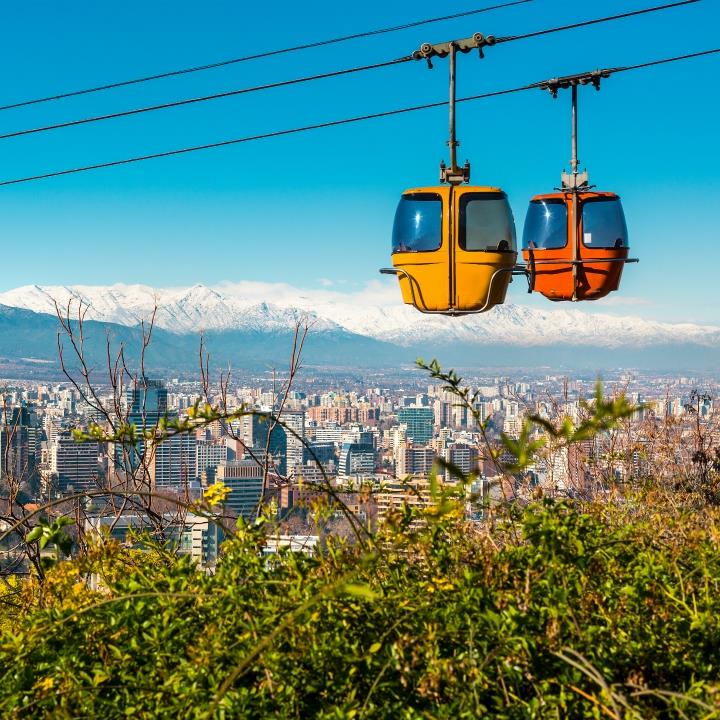
Located at the foot of the Andes Santiago It perfectly blends modernity with history. In the city center, you'll find the colonial Plaza de Armas, an impressive cathedral, and historic palaces reminiscent of Chile's Spanish origins. Also worth visiting are the vibrant districts of Lastarria and Bellavista, famous for their art galleries, restaurants, and murals. San Cristóbal Hill dominates the city, offering panoramic views of the capital and the snow-capped Andes. It's here that the contrast between the modern metropolis and the mighty mountains that surround the city on almost every side is most evident.
Valparaiso
There is no other city in Chile that looks similar. Valparaiso It stretches across dozens of steep hills plunging directly into the Pacific Ocean. Colorful houses, historic UNESCO-listed elevators, and hundreds of murals make the city resemble a vast open-air art gallery. Strolling through the labyrinth of stairs and narrow streets, you'll constantly encounter new viewpoints, small cafés, and local artists' studios. Once one of South America's most important ports, today it captivates with its unique atmosphere and relaxed vibe.
Atacama Desert and San Pedro de Atacama
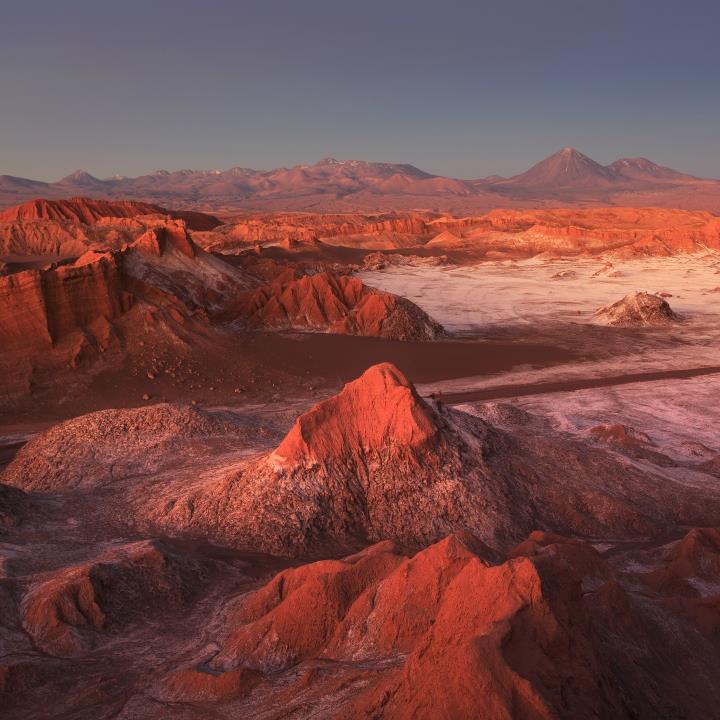
Atacama Desert It's considered the driest place on Earth, yet its landscapes are anything but monotonous. Here, you'll find colorful lagoons inhabited by flamingos, the El Tatio geysers, vast salt pans, and lunar valleys with fanciful rock formations. The base for excursions is the small, clay-built town of San Pedro de Atacama, from which daily expeditions depart into the desert. Thanks to its exceptionally clear air, the region is also among the best in the world for stargazing, which is why some of the most modern astronomical observatories have been built here.
Torres del Paine
In the south of the country, there is a landscape that has been attracting trekking enthusiasts for years. Torres del Paine National Park It's famous for its granite towers rising above turquoise lakes, enormous glaciers, and the vast Patagonian steppes. Hiking the trails, you might spot guanacos, rheas, foxes, and, with a bit of luck, even a puma. This place delights not only with its spectacular views but also with its changeable weather – strong winds, sun, and rain can all occur on the same day, giving the landscapes a completely new character.
Easter Island
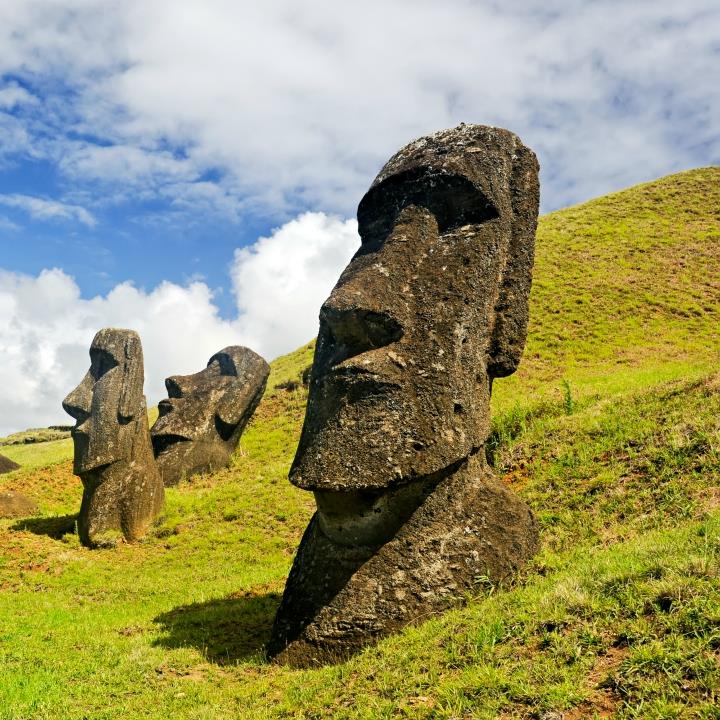
Located over 3500 kilometers from the coast of Chile Easter Island It is one of the most isolated inhabited places in the world. It is here that nearly a thousand monumental moai statues are located, which have remained one of the greatest archaeological enigmas for centuries. The most impressive are the Ahu Tongariki platform, where fifteen stone figures gaze into the island's interior. Besides its mysterious history, it's also worth discovering the Polynesian culture of the Rapa Nui people, the volcanic landscapes, and the palm-fringed beaches, which reveal a completely different side of Chile.
Patagonia and the Carretera Austral
One of the most scenic routes in South America is the Carretera Austral, a road that leads through the fjords, rainforests, glaciers, and turquoise lakes of Chilean Patagonia. It's perfect for those who appreciate traveling away from the crowds and want to discover places where nature still dominates civilization. Along the way, you'll encounter small towns, glaciers, natural hot springs, and some of the most beautiful viewpoints in the entire country. The Carretera Austral isn't just a road; it's one of Chile's greatest attractions in itself, offering a glimpse into a region that has retained its wild character to this day.
Travel to Chile – practical information
Chile is one of the safest countries in South America, but it is worth keeping basic precautionsPickpocketing is common in Santiago, Valparaiso, and other popular tourist destinations, so avoid carrying large sums of cash or valuables. It's best to leave your passport and other important documents in the hotel safe and use copies or photos saved on your phone for daily use. Before leaving, it's also a good idea to make copies of your passport, tickets, and driver's license. Be especially careful in the subway, bus stations, and on long-distance public transport. If you're planning a trip to northern or border regions of the country, choose daytime travel, use official public transport, and avoid wandering off the main routes alone.
The official currency is the Chilean peso (CLP). It's best to bring US dollars issued after 2013 or euros and exchange them locally at exchange offices or banks in larger cities like Santiago. currency exchange You may be required to show your passport. It's worth comparing rates and carefully checking the terms of the transaction – "No commission" doesn't always mean no additional costs, as some exchange offices compensate for the lack of commission with a less favorable rate. Definitely avoid exchanging money on the street or with random people.
In most hotels, restaurants and shops you can pay without any problems card, however, banks may charge fees for foreign transactions. Using multi-currency cards such as Revolut or Wise is a good solution. If you need cash, choose ATMs from reputable banks, including Banco del Estado or Scotiabank. Keep in mind that ATMs may charge fees and have limits on single withdrawals, so it's worth carrying more than one payment card. Cash is especially useful in smaller towns, at markets, local bazaars, and small eateries. Bargaining is widely accepted, especially at markets and among local artisans.
Internet access It's very good in larger cities and popular tourist areas. You can buy a local SIM card at the airport, at operator lounges, or at kiosks, and you'll need your passport to purchase it. The largest operators are Entel, Movistar, and Claro. Purchasing an eSIM card before your departure is also becoming increasingly popular, allowing you to use the internet immediately upon arrival. Free Wi-Fi is usually available in hotels, restaurants, and cafes, but in mountainous and less populated areas, the connection may be slower or temporarily unavailable.
When using taxis Always make sure the driver has turned on the taximeter or agree on a price beforehand. It's safest to use licensed carriers or apps like Uber, Cabify, or DiDi.
Tap water It's safe to drink in most regions of Chile. When buying fruit at local markets, it's a good idea to wash it thoroughly, blanch it in boiling water, and peel it. It's best to choose restaurants based on reviews and observing where locals dine – this is usually the best guarantee of freshness and quality of food. In many towns, especially outside large cities, shops, banks, and some service providers may be closed between 1:00 PM and 2:00 PM for lunch, so it's worth considering this when planning your day.
Pharmacies are easily accessible, especially in larger cities, but it is a good idea to stock up on your own before leaving. first aid kitFever reducers, stomach medications, dehydration medications, waterproof plasters, Steri-Strips for closing minor wounds, healing ointment, and sunscreen with at least SPF 30 will be useful. Due to the presence of mosquitoes in some regions, it's also a good idea to bring insect repellent with a high DEET content. Medications for personal use can be brought in at no extra charge, as long as the quantity is appropriate for the length of your stay and the value doesn't exceed $500. It's best to bring them in their original packaging and carry a medical certificate in English if you take medications on a regular basis.
When packing your suitcase, remember that Chile stretches over 4 kilometers, so the climate can vary dramatically depending on the region. Light clothing for warmer days, as well as warm clothing, sturdy hiking boots, and a raincoat, will be useful.
There are very strict regulations at the border regarding food transportationMost fresh foods, fruits, vegetables, seeds, and animal products are prohibited from entering the country. Upon arrival, you will receive a customs declaration, and you must list all food items being transported—even a single piece of fruit. Failure to declare such items may result in a hefty fine.
Na a souvenir It's worth bringing home handicrafts purchased at local craft markets—wool products, ceramics, textiles, and jewelry made of silver and natural stones. Chilean wines are also popular choices, and when visiting Easter Island, wooden or stone moai figurines are a must. However, remember that many plant and animal products are prohibited from leaving Chile, including unprocessed fruit, seeds, shells, coral, wood, and products made from protected species.
Chile attractions – holiday guide
Trekking among the granite peaks of Patagonia
Chile is one of the world's top destinations for hiking enthusiasts. In Patagonia, trails lead through glacial valleys, across suspension bridges, forests, and viewpoints offering monumental granite peaks and turquoise lakes. The most popular trails in Torres del Paine National Park offer options ranging from short walks to multi-day treks with overnight stays in mountain huts. Hikes take place in almost untouched natural surroundings, and along the way, you'll often encounter guanacos, condors, and Patagonian foxes. It's precisely the opportunity to traverse some of South America's most beautiful mountain trails that makes a trip to Chile an excellent option for those who enjoy an active holiday.
Penguin, whale and sea lion watching
Few countries offer so many opportunities to observe wildlife in their natural habitat. Cruises are available off the Chilean coast, offering opportunities to see humpback whales, blue whales, orcas, and dolphins. Magellanic and Humboldt penguins nest on the islands and rocky shores, and numerous colonies of sea lions rest on the rocks. In Patagonia and the Chiloe region, animals can be observed from a short distance without disturbing their natural rhythms. A trip to Chile is an excellent opportunity to see the South Pacific's incredibly rich fauna and the importance the country places on preserving its ecosystems.
Chilean wine tasting at family-owned vineyards
Chile has long been one of the world's largest wine producers, and its wine valleys can be visited almost year-round. A visit to a family-owned winery is much more than just a tasting. Walking among the rows of vines, you'll learn about the production process, visit the cellars where the wines mature, and discover why the climate between the Andes and the Pacific Ocean is ideal for growing Cabernet Sauvignon, Carmenere, and Sauvignon Blanc. At many wineries, tastings are accompanied by regional cheeses and local specialties, and the meetings are led by the owners or oenologists themselves. This experience allows you to better understand one of Chile's most important culinary traditions.
Night stargazing in the Atacama Desert
Dry air, almost complete cloud cover, and minimal light pollution make the Atacama Desert one of the best places in the world for observing the night sky. It is here that some of the most modern astronomical observatories have been built, used by scientists from around the world. Guided evening tours allow you to gaze through professional telescopes at planets, nebulae, star clusters, and the Milky Way, visible with extraordinary clarity. Even those with no prior interest in astronomy quickly discover why this region of Chile is considered the world capital of space observation.
A cruise among the glaciers and fjords of Chilean Patagonia
Patagonia's beauty is best revealed from the deck of a ship. Cruises take you through narrow fjords, between islands and towering rock faces, all the way to the fronts of glaciers flowing from the Andean ice fields. During the expeditions, you can often hear the unmistakable roar of ice breaking off, observe seals basking on the rocks, and observe numerous seabirds circling the water. Some routes also take you through the Beagle Channel and around Cape Horn, where the world's most important shipping routes have passed for centuries. This experience reveals a completely different side of Chile – the country, viewed from the ocean, seems even more monumental, allowing you to reach places inaccessible by land.
Hotels in Chile
When planning a vacation to Chile, you'll quickly discover that the accommodation options are as diverse as the landscapes of this extraordinary country. Over a distance of over four thousand kilometers, not only the climate and nature change, but also the character of the hotels. In Santiago, modern properties with views of the Andes dominate; in the wine valleys, elegant haciendas surrounded by vineyards await; in the Atacama Desert, luxurious lodges are built harmoniously into the rugged landscape; and in Patagonia, you can stay in intimate hotels designed to emphasize nature as their primary element.
If you dream of discovering Chilean Patagonia, a perfect base would be Hotel Las Torres Patagonia, located in the heart of Torres del Paine National Park. This place is designed for those who want to actively explore the area. The hotel organizes trekking, horseback riding tours, and guided tours, and after returning from the trails, you can relax in the spa area. It has a completely different character. Cape Horn in Punta Arenas. This elegant hotel, located in the historic center of the city, allows you to conveniently explore the former capital of explorers and navigators, while also serving as a great base for cruises on the Strait of Magellan and further travels in Patagonia.
The Atacama Desert is dominated by intimate facilities that fit perfectly into the region's rugged landscape. Altiplanico It was built from natural materials in accordance with the traditions of local communities, allowing you to experience the desert atmosphere even better. A swimming pool and a peaceful garden provide additional relaxation, and the surrounding area invites day trips. It has also retained its traditional character. Don Raul, whose rustic architecture refers to the style of San Pedro de Atacama. In turn, Casa Sorbac resembles a colorful house at the end of the world – an intimate facility surrounded by the desert and pre-Columbian ruins, offering easy access to the greatest attractions of the Atacama.
Hotels in Santiago are equally interesting. Cumbers Lastarria stands out for its modern architecture and location in one of the capital's most cultural districts, full of galleries, restaurants, and theaters. For those who prefer a more tranquil atmosphere, the boutique hotel is an excellent choice. Orly, decorated in the style of an elegant French residence in the Providencia district. Manquehue Las Condes It impresses with its original architectural design and extensive gardens, offering a comfortable stay in a modern part of Santiago.
A unique experience also awaits on Easter Island. Taha Tai offers rustic rooms and bungalows surrounded by tropical vegetation overlooking the Pacific Ocean, while the intimate Easter Island Ecolodge focuses on simplicity, local architecture, and a peaceful atmosphere. Both properties provide a great base for exploring the mysterious moai statues and learning about Rapa Nui culture.
Unique places in Chile
Chile is a country that rewards curiosity. Besides its most famous attractions, it boasts numerous off-the-beaten-path destinations, where spectacular landscapes combine with fascinating history and unique natural phenomena. It's here that you can most easily discover the country's less obvious side—from marble caves and ancient forests to colorful valleys and small islands that have retained their authentic character. If you enjoy straying from the beaten track when traveling, the following places are certainly worth your attention.
Marble Chapels (Capillas de Marmol)
On Lake General Carrera, on the border with Argentina, nature has created one of South America's most extraordinary attractions. The Marble Chapels are a complex of caves, tunnels, and rock pillars carved by water over six thousand years. Their walls shimmer in shades of white, blue, and gray, changing color depending on the time of day and water level. Access to the caves is only possible by small boat or kayak, making the visit even more unique.
Conguillio National Park
This is one of the best places in Chile to see the distinctive Araucaria—trees dating back to the time of the dinosaurs. The park stretches along the foothills of the active Llaima volcano, and its landscape is defined by lava flows, lakes, and vast forests. Scenes from the BBC film were filmed here. Walking with Dinosaurs, because the area is strikingly reminiscent of a prehistoric world. Numerous hiking trails allow you to admire both the volcanic landscapes and the extraordinary vegetation unique to this part of the Andes.
Chiloe Archipelago
Chiloe has developed independently of mainland Chile for centuries, thus retaining its own culture, cuisine, and architecture. The most distinctive feature of the landscape are its wooden churches, a UNESCO World Heritage Site, built without nails by Jesuit and Franciscan missionaries. The island is also famous for its colorful stilt houses, known as stilt houses, and numerous legends about sea monsters, ghosts and sorcerers, which still constitute an important element of local folklore.
Elqui Valley
Hidden among the Andean peaks, the Elqui Valley is renowned for its exceptionally sunny climate and one of the clearest skies in the world. It's here that Chile's national drink, pisco, is produced, and it's also home to numerous astronomical observatories. By day, you can visit family-owned distilleries and stroll through verdant vineyards, while at dusk, you can observe the Milky Way in conditions that are among the best in the world. The valley also attracts yoga, meditation, and wellness enthusiasts who believe in the region's unique microclimate.
Huilo Huilo Nature Reserve
Hidden amid the rainforests of southern Chile lies a reserve reminiscent of a fantasy film. Huilo Huilo is renowned for its impressive waterfalls, suspension bridges, and dense Valdivian forests, considered among the oldest ecosystems in the Southern Hemisphere. The Montana Magica Lodge hotel, whose facade is covered in mosses and ferns, and whose summit is constantly flowing with water like a natural waterfall, has become a distinctive symbol of the region. The reserve is also an important conservation center for endangered species, including the small pudu deer – the world's smallest cervid.
Which region should I choose for my trip to Chile?
Chile stretches over 4300 kilometers from north to south, so each region offers a completely different experience. Choosing a destination depends primarily on what you expect from your trip – active recreation, contact with nature, discovering local culture, or relaxation combined with tasting excellent wine. This immense diversity means that trips to Chile can be planned in many ways, and each one will be completely different.
If you're dreaming of extraordinary landscapes and adventure, the north of the country is your best bet. The Atacama Desert delights with geysers, lagoons teeming with flamingos, vast salt flats, and some of the clearest nights in the world. This region is ideal for those who enjoy active exploration and want to see places unlike any other. The Atacama is best suited for an intense journey, where almost every day brings new views and new experiences.
Central Chile is a great choice for those who want to combine sightseeing with a relaxing getaway. Santiago boasts modern architecture, museums, and excellent restaurants, while nearby the capital are renowned wine valleys, where you can visit family-owned vineyards and sample some of South America's finest wines. A few dozen kilometers away is colorful Valparaíso and the Pacific Ocean coast. This combination means a Chilean vacation can encompass both cultural and historical exploration and a peaceful oceanside retreat.
The south of the country is a completely different world. Patagonia beckons with its monumental mountains, glaciers, fjords, and vast landscapes almost devoid of civilization. This is the perfect region for lovers of trekking, photography, and nature. Hiking in Torres del Paine National Park, cruising the Patagonian fjords, or driving the famous Carretera Austral are among the top attractions in this part of Chile. However, it's worth remembering that the weather here is highly changeable, so the region is best visited from the Chilean spring through autumn.
Easter Island is a category unto itself. Although it lies over 3500 kilometers from the mainland, it administratively belongs to Chile and, for many travelers, becomes a dream come true. Monumental moai statues, Polynesian culture, and volcanic landscapes create an atmosphere completely different from that found on the mainland. This is a destination for those who want to combine sightseeing with discovering one of the world's greatest archaeological mysteries.
When planning a trip to Chile, it's not worth trying to see everything in one trip. A much better solution is to choose one or two regions and dedicate more time to them. This will allow you to not only visit the most important attractions but also better understand the local culture, cuisine, and daily life of the locals. Chile is a country that encourages return visits – each new region reveals a completely different side of this extraordinary corner of South America.
Chile Travel Offers


Hotels in Chile


Chile – places worth seeing


When to go to Chile?
The climate in Chile is exceptionally diverse: from hot and dry in the desert north, through mild and moderate in the centre, especially on the coast, to the harsh subpolar climate in the distant south of Tierra del Fuego and Patagonia. The coldest months are July and August, so this is the time to travel to Chile for skiing enthusiasts, while the warmest are November and February, ideal for visiting Santiago, the central part of the country and Easter Island. The heaviest rainfall occurs from late April to early October. From October to April, however, the days are almost always sunny. The temperature can vary significantly, even within a single day.
The climate is also influenced by the terrain. In some places, such as the coast and the Andes, very little rainfall is recorded, while in the Atacama Desert there are areas where it never rains!
Chile – travel inspirations

Valparaiso Hills
Moon Valley

Atacama Desert
Mysterious Moai Statues on Rapa Nui

Chilean wine

Torres del Paine National Park