
Get inspired and read about your dream trip on the blog
Culture Shock – How to Prepare
September 13, 2017
The Indian receptionist folds her hands as if in prayer at chest level and smiles broadly. The Thai looks angrily when we ruffle the hair of his little child with a friendly gesture. In Bhutan, a monk accidentally bumped into by a woman looks very surprised. He will have to undergo ritual purification, but we are in a given place only for a moment, not realizing how awkwardly we have behaved towards its inhabitants. What is obvious, polite or nice to us may be perceived as impertinent, pretentious or unsophisticated elsewhere. If we do not want to behave or be treated rudely, we must learn the basic rules prevailing in the places we pass on the route of our dream trip. Often a few words in the local language solve many complicated problems. A smile seems to be a universal key to hearts at any latitude. These simple methods are effective at first contact. However, the better we get to know a different culture, the more of its aspects can surprise, surprise and shock us.
Culture shock is a phenomenon known not only to sociologists and cultural anthropologists. Anyone who has spent any length of time in a foreign country has noticed that foreigners have their own rules or customs that we are not used to. Often, this observation is accompanied by pressure to behave like them, even without understanding the reasons for such behavior. Every decision requires thinking twice – what do I want to do, and what would a foreigner do in my place? Later, there is a longing for what is familiar. You have to expect confusion, anxiety, even depression. Some react to this with hostility. Others have the impression that these first symptoms of culture shock will never go away.
Fortunately, culture shock, despite being a difficult experience, has a phased course. First, there is the "honeymoon period" - a time of delight, enchantment, curiosity. This is when we most often make various blunders, and expectations of the new culture are sky-high. Later, the more we observe, the more disoriented we become. We can feel uncertain or even rejected. We notice our otherness and confront it with the otherness of the people we meet. After this phase, there is an attempt to adapt, sometimes laced with disappointment or even hostility. Fear of change, anger at the difficulties of adaptation accompany the idealization of one's own culture. It is worth mentioning the language here - usually in this phase the new language is already well-known, but it still turns out to be insufficient, which results in frustration. Then there is room for habituation and a state of equilibrium. New relationships and skills acquired in the previous phases help in this.
How to deal with culture shock?
There is no way to prepare for shock. By maintaining an open mind, getting to know new people, and honestly asking them questions about culture, it should be easier to go through all the stages. It is worth withholding judgment on any controversial behavior that we observe. Understanding, getting to know instead of passing judgment is a difficult art. Of course, the more we know about people, the easier it is for us to function with them. Culture is not only serious, encyclopedic information, but also cuisine, popular films or songs that you hear on the local radio. It is also worth allowing ourselves to make mistakes. Only with such an approach can we feel natural in a new environment and enter it while still being ourselves.
We can try to minimize culture shock, but there is no way to avoid it. The first example is cuisine. Eating in other countries can be an incredible experience. At the same time, you can spend your entire vacation searching only for those restaurants that serve pizza and pasta. However, far from home, even familiar dishes taste completely different. The point of eating locally is to use available and therefore the freshest ingredients. In Peru Roasted guinea pig on a spit is popular. The shape of this dish arouses emotions. It is eaten in the same way as sausages from a campfire in our country. There is certainly no other place in the world where you can taste such a delicacy. If, during your holiday in Peru, you want to try something local that is not available here, and at the same time is not as extreme as a rodent impaled on a stick, it is worth reaching for... bananas! Fruits taste best in their homeland. Bananas are divided into many species, among which the one we know is not the best at all. Shorter, red, they simply melt in your mouth. In Peru, you simply have to try platano al horno, or platano maduro. Baked bananas are a delicious dessert. It would be a sin not to be tempted.
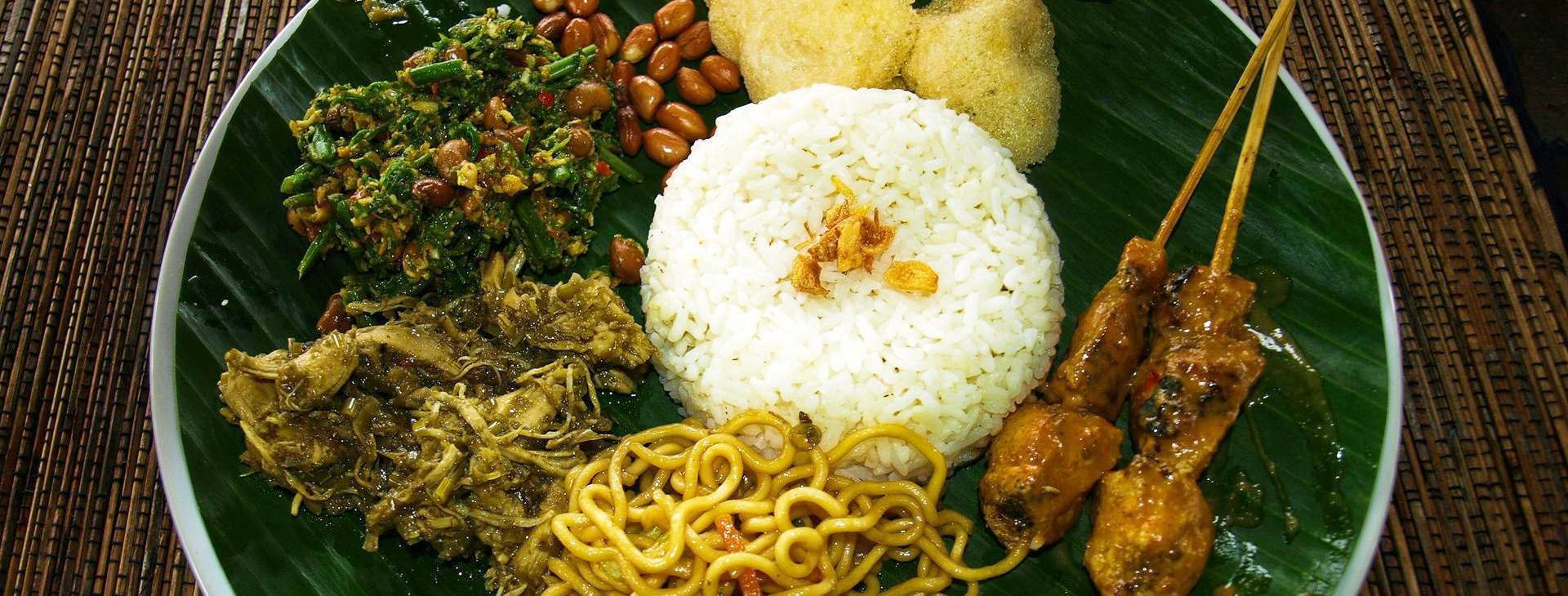
On Asian streets you will see sellers of melons, watermelons, coconuts. If you are afraid of parasites or germs, you will probably want to try these delicacies only at your hosts. If you are staying at a homestay or a farm, i.e. with family, you can count on a warm welcome. It may happen during dinner in Indonesia, that the master of the house will set before you a large portion of the main course, whether it be a roast or a vegetable stew. Not wanting to offend him, you will eat until you are satisfied. It may turn out later that it was a portion for the whole family, not just for you, but the hosts did not warn you about this! The hosts will want to share everything they have. In Georgia, if you compliment a piece of equipment, a jug, a picture on the wall, the host may give it to you, even if it is a valuable family heirloom. Their upbringing requires it. The offer is certainly sincere and polite, but politeness also requires that you refuse. Sometimes visitors unknowingly abuse hospitality. Just because someone offers us something doesn't mean we should take it. Moderation is always the best solution.
In developing countries, we may have a hard time accepting poverty, but developed countries can also surprise us. Being in Singapore we can be surprised by such seemingly obvious matters as cleanliness or law and order. There are even jokes about the fact that you cannot chew gum other than the one prescribed by a doctor, the anti-smoking one. Littering is punished by flogging. Tourists are bound by the rules of this place just as much as citizens. What surprises Poles the most is a certain obedience or humility with which the residents approach the strict rules. No rebellion, full trust that it is good, right and proper. For Singaporeans, it is not even an interesting topic of conversation, it is what it is and that's it. In Singapore, what arouses genuine admiration is contemporary architecture. Even if someone in Poland is skeptical about glass walls and curved forms, when they see world-class projects, they cannot fail to appreciate them. Contact with beauty in this form triggers layers of sensitivity that we would not suspect ourselves of. This is also an expression of the wealth of a given country, wealth devoid of the ostentation we know from our own backyard. This is what is interesting: that it is possible to express the same thing in a completely different way.

It stands out among developed countries Japan. You may have heard of the work ethic there, but the sight of PhD students sleeping on the windowsills of university buildings is surprising. For a Japanese person, retirement is probably the most difficult experience in life. “You must be very tired,” a sentence that you can hear more than once, is the most beautiful compliment in their ears, because it testifies to the effort put in, to hard work. Foreigners believe that the Japanese do not say what they think. This is not entirely true: the Japanese think this way. They believe that work is more important than talent, that effort translates into results, and that no success comes without difficulty. What’s more, a hard-working person is valued more than a talented one. Maybe that’s why these students don’t go home at night, because they want to show that they can live up to the hopes placed in them? Every few years, Japan wins the Nobel Prize in science, so maybe there is something to it.
The situation is completely different on the islands. Central America. If you want to buy a deserted Caribbean island, you should hurry up, there are only a few left. The owners of these pieces of paradise are only there for a few weeks a year. The rest of the time, the island is inhabited by a caretaker - a native. There are other islands, the size of a pitch or a stadium. Life goes on there... that's an exaggeration. People live on them, whose lives pass without desires. It's hard to imagine, hard to describe, you have to experience it. People who authentically sit by the sea, look into the distance, talk or not, and this is the whole time. Every now and then a boat comes with shopping, apart from that nothing happens. Here the word "nothing" takes on a new meaning. It's a level higher than ease, rest, relaxation. Here it turns out that you can be happy without having anything - not even desires.
The total ease on the islands contrasts with the hustle and bustle of the big cities. Sunday drivers who are not used to it may Vietnam feel like a child in the fog. After a few intersections, you already know where the saying “what a Saigon” comes from! The only way to cope on an Asian street is to adapt to the lack of rules. So you can drive as long as you don’t break the line of vehicles. The bravest who pushes in first has the right of way. On a roundabout, scooters can drive against the flow. The horn is the basic way of communicating on the road. Pedestrians are deprived of any privileges. At the same time, drivers who have been trained to drive in such conditions have surprisingly good control over their vehicles and rarely cause collisions. As you can see, you can even get used to the lack of rules.
What arouses great emotions, not only during travel, is sexuality. The inglorious title of the capital of sex tourism goes to, of course, Thailand. In the evenings, you can meet lady-boys there, or rather ostentatiously chosen characters, emphasizing their assets with their outfits. Every other place advertises a so-called "ping-pong show" with a pink neon sign. This show is definitely not for everyone. Thai women on stage show off the strength of their trained vaginal muscles. If we stay longer, we can also come across a "fuck show", or, in short, live porn. Supply is a response to demand. All this happens according to the whims, desires or fancies of tourists.


It's not only morally questionable behavior that is shocking. Indonesia is a Muslim country, while in Bali the inhabitants practice Hinduism. This variety of this religion is specific, exceptional, local. It is the assimilation of different religions into one whole, which does not resemble any of its sources. In some places it seems like Buddhism. At times it brings to mind old, extinct animistic religions. At the same time, the belief in reincarnation characteristic of Hinduism is not particularly strong here. When, living in the shaman's house in Bangla, we accompany him in making an offering of flowers, we feel a moving mysticism and harmony with nature at the same time. It is surprising how much people of different religions can unite in principles and agree that we are all heading in the same direction. A lesson in tolerance in practice.
Meanwhile w China Tolerance is a difficult word. When we come to the Middle Kingdom, we get annoyed – the death penalty, a Nobel Peace Prize winner imprisoned, another Nobel Prize winner (in literature) persecuted. What annoys us the most is what concerns us directly, such as Internet censorship. Using Wi-Fi in a Chinese hotel can be an extreme experience. No Chinese newspaper will print a single link to any website – because the content of that website may be changed to something disloyal. In addition, historical politics, topics that are simply passed over in silence. The Chinese do not want to talk about it. Not only because they want to avoid misunderstandings. They have every right to fear surveillance and denunciations. On the other hand, let us remember that the Chinese have never had as much freedom in history as they do now. We must remember this when we look through English editions of local newspapers and shake our heads in disbelief.


China is also notorious for its smog. When talking about air pollution, we have to mention the Amazon Jungle. We, who wrote papers on the ozone hole and the greenhouse effect in primary school, are surprised by what we can see in Brazil. Clearing forests for cultivation is an extremely unpleasant sight, but it is the conversations with the locals that can astound us. What we call ecological awareness is surprisingly low in the centre of the green lungs of the Earth. Thanks to tourism, the approach is slowly changing. The locals, seeing the interest, are starting to protect these areas themselves. For Brazilians, the Amazon is commonplace, it is obvious, which is why they do not fully understand our delights. It is worth noting that when English amateur ornithologists come to Poland to watch birds over the marshes of Biebrza, they are met with a condescending smile at most.
Yes, v Poland many foreigners also experience surprises. Surprise is common in a shop where the lady always asks for change and, when giving change, says that she will owe a penny. Many tourists look at a nun in surprise. The sight of a nun in full habit and veil, on the street, in the city center, in the middle of the day, is not common for foreigners. A certain Russian explained to his friends why in January our streets are full of billboards encouraging charity - it is about the 1% tax campaign. Another surprise is holy water in the church. Many people do not understand that several hundred people, one after another, without disgust, put their hands in the same water. Our cuisine is shocking, Terry Pratchett could not understand that he was served a dish consisting only of fat (it was lard). Many a man will be terrified when an older woman offers him her hand for a kiss. Kissing hands outside of Poland is considered a downright barbaric custom.
Traveling will bring us many positive surprises. It's a pity that cordiality, openness and the fact that there is always someone ready to help us are still not the standard and are constantly surprising us. When reading about other countries before leaving, it is worth being careful and not falling into stereotypes. Not every Georgian drinks wine by the jug. Not every Vietnamese child is poor. Not every Balinese person will fall in love with a blonde.
Based on our behavior, locals will form an opinion about all those we represent. Let's feel like ambassadors of our own culture and leave behind good memories, not just anecdotes of culture shock. Tourists are always allowed more. We should not abuse this privilege. Respect shown to another culture is a condition for its representatives to let us get closer to them. To get to know them, not just notice them.



October 9, 2026


October 7, 2026

October 6, 2026
October 5, 2026

recent posts
 Honeymoon trip to Portugal October 12, 2026
 Cambodian cuisine – what is worth trying? October 9, 2026
- Safety in Ecuador. Is Ecuador safe? October 9, 2026