
Get inspired and read about your dream trip on the blog
New Zealand Weather and Temperatures – When to Go on Holiday
May 21, 2025
New Zealand is a country that seems to be at the edge of the world on the map. For many travelers, it is a symbol of distant adventure, wilderness and spectacular landscapes. But before you plan a flight to the Antipodes, it is worth understanding one thing: the weather in New Zealand can be capricious and changeable, although it never ceases to be fascinating. It is the climate and seasonality that determine the nature of your trip.
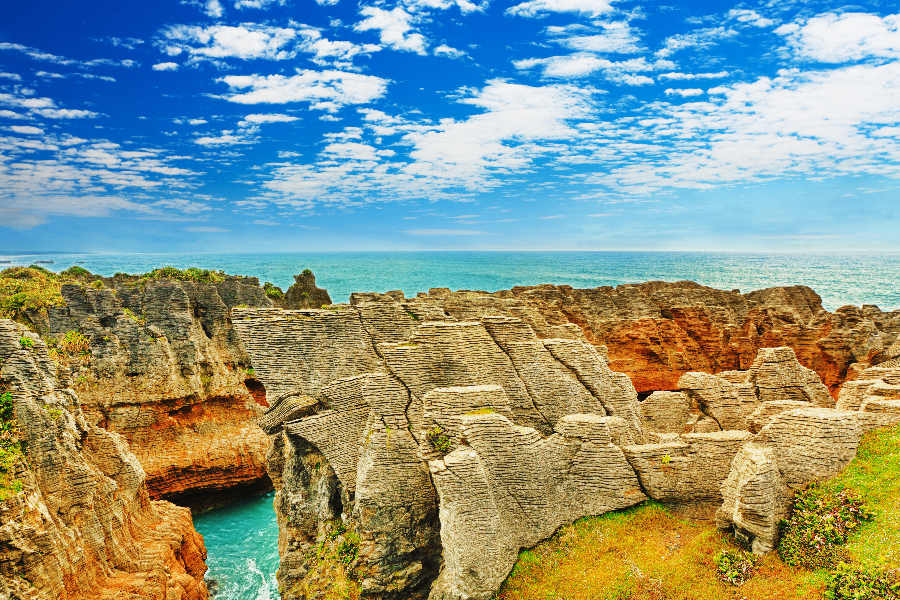
A country that can show you four seasons in one day – literally. And although nature plays first fiddle here, one of the most important elements that a successful trip depends on is… the weather. So before you plan a trek in the Southern Alps, a road trip through the wild South Island or relaxation by the crystal clear Lake Taupo – get to know the rhythm of the seasons in New Zealand. Because this journey begins not with a plane ticket, but with a calendar and a forecast.
New Zealand Climate
Located in the southern hemisphere, New Zealand has a temperate maritime climate, meaning relatively mild temperatures year-round. Unlike Europe, the seasons are reversed: summer is December–February and winter is June–August.
The weather can change rapidly during the day, especially in mountainous regions. A popular saying goes: "four seasons in one day". The climate difference between the islands is clear: the North Island is warmer and wetter, while the South Island is colder and harsher, especially in mountainous regions.
Extreme weather events are rare in New Zealand, but it is worth noting:
- strong winds, especially in the Wellington region,
- downpours and floods in transitional seasons,
- snowfall in mountains and ski areas in winter,
- summer droughts on the North Island,
- sporadic earthquakes that are part of geological activity,

Visiting the land of Hobbits
New Zealand | Auckland, Coromandel Peninsula, Rotorua, Napier, Wellington, Nelson, Paparoa National Park, Westland National Park, Queenstown, Lake Te Anau, Dunedin, Christchurch
What is the weather like in New Zealand
New Zealand Weather December to February
From December to February, New Zealand celebrates summer. Temperatures then average between 20°C and 30°C on the North Island, and around 18–25°C on the South Island. This is also one of the driest times of the year, although it should be remembered that rain is always possible – especially on the western coasts and in Fiordland, where annual rainfall exceeds 6000 mm. In practice, this means: lots of sunshine, warm seas, long days (up to 14 hours of daylight) and ideal conditions for all kinds of outdoor activities.
It's the height of summer, so it's the perfect time for tramping (the local version of trekking), camping, sunbathing and music festivals. In Northland and Bay of Plenty, the beaches are full, in Abel Tasman you can kayak among seals, and in the mountains you can go on day trips in fairly stable weather. In the Central Otago region, the famous wild lupines appear - purple and pink carpets of flowers flooding roadsides, lakes and valleys, although their presence does not always please local environmental authorities. New Year's Eve can be spent dancing at Rhythm & Vines in Gisborne or a little more intimately by the bonfire in Wanaka. In February, Napier goes back in time with the Art Deco Festival, and Splore tempts Aucklanders with a three-day artistic and musical trip in the style of Burning Man. This is also the peak tourist season - it is worth booking accommodation, especially in resorts such as Mt Maunganui, a few months in advance. The summer school holidays (from mid-December to February) cause accommodation prices to rise and campsites and holiday parks fill up with families.
Weather from March to May in New Zealand
March brings relief – both in terms of weather and people. March, April and May bring autumn to New Zealand – mild, colourful and much quieter. Temperatures drop to an average of 15–23°C in the North and 10–20°C in the South. The days get shorter, but the weather is still stable and pleasant, especially in the central regions.
Autumn in New Zealand is a great time for a road trip – less traffic, cheaper accommodation and spectacular landscapes. Routes through Marlborough, Otago or Nelson are not only enchanting with landscapes, but also delicious – it is the season of harvest in vineyards and a time of food festivals. In Marlborough and Hawke's Bay, the season is in full swing – tastings in vineyards take on charm. In Hokitika, you can try fried huhu larvae or manuka honey, in Queenstown drink pinot noir straight from the barrel. The sea is calmer than in summer, so cruises and water sports – paddleboarding, diving or kayaking – are still popular, and without crowds. Mountain trails, such as the Tongariro Crossing, are now easier to overcome – less sun, but also fewer people and fewer mosquitoes. In the Fiordland region – despite the higher humidity – you can count on magical light and lower prices for trips to Milford Sound. This is the perfect time for trip to new zealand in slow style – stopping for every sunset.
New Zealand Weather June to August
June to August is winter – the most diverse season in terms of weather. On the North Island, especially in Auckland or the Bay of Islands, winters are usually mild: average temperatures range from 8 to 15°C. On the South Island, in the mountainous regions, you can expect frosts and snow – for example, in Queenstown the thermometer often shows from -2°C to 10°C. Snowfall occurs mainly in the mountains and foothills, in cities it is sporadic. There is no shortage of sunshine in winter – many regions (e.g. Nelson or Canterbury) record the most cloudless days of the year at this time.
Queenstown and Wanaka are becoming skiing capitals, and Mt Ruapehu reminds us that even a volcano can be a slope. In Rotorua, you can still bathe in hot springs and breathe in the smell of sulphur. Cities, especially Wellington and Christchurch, are quiet and atmospheric then – perfect for city breaks, exhibitions and wine evenings in small bars. Abel Tasman and Coromandel – usually busy in summer – now offer solitude and spectacular walks on empty beaches. Kaikoura is a great whale-watching season – sperm whales and orcas appear regularly, and the clear winter air guarantees perfect visibility.

From North to South
New Zealand | Auckland, Matamata, Rotorua, Christchurch, Mt. Cook, Wanaka, Queenstown, Milford Sound, Franz Josef, Punakaiki, Greymounth, Kaikoura
September - November in New Zealand
September brings spring. While Europe is drowning in grey, New Zealand begins to bloom – literally. Temperatures during this period range from 10 to 20°C. In the north, the days quickly become longer and warmer, in the south – there may still be snow in the mountains, but the valleys are already immersed in green. Lambs appear in the green pastures of Canterbury, in Queenstown, magnolia buds burst against the backdrop of snow-capped peaks, and the botanical gardens in Christchurch explode with colour. By November, everything becomes fresh, lively, slightly damp, but warm.
This is the perfect time for climbing, especially on the lesser-known but beautiful South Island trails – such as the Kepler Track. Food and culture lovers will also be in for a treat: wine festivals and events pop up almost every weekend, from Nelson to the Wairarapa. Feast Marlborough, the Nelson Arts Festival or the Taranaki Garden Festival are all worth a visit. Spring sees less rain than autumn, although the wind – especially in Wellington – can be more severe. This is a time for artistic festivals, local fairs, garden shows and the first outdoor barbecues.
There is no single “best time” to visit New Zealand – each season reveals a different side of the country. Instead of asking when to go, ask: what do you want to experience on your trip?
How to prepare for a trip to New Zealand?
Visa to New Zealand
New Zealand welcomes Polish tourists without the need to apply for a traditional visa, but requires simple online formalities before travel. Anyone planning a short tourist stay must obtain an electronic entry authorization (NZeTA). The application is quick and intuitive, and the resulting authorization is valid for two years, allowing for repeated visits to the Land of the Long White Cloud. The NZeTA application also includes a mandatory IVL tourist tax, which supports the conservation of New Zealand's unique natural environment. In addition to electronic authorization, crossing the border requires a passport valid for at least three months beyond the planned return date and an onward travel ticket.
What to take and pack for your trip to New Zealand?
When packing a suitcase for New Zealand, versatility is key, as the local weather can be unpredictable at any time of year. The key to comfort is dressing in layers, with a waterproof jacket, a warm fleece, and comfortable, well-worn hiking boots essential. Due to the extreme UV radiation, sunscreen with a high SPF, sunglasses, and a hat are essential. It's also worth remembering the extremely strict biosecurity regulations and the requirement to declare hiking equipment and food upon entry. Such thoughtful preparation ensures that changing weather conditions won't disrupt your exploration of New Zealand's spectacular landscapes.
Vaccinations to New Zealand
New Zealand is an exceptionally safe country in terms of health, meaning travelers from Poland don't need any mandatory vaccinations. There's no risk of tropical diseases, and high hygiene standards minimize the risk of infection. Despite the lack of formal requirements, it's worth checking your basic vaccinations before embarking on such a long journey, especially against tetanus, diphtheria, and pertussis, which are important when planning hiking trips. It's also wise to consult with a travel physician, who can recommend additional vaccinations, such as hepatitis A, to fully enjoy exploring the country's spectacular landscapes without a care in the world.
Security in New Zealand
New Zealand is a country where a sense of security is one of its greatest assets, allowing travelers to fully relax and freely explore its charms. An exceptionally low crime rate and friendly locals make it possible to stroll through cities and hit the trails without fear. The greatest challenge for tourists is the power and volatility of nature – sudden weather changes in the mountains, strong ocean currents, and seismic activity are key aspects to watch out for. Proper preparation for hiking and respect for the forces of nature are key to safely experiencing an unforgettable adventure in the Land of the Long White Cloud.


Weather and temperatures in Greece – when to go on holiday?
Older post
Trip to Peru - how to prepare, what is worth knowing?
Newer post
November 12, 2026
November 9, 2026

November 4, 2026

November 2, 2026
October 30, 2026
recent posts
 Honeymoon trip to Morocco November 13, 2026
- International driving license – when is it needed? November 12, 2026
 The most beautiful lakes in Asia – where is it worth going? November 10, 2026