Get inspired and read about your dream trip on the blog
Weather and temperatures in Ecuador – when to go on vacation?
June 22, 2026
Is it possible to freeze in the high mountains, get wet in the tropical jungle, and finally bask in the blazing sun on a sandy beach in a single trip? While this sounds like a scenario for a wild trip around the world, this is precisely the reality in Ecuador – a country where capricious nature knows no bounds and traditional seasons simply don't exist. Its location on the equator, combined with the mighty Andes mountain range and the power of ocean currents, has created a unique mosaic of microclimates that can surprise even the most experienced travelers.
In this article, we'll take you on a fascinating journey through Ecuador's weather anomalies. We'll examine how the calendar months dictate conditions in specific regions and discover why the water temperature in the Galapagos can challenge even the most passionate swimmers. We invite you to read our guide, which will help you perfectly plan your dream trip and pack your backpack for every eventuality!
When is the best time to travel to Ecuador?
The answer to the question of when is the best time to travel to Ecuador is, paradoxically, always and never. Because the country lies on the equator and is divided by the mighty Andes, there are no classic four seasons, and individual regions have their own unique rules. Choosing the perfect time to travel depends entirely on what you plan to do and which places you want to visit.
To optimally plan your trip, it is worth looking at the calendar through the prism of specific geographical regions:
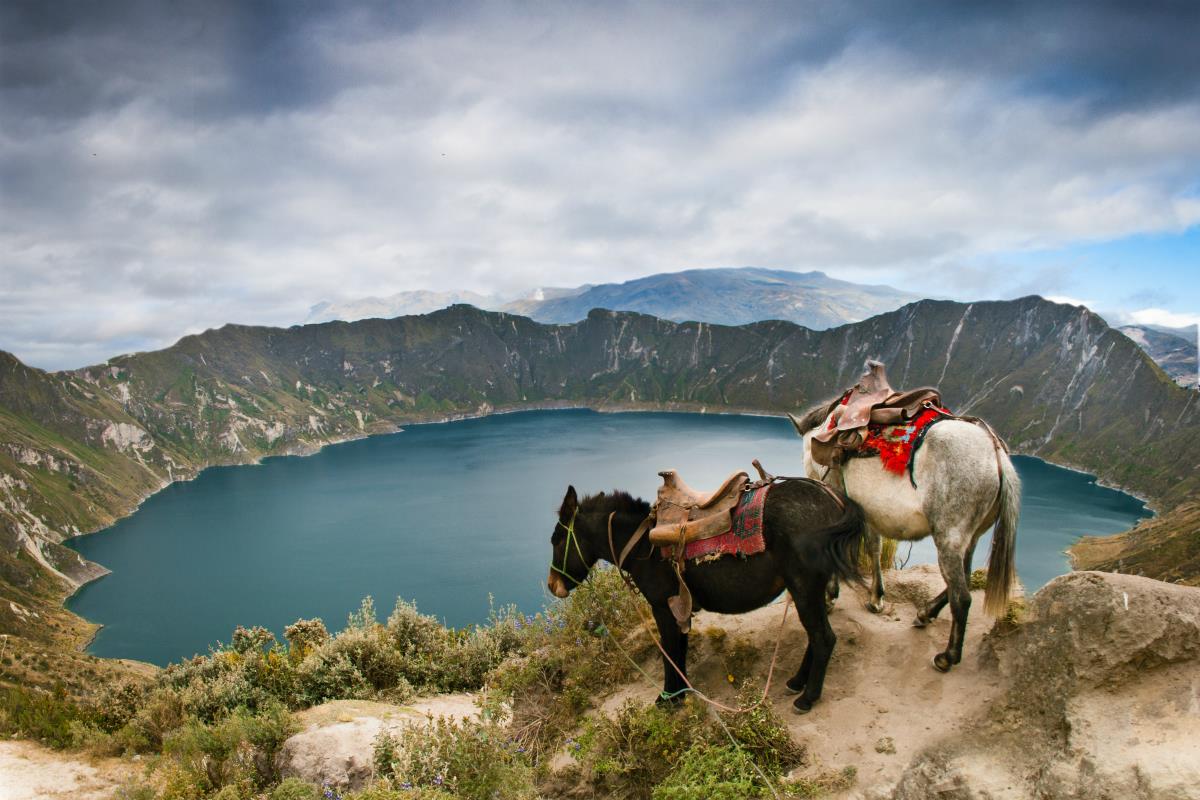
- Andean Sierra (Quito, Cuenca, Otavalo): if your goal is to hike in the mountains, trek around the Quilotoa lagoon or conquer volcanoes, e.g. Cotopaxi, the best time will be from June to SeptemberThis is the Andean "summer"—the time when the days are driest and the skies are cloudless, guaranteeing spectacular views.
- Pacific Coast (Costa): for beach lovers the optimal moment is completely different, because from December to MayAlthough it's technically the rainy season, precipitation typically comes in the form of heavy but short afternoon downpours, quickly followed by sunshine and the highest air and water temperatures of the year. Meanwhile, from June to November, the coast is shrouded in a cool, damp fog, which is unsuitable for swimming but attracts migrating humpback whales to the shores of Puerto López.
- Amazonia (Oriente): In the jungle, rain is considered a permanent resident, so it falls here year-round. However, the months are considered a slightly drier and logistically easier period. from August to DecemberChoosing the rainy season (March–May) also has its advantages – high river levels allow you to kayak into deeper, otherwise inaccessible corners of the forest.
- Galapagos Islands: the archipelago delights at any time, but travelers divide the year into two seasons. From December to May the water is warmer and calmer (ideal for snorkeling) and the weather is sunny. From June to November The ocean is cooled by the Humboldt Current – the water is cooler and more turbulent, but rich in nutrients, which attracts a huge number of sea creatures and birds during the mating season.
If you are planning a dream trip connecting all these regions – from the colonial cities in the Andes, through the wild Amazon, to the unique fauna of the Galapagos – the best compromise will be the so-called transition months, i.e. May and October and NovemberDuring these periods, the weather stabilizes at a tolerable level across most of the country, and an added benefit is reduced tourist traffic. This allows you to avoid both the crowds and the peak prices for accommodation and local flights that dominate in July and August.
Ecuador offers year-round adventures. The abundance of microclimates means that even if one region is experiencing heavy rainfall, a few hours' journey is enough to reach a sunny spot. When choosing a date, it's worth packing clothes for every eventuality—from sunscreen to a warm fleece.
Ecuador – climate
Ecuador, despite its small size, has a very diverse climate, which is mainly due to its geographical location and the powerful mountain range. Andes, which divides the country into distinct zones. Although the name itself suggests its proximity to the equator, suggesting perpetual, monotonous heat, the reality paints a much more complex picture. When planning a trip to this fascinating corner of South America, you'll quickly realize that there is no single universal microclimate for the entire country, and conditions can change dramatically within just a few hours' drive. If you choose Ecuador for your vacation, the weather there will surprise you with its changeability, while offering eternal spring in the high mountains, tropical humidity in the jungle and capricious, foggy mornings on the Pacific coast.
When analyzing the conditions in this country, it is necessary to distinguish four main regions, each of which is governed by its own meteorological laws. The first of these is Costa, or the lowland coast of the Pacific Ocean, where the climate is shaped by two powerful ocean currents: the cold Peruvian Current (Humboldt) and the warm El Niño Current. This causes the rainy season to last from January to May, characterized by high temperatures and intense, though usually short-lived, rainfall, while the rest of the year is cooler, drier, and often shrouded in low clouds. The situation is completely different in Sierra, i.e. in the Andean region, where altitude is the deciding factor. Cities like Quito and Cuenca have a temperate mountain climate, often called "eternal spring," where days are pleasantly warm, while nights can be bitterly cold, requiring a warmer wardrobe.
Moving further east, we descend into the area Oriente, or to the Ecuadorian Amazon, which represents a classic, extremely humid equatorial climate. Here, high temperatures of around 30°C persist year-round, and rainfall is almost daily, fueling the lush growth of one of the most biologically diverse rainforests on our planet. The final, extremely specific region is located a thousand kilometers from the continent. Galapagos IslandsDespite its location on the equator, this archipelago is characterized by a relatively dry climate, with cool trade winds blowing from June to December, bringing cooler water and refreshing air ideal for its unique fauna, while the first half of the year is warmer, with occasional heavy rains.
Weather and temperatures in Ecuador
Ecuador – weather in January
While Europeans associate the beginning of the year with wintry weather, on the equator, this concept takes on a completely different meaning. January in Ecuador is a month of striking climatic contrasts, with the weather depending entirely on the region. If your goal is to escape the European winter and choose Ecuador as your destination, the January weather in individual provinces will surprise you with its extremes, from tropical heat to crisp coolness.
On the lowland beaches of the Costa (Costa), January marks the beginning of the rainy season and the warmest period of the year. The influx of the El Niño Current raises temperatures above 30°C. Days are sunny, with short, heavy downpours in the afternoons that do not interfere with relaxation. The situation is quite different in the Andean Sierra (e.g., Quito), where January marks the height of the rainy season. Sunny mornings give way to afternoon clouds and showers, and temperatures can drop to several degrees after dark. In the Amazon (Oriental), January is paradoxically one of the relatively driest months. Although rain is common in the jungle, precipitation is less frequent, making trekking and animal spotting easier. Meanwhile, in the Galapagos Islands, January ushers in the hot season. The ocean water is at its warmest and most transparent, the sky is cloudless, and occasional rains do not interfere with viewing endemic fauna.
If you're planning a trip to Ecuador in January, you'll encounter a patchwork of weather patterns instead of a single climate. The key to a successful trip is packing clothes for every eventuality—from a swimsuit to a waterproof jacket and a warm fleece.
Ecuador – weather in February
February in Ecuador is a time when weather anomalies and geographic conditions reach their annual peak, offering travelers a full range of atmospheric conditions. If you're planning a vacation during this period and want to understand just how diverse Ecuador can be, February's climate perfectly illustrates this, dividing the country into zones of scorching sun, tropical downpours, and Andean spring.
On the Pacific Coast (Costa), February is the height of the hot and rainy season. Warm ocean currents raise air temperatures above 30°C, and high humidity makes the heat very noticeable. Although afternoon downpours can be heavy, mornings are usually sunny, which still attracts beach lovers. In the Andean Sierra, February brings a continuation of the unpredictable weather – days are cooler (around 15–18°C), mornings can be clear, but afternoons, as is almost traditional, bring rain and fog shrouding the mountain peaks.
In the Amazon, February is characterized by steady, high rainfall, typical of the rainforest, which raises river levels and facilitates exploration of the jungle by kayak. Meanwhile, in the Galapagos Islands, February is the absolute peak of the hot season. Ocean temperatures reach their highest point of the year (often around 26°C), which, combined with nearly cloudless skies, creates ideal conditions for snorkeling and observing the mating rituals of local birds and turtles. Therefore, February requires flexibility and packing clothing for all weather conditions.
Ecuador – weather in March
On the lowland beaches of the Costa, March is statistically the warmest and wettest month of the year. The mercury regularly exceeds 31°C, and high humidity intensifies the feeling of heat. Although intense, tropical downpours occur in the afternoons and at night, mornings are sunny, allowing for the enjoyment of the ocean. The situation is quite different in the Andean Sierra (e.g., Quito), where March brings the height of the rainy season. Here, the days are crisp, with temperatures around 16-18°C, and heavy afternoon rains can dramatically drop temperatures, forcing you to wear a warm jacket.
In the Amazon, March is a time of heavy rainfall, which feeds the Amazon basin and raises river levels to their annual maximum, while temperatures remain consistently around 30°C. Meanwhile, in the Galapagos Islands, March is a dream for anyone who enjoys warm baths. The ocean reaches its highest temperature of the year then, hovering around 26-27°C. Although the islands experience short, heavy rains during this time, the sun shines brightest in March, creating ideal conditions for underwater adventures. Traveling in March requires packing UV filters and a solid supply of rain gear.
Ecuador – weather in April
April is a time of slow transition between seasons, making it an extremely interesting time to travel, and the weather in Ecuador can offer both a tropical sauna and a crisp, cool mountain breeze.
On the sandy coast (Costa), April marks the end of the hot season. Temperatures remain very high, often exceeding 30°C, but the intensity of afternoon downpours begins to slowly decrease towards the end of the month, giving way to longer periods of sunshine. In the Andean Sierra (e.g., Quito and Cuenca), April is still the height of the wet season. Days are moderately warm (around 17°C), and mornings can be sunny, but afternoons regularly bring cloud cover and rain, so an umbrella or waterproof jacket is essential.
In the Amazon, April marks the continuation of humid and hot weather – high river levels favor boat trips deep into the jungle in search of wildlife. Meanwhile, in the Galapagos Islands, April is considered one of the most beautiful months of the year. It's a time of transformation: the ocean water is still very warm and clear (around 25°C), the rains slowly subside, and the islands are covered in lush greenery. Furthermore, it's a time to observe newly hatched sea turtles on the beaches, a travel dream come true for many.
Ecuador – weather in May
May in Ecuador is a unique transitional month, marking a distinct shift in weather patterns in most regions. On the Pacific Coast, May brings welcome relief after months of intense heat and downpours. The hot and humid season draws to a close, with temperatures dropping to a very comfortable 26-28°C (78-82°F), and rain almost entirely giving way to longer periods of sunshine. Meanwhile, in the Andean Sierra, May heralds the end of the oppressive rainy season. After months of rain, the mountain landscape is green and fresh, the days become increasingly drier and clearer, and daytime temperatures stabilize at a pleasant 17-19°C (65-67°F).
May is still humid and hot in the Amazon, but rainfall intensity is slowly decreasing, creating better conditions for jungle hikes while maintaining high river levels, ideal for kayaking. However, May truly shines in the Galapagos. The archipelago enters its dry and cooler season – ocean water begins to cool slightly (around 23–24°C), rains cease, and air clarity is delightful. Additionally, May is when albatrosses and blue-footed boobies nest on the islands, making it a paradise for nature photographers.
Ecuador – weather in June
June in Ecuador marks the official beginning of the Andean summer and a time of significant cooling of the air masses over the ocean, dramatically changing travel conditions compared to previous months. For mountaineering enthusiasts, it's one of the best times of the year to visit the country.
In the Andean Sierra, June brings the welcome dry season. Days become incredibly sunny, and the sky is cloudless and clear, guaranteeing spectacular views of majestic volcanoes like Cotopaxi and ChimborazoDaytime temperatures hover around a comfortable 18-20°C, but the lack of clouds makes nights and mornings very crisp, and frosts can occur in the higher elevations. On the Pacific coast, June marks the beginning of the dry and cooler season. Lower temperatures (around 24-26°C) and a characteristic low-lying fog called drizzle, which limits sunlight, but at the end of the month also heralds the arrival of the first whales to the shores.
In the Amazon, June still brings the regular rainfall typical of the rainforest, although downpours are typically shorter than in spring, and high temperatures favor jungle exploration. Meanwhile, in the Galapagos Islands, June brings distinct changes caused by the strong influence of the cold Humboldt Current. Ocean water cools to around 22°C (70°F), and winds become stronger. Although it's a bit too chilly for sunbathing, June's nutrient-rich waters attract a multitude of marine life, making it a perfect month for diving and observing unusual seabird activity.
Ecuador & Galapagos Tour
Ecuador | Quito, Cotopaxi, Baños, Chimborazo, Riobamba, Nariz del Diablo, Ingaprica, Cuenca, Guayaquil, Galapagos
Ecuador – weather in July
July in Ecuador is the height of the Andean summer and one of the most popular months for travel, when atmospheric conditions in the mountains reach their annual optimum. The country is bustling with life, and the cloudless skies over the Andes attract climbing enthusiasts.
In the Andean Sierra, July is a time of perfect, dry weather. Days are full of sunshine, and the air is clear enough to admire the monumental volcanoes in all their glory. Daytime temperatures are very pleasant (around 19–21°C), but a strong mountain wind intensifies the feeling of chill, and after sunset, the mercury plummets, requiring warm clothing. The climate on the coast (Costa) is completely different. Although this is the dry season, the sun rarely breaks through the thick, low cloud. drizzleTemperatures are moderate (around 24–25°C), and the main attraction of this region is the humpback whales, which arrive en masse in the vicinity of Puerto López in July for the mating season.
In the Amazon, July brings a slight respite from the heaviest downpours – although humidity and temperatures (around 30°C) remain high, rainfall is statistically lower, making jungle hikes easier. In the Galapagos Islands, July is the height of the cool, dry season. The cold Humboldt Current makes the ocean waters fresh (around 21–22°C) and more turbulent, requiring a wetsuit for snorkeling. However, the harsher water conditions are compensated by animal activity on land – it's the mating season for sea lions, giant tortoises, and the spectacular dances of blue-footed boobies.
Ecuador – weather in August
August in Ecuador is the continuation of the Andean summer and one of the driest and windiest months of the year. Due to the peak holiday season and stable weather in the mountains, it is extremely popular with foreign tourists.
In the Andean Sierra, August offers ideal conditions for trekking and climbing. Days are almost entirely sunny and the sky is cloudless, guaranteeing excellent views of the Andean giants. Daytime temperatures hover around 20°C, but strong, dry winds can intensify the chill, and at night, temperatures can drop to near freezing. On the Pacific Coast (Costa), August is the middle of the cooler, dry season. Similar to July, the skies over the beaches are often obscured by gray, low clouds, and temperatures around 24°C (75°F) are not conducive to a typical beach holiday. However, it is an ideal time for an ocean safari and the observation of humpback whales, which are extremely active this month.
In the Amazon, August brings one of the driest weather windows of the year. Although rainfall never completely ceases in the rainforest, it is significantly reduced, lowering river levels, exposing sandy shores, and facilitating caiman and birdwatching. In the Galapagos Islands, August is the coolest month of the year. Air temperatures rarely exceed 24°C, and the ocean water is crisp (around 21°C) and rich in plankton. Strong currents attract huge schools of fish, sharks, and whales, making it the best time for underwater expeditions for experienced divers, despite the need for thicker wetsuits.
Ecuador – weather in September
September in Ecuador is a transitional month, bringing slow changes to the annual climate cycles and heralding the end of the Andean summer. If you choose this time of year for your vacation and Ecuador as your destination, the weather in September will allow for comfortable sightseeing with significantly less tourist traffic than in July or August.
In the Andean Sierra, September marks the end of the dry season. Although mornings are still sunny, the first, long-awaited rain showers begin to arrive in the afternoons towards the end of the month, and daytime temperatures hover around 20°C. On the Pacific Coast (Costa), low fog is slowly giving way to sunshine, and moderate temperatures of around 25°C still allow for viewing the last pods of humpback whales migrating south.
In the Amazon, September brings a gradual increase in rainfall, which raises river levels and facilitates boat navigation deep into the jungle in search of wildlife. In the Galapagos Islands, September is still a cool and dry period – the ocean water is brisk (around 21°C), but it's a great time to admire sea lion pups, which are born en masse on the archipelago's beaches during this period.
Ecuador – weather in October
October in Ecuador marks a complete weather transition and a classic transition month, with most regions of the country officially welcoming the rainy season. For travelers, it's the low season, meaning empty trails in the Andes and a lack of crowds at the most popular attractions.
In the Andean Sierra, October brings a distinct break from the dry weather. Sunny, clear mornings become shorter, and heavy downpours occur almost regularly in the afternoons, purifying the air but also dramatically dropping temperatures from a daily 19°C to just a few degrees after dark. On the Pacific Coast (Costa), the situation is similar – the cool fogs of previous months begin to dissipate, giving way to higher temperatures (around 26–28°C) and the first afternoon rains, heralding the arrival of a tropical summer.
In the Amazon, October marks the return of the wet season. Rainfall becomes more frequent and abundant, significantly raising river levels, opening the way to flooded forests, where pink dolphins and caimans are more easily spotted. Meanwhile, in the Galapagos Islands, October marks the end of the cool season. Although the ocean water still requires a wetsuit for snorkeling (around 22°C), the days are becoming increasingly warmer and sunnier. On land, it's a spectacular time – active sea lion pups dominate the beaches, and you can witness the spectacular courtship displays of blue-footed boobies in the air.
Ecuador – weather in November
November in Ecuador is when the rainy season settles in on the mainland, while on the islands, completely different, more summer-like conditions begin to prevail. For tourists, it's still the low season, tempting them with lower prices and a lack of crowds at key tourist destinations.
In the Andean Sierra, November brings the wet season into full swing. Days follow a consistent pattern: clear, crisp mornings with temperatures reaching 18°C (64°F) are interrupted almost daily by intense afternoon downpours and thunderstorms, followed by a sudden cool down. Meanwhile, in the coastal lowlands, November is a transitional month—the cool fogs disappear for good, giving way to a muggy, tropical atmosphere, with temperatures returning to around 29°C (85°F), and occasional rain showers providing temporary relief from the humid heat.
In the Amazon, November brings heavy rainfall, which feeds the basins of major rivers, raising their levels and allowing exploration of the jungle by motorboat and kayak. However, the Galapagos Islands become a true weather haven in November. This is when the archipelago bids farewell to the cold Humboldt Current – the ocean water begins to warm up pleasantly (reaching around 23–24°C), the sky becomes cloudless, and the sea calms. It's a perfect time for snorkeling with the exceptionally curious young sea lions, who begin learning to swim at this time.
Ecuador – weather in December
December in Ecuador marks the return of the high tourist season, especially in the second half when travelers seek escape from the Northern Hemisphere winter.
On the Pacific Coast (Costa), December officially ushers in beach season and tropical summer. Temperatures soar, regularly exceeding 30°C (86°F), and the ocean water becomes pleasantly warm. Although the first afternoon showers appear, the days are mostly sunny, creating ideal conditions for surfing and relaxation. The situation is quite different in the Andean Sierra, where December brings a brief window of sunshine. Although it's the rainy season, rainfall this month tends to be slightly less frequent than in November, and sunny mornings with temperatures around 18°C (66°F) allow for comfortable strolls through colonial towns before the sky clouds over in the afternoon.
In the Amazon, December is the height of equatorial summer – high temperatures combine with regular, heavy rainfall, fueling jungle life and maintaining high river levels. Meanwhile, in the Galapagos Islands, December ushers in the absolutely most beautiful warm season. Cold currents recede, the ocean calms and warms to around 24–25°C, and the sky turns blue. A fascinating natural spectacle begins on the islands: giant tortoises complete their breeding season, and on the verdant lands, the first mating of endemic marine iguanas can be observed.
Water temperature in Ecuador
Ecuador's location on the equator would suggest that the Pacific Ocean surrounding it is consistently hot year-round. However, the reality is much more complex, and the key to understanding water temperatures in the country lies not so much in latitude but in the powerful interplay of ocean currents. These currents cause water temperatures on Ecuador's continental coast and on the Galapagos archipelago, a thousand kilometers away, to operate under completely different conditions, offering dramatically different conditions for both local wildlife and tourists visiting these regions.
The continental coast of Ecuador, known as the Costa region, is characterized by relatively warm water, typical of the tropical zone, although its parameters strongly depend on the season. In the months from December to May, when the region is influenced by the warm El Niño Current, the Pacific Ocean reaches its annual maximum, warming to a very pleasant 25-27°C. It's a paradise for surfers and classic beachgoers. However, the situation changes in the second half of the year – from June to November – when the powerful, cold Peruvian (Humboldt) Current, flowing from the south, takes over. During this period, the water temperature along the coast drops to around 22-23°C. While this temperature is still bearable for swimming for many people, the water becomes more turbulent, and the air above it becomes cooler and more humid.
However, the real phenomenon on a global scale in this respect is Galapagos IslandsThis archipelago lies at the intersection of three powerful ocean currents: the warm Gulf of Panama Current, the cold Humboldt Current, and the deep-sea, icy Cromwell Current. This hydrographic mosaic causes water temperatures in the Galapagos to vary dramatically not only from month to month, but even between individual islands at the same time. From January to May The water around the islands is the warmest and clearest, ranging from 24 to 26°C, which creates ideal conditions for snorkeling without a wetsuit.
In turn, from June to December The Humboldt Current and the upwelling of cold, deep waters by the Cromwell Current cause the ocean around the Galapagos Islands to cool rapidly, reaching a mere 19–22°C (65–72°F). In some bays on the western islands, such as Isabela and Fernandina, temperatures can drop to as low as 10 degrees Celsius. While this may require people to don thick neoprene wetsuits, it's a time of greatest prosperity for the ecosystem. The cold water is incredibly rich in oxygen and nutrients, attracting vast quantities of plankton, fish, and sharks, and supporting the existence of the only equatorial penguins in the Northern Hemisphere.
Ecuador is a country that defies the rigid rules of the calendar. While the capricious weather on the equator can pose a challenge for travelers, it's precisely this extraordinary climatic diversity that lends it its greatest charm. The key to a successful trip, then, isn't finding the perfect month for the entire country, but rather being flexible and packing wisely—from a thick fleece for Andean nights to a lightweight wetsuit for snorkeling in the Galapagos. Regardless of when you decide to travel, Ecuador always offers a region where nature is at its most beautiful, sunny best.

Best attractions in Bhutan – what is worth seeing?
Older post
Best attractions in Laos – what is worth seeing?
Newer post
October 9, 2026
October 7, 2026

October 6, 2026
October 5, 2026
recent posts
 Cambodian cuisine – what is worth trying? October 9, 2026
- Safety in Ecuador. Is Ecuador safe? October 9, 2026