Get inspired and read about your dream trip on the blog
Travel to Costa Rica – how to prepare?
March 27, 2025
Na holidays to Costa Rica are headed by all those who want to experience the earthly equivalent of the Garden of Eden, even for a moment. This highland and mountainous region stretching between the Pacific Ocean and the Caribbean Sea is full of lush forests, a diverse animal world and active volcanoes, which an observant traveler will certainly notice on the horizon. There are over 500 thousand species of animals here, which is 4% of the entire biodiversity of our globe. Christopher Columbus, when he reached the shores of this land, named it Costa Rica (Rich Country) thinking about the gold deposits that were supposed to be located here. Today, this name can be associated with biodiversity, which has become the driving force of the tourism industry throughout the country. However, there are no large hotels with numerous swimming pools, discos and restaurants here. The inhabitants of this country value living in harmony with nature, therefore the vast majority of accommodation facilities do not interfere with the surroundings, but create a coherent whole with it. What's more, Costa Rica is the safest country in Central America and for this reason it is recommended for holidays not only for experienced but also for beginner travelers, who will be able to gain valuable experience here without unnecessary worries. Below are a few tips to help you prepare for this extraordinary holiday adventure.
Self drive – treasures of untouched Costa Rica
Costa Rica Self Drive – Treasures of Untouched Costa Rica | Alajuela, Arenal, Monteverde, Pacific Coast, San Jose
Costa Rica is like one big national park. Its natural wealth, biodiversity, dense tropical forests create a unique kingdom of exotic nature. During this trip to Costa Rica, you will travel the country independently, in a 4×4 car. Don't worry - Costa Rica is the safest country in Latin America. The national motto is "pura vida", translated - a beautiful, happy and carefree life. Equipped with our Escape Book, you will discover a whole wealth of various attractions: natural, sports, culinary, historical and many, many others.
When to go to Costa Rica?
Costa Rica is located in the equatorial climate zone. For this reason, the four seasons known to us in Europe do not exist in that region, and the air temperature remains at a similar, high level throughout the year. However, heavy rains, thanks to which Costa Rica abounds in such diverse and impressive vegetation, may be an obstacle to travel. The so-called rainy season lasts from May to November. During this time, there is very heavy rainfall, the intensity of which depends on the region. It happens that it leads to local flooding and communication difficulties, which may make reaching some attractive tourist regions impossible. For this reason, we recommend going to trip to costa rica in the so-called dry season, lasting from December to April, when rainfall is already low, so tourists can enjoy not only a holiday on the two Costa Rican coasts, but also explore the highland and mountain regions located in the interior of the country, which abound in numerous national parks. It is also worth remembering that the temperature and weather in Costa Rica the terrain has a significant influence. In the highland and mountainous regions of this country, even in the dry season, it is much colder than on the coast, and the temperature differences can reach up to 15 degrees Celsius.

Swimming with dolphins is one of the attractions that you can enjoy on the coast
Visa to Costa Rica
Polish citizens traveling to trip to Costa Rica for a period of no more than 90 days, they do not need a visa. However, this does not mean that all you need to cross the border is a passport valid for at least the next 6 months - Costa Rican border services may, in accordance with applicable law, ask for confirmation of the length of the trip (purchased return ticket) and possession of the appropriate amount of financial resources (account statement, cash). In practice, however, such a request is extremely rare. Many people may be surprised by the fact that for years, before returning to their home country by air, tourists were required to pay the so-called Exit Tax, i.e. a tax of USD 29, but now this amount is already included in the price of the plane ticket. In the case of crossing the border by land, the tax is a dozen or so dollars. Payments can be made both in cash and by card.
Relaxation in the wilderness
Costa Rica & Panama – Relax in the Wild | Panama City, Bocas del Toro, Arenal Volcano, Monteverde, Manuel Antonio
There is no need to convince anyone that the beauty of Costa Rica's nature is breathtaking. During this journey, you will discover many more Central American wonders. The streets of old Panama, steeped in history and colonial charm, the majestic Arenal volcano, sun-drenched tropical beaches, wild animals and the most beautiful national park in the world - traveling with us through Panama and Costa Rica, you will discover the most beautiful faces of Central America.
Vaccinations before traveling to Costa Rica
No mandatory vaccinations are required for people traveling to Costa Rica from Poland. However, medical personnel and Polish authorities recommend vaccinations or a booster dose against: diphtheria, tetanus, whooping cough, hepatitis A and B, typhoid fever and rabies. Before leaving, it is also worth checking the supplies in the first aid kit and replenishing it with any missing repellents, antidiarrheal, antipyretic and painkillers, disinfectants and dressings.
What to take on a trip to Costa Rica
This country offers tourists many opportunities to spend their free time during their vacation. For this reason, before going on vacation to Costa Rica, remember to prepare your luggage appropriately. First of all, you should take clothes that will be useful during hiking into the rainforests: comfortable shoes, a raincoat, pants and long-sleeved shirts (effective protection against insects) and the necessary accessories: a backpack, a flashlight (headlamp), a penknife, numerous repellents and means for eliminating annoying bites (lime), because these are much more expensive there than in Poland. Also, make sure that you will receive a mosquito net at the hotel. Otherwise, it is worth buying one before leaving for Costa Rica. You can't forget about the heavenly beaches, where you will definitely need a swimsuit, beach towel, sunglasses, a hat, flip-flops, sandals and protective measures in the form of UV cream filters - you should definitely stock up on a face cream with SPF 50. Before arrival, it is also worth downloading a map to your phone, because the signal in the rainforests is not always good. A good power bank will be indispensable, especially during all-day hiking trips. Costa Rica has very high air humidity, so it is recommended to stock up on quick-drying towels and ziplock bags, which will help protect documents from moisture. Your holiday luggage should not lack an adapter for an electrical outlet, because in Costa Rica, American-type sockets with two pins are used, as well as a waterproof phone case and a flat fanny pack (pouch) in which you can hide the necessary cash and documents. Also consider installing a mobile app with a Polish-Spanish dictionary, because Central Americans, especially off the tourist trail, do not speak English fluently. When you get there, before you start your trip, buy a SIM card with internet access. Claro has a good offer, offering 18 GB of internet for PLN 120. Wi-Fi is generally available, but only in tourist spots where there are many hotels and restaurants.

Toucan - one of the symbols of Costa Rica
Safety in Costa Rica
Costa Rica is considered the safest country in Central America. However, it is important to remember that there are numerous thefts, especially pickpocket thefts, throughout the region. For this reason, it is advisable to be extra careful when traveling to Costa Rica. The least safe place, especially after dark, is of course the capital of this country – San Jose. Tourists are strongly advised against walking along poorly lit side streets and in suspicious areas. A good custom among holidaymakers visiting Latin America is to store valuables in hotel safes and to carry only necessary documents and money in a flat fanny pack placed under the shirt. You should also leave your passport at the hotel and use only a photo or scan of it. You should not flaunt expensive jewellery, electronic equipment or other items that could arouse the interest of potential criminals. When visiting green areas and admiring animals, remember not to feed or touch them under any circumstances to avoid being bitten and contracting rabies. This rule applies not only to wild animals, but also to domestic animals such as dogs and cats.
The best way to explore Costa Rica is to rent a car and explore on your own. For this reason, it is important to familiarize yourself with the safety rules on the roads here. In addition to the general rules, such as: no driving under the influence of alcohol, mandatory seat belts, no crossing double solid lines, no using a phone while driving or speeding, which can result in severe penalties of up to USD 500 and imprisonment, there are also other rules and regulations. Driving on the beach is strictly prohibited, and from 18:00 PM to 6:00 AM you must have your headlights on. In addition, you should be especially careful when passing or overtaking other vehicles, because many roads, especially the less traveled ones, are narrow and winding, often in poor condition. During your vacation in Costa Rica, due to the poor lighting and the risk of collisions with wild animals, you should avoid driving at night. You should also avoid walking on the beach and in the forests after dark due to the possibility of uncontrolled encounters with wild animals. The exception here are holiday trips with a specialized guide.

Whale watching can be an interesting experience.
What to eat when traveling in Costa Rica
Costa Rican cuisine is similar to that of other Latin American countries. The vast majority of dishes here are based on rice, red and black beans, as well as corn and cornmeal, and the whole is enriched by fruits and vegetables, which are plentiful thanks to Costa Rica's location in the equatorial climate zone. Different types of meat are used to prepare some dishes, usually fish, seafood and the ubiquitous poultry.
The most popular dish in the country and neighboring countries, which is definitely worth trying during a trip to Costa Rica, is gallo pinto (painted rooster). It consists of rice mixed with black or red beans, onion, garlic, red peppers and cilantro. The meal is served with scrambled eggs and patacones, which are fried plantains, a local type of banana, sometimes with sausage. Gallo pinto is most often eaten for breakfast, but is often an element of other meals and appears even several times a day. Another dish, this time served for a midday lunch, is casado (small chicken), which is again rice and beans, but accompanied not only by patacones, but also by meat. Depending on your predisposition, it is served with beef, poultry or fish. Both dishes are easiest to order at popular milk bars, called sodas in Costa Rica. Among all the other dishes present in Costa Rica, a distant relative of Polish pierogi deserves special attention – empanadas, a corn flour-based pastry stuffed with various types of meats, cold cuts, cheeses and beans. A significant difference between the two dishes is the method of preparation – Costa Rican pierogi are not boiled, but fried. It is also worth getting to know the local street food offer. The most popular quick dish here is vigorones, or impressive-looking chicharrones (pork skin chips), pieces of juicy meat, lime, vegetables in spicy vinegar, hot peppers and yucca served on a banana leaf. This proposal is an ideal solution for a quick meal while traveling in Costa Rica.
If you feel thirsty, you can freely drink Costa Rican tap water, because it is safe to drink in most places. Therefore, if you buy a bottle with a filter, you can safely use it. Costa Ricans do not buy bottled water, which is intended rather for tourists, and for this reason, it may be difficult to buy it outside the main trail. It is also worth taking advantage of the wide range of fresh, local frescos, i.e. juices and lemonades, including pineapple, watermelon, tamarind, papaya or guanabana. A very popular drink that enjoys great interest among tourists spending their holidays in Costa Rica is water from fresh, split coconut, which is drunk through a straw - pipa fria. Don't forget about Costa Rican coffee, which grows on the slopes of the local volcanoes and is considered one of the best in the world.
The selection of local alcohols in Costa Rica is not very wide. Among the most important drinks that you should try are Vino de Coyol, which is wine made from palm juice, Cafe Rica coffee liqueur and guaro, a liqueur made from sugar cane juice. In addition, Rompope, a local eggnog, is also interesting in taste. In Costa Rica, the prices of both alcohol and food are higher than in Poland. A cheaper offer will certainly be available in sodas milk bars and off the main tourist trail. VAT and a tip for waiter service are usually added to the prices presented in the menu.

Coffee is one of Costa Rica's unique specialties.
Costa Rica's Top Attractions
Poas Volcano and Alajuela
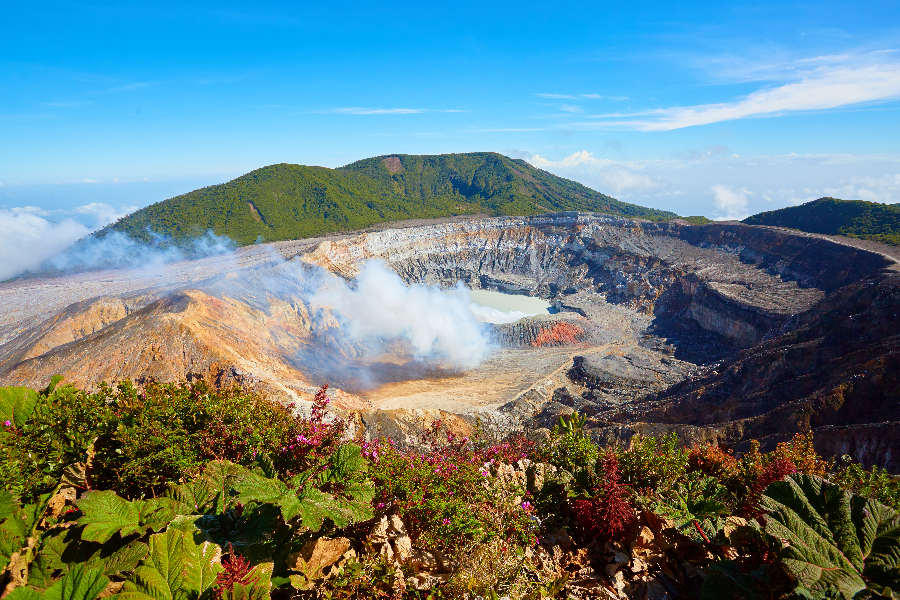
It is not without reason that this volcano is one of the most recognizable and most frequently visited by travelers in the whole of Central America. It arouses curiosity not only with its constant activity, but also with the size of the crater, which is 320 meters high and 1600 meters in diameter, making it one of the largest in the world. Two of the three craters are filled with lakes created from rainwater, which under the influence of high temperature changes its state of matter into steam and effectively prevents you from seeing the azure body of water, however, if you are lucky during your trip to Costa Rica and the wind blows, it may dispel the fog for a moment. Paths located among dense forest areas, plantations of the best Costa Rican coffee and mountain strawberries lead to the very top. At the foot of the volcano, a small town located in the middle of wilderness has developed - Alajuela, which is a shelter for travelers tired of hiking.

Poas Volcano
Arenal volcano and La Fortuna
The Arenal volcano looming on the horizon is just over 1600 metres above sea level. The flawless, almost cinematic shape of this mountain arouses general curiosity, which translates into the number of people traversing the trails that wind around it, although the volcano's summit itself remains inaccessible to tourists. Due to its constant activity, it also attracts many researchers and adrenaline junkies. The national park itself, which includes the crater and its surroundings, offers not only fantastic views, but also a unique attraction in the form of hot springs, which are heated by volcanic heat. The water temperature, depending on the location, ranges from about 30 to even 40 degrees Celsius. Relaxing in such conditions is an amazing and unforgettable experience. In addition, near the volcano there is the La Fortuna waterfall, measuring over 70 metres, which can be admired both from the viewing terrace and by descending to its foot on a hiking trail. If you take a towel and swimsuit with you, you can swim among the rocks against which the streams of water crash. While on holiday in Costa Rica, you can also enjoy numerous sports in this area, including horseback riding, rafting and ziplining.

Arenal volcano
Manuel Antonio National Park
This place was appreciated for its diversity by Forbes magazine in 2011, when it was recognized as one of the twelve most beautiful national parks in the world. The diversity of both plants and animals that can be found here is astonishing. The sounds of wildlife, countless species of colorful birds within reach, agile capuchins that follow tourists and are quick to steal any food, sloths that seem to smile while walking on hanging branches, ruffled iguanas and tiny crabs... But that's not all - on the coast of the park you can find a beautiful coral reef, inhabited by many exotic species of fish, and during the mating season you can even see dolphins and whales. Snorkeling in this place will be a great idea. The beaches in the park are among the most beautiful in Costa Rica, so it is worth combining exploring the wilderness with a well-deserved rest, especially since the hiking trails in the park are not very demanding and the average traveler can easily traverse them in sandals or even flip-flops. The only thing to watch out for is the raccoons that explore the local coast in search of delicacies brought by tourists.

Manuel Antonio National Park
Monteverde
The Monteverde Cloud Forest Reserve (Green Hill) is a must-see when traveling in Costa Rica. Of all the forests in the world, only one percent is similar to it – these are cloud or fog forests, and their name is related to the phenomenon of water vapor condensation, which gives the impression of a constant fog hanging over the treetops. This phenomenon is most noticeable during the transition period between the rainy and dry seasons, i.e. between November and January, when the most clouds form. However, this is not the only reason to visit this place. It is estimated that there are about 2500 species of plants in the forest covering Monteverde, of which as many as 800 are epiphytes, i.e. plants growing on other plants. In addition, there are about 450 species of birds that constantly greet tourists with a bird concert. The park's biggest attractions, and the best ways to admire the local flora and fauna, are sky walks, i.e. walks on suspension bridges in the treetops, thanks to which you can observe the surrounding wildlife, and ziplines, i.e. zip-lines allowing you to ride above the treetops.

Monteverde Cloud Forest
Cahuita National Park
When visiting Costa Rica, don't forget about the Cahuita National Park, located on the Caribbean Sea, near the border with Panama. It was created to protect the local coral reef, which consists of 35 different species of corals, among which live hundreds of tropical fish. Over 90% of the park's surface is marine, while the rest of it is dedicated to animal species present throughout Costa Rica, including: parrots, capuchins, sloths, raccoons, various species of colorful snakes, sea turtles and caimans.

Cahuita National Park delights with its rich fauna
Tortuguero National Park
Tortuguero National Park, located on the coast of the Caribbean Sea, has no road infrastructure, and exploration of the area is only possible by long, motorized boats moving through numerous river channels. This place is a flood plain covered with swampy jungles, which was created by the connection of river deltas with their meandering beds. However, the protected area was established here not only to protect the unique flora, but above all because of the sea turtles: hawksbill, leatherback and green. The latter were close to extinction due to numerous hunts and plundering of their eggs motivated by alleged aphrodisiac effects. During the day, you can observe females laying eggs on the beach, but during a trip to Costa Rica we recommend visiting this place after dark (this is only possible under the care of a guide), when the turtles return from the sea to dig nests. With a bit of luck, you will also be able to see the youngest individuals racing towards the sea waves, which occurs immediately after they hatch from their eggs.

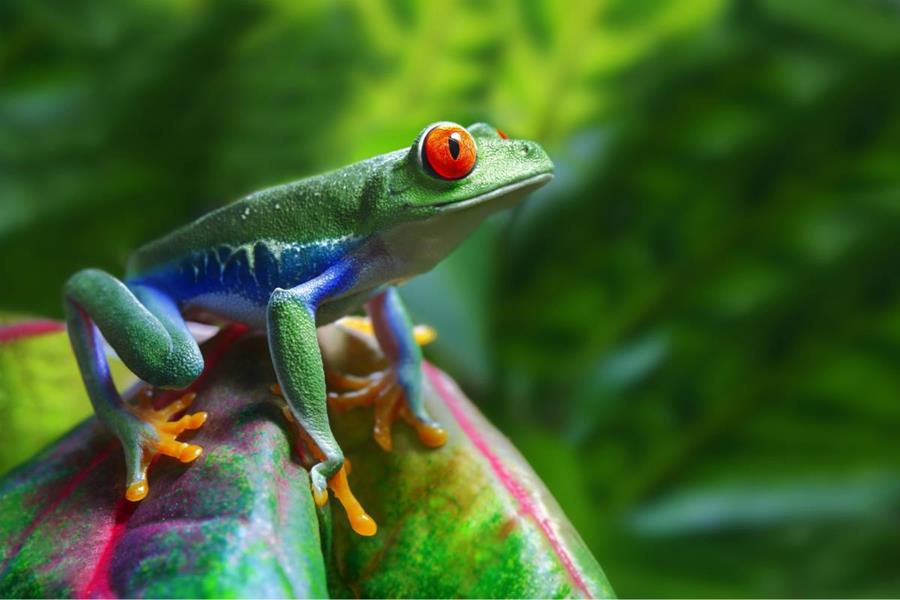
Tortuguero National Park - Red-eyed Frog
Corcovado National Park
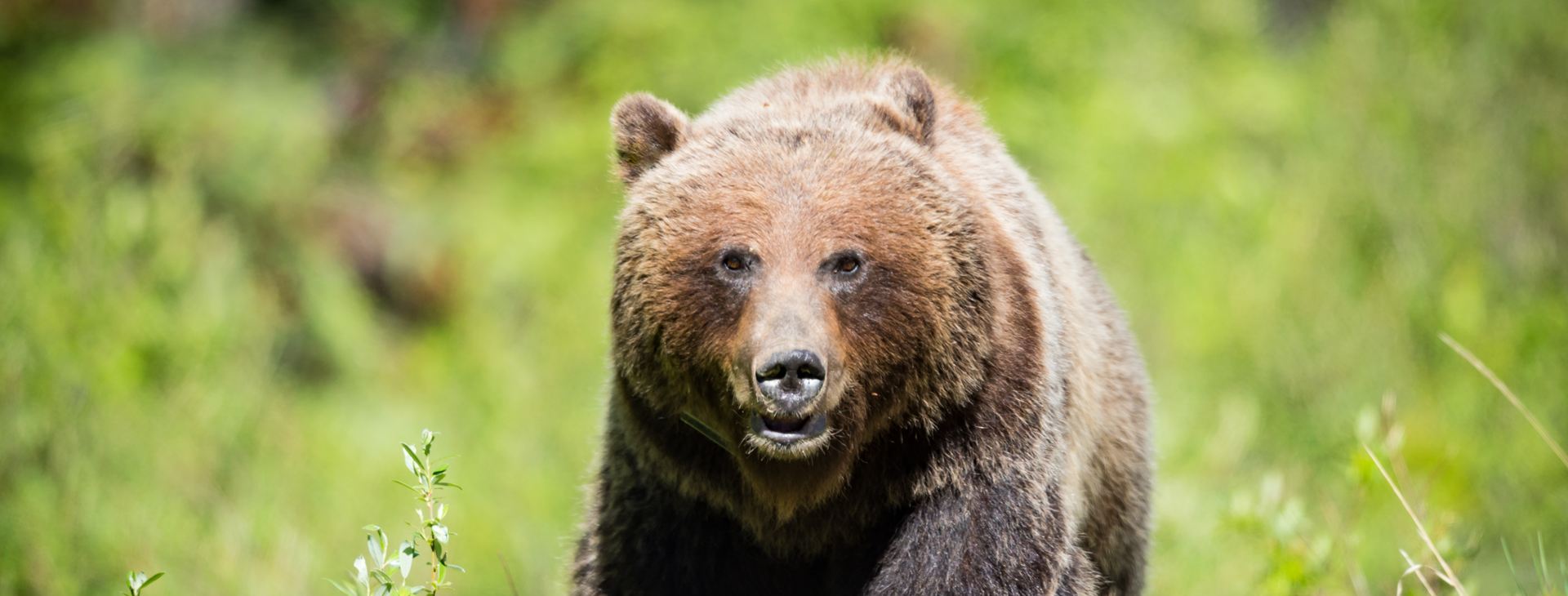
It occupies about one third of the Osa Peninsula located on the Pacific Ocean near the border with Panama, making it the largest protected area that can be visited during a holiday to Costa Rica. Corcovado National Park is indicated as the most important among all the others operating in this country. Its importance is evidenced by, among others, the National Geographic position, according to which it is "the most biologically intensive place on Earth", which is due to the diversity of altitudes from sea level to 745 m. Corcovado has as much as 2,5% of the Earth's biodiversity and 50% of the biodiversity of Costa Rica. The so-called sacred Mayan trees, or five-stemmed owls reaching a height of up to 70 meters, tiny hummingbirds drinking water from leaves and their nests woven from spiderwebs, and crocodiles, pumas, jaguars and boa constrictors, which are difficult to spot, because they effectively hide from tourists, are certainly worthy of attention. Visitors can stay overnight in the park and experience the surrounding nature at a time when many animal species wake up from their sleep.

Biodiversity is a factor that definitely distinguishes Costa Rica from surrounding countries.
How to spend your vacation in Costa Rica?
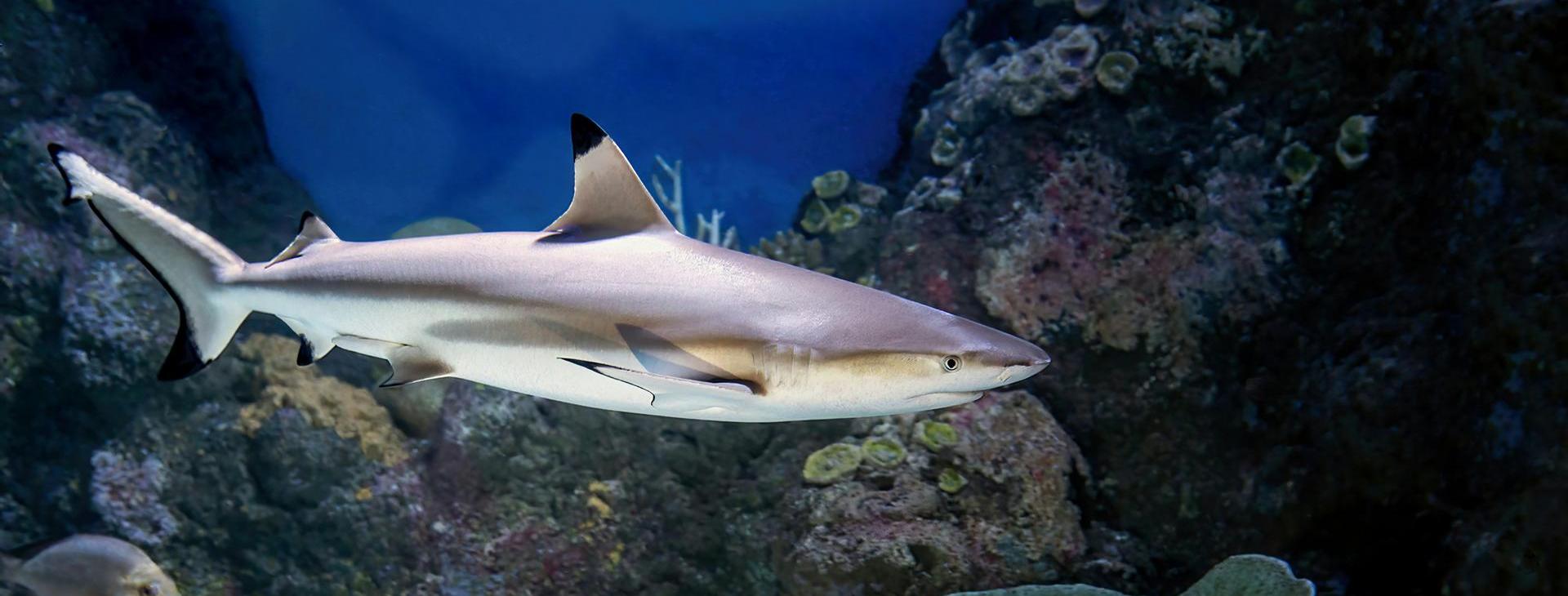
Costa Rica is above all a place where you should take full advantage of the opportunity to commune with nature during your vacation. To this end, you can take advantage of many attractive forms of sports that will allow you to combine physical effort with exploring the local flora and fauna. Thanks to its location between the Caribbean Sea and the Pacific Ocean, this country is an ideal place for diving. Beginners can go snorkeling or start learning scuba diving at one of the local schools, while more advanced ones can explore the real depths of the sea admiring the underwater world of Costa Rica. The most beautiful place where fans of these sports will find themselves is Isla del Coco on the Caribbean coast, where, in addition to the coral reef, you can see underwater caves. On the other side, on the coast of the Pacific Ocean, the Isla del Cano region is recommended, where you can swim with sharks, as well as the previously mentioned areas of the beautiful Manuel Antonio National Park.

Nicoya Peninsula – Samara Beach, one of the most beautiful Costa Rican beaches
Another noteworthy water activity, for which Costa Rica has ideal conditions, is surfing. Although this sport can be practiced on both coasts, the Pacific coast is more noteworthy, where both experienced surfers will find places with big waves, and beginners - surf schools. Dolphin and whale watching can also be an interesting experience. You will also find many beautiful beaches here, for example in Santa Teresa and Samara on Nicoya Peninsula or those located around Puerto Viejo and Guanacaste, but remember that it is not a typical beach destination - this country offers too many other attractions to limit yourself to just lying on the sand during your holiday in Costa Rica!
The highland and mountainous terrain and abundant rainfall create ideal conditions for rafting. You can also experience adrenaline by combining the observation of dense rainforests with extreme sports such as ziplining or canopy, during which you will feel like a Costa Rican toucan flying over the treetops. The points where you can experience this activity are scattered throughout Costa Rica and you will find them easily. People who are not looking for such extreme experiences can traverse the numerous national parks, of which there are as many as 28 in Costa Rica, in a slightly more leisurely way. Birdwatching is worth noting here due to the wealth of local birds, which all passionate ornithologists will certainly be delighted with. For this purpose, we especially recommend going to the Monteverde rainforest. When you get bored with discovering the wilderness, you can go to one of the numerous coffee plantations located on the slope of a volcano - Costa Rica is one of the most important producers and exporters of coffee, cocoa and chocolate, and these plants, thanks to excellent cultivation techniques, can grow even at an altitude of 2000 m above sea level

Zipline is great fun for active people!
Luxury getaway in Costa Rica
Luxury in Costa Rica is certainly perceived differently than in Europe, because you won't find huge hotels stretching along the seashore, with countless restaurants, swimming pools, discos and other amenities. In this country, peace and the opportunity to commune with the surrounding nature are more valuable, so go to one of the small hotels hidden between the crowns of exotic trees - in our offer you will find places built from natural materials, in harmony with nature, thanks to which they create a unity with it, of which you can become a part. Observing Costa Rican flora and fauna around the clock from a soft bed, in the shower or while bathing in a private pool is a really great idea for spending luxury vacation in Costa Rica.
Costa Rica Exclusive
Costa Rica Exclusive | Alajuela, Monteverde, Arenal, Tortuguero, Caribbean Coast, San Jose
There is no need to convince anyone that the beauty of Costa Rica's nature is breathtaking. During this trip, you will see the lush green landscape of the safest country in Central America with your own eyes. Majestic volcanoes, sun-drenched tropical beaches, wild animals and unique national parks - all of these attractions await you on this exclusive trip to Costa Rica.
One of the facilities we recommend is the hotel located near the famous Manuel Antonio National Park Makanda by the Sea. This place owes its extraordinary character to its location in the so-called biological corridor, which gives guests a unique opportunity to observe wild animals in their natural environment. During your stay, you will certainly notice sloths, toucans and charming monkeys appearing within reach. All villas and apartments available to guests are largely glazed to allow maximum contact with the surrounding nature, and the infinity pool with a view of the ocean is placed above the crowns of exotic trees.

Makanda by the Sea
Another noteworthy luxury hotel in Costa Rica is Nayara Hotel Spa & Garden, which offers villas hidden in the wilderness with a unique Costa Rican design, on the terraces of which there are bathtubs allowing for a comfortable bath in the bosom of nature. The owners of the hotel take advantage of the advantages of the location at the foot of the volcano, offering guests coffee from beans collected on its slopes, organic cocoa and beauty treatments, for which volcanic mud with extraordinary properties is used. The whole is complemented by a wonderful view not only of the jungle, but also of the majestic Arenal volcano.

Nayara Hotel & SPA
An equally attractive panorama of the same volcano can be seen from the terraces of the villas that make up the hotel. Cupid Arenal. This facility offers not only numerous beauty and health treatments, but also a great deal of privacy, as each villa has a private pool covered with exotic plants. A swim in one of the pools resembling hot springs and breakfast, during which you can taste many local products and juicy vegetables and fruits, will also be a pleasure. The entire facility is made of natural materials, and a large part, such as the bathroom walls, is glazed, so that guests have the feeling of bathing in the treetops.

Cupid Arenal

Vaccinations before traveling to Vietnam - recommendations and requirements
Older post
TOP 5 - The best diving spots in the world
Newer post
November 4, 2026

November 2, 2026
October 30, 2026

October 28, 2026
recent posts
 The best diving spots in the world – where to go? November 6, 2026
 Wedding abroad – what should you remember? November 5, 2026