
Get inspired and read about your dream trip on the blog
New Zealand's most beautiful beaches – which ones are worth visiting?
August 6, 2025
New Zealand is primarily associated with mountainous landscapes, green hills, and postcard-perfect lakes – but a glance at a map is enough to understand that the country's true treasure is its coastline. Over 15 kilometers of coastline encompass countless bays, cliffs, sandy crescents, and hidden beaches that remain beyond the reach of mass tourism. If you're willing to venture off the beaten track, you'll find places that captivate with their ruggedness, spaciousness, and tranquility. There are no crowds, no beach screens, and noisy resorts; instead, there are unspoiled beaches with light or dark sand, turquoise waters, green-covered rocks, and the scent of salt wafting through the air. Some are difficult to find on a map, while others are only accessible by a short trail through the forest or along a dirt road. Here, you'll find beaches ideal for those who enjoy relaxation and contemplation of nature, as well as those that will delight water sports enthusiasts. Piha Beach on the North Island captivates with its distinctive black sand and powerful waves, creating a paradise for surfers, while Wharariki Beach on the South Island will provide you with unforgettable views of wild cliffs and sand dunes, while Koekohe Beach is known primarily for the famous Moeraki Boulders – gigantic, spherical boulders of unique geological beauty.
New Zealand beaches – the most important information
New Zealand's beaches – places where nature reveals its most diverse and wild character – are unlike those typical of other corners of the world. Each one is unique, full of contrasts that spark the imagination and encourage discovery. New Zealand's coastlines possess something primal: this isn't an all-inclusive destination, where everything has been retouched to suit the tourist's taste; here, nature reigns supreme – raw, sometimes wild, but always stunningly beautiful. You'll find vast stretches of sand with fine golden or almost white sand, tempting you for long walks and carefree relaxation, as well as places where obsidian-black sand is scattered at the foot of dramatic cliffs. You can witness powerful waves, creating a paradise for surfers seeking adrenaline, while there are also plenty of quiet coves perfect for a swim or to curl up with a book. There's no shortage of surprises: thermal springs beneath the sand, wild rock formations, and caves accessible only at low tide – each beach holds its own secret. What further distinguishes New Zealand beaches is their surroundings – instead of concrete promenades or crowded resorts, they are often surrounded by wild forests or hills covered in greenery. The fauna and flora also create a unique atmosphere. You'll encounter various species of birds, often wild and shy, and the sea harbors a wealth of aquatic life, encouraging snorkeling or kayaking along the coast. The changing tides cause the sea line to shift by several hundred meters, revealing spaces to explore and adding character to the landscape. A sense of space and tranquility is also characteristic of these beaches. You'll rarely encounter crowds. Instead, you'll find a lone seagull in the sky, a few shells underfoot, and a breeze that seems to whisper the stories of the ancient Maori. If you're looking for a place to truly unwind, you'll find the perfect setting here.
New Zealand's Best Beaches - Holiday Guide
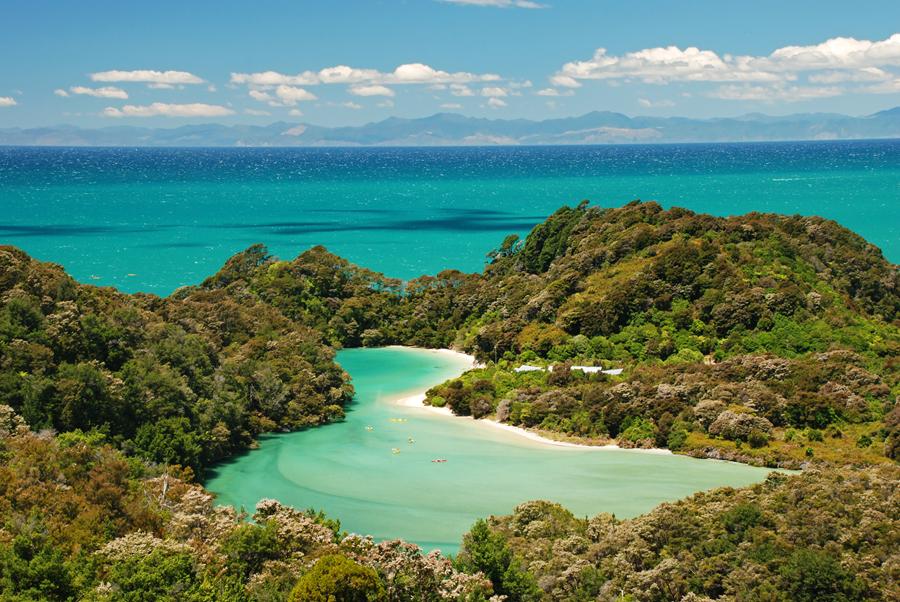
You are going to trip to new zealand Looking for beaches with unique features that will stay in your memory for a long time? Start by exploring Piha Beach, located near Auckland. It's one of New Zealand's most famous beaches – famous for its black sand and powerful waves that attract surfers. Piha has a wild, untamed feel, with rugged cliffs and sculpted rock formations like the iconic Lion Rock. If you enjoy intense encounters with nature, you'll feel right at home there. Heading north, Ninety Mile Beach is worth a visit, although the name might be misleading – the beach is approximately 55 miles long. It's a vast, almost endless expanse where you can drive along the shore, feeling like you're in a desert by the ocean. The sand dunes surrounding the beach create a true Saharan landscape, a rare find on island beaches. It's the perfect place for those who love space, solitude, and unusual adventures, like bodyboarding. Hot Water Beach on the Coromandel Peninsula invites you for a completely different kind of adventure. It's famous for its geothermal springs beneath the sand. When the tide goes out, you can dig your own natural hot tub, where warm, mineral-rich water flows straight from the earth's depths. Next on your list is Awaroa Beach, hidden in Abel Tasman National Park on the South Island, enchanting with its golden sand and turquoise waters, surrounded by lush wildlife. This is definitely a place for those who want to immerse themselves in tranquility, away from the crowds, while also enjoying kayaking or light hiking in the park. Finally, you can head to Muriwai Beach, known for its black sand and seabird sanctuary, where you'll encounter wild gulls and soak up the surfing spirit. Surrounded by dunes and bushland, it offers beautiful natural views and opportunities for active leisure.
When to go to New Zealand beaches?
When planning a trip to New Zealand and dreaming of relaxing on the beach, you naturally wonder when the best time is for such an experience. New Zealand weather can be variable, but thanks to knowledge of the seasons and climate, you can perfectly choose the date of your trip to fully enjoy the sun, warmth and beauty of the seaside landscapes.
The most obvious choice for a beach holiday is summer, which runs from December to February. This is when temperatures average between 20 and 30°C, especially on the North Island, where many of the most beautiful beaches are located. The days are long and sunny, which is perfect not only for sunbathing and sea fun but also for outdoor activities like surfing and hiking along the coast. New Zealanders also enjoy their holidays during this time, so beaches can be a bit more crowded, and accommodation and service prices can be higher. However, the summer atmosphere fosters all sorts of festivals and outdoor events, adding a unique character to a New Zealand holiday.
If you're not afraid of slightly cooler weather, you might consider a beach trip in spring (September-November) or autumn (March-May). The weather is still pleasant during these times, though daytime temperatures hover more around 15-22°C. Expect fewer tourists, which means more space and peace on the beach. Spring sees wildlife bloom around the beaches, while autumn paints the landscape in warm shades of gold, making a trip to New Zealand even more picturesque. It's also a good time for longer coastal hikes or exploration. New Zealand attractions, without the heat of summer. In winter (June–August), beaches become less accessible for sunbathing – temperatures can drop to as low as 0–15 degrees Celsius, and the days are shorter. However, this is a time when you can use your trip to New Zealand for other activities, such as skiing or exploring the interior of the country if sunbathing isn't your priority. Despite the cold and more frequent rainfall, winter has its charm and allows you to avoid crowds on the beaches if you want to experience their raw beauty.
It's also important to remember that ocean weather can be changeable even in the summer months, so it's always worth bringing appropriate clothing and preparing for possible cold snaps or sudden rain. When searching for the best times to go to the beach, it's also worth considering local conditions, such as tides, which can affect accessibility and comfort – for example, at the famous Hot Water Beach, where warm geothermal water only appears during low tide.

Visiting the land of Hobbits
New Zealand | Auckland, Coromandel Peninsula, Rotorua, Napier, Wellington, Nelson, Paparoa National Park, Westland National Park, Queenstown, Lake Te Anau, Dunedin, Christchurch
New Zealand beaches
Cathedral Cove (Coromandel Peninsula)
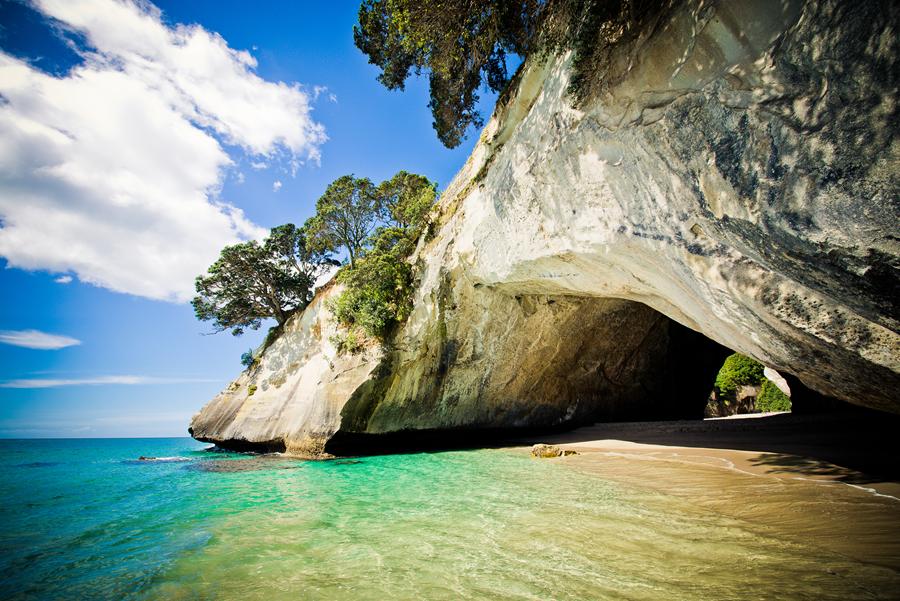
Cathedral Cove, near the town of Hahei on the North Island, in the Te Whanganui-A-Hei Marine Reserve, is one of the most beautiful and famous places on the island. Coromandel PeninsulaThis unique beach attracts visitors primarily with its spectacular natural rock arch – a huge opening carved by waves and wind, resembling a majestic "cathedral window," hence the name. To reach Cathedral Cove, you'll need to prepare for a walk – it's approximately 2,5 km long, starting on the cliff above the bay. Along the way, you'll admire stunning views of the coast and surrounding forests, and stop at memorials dedicated to New Zealand soldiers. The walk itself has its challenges – the terrain is somewhat hilly and requires some fitness, but the reward is a breathtaking landscape. Alternatively, if you prefer a different perspective, you can take a boat or kayak trip from Hahei – the view from the water is equally spectacular. Here, you'll find soft, light-colored sand and crystal-clear, turquoise water. Around you, you'll encounter distinctive rock formations, such as Te Hoho Rock, which add to the wild and rugged charm of this place. What makes this place so special? First and foremost, it features an unusual rock arch, formed approximately 7-8 million years ago by natural forces. This site also holds particular historical and cultural significance, as this area was the first habitat of the Māori, and their descendants still feel a spiritual connection to the region.
Beaches of Abel Tasman National Park
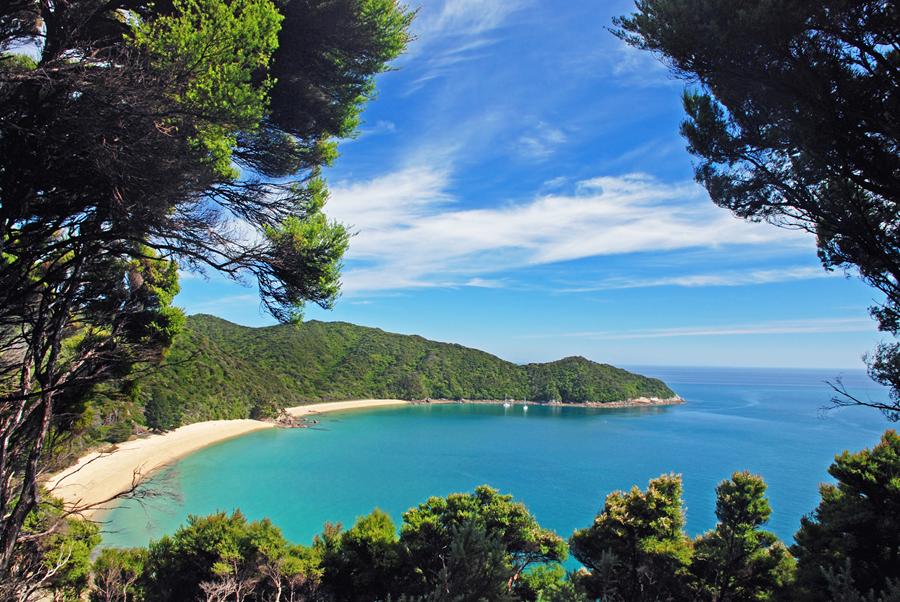
Abel Tasman National Park is famous for its beautiful beaches, which will delight you with their diversity and natural beauty. If you're looking for a trip that combines golden sand, crystal-clear waters, and unique landscapes, these beaches will surely meet your expectations.
Let's start with Marahau Beach, the gateway to the park and one of the most accessible beaches. It features a long, gentle bay of golden sand, and its shallow, sheltered waters make it ideal for families with children and those unsure of their swimming skills. At low tide, you'll discover vast sandy stretches with small pools where you can observe marine life and even collect local shellfish like tuatua and mussels. Marahau is also a watersports rental center and the starting point of the popular Abel Tasman Coast Track – a perfect place to begin your adventure.
Continuing along the trail, you'll reach Apple Tree Bay – one of the park's most charming and popular beaches. This cove boasts soft, golden sand and calm, blue waters, perfect for swimming, kayaking, or snorkeling. The surrounding trees and shrubs provide pleasant shade, a welcome addition on warmer days. Apple Tree Bay is also a popular destination for hikers starting or ending day hikes, yet it maintains the atmosphere of a cozy, relaxing spot.
Awaroa Bay, on the other hand, is a beach for those seeking peace and privacy. Located in a secluded bay, it's more remote and somewhat difficult to access – accessible by foot or kayak, it's less crowded. Here, you'll experience true wilderness and enjoy the endless expanse and soft sand without the crowds. The water is very clear here, and the beach is surrounded by green hills and natural bush.
Another unique beach is Onetahuti Beach, known for its wide shoreline and flat sandy areas that expand several hundred meters at low tide. It's here that you can often see seals and wild birds sunbathing. The beach itself is surrounded by natural vegetation, and the sea is calm, making it a great place for a family vacation or a leisurely stroll.
Finally, it's worth mentioning Tonga Quarry Campsite, a smaller but very distinctive beach located near Anchorage Bay. This place has a more rugged feel, with a rocky shore and wild vegetation. Here, you'll find peace and the opportunity to observe nature in a more natural, less tourist-affected state.
Koekohe Beach (Moeraki Boulders)
Located on the east coast of New Zealand, in the Otago region, between the towns of Moeraki and Hampden, this beach is one of the most unique and picturesque on the South Island. The sand at Koekohe Beach is soft and fine, but that's not its greatest asset – it's the massive, smooth boulders, ranging from half a meter to three meters in diameter and weighing up to several tons! The Moeraki Boulders formed as concretions in Paleocene marine mudstones around 60 million years ago, during the early Tertiary (Paleocene) period. Their formation took approximately 4 to 5,5 million years, when calcium crystallized to form the distinctive spherical stones. Their charm lies not only in their size but also in the unique patterns created by cracks within the boulders, called septaria. Filled with calcite crystals, they sparkle in the sun, giving the boulders a luster and enhancing their natural beauty. The best time to admire these natural giants is at low tide – that's when the boulders are most visible and accessible, scattered just below the waterline. The landscape then creates a unique blend of gray sand, blue water, and gray rocks.
This place is not only a geological marvel, but also a rich Māori culture. According to Māori legend, these boulders are the remains of eel baskets, gourds, and sweet potatoes that were aboard the legendary canoe Araiteuru. After the shipwreck, the cargo transformed into these extraordinary boulders.
The best way to get to Koekohe Beach is by car. The nearest larger town is Dunedin, located about 75 km south, and offering a scenic drive along the SH1 national road. There's a small car park at the beach and an entrance leading directly to the shore. It's also possible to walk from Moeraki town centre, which takes about 30-40 minutes. Access to the beach is free, although it's worth checking the tide times, as many of the boulders are only fully visible at low tide.
Wharariki Beach
Wharariki Beach, spectacular and wild, is located on the northwestern tip of the South Island, near Cape Farewell, the island's northernmost point. Located in the Golden Bay region of Kahurangi National Park, the beach captivates with its rugged natural beauty, expansive sands, massive dunes, caves, and distinctive rock formations jutting out from the sea. One of the iconic features of this location is the majestic Archway Islands, which are particularly striking at low tide.
Wharariki Beach is characterized by its wilderness and seclusion—a place untouched by mass tourism, making it an ideal destination for those seeking peace, adventure, and breathtaking views. Strong winds, changing weather conditions, and rising tides shape the landscape in constant motion, giving the beach a rugged, almost lunar feel. At low tide, you can explore numerous caves and tidal pools teeming with marine life, and with a bit of luck, spot New Zealand sea lions basking on the sand or playing in the water. Wharariki is also a popular spot for photographers, especially at sunset, when dramatic light hits the rocks and reflects in the low-tide water.
There's no direct access to the beach – you'll need to park your car at the car park at the end of Wharariki Road, near Puponga. The drive from the larger town of Takaka takes about 1,5 hours, and the road winds through the picturesque Golden Bay area. There are three hiking trails leading to the beach, the most popular of which is the Wharariki Beach Track – the main route used by most visitors. All trails begin at the car park at the end of Wharariki Road, about 4 km west of Puponga. The Wharariki Beach Track takes about 20 minutes each way, is about 1,5 km long, and passes through varied terrain – green pastures, small hills, copses, and sand dunes. It's well-marked and technically easy, though it can be sandy and slippery in places after rain. After crossing the last dunes, a panoramic view of the wide beach opens up, with Archway Islands on the horizon. This trail is accessible to most people, including families with children, although it's not suitable for strollers or bikes. The second trail, the Green Hills Track (approx. 1,5 hours each way), is longer and more challenging, connecting Wharariki Beach with Cape Farewell. The trail follows a ridge of grass-covered hills, offering spectacular views of the cliffs and ocean. It's ideal for those who want to combine a visit to the beach with a longer coastal hike. The trail can be steep and windy in places, so good shoes and appropriate clothing are recommended. From Wharariki Beach itself, you can walk to Pillar Point Lighthouse (approx. 45 minutes each way from the beach), which offers one of the most stunning views in the region – a panoramic view of the entire beach, Archway Islands, and the wide coastline of Golden Bay. The trail is slightly steeper and takes in hilly terrain, but the view from above is fully worthwhile. The best time to walk is at low tide, when the beach reveals its most interesting rock formations and tidal pools. The trails are inaccessible after dark, and the weather can change rapidly – it is worth bringing a raincoat and checking the forecast.
Mount Maunganui
Mount Maunganui Beach is located on the east coast of the North Island, in the Bay of Plenty region, in the city of Tauranga. Mount Maunganui is both the name of the seaside resort and the volcanic hill itself, which dominates the beach and surrounding area. The beach stretches along a peninsula, culminating in the aforementioned Mount Maunganui (Maunga), which is approximately 232 meters high. The view from its summit is one of the region's greatest attractions, offering panoramic views of the Pacific Ocean, the Bay of Plenty, Tauranga Harbor, and surrounding islands such as Motiti Island and Matakana Island. The walk to the summit takes about 30-45 minutes, and the path winds through scenic trails covered with native vegetation. This short trek is definitely worth the effort for an unparalleled view at sunrise or sunset.
The beach itself is renowned for its fine, golden sand and gently sloping shore, making it ideal for families with children and surfers alike. Surfing conditions are excellent here – waves range from moderate to strong, and numerous surf schools offer lessons for beginners and intermediate surfers. The water is crystal clear, and lifeguards are on duty during the summer months to ensure the safety of beachgoers. The beach has been repeatedly awarded as one of the best in the country and is ranked among the best beaches in the world. At the end of the beach is the popular Mount Hot Pools – the perfect place to relax after a day in the sun or climbing.
Getting to Mount Maunganui is very easy. It's a short 10-15 minute drive from the region's main city, Tauranga. Tauranga also has a domestic airport with regular flights to Auckland, Wellington ChristchurchFor those traveling from further afield in New Zealand or internationally, the best option is to fly into Auckland and then drive (about 2,5 hours) or take a bus to Mount Maunganui.
The Mount Maunganui area is not just about the beach and the mountain – it's also a vibrant town with numerous cafes, restaurants, bars, and boutiques. The main street, Maunganui Road, is a hub of cultural and culinary life – you'll find both local delicacies and international cuisine. Fresh seafood, especially the famous New Zealand mussels and fish, is worth trying, and on weekends, there are markets featuring local produce, crafts, and live music.
Onetangi Beach
Onetangi Beach is one of the most beautiful beaches on Waiheke Island, located in the Hauraki Gulf, near Auckland. Unlike many city beaches, the two-kilometer-long Onetangi is uncrowded, allowing you to enjoy its space and tranquility. It's an ideal spot for both lazy sunbathing and active recreation. The water is clear, relatively warm, and the waves are gentle enough for both swimming and family fun. For more active guests, there are excellent conditions for paddleboarding and kayaking. Walking along the shore, you'll often spot local surfers taking advantage of the favorable winds and waves.
Onetangi stands out not only for its natural beauty but also for its surroundings. Near the beach, you'll find atmospheric cafes and restaurants with ocean views, where you can sample fresh seafood, local wine, or classic New Zealand dishes. Charlie Farley's and Three Seven Two are popular spots for lunch with a view.
Getting to Onetangi Beach is easy, though it does require a bit of planning. First, you'll need to get to Auckland, New Zealand's largest city. From there, regular ferries run to Matiatia Harbor on Waiheke Island—the crossing takes about 40 minutes. Once you're on the island, you can take local buses that stop right on the beach, or rent a car or bike, giving you more freedom to explore other parts of the island.
It's worth knowing that Onetangi is not just a beach but also part of a larger community. The area boasts vineyards, art galleries, and hiking trails through picturesque hills. You can plan a whole day—or even several—combining beach relaxation with local wine tasting, winery tours, and walks through the surrounding forests and viewpoints.

From North to South
New Zealand | Auckland, Matamata, Rotorua, Christchurch, Mt. Cook, Wanaka, Queenstown, Milford Sound, Franz Josef, Punakaiki, Greymounth, Kaikoura
New Zealand's most beautiful beaches stand out from other countries with several unique features that make them unique worldwide. First and foremost, they are characterized by an extraordinary diversity of landscapes—from powdery white sands surrounded by crystal-clear turquoise waters to black volcanic sands and dramatic cliffs. Another characteristic is the extraordinary purity and natural beauty of these beaches—many are unspoiled, often far from large cities, providing a peaceful and uncrowded environment. Local geological and natural attractions are also unique, and the landscapes often combine coastline with mountain vistas and lush vegetation, creating a unique, picturesque landscape unmatched in many other countries.
All these features make a dream honeymoon to New Zealand an absolutely unique experience. The opportunity to explore these unspoiled, almost private corners is enhanced by the high level of safety in New Zealand, which allows for complete relaxation and freedom. Of course, when planning such a trip, you need to take into account a significant flight time to New Zealand, but the prospect of relaxing on such spectacular beaches is the best reward for the hardships of the journey and a guarantee of memories that will last a lifetime.


Diving in the Seychelles – what's worth knowing? Must-see places!
Older post
Visa to Australia: how much does it cost, required documents
Newer post
November 10, 2026
November 9, 2026
November 6, 2026
November 5, 2026
November 4, 2026
October 29, 2026
recent posts
 International driving license – when is it needed? November 12, 2026
- The most beautiful lakes in Asia – where is it worth going? November 10, 2026
- Honeymoon trip to Canada November 9, 2026