
Get inspired and read about your dream trip on the blog
Australia's Most Beautiful Beaches – Which Are Worth Visiting?
May 27, 2025
Australia is a true paradise for beach and adventure lovers. Wherever you go – to the east coast, to the wild corners of the west or to the tropical islands of the north – you will find postcard views, azure waters and sand so white that it dazzles the eyes. This huge island-continent hides hundreds of places where sand meets ocean water, and you can feel like you are at the end of the world – in the best sense of the word. Beaches in Australia are not just places to sunbathe – they are a whole experience: encounters with wild animals, hiking along cliffs, snorkeling on a coral reef or a picnic with a view of the endless horizon. When going to the antipodes, you will quickly see that Australian beaches are really diverse – you will find here both wide, sandy coasts full of life, as well as wild, hidden bays, which you have to reach by forest path. From Sydney’s world-famous Bondi Beach, to the Whitsundays’ heavenly Whitehaven Beach, to the tranquil and unspoiled bays of Western Australia, there’s something for everyone. If you’re feeling adventurous, you can surf the mighty waves at Bells Beach, swim with dolphins at Monkey Mia, or snorkel in the colourful gardens of Ningaloo Reef on Australia’s Turquoise Bay. Or if you’re more of a peace and quiet type, you can spend a lazy afternoon in the shade of eucalyptus trees at Meelup Beach, or stroll along the squeaky sands of Lucky Bay, where kangaroos really do come to rest on the shore.
Australia beaches – the most important information
If you think a beach is just a towel, an umbrella and a fight with sand in a sandwich, Australia has a completely different definition of the word for you. Here, beaches are not a decoration for holiday photos - they are a way of life, an arena of adventure and a natural gym in the open air. Or maybe rather the most beautiful living room in the world, with a view of the endless ocean and a soundtrack in the form of the sound of waves. However, before you throw your flip-flops and sunscreen into your suitcase, it is worth knowing that Australian beaches cannot be confined to one category. Here, each beach has its own character - sometimes wild, sometimes lazy, and sometimes ready to party from morning to night. And it is in this diversity that the greatest charm lies. You do not have to be a surfing champion or a seashell specialist - it is enough that you like water, space and a bit of adventure.
Interestingly, Australians treat the beach as something completely obvious. For them, it's a bit like a park for us - only instead of pigeons there are seagulls, and instead of benches... well, sand. And in such quantities that you could build a second desert. But don't worry - the beaches are very well prepared - with infrastructure, toilets, a place for a barbecue and often free showers. Yes, showering under a palm tree is not a luxury here, but an everyday occurrence. Besides, Australia takes its beaches seriously. Sometimes more seriously than politics. Lifeguards regularly patrol here, there are safe swimming areas, and warnings about waves or jellyfish are as common as the weather forecast. And that's a good thing - because although the ocean looks innocent, it can show its teeth. But with a bit of common sense, you can swim, surf and jump through waves here without much stress. Let's not forget about the atmosphere either. Australian beaches have a relaxed feel that can't be faked. Maybe it's the sun, maybe the fact that people really don't rush here... Besides, one look at the local surfers is enough – no one here pretends to have everything under control. A mishap on the board? Laughter. A knocked-over umbrella? Laughter. A burnt nose? Well, a lesson for the future.
And if you fancy something more than just lying flat, the possibilities are almost endless. From snorkelling in crystal clear waters, to collecting seashells, to evening bonfires and barbecues overlooking the sunset. Yes, a beach barbecue here is not a craze – it’s a tradition. And let’s be honest – a sausage tastes better with a view of the ocean. Because on an Australian beach, everything revolves around one rule: live in the moment. And do it barefoot.
Australia's Best Beaches - Holiday Guide
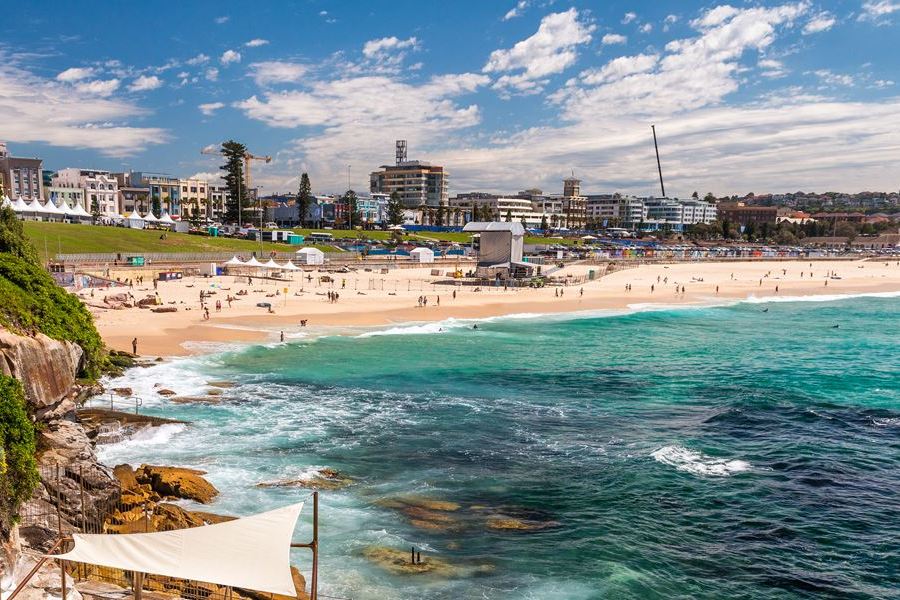
Australia is a place where the sun shines as if powered by batteries, the waves dance like in an energy drink advert, and the beaches… well, the beaches can take your breath away! If you are planning holidays in Australia with an oceanic flair, you can't miss a few legendary spots. Let's start with Bondi Beach - a beach that has more photos on the Internet than many a pop star. If you land in Sydney and you have even half a day free, there is only one destination! You will walk the famous Coogee Walk, watching runners, walkers and people who simply have time to enjoy life. You will find here cafes with the best coffee, tempting ice cream parlours and street art that will surprise even the skeptics. And if surfing is not your thing - don't worry, watching others is also exciting.
From Bondi, we smoothly transition to Whitehaven Beach in Queensland. This is where it gets magical – literally! This beach is pure white sand (really pure white, because it’s mostly made of pure silica) and water that’s hard to describe without using the word “turquoise”. Getting here takes a bit of effort – by boat or seaplane – but trust me, it’s worth it. Whitehaven has no bars, shops or Wi-Fi. And that’s exactly why everyone loves it. It’s the perfect place to disconnect from civilization and connect with nature – no password, no code, just you and the sky above.
Next stop is Cable Beach in Broome, Western Australia. If you’ve ever wanted to feel like you’re in a perfume advert, this is it. This beach stretches for over 20 kilometres and is known for having some of the most beautiful sunsets in the world. Yes, some people come here just to watch the sky change colours for an hour. And if you want to add a bit of exoticism, you can take a camel ride on the beach. It may not be the most aerodynamic form of transport, but it’s definitely unforgettable.
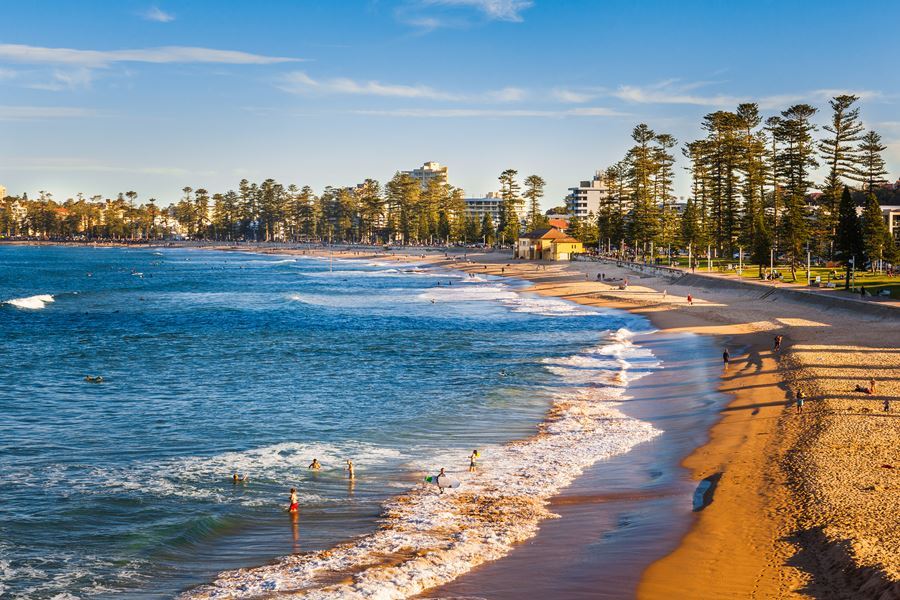
Finally, Manly Beach is also in Sydney, but has a completely different soul to Bondi. You get there by a scenic ferry across the bay – that’s an adventure in itself. Manly combines the feel of a holiday village with the laid-back city. The beach is wide, great for swimming and more secluded than crowded Bondi. This is the perfect place if you’re looking for a happy medium: a bit of action, a bit of relaxation, a few great eateries and the ocean as the main character.
When to go to the beaches of Australia?
Are you planning a trip to Australia for the beach and wondering when is the best time to go? Although Australia tempts with sun all year round, its climate can play tricks, and the weather in different regions of the country works according to its own calendar. So before you pack your bags, find out when and where to go so that you emerge from the ocean happy, not frozen or... stung by a jellyfish.
First of all, you need to remember that Australia is located in the southern hemisphere, so the seasons are reversed here compared to Europe - when it's winter here, it's summer there. It's warmest from December to February, which on the one hand sounds ideal, but on the other - it's also the middle of the tourist season. Prices are skyrocketing, crowds on the beaches are growing, and the sun takes no prisoners. If you're planning a trip to the east coast - Sydney, Brisbane or the Gold Coast - this is the period that will provide you with heat, warm water and a real beach climate. Just remember to use a solid sunscreen - the Australian sun is merciless. The situation is slightly different in the north of the country - for example in the Cairns or Darwin area. There, the rainy season lasts from December to March. The air humidity is like a sauna, it rains often, and there may be box jellyfish in the water, which are definitely not friendly to tourists. So if you dream of diving on the Great Barrier Reef, it is better to wait until May or June – the weather stabilizes, the water is still warm, and the underwater world is fully accessible and safe.
Spring (September – November) and autumn (March – May) are the ideal months to visit the southern parts of Australia – Melbourne, Adelaide or Perth. The temperatures are pleasant, there are no extreme heat or cold, and on the beaches you can find peace, sun and ideal conditions for surfing. In autumn, the water still retains its warmth after the summer, so bathing is completely comfortable. This is a good time if you do not like crowds and are looking for a more balanced climate. Winter – the Australian months from June to August – is a great time to visit the tropical north. Although it gets colder in the south and the water is not inviting for bathing, in the north of the country there is the so-called dry season – dry, sunny, safe. Ideal if you plan to explore wild beaches, go trekking along the coast or admire the reef without worrying about rain and jellyfish.
As you can see, there is no one perfect time for a beach trip to Australia – it all depends on where you want to go and what you want to do. If you are aiming for classic sunbathing and surfing – summer on the east coast is a bullseye. If you want peace, lower prices and milder sun – choose spring or autumn. And if you are tempted by the exoticism of the north, it is best to bet on the Australian winter. Either way, the beaches are waiting – you just have to choose the right moment and set off for an adventure.
The most beautiful corners of Australia
Australia | Melbourne, Grampians National Park, Apollo Bay, Byron Bay, Sydney
Australian Beaches
Turquoise Bay – Western Australia
Turquoise Bay is a real gem on the west coast of Australia, located in the Cape Range National Park, near the town of Exmouth. The name says it all - the bay shimmers in all shades of blue and turquoise, and the white sand tempts you to spread out your towel and immerse yourself in blissful relaxation. You can get here by car from Exmouth - it's only 60 kilometers. The road leads through the picturesque areas of the national park, so the journey itself will put you in the holiday mood. Turquoise Bay is famous for the so-called drift snorkeling - you jump into the water at one end of the beach, and the current calmly carries you along the Ningaloo Reef, one of the largest coral reefs in the world. All you need is a mask and a snorkel, and the underwater world will delight you with colorful fish, turtles and soft corals. On the beach you will find toilets and covered picnic areas - great for lunch with a view. There are no shops here, so bring everything you need: water, snacks, and sunscreen. This is a great place for a day trip, snorkeling, swimming, or just lazy sunbathing in a paradise setting.
Little Beach – Western Australia (Albany region)
Little Beach is located in the Two Peoples Bay Nature Reserve, about 30 minutes drive from Albany in Western Australia. This is a small but breathtaking bay that any lover of wild, untouched landscapes will love. You can reach the beach by car, and the last part is a short walk on a designated path through the nature reserve. As soon as you arrive, you are greeted by the sight of turquoise water, snow-white sand and two huge boulders jutting out of the sea - a real postcard! You will not find many facilities here - no shops or restaurants, but there are toilets and a barbecue area. This is what adds to its charm - peace, nature and tranquility. Be sure to bring food, water and beach equipment. This is an ideal place for swimming, picnicking and wildlife photography. The water is clear and calm, and the landscape - dramatic and fairytale.
Hyams Beach – New South Wales
Hyams Beach is located in Jervis Bay, about 3 hours drive south of Sydney. It is known for having the whitest sand in the world – at least according to the Guinness Book of Records! The beach is easily accessible by car and in the town of Hyams you will find small cafes, toilets and parking. Although the place is becoming more and more popular, you can still feel the atmosphere of peace and relaxation. The beach is perfect for swimming, walking along the ocean and snorkeling – in the calm waters you can spot colourful fish and, with a bit of luck, even dolphins. Nearby you will find walking trails, such as the White Sands Walk – a beautiful route along the beaches and eucalyptus forests. It is a great place for a day trip or a weekend of relaxation.
Murrays Beach – New South Wales
Murrays Beach is a hidden gem in Jervis Bay, just a few kilometres from Hyams Beach. It is located within Booderee National Park, famous for its wildlife, white beaches and crystal clear waters. It is the perfect place to relax away from the crowds. You can drive to the beach – the last part is a short walk through fragrant bushland. There is an entry fee to the park, but it is worth it – you get access to one of the most beautiful bays in Australia. There are toilets and parking on site, but no shops – pack everything in advance. At Murrays Beach you can swim, dive, snorkel and sunbathe. The water is calm, perfect even for children. From the marina you can take a kayak or a boat to the nearby islands. Dolphins and even baby penguins are often seen here!
Coral Bay - Western Australia
Coral Bay is located on the northern coast of Western Australia, on the famous Ningaloo Reef. It is a small, paradise-like town with a beach right on the reef - you can jump into the water and dive among the corals straight away! You can get there by car from Exmouth or by local flight to Carnarvon. Coral Bay offers campsites, apartments, shops, restaurants and dive centres - everything you need for a longer stay. It is a paradise for snorkelers and divers - the water is calm, warm and full of life. You can go on a cruise to see manta rays, turtles and whale sharks (in the right season). The beach is wide and sandy - also ideal for children.
Lucky Bay - Western Australia
Lucky Bay in Cape Le Grand National Park near Esperance is one of Australia’s most photogenic beaches. It is known for its white sand that “squeaks” underfoot and… kangaroos basking on the shore! Why does the sand squeak? Because it is extremely clean and is made almost entirely of tiny, round quartz grains. When you walk on it, the dry grains rub against each other, making a characteristic, swishing sound. This is only possible when the sand is dry, clean and firmly packed. You will hear this natural effect – called sand phonation – on few beaches in the world.
Access is possible by car (preferably 4x4) from Esperance - approx. 1 hour drive. The park has camping sites, toilets, showers and barbecues, but no shops - take everything with you. Here you can swim, snorkel, hike the granite hills or just lie on the beach with kangaroos. It is an ideal place for unforgettable photos and close contact with nature.
Hog Bay - Kangaroo Island, South Australia
Hog Bay is the main beach in the town of Penneshaw, right next to the ferry port to Kangaroo Island. Although less wild than other beaches on the island, it has its charm - a great place to relax after arriving by ferry from Cape Jervis. You can get here by ferry from the Fleurieu Peninsula. Penneshaw has everything: cafes, shops, accommodation and tourist information centres. Hog Bay has a gentle slope into the water and beautiful views over the bay - great for family picnics and swimming. The water is calm, perfect for swimming. Nearby you will find walking trails, a lighthouse and dolphin and penguin viewing points.

Australia and New Caledonia – a journey to the Antipodes
Australia, New Caledonia | Sydney, Poe, Kone, Hiengene, Poindimie, Farino, Ile Des Pins, Noumea
Green Pools and Elephant Rocks – Western Australia
Located near Denmark in William Bay National Park, Green Pools and Elephant Rocks are two fabulous locations that look like they’ve been taken straight from a travel catalog. Green Pools are natural pools sheltered by rock formations – the water is calm, perfect for snorkeling and for families with children. Elephant Rocks, right next door, are giant boulders resembling elephants walking through the water – they’re a real eye-catcher! It’s only a 10-minute drive from Denmark. There are parking lots, toilets and picnic tables on site. No shops – pack your bags in advance. This is a great place for a day trip: swimming, taking photos, walking and communing with nature. The views and peace make up for it all.
Meelup Beach – Western Australia
Located near Dunsborough in the Margaret River region, Meelup Beach is one of the most picturesque beaches in southwestern Australia. It is surrounded by forests and hills, and its waters are a deep turquoise. It is a short drive from Dunsborough. The beach has parking, toilets, showers, picnic areas and barbecues - everything you need to spend the whole day here. In season, a food truck also appears. Meelup Beach is peaceful, perfect for family swimming, paddling, SUPing or snorkeling. Nearby is the Meelup Trail - a path along the coast through other hidden bays.
Monkey Mia – Western Australia
Monkey Mia is a magical place located in Shark Bay, about 25 kilometres from the town of Denham, in the north-west of Western Australia. It is one of the few places in the world where wild dolphins regularly swim right off the shore to meet people. The best way to get here is by car (4WD is not necessary), and the nearest airport is Monkey Mia Airport. The resort has a resort, restaurant, shop, petrol station, camping site, picnic areas and even a spa - full infrastructure for a longer stay here. However, the biggest attraction is the morning dolphin encounters - you can stand barefoot in the water and see them up close, often just a metre away from each other. The encounters take place under the supervision of ecologists and are conducted with respect for the animals. It is an unforgettable experience! You can also swim, snorkel, rent kayaks or go on a cruise with observations of dugongs, turtles or sharks. The beach is wide, calm and surrounded by wildlife.
Bells Beach – Victoria
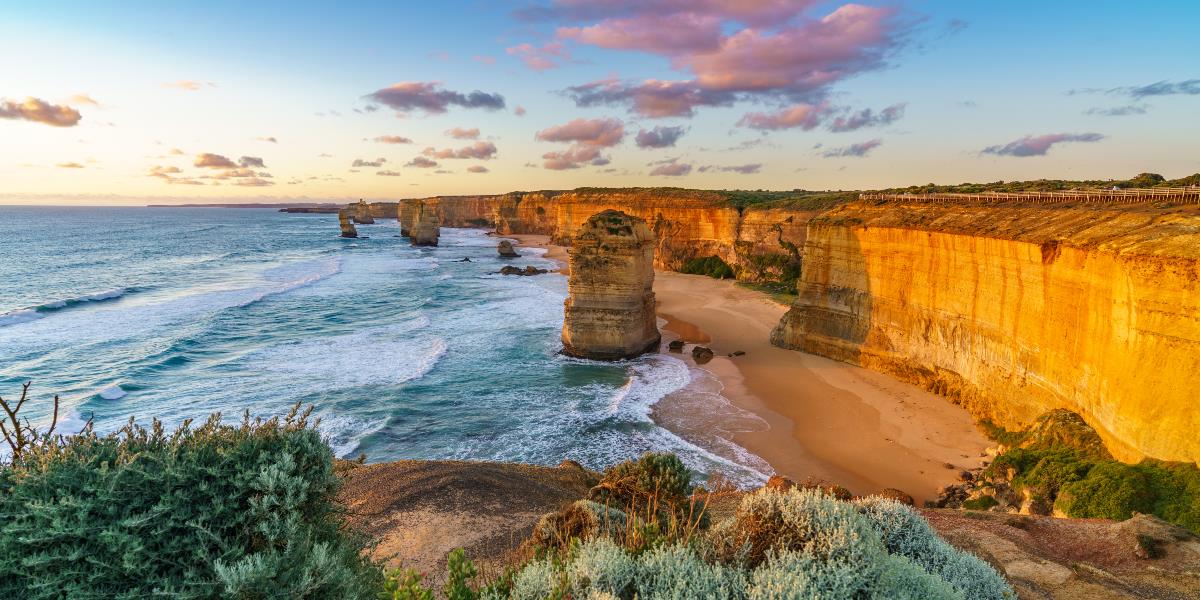
Bells Beach is a legendary surfing mecca, located on the famous Great Ocean Road, near Torquay. It is home to one of the world’s most important surfing competitions – the Rip Curl Pro – every year. But even if you don’t surf, this beach will impress you. It takes about 90 minutes by car from Melbourne. There is parking, viewing points, toilets and information boards on site. There is no shop on the beach, so stock up ahead. Bells Beach has a wild, rugged feel – a cliff coastline, powerful waves and an endless horizon. This is not your typical swimming beach – the currents are strong and the waves are high – but the views are spectacular and the atmosphere is inspiring. You can walk down to the beach, spread out a blanket and watch the surfers battle the waves, or take a walk along the cliff trail for breathtaking views of the ocean.
Main Beach – New South Wales
Main Beach in Byron Bay is the heart of this iconic seaside town and one of the most recognisable beaches in Australia. It is located right next to the centre of Byron Bay, so you can walk there no matter where you are staying. It is the perfect place to start your adventure on the Australian coast – the beach is bustling with life, while still maintaining the laid-back, hippie vibe that Byron is famous for. Main Beach has everything you need for a perfect day by the ocean. With lifeguards on duty, easy access to the water, surfboard hire and surf schools, it is a great place to try your hand at the waves, especially if you are just starting out. For those who prefer more sedate activities, the beach offers plenty of space to sunbathe, play frisbee or relax with a book. Right next to it is a green belt with palm trees, a children's playground, showers and toilets. A few minutes' walk away you can find cafes, ice cream parlours and souvenir shops. In the afternoon, it is worth staying for the sunset – the view of the sun setting behind the Hinterland Mountains is breathtaking. Main Beach is also an ideal starting point for a walk towards Cape Byron Lighthouse. The trail leads along the coast, past other charming beaches and viewpoints – it is one of the most beautiful walks in the region.
Australia delights not only with its wildlife and unique climate, but also with the amazing diversity of its coastlines. After visiting at least a few of these extraordinary places, you will understand that beaches in Australia are much more than just a place to sunbathe - they are a space for adventures, encounters with nature and discovering peace that is hard to find anywhere else. Regardless of whether you dream of surfing on high waves, diving among corals, close encounters with a kangaroo on the sand or just a long walk in silence - Australian beaches have all this to offer you. Each of them has its own unique character and charm that will stay in your memory long after you return home.
What is worth knowing before traveling to Australia?
Australia amazes with its diversity - from metropolises like Sydney and Melbourne to the wilds of the Outback and the coral reef. Australia Attractions attract lovers of nature, surfing and Aboriginal culture.
Safety in Australia
Australia is considered one of the safest countries in the world, where the greatest challenge for travelers isn't crime, but the power and wildness of nature. When traveling across this vast continent, be prepared for extreme weather conditions, from heatwaves and bushfires to flash floods. It's also crucial to be cautious of local wildlife, including venomous snakes and spiders, and to be aware of dangerous currents when swimming in the ocean. By following local recommendations, swimming at lifeguarded beaches, and planning your outdoor adventures carefully, you can enjoy Australia's extraordinary landscapes and unique wildlife in complete safety.
Visa to Australia
When planning a trip to the Antipodes, remember that Australia requires a visa for Polish citizens. Fortunately for tourists, this process is quick, simple, and, most importantly, completely free. Simply apply online for an eVisitor (subclass 651), which allows for multiple three-month stays per year. The application must be completed before departure, and the visa is electronically assigned to your passport, eliminating the need for embassy visits. This simple solution ensures that formalities don't stand in the way of fulfilling your dreams of seeing the Great Barrier Reef or the iconic Sydney Opera House. Nevertheless, it's worth remembering to submit your application well in advance to prepare for this unique trip without stress.
Weather in Australia
When planning a trip to Australia, it's crucial to understand its diverse climate, which divides the continent into three main zones. The northern, tropical part of the country experiences a rainy season from November to April, so the best time to visit is from May to October, when the dry season is in full swing. The south, with its temperate climate, offers the most pleasant weather in spring (September to November) and autumn (March to May). The center of the continent is made up of vast deserts, with extreme temperature fluctuations between day and night. It's important to remember that Australia's seasons are the opposite of those in the Northern Hemisphere. For underwater enthusiasts, the Great Barrier Reef offers the best diving conditions between March and June.
Honeymoon trip to Australia
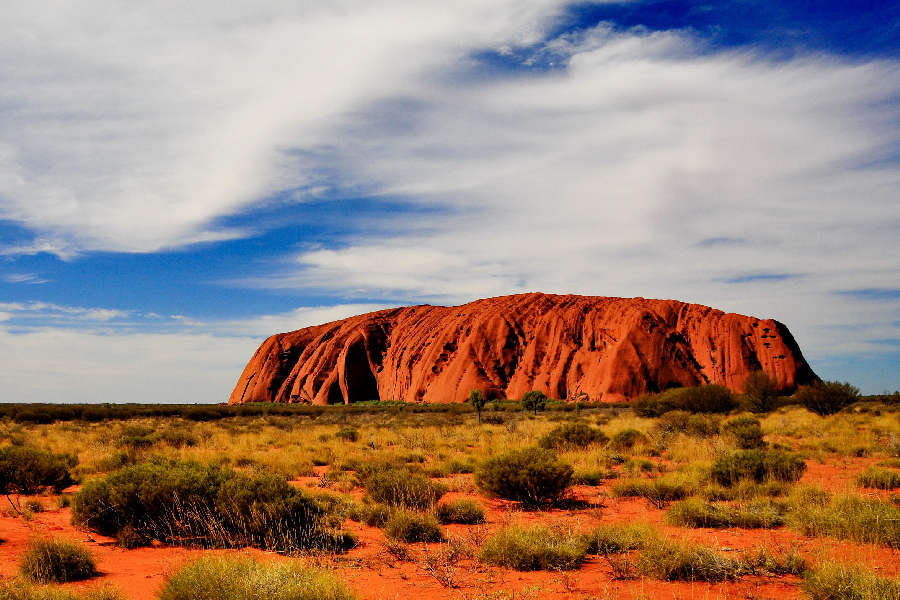
Australia, a continent full of contrasts, provides the perfect backdrop for an unforgettable honeymoon, combining the thrill of adventure with luxurious relaxation. Newlyweds can immerse themselves in the azure waters of the Great Barrier Reef, admiring the underwater world from a catamaran on the paradise Whitsunday Islands. A magical sunset over the red rock of Uluru in the heart of the Outback, culminating in a romantic dinner under the starry sky, is also a truly unforgettable experience. From iconic Sydney with its majestic Opera House, through the picturesque Great Ocean Road, to the wilds of Tasmania, Australia offers endless opportunities to create memories that will last a lifetime. This destination captivates with its natural splendor and allows you to embark on your journey together in truly spectacular style.

November 13, 2026
November 10, 2026
November 9, 2026
November 6, 2026
November 5, 2026
November 4, 2026
recent posts
- Honeymoon trip to Morocco November 13, 2026
 International driving license – when is it needed? November 12, 2026
- The most beautiful lakes in Asia – where is it worth going? November 10, 2026