Get inspired and read about your dream trip on the blog
Best attractions in Ecuador – what is worth seeing?
August 24, 2026
How about a trip where one day you stroll through colonial streets and the next you set off on a trek through volcanic landscapes? Want to have one foot in the Northern Hemisphere and the other in the Southern? Or perhaps you dream of a canoe trip deep into the Amazon, meeting sea lions in the Galapagos, or ziplining over the cloud forest canopy? Ecuador can surprise you with its sheer diversity, despite being a relatively small South American country. In this article, we'll take you on a journey through the most interesting corners of the country. We'll tell you what to see in Ecuador, where to find the most spectacular landscapes, and which places to include in your itinerary. We'll visit the historic center of Quito and colonial Cuenca, visit the market in Otavalo, and show you the unique side of the Andes, with the Cotopaxi volcano and the Quilotoa Lagoon as the main attractions. Adventures abound, too. We'll cover the famous "Swing at the End of the World" in Baños, an expedition to the Amazon jungle, a night canoe cruise, and hummingbird watching in the Mindo Cloud Forest. A separate section will be dedicated to the Galapagos and its unique wildlife encounters. You'll see Ecuador not only as a land of volcanoes, but above all as a destination brimming with diverse experiences that can be tailored to your travel style.
Attractions in Ecuador - travel guide
Ecuador may be a small country, but its diversity of attractions is hard to rival. Traveling around the country allows you to combine sightseeing in colonial cities, mountain trekking, expeditions to the Amazon jungle, relaxation by the Pacific Ocean, and encounters with the unique wildlife of the Galapagos. Ecuador is divided into four distinct regions – the Andes, the coast, the Amazon, and the Galapagos – so its attractions range from natural and scenic to cultural and active.
In the Andes, it's worth starting in Quito, whose historic center is a UNESCO World Heritage Site. You can stroll among colonial churches and monasteries, visit handicraft markets, and then head into the mountains. Among the most interesting places are Cotopaxi National Park, the Quilotoa Lagoon, and the surrounding area. ChimborazoThis region is perfect for trekking, climbing, horseback riding, and cycling enthusiasts. In Baños de Agua Santa, you'll find rafting, canyoning, zip-lining, waterfalls, and natural thermal baths.
The Amazon has a completely different character. A trip to the rainforest allows you to observe monkeys, birds, and other wildlife, traverse rivers in canoes, and learn about the lives of local communities. For nature enthusiasts, Mindo—a land of cloud forests renowned for its vast diversity of birds, butterflies, and orchids—will also be a unique experience.
On the coast, you can combine beach time with water activities. Surfing, diving, kayaking, and whale watching are just some of the options. However, the most extraordinary attractions await in the Galapagos. Here, you'll encounter giant tortoises, sea lions, and endemic birds, and underwater, you can dive and snorkel among unique marine fauna.
Attractions in Ecuador allow you to create a very diverse journey – from city sightseeing and cultural exploration, through active recreation in the Andes, to close encounters with wildlife.

Ecuador & Galapagos Tour
Ecuador | Quito, Cotopaxi, Baños, Chimborazo, Riobamba, Nariz del Diablo, Ingaprica, Cuenca, Guayaquil, Galapagos
What is worth seeing in Ecuador?
It's worth viewing Ecuador as a collection of vastly different landscapes and experiences: the high Andes, volcanoes, crater lakes, rainforests, colonial cities, archaeological sites, and small towns where indigenous traditions remain an important part of daily life. If you want to truly experience Ecuador, it's worth planning a trip that combines several different regions.
One of the most interesting places is Cajas National Park, located near Cuenca. The rugged, high-mountain landscape is formed by dozens of lakes and lagoons, surrounded by grassy páramos. The park is a great place for trekking and observing Andean wildlife. Recommended for history buffs. Ingapirca archaeological complex – the most important preserved Inca site in Ecuador. At an altitude of over 3000 meters, there are remains of structures related to both the Inca culture and the earlier Cañari culture. The most characteristic element of the complex is the Temple of the Sun. An interesting addition to your trip will be Lake San Pablo at the foot of the Imbabura volcano. You can combine a visit to the lake with exploring the Otavalo area, where the culture of the indigenous people is particularly visible. It is also worth visiting Chordeleg, a small town famous for its traditional crafts, especially jewelry made using the filigree technique.
It allows for completely different experiences Sangay National ParkThis is one of the most naturally diverse areas in the country—volcanoes, lakes, cloud forests, and páramos are all found here. You can go trekking and observe wildlife, including Andean species. It's also worth taking time for Pacific coastIn towns like Puerto López, you can combine a beach vacation with cruises, whale watching, snorkeling, or exploring the coastal nature. Ecuador is best explored through this diversity – instead of limiting yourself to a few well-known landmarks, it's worth combining mountains, cities, culture, archaeology, and wildlife.
Top things to do in Ecuador
Galapagos Islands
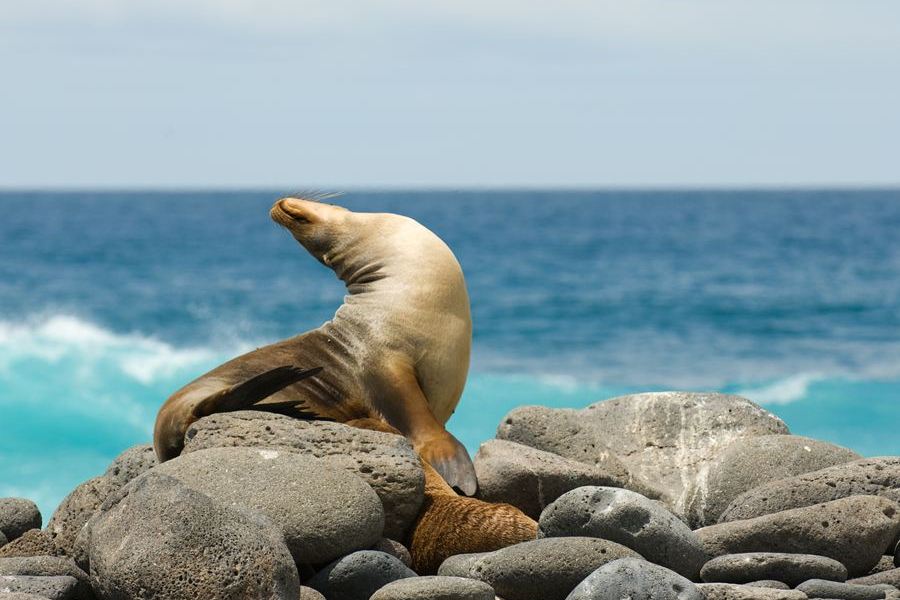
Galapagos Islands They are among those places that are difficult to compare to anywhere else in the world. This archipelago, located in the Pacific Ocean, is part of Ecuador, but in terms of its natural beauty, it's almost a world unto itself. Volcanic landscapes, rugged coastlines, crystalline waters, and animals that fear no human presence make a trip here, above all, an encounter with exceptional nature. Although Ecuador is primarily associated with the Andes and colonial cities, it's in the Galapagos that it reveals its most extraordinary side.
The archipelago consists of 13 larger islands and numerous smaller islets and rocks. Each main island has a slightly different character, so it's worth planning your stay to see more than one. On Santa Cruz, you can visit the Charles Darwin Research Station and see the famous giant tortoises. Isabela delights with its volcanic landscapes, lagoons, and the opportunity to observe Galapagos penguins, while San Cristóbal is worth a visit to meet sea lions and learn about the history of the archipelago. The Galapagos is primarily a paradise for nature lovers and active vacationers. You can dive and snorkel among sea turtles, rays, sharks, and colorful fish, kayak along the rocky coast, or go trekking through the solidified lava fields. On many islands, you'll encounter endemic species found nowhere else. It was the archipelago's isolation that led to the development of a unique fauna that played an important role in Charles Darwin's research on evolution.
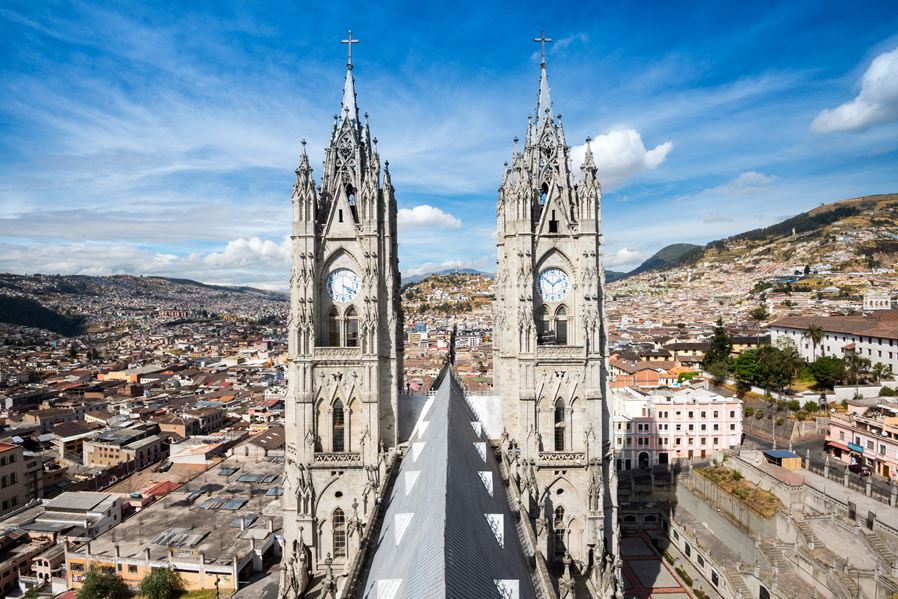
Historic Center of Quito
Historic center Quito This is one of Ecuador's most treasured destinations and a must-see for those wondering what to see in Ecuador. The country's capital was founded by the Spanish in 1534 on the site of an earlier Inca settlement. The city is located high in the Andes, at an altitude of approximately 2850 meters above sea level, on the slopes of the Pichincha volcano. Its historic center is exceptionally well-preserved, and in 1978, it was one of the first places in the world to be designated a UNESCO World Heritage Site.
Walking through old Quito, you'll primarily see impressive churches, convents, plazas, and characteristic colonial houses with interior courtyards. The heart of the district is the Plaza de la Independencia, home to the cathedral, the presidential palace, and administrative buildings. Also worth visiting is the Plaza de San Francisco, home to the impressive San Francisco church and convent complex, and the Church of La Compañía de Jesús. The latter is renowned for its exceptionally rich Baroque interior, featuring extensive use of gold. The church is one of the finest examples of the so-called Quito Baroque school, which combined European patterns with influences from local arts and crafts. The street layout of the historic center has largely retained its original character. Despite numerous earthquakes, including the powerful 1917 earthquake, Quito is one of the best-preserved historic centers in Latin America. The architecture shows an extraordinary blend of different traditions – Spanish, Italian, Moorish, Flemish and Native American.
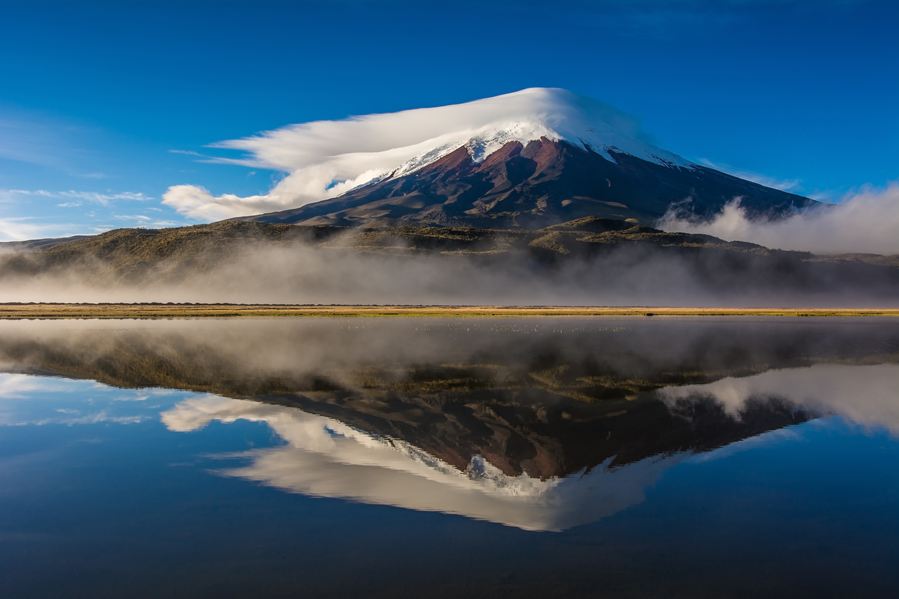
Cotopaxi Volcano
Cotopaxi Volcano is one of Ecuador's most iconic symbols and one of the highest active volcanoes in the world. Rising 5897 meters above sea level in the Andes, about 50 kilometers south of Quito, its almost perfectly conical shape and snow-capped summit make it difficult to confuse it with any other mountain. Cotopaxi is part of the Cotopaxi National Park, established in 1975. For those planning to visit Ecuador, it is one of the country's most interesting natural attractions.
The volcano itself has an impressive history of eruptions. The highest recorded activity began in the 18th century, and Cotopaxi has made its presence felt many times since then. In 2015, another eruption occurred, after which access to parts of the park was restricted for a time. Today, the area around the volcano is a popular hiking destination, although it's worth checking the latest information about Cotopaxi's activity and trail conditions before setting off. One of the biggest attractions is the Laguna de Limpiopungo, located at the foot of the volcano. In good weather, the lake reflects Cotopaxi's distinctive silhouette, and the area is a good place for birdwatching and observing the Andean landscape. You can also drive or hike to the José Rivas Refuge, located at an altitude of approximately 4864 meters (15,964 feet). From here, experienced and well-prepared climbers can attempt to summit the peak. However, a visit to Cotopaxi doesn't have to mean a high-altitude expedition. The drive through the park, the views of the volcano, the walk along the lagoon, and the páramo landscape are reason enough to include this place in your itinerary. Cotopaxi showcases the most spectacular side of the Andean region and is a perfect addition to any Ecuadorian tour.
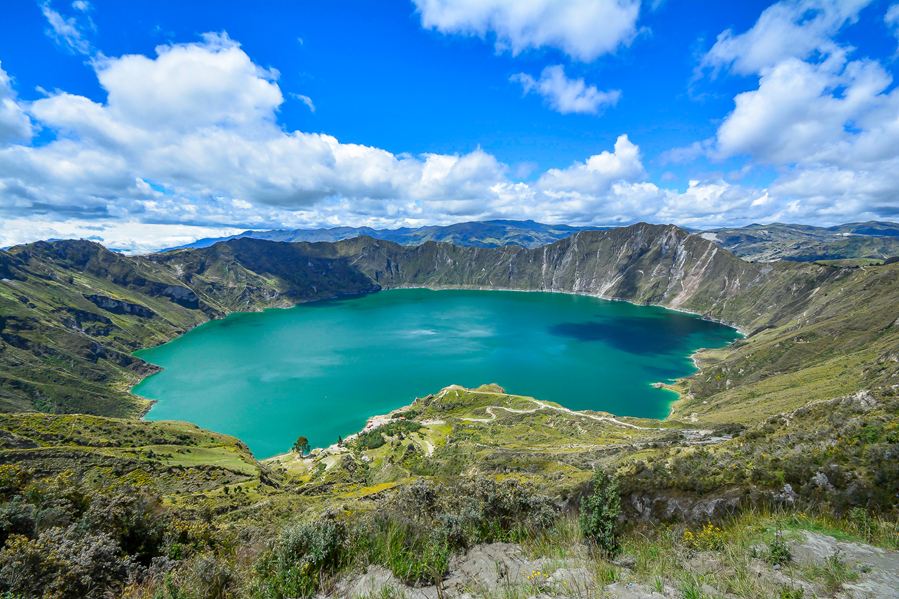
Quilotoa Lagoon
Laguna Quilotoa is one of the most extraordinary landscapes in the Andes and definitely deserves a place among the most interesting attractions Ecuador has to offer. The turquoise-green lake occupies the interior of the enormous crater of the extinct Quilotoa volcano, located at an altitude of approximately 3900 meters above sea level. From the top, there is a spectacular view of the almost perfectly circular surface of water surrounded by steep, rugged slopes.
The crater was formed about 800 years ago by a massive volcanic eruption. The collapse of its magma chamber created a caldera, which over time filled with water. The lake's distinctive color is due to the presence of dissolved minerals in the water, the composition of which changes depending on conditions and lighting. On a sunny day, the water can be a vibrant turquoise, while on cloudy days, it becomes darker and greener. One of the most popular ways to explore Quilotoa is by descending the path from the viewpoint to the crater floor. The trail is steep, so the return journey, due to the altitude and incline, can be much more challenging. You can also choose to trek around the caldera rim. The entire trail is approximately 12 kilometers long and allows for views of the lake from various perspectives. The area around Quilotoa is also a good place to learn about the culture of the indigenous Andean people. In nearby villages, you can see traditional costumes, buy local handicrafts, and visit small markets.
Holy water baths
Baños de Agua Santa, simply called Baños, is a small town nestled in the Andes, at the foot of the active Tungurahua volcano. It's famous for its hot springs, waterfalls, and numerous attractions for outdoor enthusiasts. Its location between high mountains and humid forests makes it one of the most interesting places on the Ecuadorian tourist map. Baños is also a major pilgrimage center – its full name comes from the cult of Our Lady of the Holy Water, whose sanctuary is located in the town center.
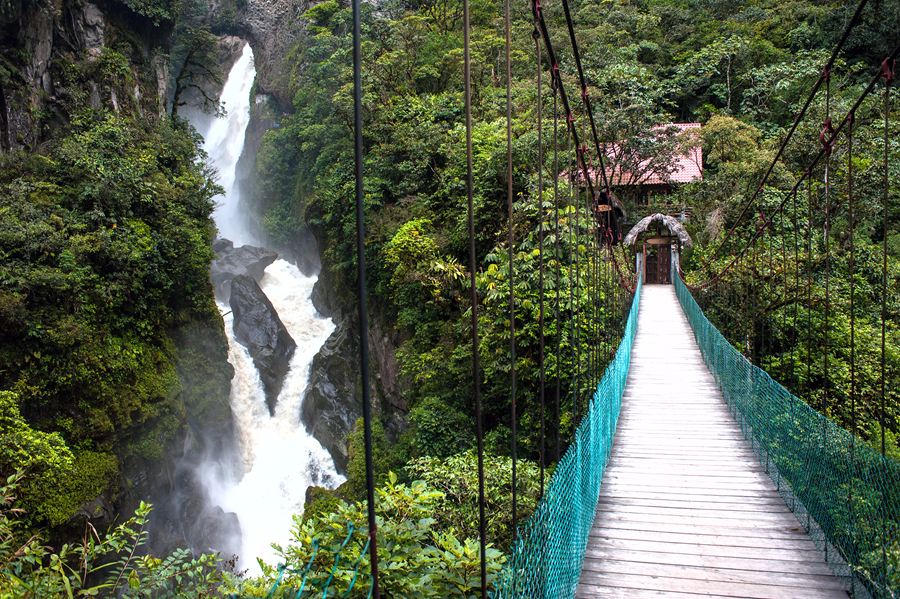
The history of Baños dates back to colonial times. The town developed around thermal springs, which were believed to have healing properties. Over time, it became a popular vacation spot for both Ecuadorian residents and travelers. Interestingly, the town is located near the Tungurahua volcano, which remained active for years and caused several evacuations. Despite this, Baños remains one of the most popular destinations in the region. The area's greatest attraction is its waterfalls. One of the most famous is the Pailón del Diablo, or "Devil's Cauldron," which is accessed via a steep trail through lush vegetation. Also worth seeing is the Cascada de la Virgen, located practically next to the town. Baños is also famous for its distinctive Ruta de las Cascadas, a trail along numerous waterfalls, which can be completed by bike, car, or local bus. The town also attracts thrill-seekers. You can try rafting, canyoning, zip-lining, or bungee jumping. A popular viewpoint is Casa del Árbol, home to the famous swing suspended over the mountainside. It's one of the most iconic photo spots in the area.
Otavalo Craft Market
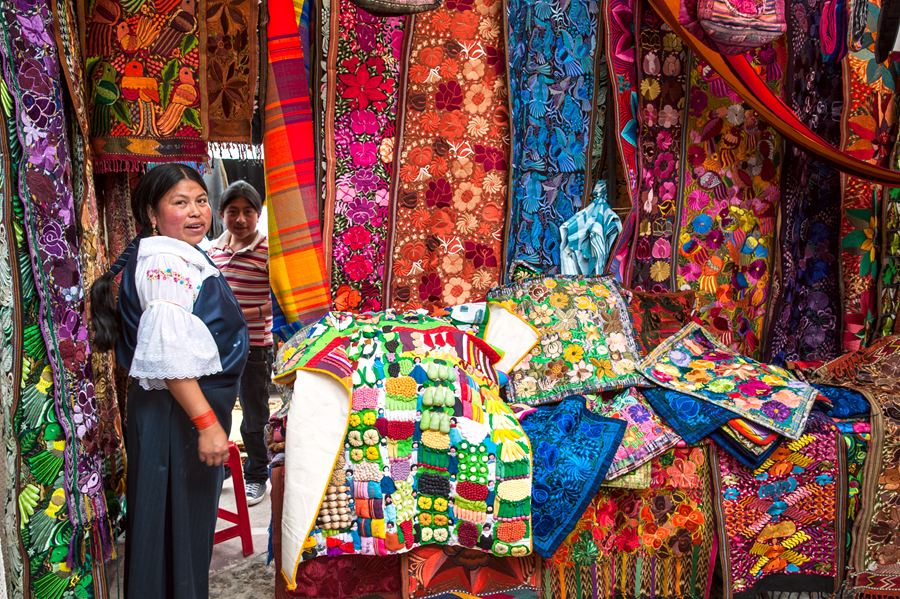
Market in Otavalo This is one of the best places to travel to experience the daily lives of Ecuador's indigenous people and learn about their traditions. The city lies about 90 km north of Quito, surrounded by Andean volcanoes, and its inhabitants – largely Kichwa Otavalo – have been renowned for crafting and selling handicrafts for generations. If you're wondering what to see in Ecuador, Otavalo is worth considering not only for the shopping but also for the opportunity to immerse yourself in local culture.
The most famous is Plaza de los Ponchos, where the largest and most recognizable market takes place. Here you can find colorful fabrics, ponchos, scarves, hats, bags, jewelry, ceramics, and various traditionally made products. Saturdays are especially interesting, when the market expands significantly and extends to the surrounding streets. However, it's worth taking a closer look at the items – some of the products sold as local handicrafts may be mass-produced. Otavalo also has an interesting trading history. The Kichwa community of Otavalo has been engaged in the exchange and sale of goods for centuries, and today its members travel with their handicrafts not only throughout Ecuador but also to other countries. Traditional costumes are also a distinctive element of local culture. Women often wear white embroidered blouses, long skirts, and distinctive scarves, and their hair is braided in long braids.
A visit to the market can also be a good starting point for further exploration of the area. Nearby are Lake San Pablo and the Peguche Falls, important to the local Kichwa community. It's worth combining shopping with a short walk exploring the landscapes of the northern Andes. Otavalo shows Ecuador from a completely different perspective – as a country of vibrant traditions, colorful handicrafts, and cultures that, despite the passage of time, remain present in everyday life.
Mindo Cloud Forest
Mindo This small town nestles in the Andes, about a two-hour drive from Quito, and is surrounded by one of Ecuador's most valuable ecosystems – the cloud forest. The humid, green landscape, frequent fogs, and extraordinary species richness make it a place unlike any other in the high Andes. For those planning to explore Ecuador, Mindo will be an interesting stop, especially if you're interested in nature, trekking, and birdwatching.
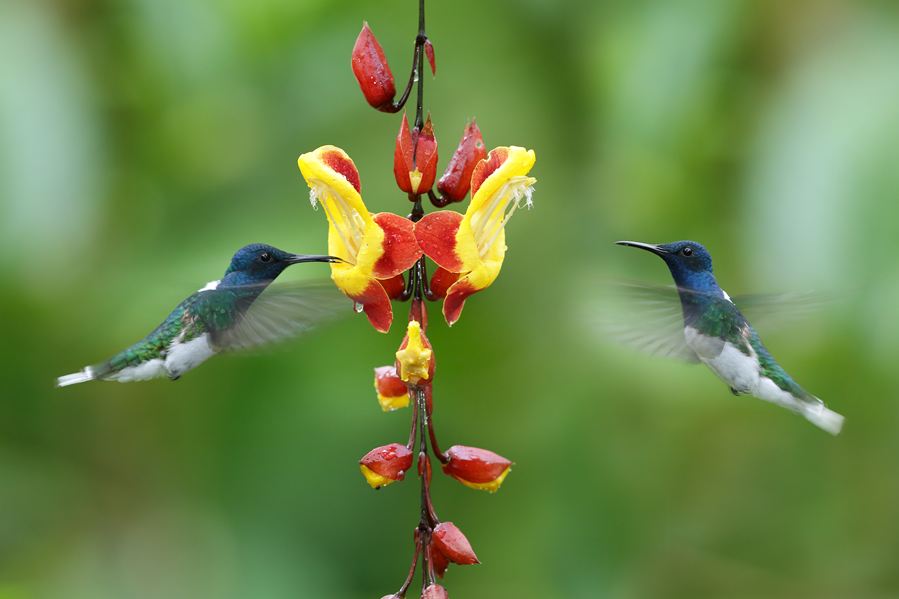
The Mindo region is known primarily for its incredible birdlife. Hundreds of species can be spotted in the forests, including toucans, hummingbirds, and the distinctive Andean rooster-crest. Birdwatching is one of the most popular activities in the area. It's worth taking a tour with a local guide who knows the best spots to spot specific species. However, Mindo offers much more. Hiking trails wind through the forest, and one popular attraction is the Ruta de las Cascadas, which features several waterfalls hidden among the lush vegetation. You can also ride the iconic Tarabita cable car, suspended above the treetops, and then hike towards the waterfalls. For those seeking an adrenaline rush, ziplines are also available above the forest.
Mindo is also interesting for its location at the crossroads of diverse ecosystems. The area belongs to the Chocó Andean region, considered one of the most important biodiversity hotspots in the world. Thanks to its high humidity, the local forests are full of mosses, ferns, bromeliads, and orchids. You can observe both exotic birds and unusual vegetation in a single stroll. Mindo is a good choice for those who want to slow down and immerse themselves in nature. Instead of monuments, you'll experience lush greenery, bird sounds, waterfalls, and the distinctive atmosphere of the cloud forest – a completely different side of Ecuador.
Yasuní National Park
Yasuní National Park is one of Ecuador's most valuable natural sites and one of the most important protected areas in the Amazon. Located in the eastern part of the country, between the Napo and Curaray rivers, it encompasses vast stretches of tropical rainforest. This is the place to visit if you're wondering what to see in Ecuador and want to experience its wildest side. Yasuní delights with its incredible diversity of life – hundreds of species of trees, birds, mammals, amphibians, and reptiles can be found in a small area.
One of the best ways to explore the park is by boat on the Amazon rivers and lakes. During the cruises, you can observe monkeys, caimans, river turtles, and numerous bird species. Guided morning and evening hikes are especially interesting, when the forest comes alive with life. Depending on your location, jungle hiking tours are also available, during which guides show you medicinal plants, tropical trees, and animal tracks. Yasuní is also an important cultural site for the indigenous people of the Amazon. Within the park and its surroundings, communities live for whom the forest is a source of food, materials, and knowledge passed down through generations. The situation of the Tagaeri and Taromenane peoples is particularly unique, remaining in voluntary isolation. For this reason, part of the area is under special protection and is not accessible to tourists.
The colonial city of Cuenca
Cuenca It's one of Ecuador's most beautiful cities and a prime example of how the country's colonial history intertwines with modern life. Located in the southern Andes, at an altitude of approximately 2500 meters above sea level, it delights with its cobblestone streets, historic churches, elegant townhouses, and leafy squares. Its historic center was designated a UNESCO World Heritage Site in 1999. For those seeking interesting places in Ecuador, Cuenca is a must-see, especially if you enjoy cities that you can leisurely explore on foot.
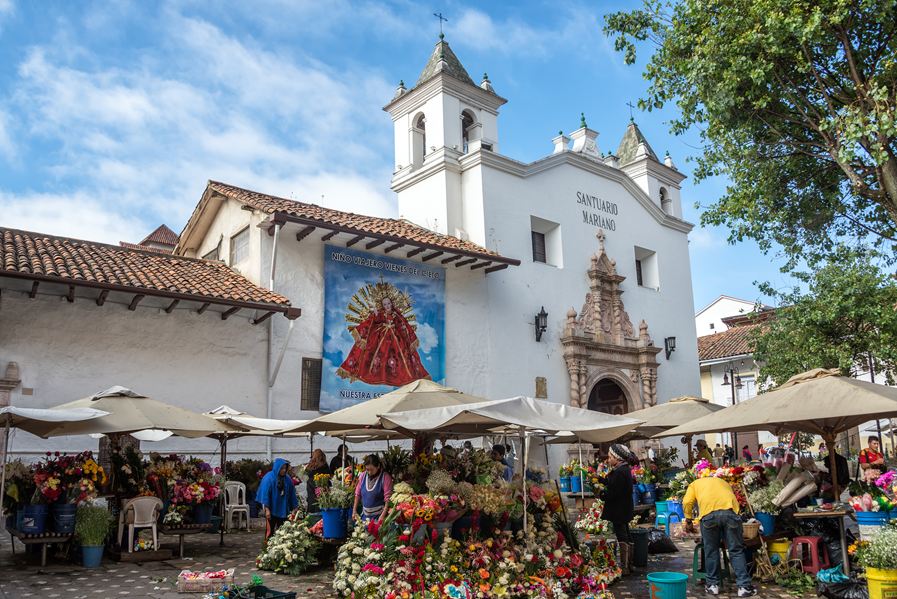
Cuenca's history stretches back much further than the colonial era. Before the arrival of the Spanish, it was home to an important Inca city known as Tomebamba. The Spanish founded Cuenca in 1557, naming it Santa Ana de los Ríos de Cuenca. The present-day buildings of the old town are primarily a testament to the colonial period and the city's subsequent development in the 19th century. While strolling, it's worth seeing Parque Calderón, the central square of the historic center, and the towering Cathedral of the Immaculate Conception, also known as Nueva Catedral. Its distinctive blue domes have become one of Cuenca's symbols. It's also worth visiting the older cathedral, known as El Sagrario, before continuing on to the Tomebamba River. A picturesque promenade runs along its banks, lined with preserved historic buildings. The city's strong craftsmanship is also noteworthy. Cuenca is renowned for its ceramics, silverware, and textiles, among other things. It's also one of the centers of production for the famous Panama hat, although its name can be misleading – it's traditionally made in Ecuador, not Panama. The city boasts workshops and shops selling handmade products. Cuenca is also a good base for exploring the surrounding area. Nearby is Cajas National Park, with its high-altitude lakes, páramo moorland, and numerous trekking trails.
The Center of the World (Mitad del Mundo)
The Center of the World, or Mitad del Mundo, is one of the most iconic attractions in and around Quito. The tourist complex is located approximately 25 km north of Ecuador's capital, on Manuel Córdova Galarza Avenue, at a point associated with the course of the equator. Here, you can symbolically stand with one foot in the northern hemisphere and the other in the southern. For those planning to explore Ecuador, this is an interesting stop, especially since a visit combines the country's geography, history, and culture. The centerpiece of the complex is the towering Monumento Ecuatorial, which houses a museum dedicated to the geography and diversity of Ecuador. The exhibition progresses through the monument's floors, showcasing, among other things, the landscapes of the Galapagos, indigenous cultures, and various regions of the country. You can also visit the pavilion dedicated to the French geodetic mission that conducted measurements in the 18th century to help determine the precise course of the equator.
There are several interesting facts about the Mitad del Mundo. The equator line itself is marked as 0° latitude, and a photo taken with one foot on each side of the equator has become an almost obligatory souvenir of a visit. However, it's worth knowing that modern satellite measurements indicate that the actual course of the equator lies slightly beyond the historically designated point of the complex. This doesn't diminish the site's tourist significance, but rather illustrates how the accuracy of geographical measurements has changed. Within the Mitad del Mundo, you'll also find a planetarium, the Guayasamín Museum, the Railway Museum, plazas, and spaces showcasing Ecuadorian culture. So, you can spend a few hours here, and not just take a souvenir photo at the equator. The official complex is currently open year-round; it's open Monday through Friday from 9:00 AM to 17:00 PM, and until 18:00 PM on weekends.
Mitad del Mundo is, above all, an interesting geographical experience, but also a good introduction to the diversity of Ecuador. A visit allows you to literally find yourself at the crossroads of two hemispheres, while also learning about the history of equatorial exploration and the country's culture.
Interesting places in Ecuador
Ecuador can surprise you with its diversity of places worth seeing, beyond the most obvious spots on the tourist map. It's worth discovering the less obvious corners of the country, because Ecuador – the attractions it offers to the traveler – is truly diverseFrom the towering Andes and colonial cities to wildlife, fascinating history, and places where you can get a glimpse of the daily lives of locals, it's worth leaving some space for less-frequented destinations when traveling.
An interesting direction is Reserva de Producción de Fauna Cuyabeno in the Amazonian part of the country. Extensive wetlands, rivers, and lagoons create exceptional wildlife viewing conditions. During boat trips, you can spot monkeys, caimans, birds, and a variety of rainforest species. This is a good choice for those who want to experience the Amazon away from large cities and hotel complexes. Nature lovers should also be interested in El Ángel reserve in the northern Andes. High-altitude trails lead through the rugged páramo, and one of the most interesting spots is the El Voladero lagoon. The landscape is completely different from that of the tropical Amazon, which well demonstrates Ecuador's extraordinary diversity. Also worth visiting Guayaquil, the country's largest city and a major port on the Pacific Ocean. Here, you can explore the historic Las Peñas district, climb Cerro Santa Ana Hill, visit the Malecón 2000 promenade, and visit Parque Seminario, where iguanas roam freely. The city also makes a convenient base before continuing your journey to the coast.
An interesting stop is Vilcabamba, a small town nestled in a green valley in southern Ecuador. The area attracts lovers of peaceful relaxation, hiking, and mountain landscapes. From here, you can set off on trails leading through the surrounding hills and forests. Also worthy of note is Machalilla National Park on the Pacific coast. It protects fragments of tropical dry forest, as well as the coast and islands. During the season, migrating humpback whales can be observed here, and the park's surroundings are a good place for hiking, snorkeling, and exploring coastal wildlife. Thanks to places like these, Ecuador reveals its less obvious side – diverse, natural, and definitely worth exploring off the beaten track.
What is worth experiencing in Ecuador?
Snorkeling with Sea Turtles, Sea Lions, and Sharks in the Galapagos
Snorkeling in the Galapagos Islands is one of the most unique experiences you can have while exploring Ecuador. The waters surrounding the archipelago are exceptionally rich in wildlife, and while snorkeling, you can observe animals in their natural habitat. Depending on the site you choose, you might encounter green sea turtles, inquisitive sea lions, reef sharks, rays, Galapagos penguins, and hundreds of colorful fish. One interesting spot is Las Tintoreras off the coast of Isabela Island. Sea turtles, sea lions, and whitetip sharks are common sights in the clear waters. The area itself is unique – it's made up of black lava formations, channels, and natural pools, where you can also observe marine iguanas and Galapagos penguins. Gardner Bay on Española Island is also a good snorkeling spot. In the shallow waters, you can swim among colorful fish and play with sea lions, while reef sharks often rest near the bottom. Sea turtles can also be spotted in the area, appearing both in the water and on the beach. An even more spectacular experience awaits at Kicker Rock near San Cristóbal. This distinctive rock monolith, resembling a sleeping lion in profile, creates an underwater channel where you can observe sharks, sea turtles, and rays. However, water conditions can change, so snorkeling should be done in accordance with your guide's recommendations and the Galapagos National Park regulations.
Snorkeling doesn't require diving experience and is accessible to most travelers. However, it's important to remember that the Galapagos is a highly protected ecosystem. Animals cannot be touched or fed, and during excursions, it's important to maintain a safe distance and follow the guide's instructions.

Standing on two hemispheres at the same time in Mitad del Mundo
One of the most unusual souvenirs from a trip to Ecuador might be a photo taken at the exact point where the Northern and Southern Hemispheres meet. This is precisely what the Mitad del Mundo, a complex located north of Quito, offers. The concept is simple, but the place offers much more than just the distinctive yellow line in the square. It's also an opportunity to learn about the history of geography, local cultures, and ancient ways of observing the sky. A highlight of the visit is the nine-story museum located inside the Monumento Ecuatorial. Each floor is dedicated to different regions of Ecuador and the communities that inhabit them. You can see exhibits on topics such as the Shuar and Huaorani cultures, the Galapagos, and the traditions of the coastal region. This makes a visit to Mitad del Mundo a short journey across the country.
Worth noting is the Pabellón Francia, dedicated to the 18th-century French Geodetic Mission. Its participants came to South America to conduct measurements that would more precisely determine the shape of the Earth and the position of the equator. Their work was crucial to the development of modern geodesy. On-site you'll also find a planetarium, a railway museum, the Guayasamín Museum, and even a cocoa experience where you can learn about the chocolate-making process. Cultural events also take place here on weekends, including performances, concerts, and traditional dances. An interesting addition to your visit is the nearby Intiñan Museum, which hosts interactive displays related to the equator and astronomy. However, it's worth keeping a distance from popular demonstrations, such as the direction of water swirl – some of these are educational experiments, but not the actual effects of the equator. Therefore, the Mitad del Mundo is worth considering for more than just a souvenir photo. It's a fascinating stop on a tour of Ecuador, especially for those interested in the country's geography, history, and culture.
Trekking to the crater rim of the emerald Quilotoa Lagoon
Trekking around the rim of the Quilotoa crater is one of the best experiences to showcase the beauty of the Andean landscape. Located at an altitude of approximately 3900 meters above sea level, the lagoon fills the interior of a former volcanic crater, and its intensely turquoise, sometimes emerald, water contrasts with the dark slopes of the caldera. If you're looking for interesting places in Ecuador, it's worth seeing Quilotoa not only from the main viewpoint but also while trekking. The most spectacular option is walking the trail along the crater rim. The entire route around the caldera is approximately 11 km and leads through a succession of natural viewpoints. Along the way, the landscape is constantly changing – sometimes the lake is right below you, other times the path recedes from its edge, revealing vast panoramas of the Andean páramos. Due to the altitude and numerous climbs, the route requires good physical condition, and strong winds can make the hike even more challenging. If you don't want to tackle the entire trail, you can take a shorter route from the main entrance to the Shalalá viewpoint. The trail is about 2,5 km long and runs along the crater rim, offering sweeping views of the lagoon. Another option is to descend to the caldera floor, to a spot called Playita Quilotoa. The descent is about 3,3 km, but the return is much more challenging due to the steepness and altitude.
Quilotoa is also an important place for the local community. In the surrounding villages, you can buy handicrafts and learn about the traditions of the Andean people. It's also worth remembering that the altitude of approximately 3900 meters above sea level can cause symptoms of altitude sickness, so it's a good idea to plan appropriate acclimatization before the trek.
Swinging over the edge on the famous "Swing at the End of the World" in Baños
One of the most iconic attractions in Baños de Agua Santa is La Casa del Árbol, a small wooden house situated at an altitude of approximately 2660 meters above sea level on the slopes of the Tungurahua volcano. It's here that you'll find the famous "Swing at the End of the World" – a simple wooden swing suspended high above the steep slope. While swinging, you can admire the panoramic views of green valleys, Andean peaks, and, on a clear day, the Tungurahua volcano.
The history of this place is as fascinating as the attraction itself. Casa del Árbol was built as an observation post from which Carlos Sánchez monitored Tungurahua's activity. After the volcanic eruption in 1999, Baños was evacuated, and Sánchez helped observe the volcano's behavior and relay information to local residents. Initially, the swing was built as a simple pastime for his family. Over time, tourists began visiting, and in 2014, a photo taken on the swing gained international attention in a National Geographic photo contest. Today, the swing ride lasts only a short time but delivers a serious adrenaline rush. However, it's worth remembering that photos often give the impression that the swing is perched above a vertical drop—in reality, it's suspended above a steep slope. There's also a viewpoint and other attractions on site, allowing you to combine swinging with admiring the scenery.
Climbing to the shelter on the majestic Cotopaxi volcano
Climbing to the José Rivas Refuge on the slopes of Cotopaxi is a great option for those who want to experience the atmosphere of the high Andes while traveling, but don't necessarily plan on conquering a volcanic peak. Rising to 5897 meters above sea level, Cotopaxi is one of the highest active volcanoes in the world. Its almost perfectly symmetrical cone, covered by a glacier, is one of Ecuador's most recognizable landscapes. The trail to the refuge begins at approximately 4500 meters above sea level, where a parking lot is located. From here, you'll need to climb a steep 1,1 km (7.7 mi) ascent to Refugio José Rivas, located at 4864 meters (15,964 ft). Although the distance is short, the altitude can make the hike challenging. The air here contains significantly less oxygen than in the lowlands, so a leisurely pace is essential, and good acclimatization is essential.
The refuge itself is an important point for climbers preparing to climb Cotopaxi. From here, the journey towards the glacier and the summit begins. For most hikers, however, reaching José Rivas is a destination in itself. Here, they can relax, warm up, and above all, admire the high-altitude landscape. Ecuador's official tourism website lists trekking to the refuge as one of the most popular activities in Cotopaxi National Park. The hike also offers an opportunity to observe the changing landscape. In the lower reaches of the park, the páramo, characteristic of the Andes, dominates, while with increasing altitude, the vegetation becomes increasingly sparse, and the surroundings become more rugged and rocky. With good visibility, one can admire the vast expanse of Cotopaxi National Park and the distinctive volcanic cone. Due to the altitude and activity of the volcano, it is advisable to check current conditions and official announcements before embarking on the expedition. When planning high-altitude activities, Ecuador's tourism authorities recommend using the services of authorized operators or recognized mountain clubs. However, a visit to the José Rivas Refuge is a great way to experience the majesty of Cotopaxi without the demanding challenge of summiting it.
A canoe trip deep into the Amazon and listening to the sounds of the jungle at night
A canoe trip deep into the Amazon jungle is an experience that allows you to experience Ecuador from a completely different perspective. In reserves like Cuyabeno, you can navigate narrow rivers and canals, surrounded by dense vegetation, and the quiet boat makes it easier to observe animals on the banks. During the day, with a bit of luck, you might spot monkeys, sloths, toucans, parrots, hoatzins, or pink Amazon river dolphins. However, a truly extraordinary trip takes place after sunset. As darkness falls, the guide shines a flashlight on the riverbanks and calmly searches the water and vegetation. This is when you might spot caimans, their eyes reflecting the flashlight, as well as frogs, snakes, anacondas, nocturnal birds, and insects. What you hear is even more important than what you see. After dark, the jungle fills with the croaking of frogs, the chirping of insects, the calls of birds, and the rustling of animals moving among the leaves. A canoe allows you to delve into areas larger boats can't reach, and the slow movement across the water allows for wildlife observation. Some trips are conducted in traditional rowboats, making it even quieter and easier to feel like you're truly in the heart of the rainforest.
Descent along the legendary Nariz del Diablo railway line
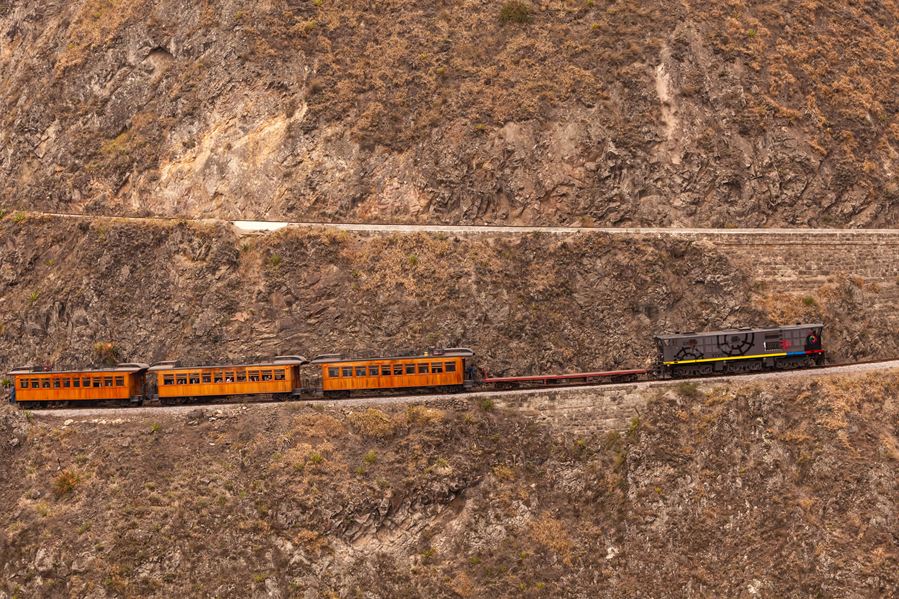
The Nariz del Diablo, or "Devil's Nose," is one of Ecuador's most unique train attractions. Located in the Chimborazo Province, in the central Andes, the route connects the towns of Alausí and Sibambe. Currently, the round-trip journey is approximately 12 km and takes about 2,5 hours, including stops and a section dedicated to exploring the local culture. Importantly, after a several-year hiatus, the route reopened in 2025, and in 2026, it remains one of Ecuador's operational tourist train routes.
The most spectacular section is located at a place called Cóndor Puñuna, or "Condor's Nest." It was here that the famous railway zigzag, carved into a nearly vertical rock face, was created. The train descends the slope, makes a sharp turn, and then reverses onto the next section of track to change direction again. This design allowed the designers to overcome a significant elevation change in a short distance. Historically, the elevation difference on this section was approximately 150 meters, with a track gradient of up to 5,5 percent. The journey begins at the Alausí station, located at an altitude of approximately 2345 meters above sea level. The train heads towards Sibambe, gradually descending the Andean slopes. Along the way, you can admire the steep mountainsides, valleys, and characteristic landscapes of the Chimborazo province. The descent through the "Devil's Nose" itself is the highlight of the journey, as from the windows you can clearly see the intricate track layout and the rock face into which the railway line is built. Once you reach Sibambe, the journey doesn't end there. A welcome reception organized by the local community is provided, and you can also visit a small museum and see traditional performances. This allows you to combine a spectacular train journey with a cultural experience. The Nariz del Diablo is also an important testament to Ecuador's railway history. The construction of the trans-Andean railway was a massive engineering feat, and the crossing of the difficult mountainous terrain via the "Devil's Nose" became one of its most impressive achievements. Today, the journey is an excellent choice for those seeking interesting destinations in Ecuador that combine beautiful views, history, and a strong dose of excitement.
Colorful shopping with local Indians at the Otavalo Market
The Otavalo Market is a place where shopping becomes an opportunity to experience Kichwa Otavalo culture. The famous Plaza de los Ponchos is located in the city center, about 90 km north of Quito. Handicrafts can be found here every day, but the greatest selection is available on Wednesdays and Saturdays, when thousands of vendors gather. Official Ecuadorian tourism materials indicate that on the largest market days, up to 3000 vendors attend.
What's worth buying? Primarily textiles – colorful ponchos, shawls, blankets, sweaters, and hats made of sheep's wool or alpaca. Embroidered blouses, traditional belts, bags, hammocks, and hand-woven kilims are also very popular. At the stands, you'll also find beaded jewelry, ceramics, wooden objects, paintings, and characteristic Andean musical instruments. Fabrics decorated with geometric patterns and motifs inspired by the Andean landscape and culture are particularly striking. If you want to buy something truly traditional, it's worth paying attention not only to the appearance but also to the quality of the workmanship and materials. A hand-woven product may have slight variations in the weave, color, or finish – these minor imperfections often indicate craftsmanship. It's a good idea to ask the seller where and how a specific item was made. There are family-run workshops in the area where you can demonstrate traditional weaving and dyeing techniques.
It's also worth remembering that not everything at the market is handmade. Some products are created using semi-industrial processes, while others may be imported or mass-produced. Therefore, there's no single, reliable characteristic that can identify an "original." It's best to look for stands that offer specific information about the material, technique, and place of production, compare the quality of several similar products, and don't rely solely on the lowest price.
Another distinctive element of the market is the clothing of the locals themselves. Kichwa Otavalo women traditionally wear embroidered white blouses, long skirts, shawls, and distinctive gold or beaded jewelry. Their clothing is not only decorative but also an important element of cultural identity. This makes a stroll through Plaza de los Ponchos more than just shopping—it allows you to see how traditional crafts remain a part of the daily lives of Otavalo's residents.
Ziplining over the treetops in the misty Mindo forest in search of hummingbirds
Mindo is one of the best places in Ecuador to combine nature with a dose of adrenaline. Located in the Pichincha province, about a two-hour drive from Quito, the region is renowned for its humid cloud forest and incredible birdlife. With over 450 bird species recorded in the forests, you can combine a zipline ride with a spotting of colorful hummingbirds, toucans, and other treetop inhabitants. One popular attraction is Mindo Canopy Adventures, where the zipline course spans 10 sections totaling over 2,6 km. Subsequent runs take you high above the green treetops, offering a completely different perspective on the cloud forest. You can choose from various positions during the descent, including the popular "Superman" position, in which your body lies almost horizontally, as if in flight. However, the thrill isn't the main attraction. During the ride, it's worth keeping a close eye on the trees and their canopy, as Mindo is one of the region's most important bird habitats. Hummingbirds are particularly characteristic inhabitants of the local forest – dozens of species can be spotted in nearby reserves. For a more leisurely birdwatching experience, a visit to one of the hummingbird observation points is a good complement to the zipline. In Mindo, you can watch them from a short distance at specially prepared feeders, and patient observers have the chance to see several species in a single visit.
Ziplining in Mindo isn't just a quick descent over the forest. It's a combination of adventure and nature observation, allowing you to experience the heights, see the dense vegetation of the cloud forest from above, and simultaneously find yourself in one of the best regions in Ecuador for hummingbird watching.
Ecuador is a destination that can fill a trip with a wide variety of experiences. You can combine sightseeing in colonial cities with trekking in the Andes, wildlife watching in the Amazon, or snorkeling in the Galapagos. There are also less obvious attractions – from the market in Otavalo to driving the legendary Nariz del Diablo route. Thanks to the close proximity of many regions, it's easy to create a diverse itinerary and see many facets of the country in a single trip. Whether you're looking for an active holiday, contact with nature, history, or local culture, Ecuador's attractions allow you to plan a trip full of fascinating experiences.



October 9, 2026

October 8, 2026
October 7, 2026
October 6, 2026
October 5, 2026
recent posts
- Cambodian cuisine – what is worth trying? October 9, 2026
 Safety in Ecuador. Is Ecuador safe? October 9, 2026