Get inspired and read about your dream trip on the blog
Best attractions in Chile – what is worth seeing?
August 28, 2026
Chile It's not easy to get to know. It's too long, too diverse, and too full of contrasts to be captured in a single, pre-packaged itinerary. Traveling through this country is more like crossing borders between completely different worlds – sometimes just a few hours' drive and the desert landscape gives way to green valleys, and bare mountains begin to reflect in the lake's surface. It's Chile's unpredictability and vast scale that make traveling here feel like discovering the unknown. In this guide, we'll show you Chile's attractions from different perspectives – not only the most recognizable ones, but also places that allow you to better understand the character of individual regions. We'll delve into extraordinary Patagonia, discover the desert reaches of the north, visit cities steeped in history and art, and visit islands whose cultures have developed for centuries far from the continental world. We'll explore trekking, encounters with wildlife, unusual geological formations, thermal springs, vineyards, and places connected with indigenous traditions. We'll tell you what's worth seeing in Chile, what experiences are best suited to specific regions, and why it's worth getting off the beaten track sometimes.
Attractions in Chile - travel guide
Chile is an extraordinary country. Stretching thousands of kilometers along the western coast of South America, it combines extremely diverse landscapes, climates, and travel experiences. On one side, the desert expanses of the north; on the other, the cool reaches of Patagonia; and in between, fertile valleys, vineyards, forests, lakes, mountains, and the Pacific coast. It is precisely this extraordinary diversity that makes Chile's attractions a topic impossible to exhaust in a single trip.
It's a good idea to start planning your trip by choosing a region. Chile is a very long country, and the distances between different parts of the country can be vast. A nature-oriented traveler can focus on the north and south, a lover of city life can combine sightseeing in the capital with a stay by the ocean, and those interested in wine, cuisine, and local culture should choose the central part of the country. However, this doesn't mean you have to limit yourself to one region – a well-planned route allows you to see several completely different sides of Chile.
A huge advantage of the country is the opportunity to connect with nature at almost every turn. Chile offers spaces dominated by silence and a sense of vastness, but also ideal places for those seeking active recreation. Depending on the region, you can plan trekking, mountaineering, wildlife watching, water sports, or leisurely drives through picturesque landscapes. The diversity of altitude and climate means that each part of the country can offer completely different experiences.
A guide to Chile should also include practical considerations. Given the country's size, not only the choice of destinations is important, but also the method of travel between them. For longer trips, it's worth considering domestic flights, travel times, and climate differences. The north and south may require completely different preparations in terms of clothing and equipment, and seasonality is crucial, especially when planning a trip to remote areas of Patagonia.
Chile also delights with its cultural contrasts. Modern cities coexist with small towns, indigenous traditions intertwine with European influences, and the cuisine utilizes both ocean produce and ingredients characteristic of the country's mountainous and agricultural regions. Added to this are wines, local markets, music, handicrafts, and the everyday lives of the locals, ensuring that the trip is more than just about admiring the scenery.

Argentina and Chile – landscapes of the south
Argentina, Chile | Buenos Aires, El Chalten, El Calafate, Torres del Paine, Punta Arenas, Santiago
Top attractions in Chile
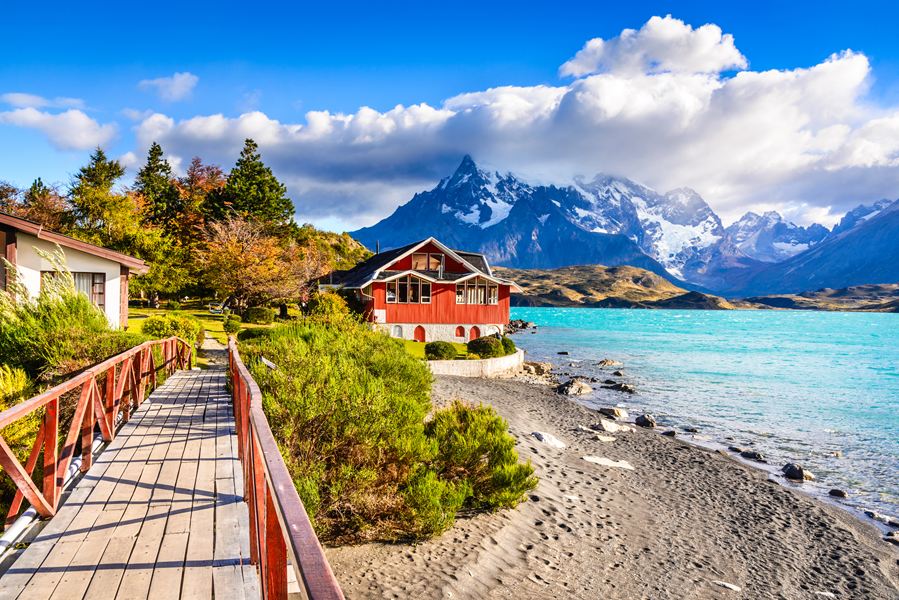
Torres del Paine National Park
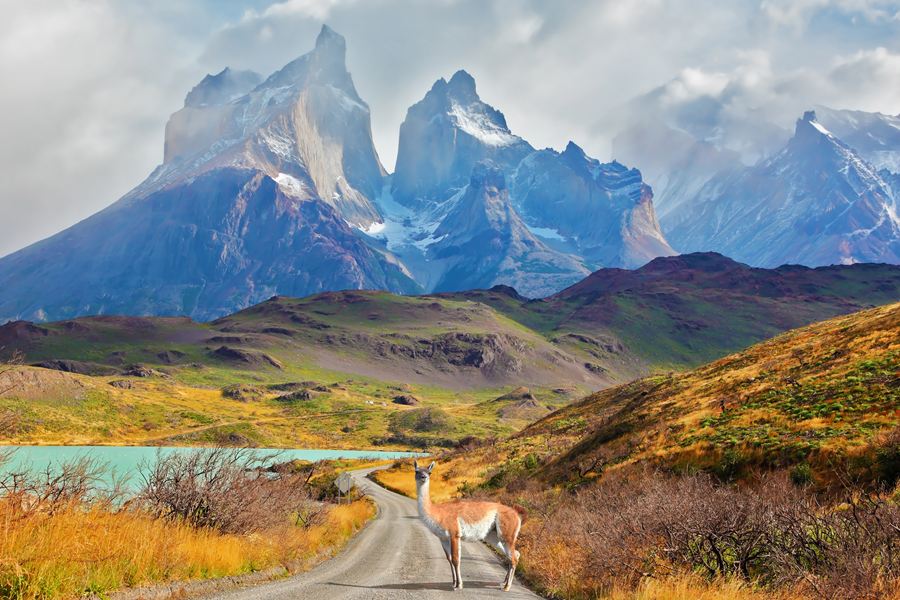
Torres del Paine National Park this is one of the most spectacular places Patagonia and a true showcase of southern Chile. It lies in the Magallanes region, about 100 km north of Puerto Natales, an area where rugged mountains meet turquoise lakes, glaciers, vast valleys, and wilderness inhabited by guanacos and condors. It's here that the vast and diverse nature of this country is best demonstrated. If the question "Chile – what to see?" arises at the beginning of your travel planning, Patagonia and Torres del Paine are a good place to start.
The park's symbols are the three distinctive granite towers of Torres del Paine, rising high above the valley. They can be reached via one of Patagonia's most famous trekking trails, which lead through forests and mountain landscapes to a viewpoint at the foot of the towering rock formations. Lakes Nordenskjöld, Pehoé, and Grey are equally impressive, their vibrant colors contrasting beautifully with the snow-capped peaks. The park is a paradise for active recreation enthusiasts. The most famous are the multi-day trekking routes. W i O, but shorter day hikes are also possible. Horseback riding tours, kayaking trips, lake cruises, and wildlife viewing expeditions are also available. While exploring the park, you can spot guanacos, foxes, condors, and, with a bit of luck, even pumas.
The park's name itself is interesting. "Paine" comes from the Tehuelche language and means blue, which fits well with the distinctive colors of the local lakes and rivers. Torres del Paine was established in 1959 and in 1978 was added to the UNESCO Biosphere Reserve list. The park's landscape is the result of powerful glacial processes that, over thousands of years, shaped the valleys, lakes, and distinctive peaks.
Torres del Paine is worth visiting not only for its individual viewpoints. The greatest experience comes from traversing the vast, almost endless expanses and witnessing how the face of Patagonia changes with the weather. Strong winds, rapidly moving clouds, the sun reflecting off the turquoise water, and monumental mountains create a scenery that lingers in the memory long after the journey ends.
Glacier Grey
The Grey Glacier is one of the most remarkable landscape features of Torres del Paine National Park and one of the places that best showcases the rugged beauty of Chilean Patagonia. A vast, bluish mass of ice flows from the Southern Patagonian Icefield into Lake Grey, creating a spectacular setting surrounded by mountains and rugged valleys. The glacier is approximately 6 kilometers wide where it joins the lake, and its ice wall can reach a height of about 30 meters above the water's surface.
Grey Glacier can be admired from several perspectives. One of the most popular options is a cruise on Grey Lake, where you can sail relatively close to the glacier's front and observe huge chunks of ice floating in the water. A more active option is trekking towards the glacier, while those seeking a unique experience can opt for a guided crampon-crawling expedition across its surface. It's worth remembering that weather conditions in Patagonia can change very quickly, so the availability of individual activities depends on the local conditions.
Visiting Chile isn't just about visiting cities and monuments, but above all, discovering extraordinary landscapes, and the Grey Glacier is a perfect example of this experience. Hiking around it allows you to witness the power of glacial nature up close, and the sight of the intensely blue ice contrasting with the dark rocks and turquoise lake is one of the most iconic images of southern Chile.
Grey Glacier is constantly changing. Influenced by global warming, its front is retreating, and massive chunks of ice are breaking off from the glacier and ending up in the lake. The resulting icebergs can have unusual shades—from nearly white to intense blue—due to the structure of the ice and how it absorbs light.
Atacama Desert and the Valley of the Moon
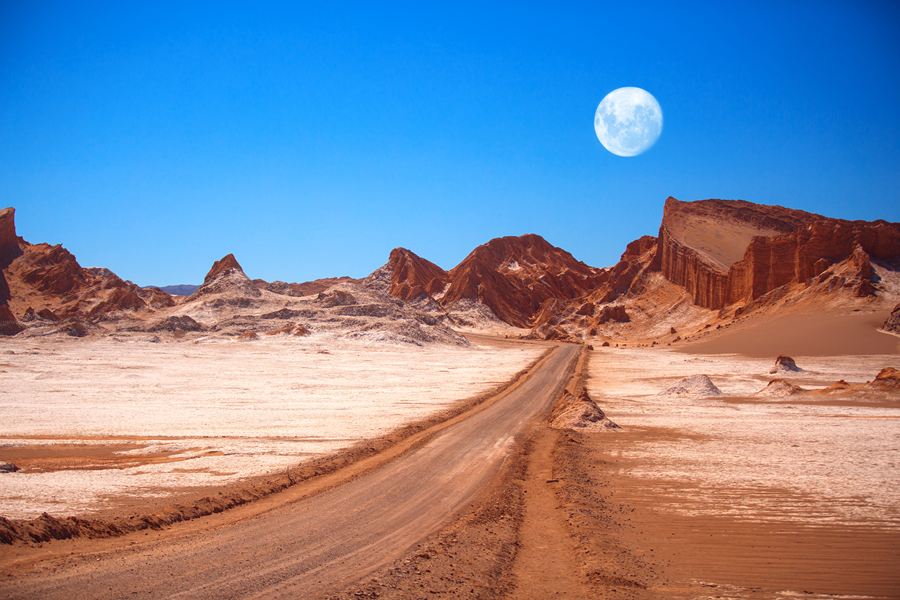
Atacama DesertLocated in northern Chile, the Atacama Desert is one of the world's most unique desert regions. Stretching between the Pacific coast and the towering Andes, it boasts landscapes that resemble the surface of a distant planet more than a classic desert. The near-total lack of rainfall, dramatic temperature differences between day and night, and rugged, rocky expanses make it one of the country's most distinctive regions. It's no wonder that those planning what to see in Chile often place the Atacama high on their list.
One of the most spectacular corners of the desert is the Valley of the Moon, located near San Pedro de Atacama. The name is not accidental – fanciful rock formations, dunes, sharp ridges, and vast expanses of salt-covered land create a landscape reminiscent of the lunar surface. It's worth visiting in the late afternoon, when the setting sun transforms the rocks. One of the most popular viewing points is the viewpoint by the dunes, from which you can admire a vast panorama of the valley. However, the Atacama offers much more than just the Valley of the Moon. In the area around San Pedro de Atacama, you can discover salt flats, high-altitude lagoons, geysers, and valleys surrounded by volcanoes. Observing the night sky is also a unique experience. Thanks to its exceptionally dry climate, minimal cloud cover, and minimal light pollution, the Atacama is one of the best places on Earth for stargazing. Professional astronomy tours are organized here, allowing you to see planets, nebulae, and distant galaxies.
The desert also holds scientific significance. The extremely dry and harsh conditions of the Atacama are used by scientists as a natural laboratory for studying life in extreme environments. The similarity of some parts of the desert to the surface of Mars makes it a suitable testing ground for solutions and instruments used in planetary science.
The best base for exploring the desert is San Pedro de Atacama – a small town with distinctive adobe architecture, which has become a base for trips around the region. It's worth dedicating several days to the Atacama, as individual sites are located quite far from each other, and some of the attractions are located at high altitudes.
El Tatio Geysers
The El Tatio Geysers are one of the most unique attractions in northern Chile and a key point of interest when exploring the Atacama Desert region. The geothermal field lies at an altitude of approximately 4300 meters above sea level, nestled in the rugged Andean landscape, about 90 km from San Pedro de Atacama. At dawn, the site transforms into a spectacular natural theater – jets of hot water and clouds of steam erupt from numerous vents in the ground, creating a unique atmosphere in the cool morning air. The best time to visit is early morning, when the temperature difference between the hot water and the cold air is greatest. This is when the geysers are at their most spectacular, with the rising steam creating spectacular columns visible from afar. As the sun rises, the landscape gradually changes – the rays illuminate successive formations, and the steam slowly begins to dissipate. Therefore, when planning what to see in Chile, you should prepare for a very early departure, but the spectacle of nature definitely rewards a pre-dawn wake-up call.
El Tatio isn't a single geyser, but a vast geothermal field containing several hundred active hydrothermal formations. Among them, you can see not only geysers but also fumaroles, hot springs, and mud pools. The water reaches very high temperatures, so following designated routes and maintaining a safe distance from geothermal vents is extremely important. The altitude at which El Tatio is located makes the trip itself a unique experience. Before setting off, it's worth properly preparing for high-altitude conditions – morning temperatures can drop well below freezing, and the intense sun quickly changes the perceived temperature throughout the day. During the drive from San Pedro de Atacama, you can also observe the characteristic wildlife of the Altiplano, including vicuñas, llamas, and high-altitude birds.
The name El Tatio comes from the Kunza language, spoken by the region's ancient inhabitants, and its meaning is related to the term referring to a place where smoke or steam appears. Geysers are the result of geothermal activity related to the volcanic nature of the Andes – water seeps into the earth, where it is heated, and then, under pressure, rises to the surface.
Easter Island
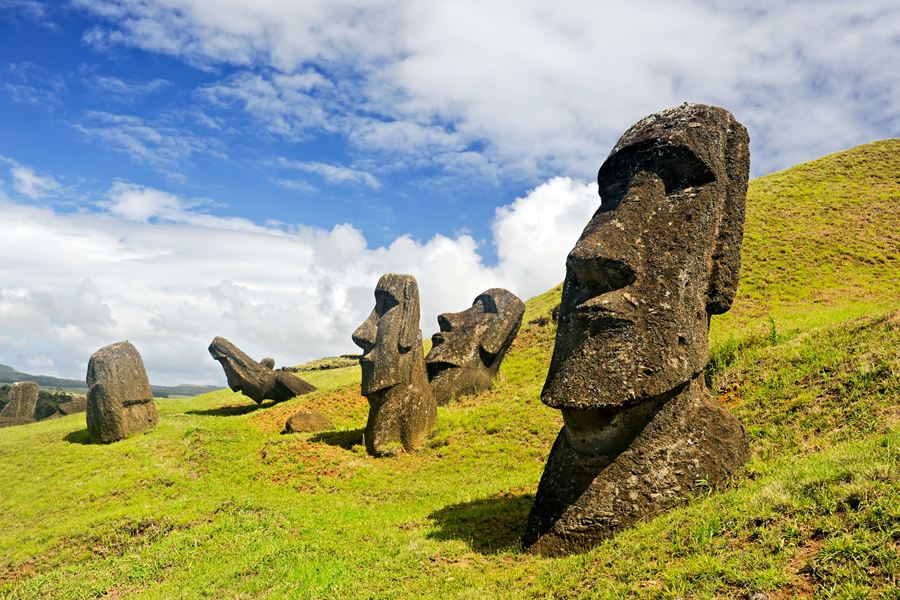
Easter Island, also known as Rapa Nui, is one of Chile's most remote and mysterious places. Located in the southeastern Pacific Ocean, approximately 3700 km from the mainland, it captivates with its volcanic landscape, secluded beaches, and, above all, monumental moai statues. These monuments have made the island one of the most recognizable archaeological sites in the world and earned it a spot on the UNESCO World Heritage List.
Moai are a symbol of Rapa Nui and one of the main reasons why the island attracts travelers. The stone figures represent the ancestors of the island's inhabitants and were created primarily from volcanic tuff quarries mined at the Rano Raraku quarry. Dozens of unfinished statues can still be seen on the volcano's slopes, giving an idea of the scale of the undertaking involved in creating and transporting them. While exploring, it's also worth visiting Ahu Tongariki, a monumental ceremonial platform with 15 restored moai. It's one of the most spectacular sites on the island, especially at sunrise. Another highlight is Ahu Tahai, near the only major Rapa Nui town, Hanga Roa. The complex includes several statue platforms and is an excellent place to learn about the distinctive ceremonial architecture of the island's ancient inhabitants.
Rapa Nui, however, holds much more than its famous statues. Here, you can explore the craters of extinct volcanoes, caves, a rocky coastline, and traditional settlements. Orongo, a former ceremonial village situated on the rim of the Rano Kau volcano crater, is worth a visit. This site overlooks the ocean and three small islands, and its location is linked to the ancient cult of the Birdman. While Chile's historical monuments are primarily associated with colonial cities, churches, and the historic architecture of the mainland, Rapa Nui showcases a completely different heritage. It is connected to Polynesian culture, the centuries-old traditions of the island's inhabitants, and the extraordinary achievements of its ancient communities. A visit here is not only an encounter with monumental statues but also an opportunity to learn about one of the most fascinating cultures of the Pacific.
The method by which the moai were moved remains a curious mystery. Over the years, archaeologists and researchers have presented various hypotheses, and experiments suggest that some of the statues may have been transported vertically, using ropes and the characteristic "rocking" of the statue from side to side. The mystery of the moai continues to add to the unique atmosphere of Rapa Nui, even as modern archaeology increasingly elucidates how they were formed and moved.
The picturesque city of Valparaíso
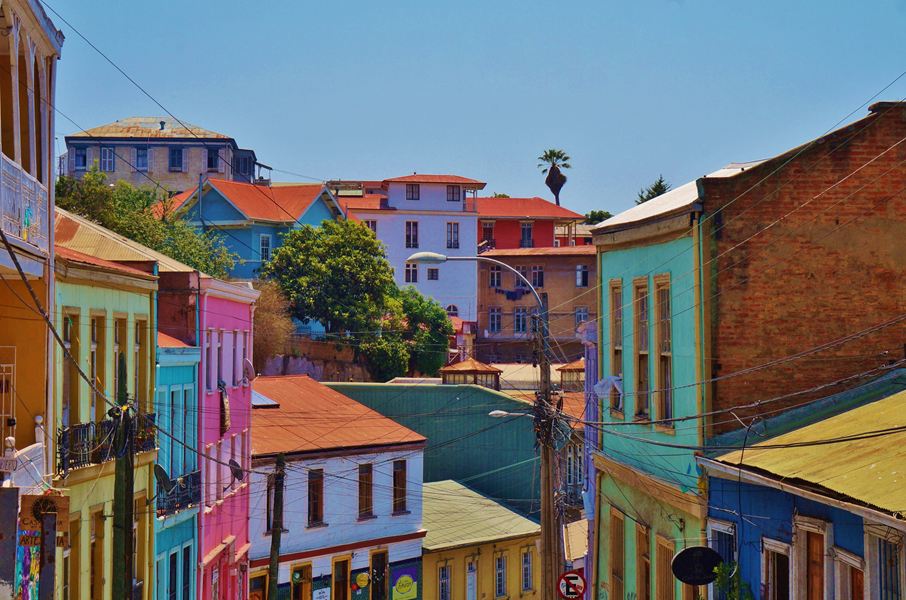
Valparaiso This is one of Chile's most iconic cities – colorful, full of contrasts, and sprawling across steep hills on the Pacific coast. Located about 120 km northwest of Santiago, it has been linked to the sea and shipping for centuries, and its unique topography means that almost every visit involves climbing stairs, riding a historic elevator, or strolling through winding streets. If you're wondering what to see in Chile, Valparaíso is a must-see – especially if you're interested in cities with character, art, and local atmosphere.
Valparaíso's most recognizable feature is the colorful houses dotting the surrounding hillsides. Many are decorated with murals and graffiti, giving the city the feel of a vast open-air art gallery. The Cerro Alegre and Cerro Concepción neighborhoods are particularly interesting, offering strolls among small cafes, galleries, boutiques, and historic buildings. It's also worth venturing off the main roads and exploring lesser-known streets – this is where you can best experience the city's chaotic, artistic character. Valparaíso's symbols are also the ascensores, historic funiculars that scale the steep hillsides. Built in the late 19th century, they served as a key means of transportation for residents for decades. Today, a ride on one of these preserved machines is not only a practical way to reach the hills but also a fascinating experience and a journey into the city's past. In the city center, it's worth visiting Plaza Sotomayor and the port area, a reminder of Valparaíso's maritime history. For many years, the city was one of the most important ports on the west coast of South America. Its importance grew particularly in the 19th century, before the opening of the Panama Canal changed the main shipping routes. Valparaíso's historic center was designated a UNESCO World Heritage Site in 2003, recognized primarily for its exceptional urban planning, architecture, and links to the development of maritime trade.
Elqui Valley
The Elqui Valley is one of the most picturesque corners of northern Chile, located in the Coquimbo region, about 500 km north of Santiago. Stretching along the Elqui River, between the arid slopes of the Andes, its landscape is defined by verdant vineyards, orchards, and small villages surrounded by mountains. It's a place with a completely different character than the desert-like Atacama – more intimate, peaceful, and associated with local life, viticulture, and exceptionally clear skies.
One of the best ways to explore the valley is by traveling through the small towns and villages along the river. A worthwhile stop is in Vicuña, the region's largest center and the birthplace of Gabriela Mistral, the Chilean poet and Nobel Prize winner for Literature. Here, you can visit a museum dedicated to her life and work, and then continue deeper into the valley, where the landscape becomes increasingly mountainous. The Elqui Valley is primarily known for its viticulture and the production of pisco – one of Chile's most distinctive spirits. Local vineyards offer insights into the process of its production, visit traditional plantations, and sample regional products. Papaya and other fruit cultivation are also worth exploring, as the valley's unique microclimate allows for excellent growth. Another major advantage of the region is its exceptional sky clarity. The sparse population, dry climate, and low levels of artificial light make the Elqui Valley one of Chile's best places for stargazing. There are astronomical observatories and centers offering night sky observations, allowing visitors to see constellations, planets, and distant celestial objects. Astronomy enthusiasts will find here some of the most extraordinary experiences Chile's tourist attractions offer. Further down the valley, Pisco Elqui is also worth a visit – a small, atmospheric town surrounded by mountains and vineyards. Here, you can relax away from the larger cities, go for a walk, visit a local distillery, or use the town as a base for further exploration. The valley is also a good place for those interested in hiking, horseback riding, or a leisurely exploration of the Chilean countryside.

Natural Treasures of the Andes: An Incredible Journey Through Latin America
Bolivia, Chile, Peru | Lima, Arequipa, Colca Canyon, Puno, Lake Titicaca, Copacabana, Isla del Sol, La Paz, Salar de Uyuni, San Pedro de Atacama, Santiago de Chile
Santiago de Chile
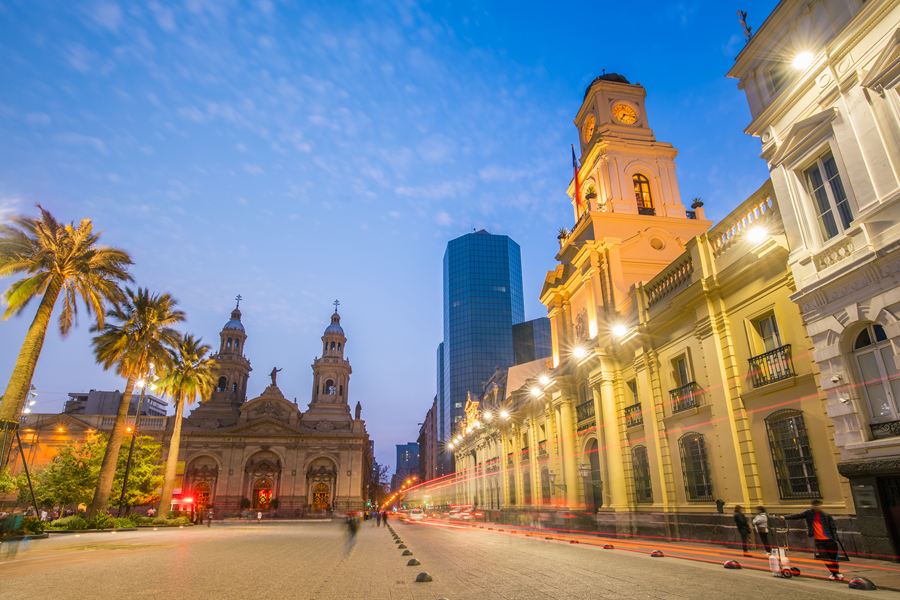
Santiago de Chile Santiago is the country's largest city and capital, nestled in a wide valley surrounded by the majestic Andes. It's here that a modern metropolis meets colonial history, urban culture, and a spectacular mountain landscape. For many travelers, Santiago is their first contact with Chile, but it's worth considering not only as a transfer point but also as a place worth exploring in greater detail. Among the places that make up Chile's attractions, the capital holds a special place.
It's worth starting your tour in the historic center, where many of the city's most important monuments are concentrated. One of its focal points is the Plaza de Armas, surrounded by representative buildings and a key part of Santiago's life for centuries. Also nearby are the Metropolitan Cathedral and the Palacio de La Moneda – the seat of the President of Chile. A stroll through this part of the city allows you to see how Santiago has transformed over the centuries from a colonial settlement to a modern capital. One of the best places to admire the panoramic view of Santiago is San Cristóbal Hill. It towers above the city and offers expansive views of the buildings and the surrounding Andes. The summit can be reached on foot, by cable car, or by funicular railway. The city is particularly impressive on clear days, when the mighty mountain ranges can be clearly seen behind the buildings.
Santiago also has a modern side, best explored in neighborhoods like Lastarria, Bellavista, and Providencia. Galleries, museums, restaurants, cafés, and shops can be found here, and the streets are filled with cultural and nightlife. Local markets are also worth visiting, offering a wealth of Chilean produce – from fresh fruit and vegetables to seafood. A particularly interesting spot is the Mercado Central, primarily focused on local cuisine and products from the Pacific Coast. The capital is also an excellent base for exploring the central region. In a relatively short time, you can reach the coastal Valparaíso, popular resort towns, or valleys famous for producing Chilean wine. Mountain lovers can head to the Andes, where ski resorts are available in winter, while hiking and mountaineering are popular during the rest of the year.
Marble Caves (Capillas de Mármol)
The Marble Caves, or Capillas de Mármol, are one of southern Chile's most extraordinary natural wonders. They are located on Lake General Carrera, in the Aysén region, in the heart of the Patagonian region. These imaginative rock formations, carved by the water, create a system of grottoes, tunnels, and arches, whose walls are captivating in shades of white, gray, blue, and turquoise. Their extraordinary appearance makes them one of the region's most iconic landmarks and a unique landmark on the Patagonian travel map.
The best way to explore the Marble Caves is by taking a small boat trip on Lake General Carrera. From the water, you can approach the rock formations directly and peer inside. Depending on water levels and weather conditions, the boats pass through some of the natural tunnels and recesses. Light reflecting off the lake surface further highlights the extraordinary colors of the marble, so the caves' appearance can change throughout the day. The formations are part of a larger rock formation known as the Santuario de la Naturaleza Capillas de Mármol. It includes La Catedral, La Capilla, and La Cueva—names that refer to the shapes given to the rocks by centuries of water action. Although the term "marble caves" is commonly used, geologically they are limestone formations that have been eroded over millions of years. It is the action of waves and water that led to the formation of the characteristic alcoves, columns, and arches. Visiting Chile may be associated primarily with big cities, desert landscapes, or the towering Andes, but the Marble Caves reveal yet another side of the country. It's a place where nature is the main character—calm, patient, and enduring for thousands of years. The journey to Lake General Carrera itself is part of the adventure, as it leads through the incredibly picturesque, sparsely populated landscape of Patagonia.
It's worth remembering that reaching the caves requires careful organization. The most common starting point is Puerto Río Tranquilo, a small town located on the lake. Cruises to the formations are organized from here, and their length depends on the chosen route and water conditions. The best time to visit is during the summer months in the Southern Hemisphere, when the days are longer and conditions are favorable for lake excursions. The extraordinary color variation of the Marble Caves is a fascinating fact. The lake water has an intense turquoise hue, which is due in part to the presence of tiny mineral particles from glacial processes. Combined with the light-colored rock walls, this creates an almost surreal scenery. The caves are especially beautiful on sunny days, when light penetrates the rock interiors and reflects off the water's surface.
Chiloé Island
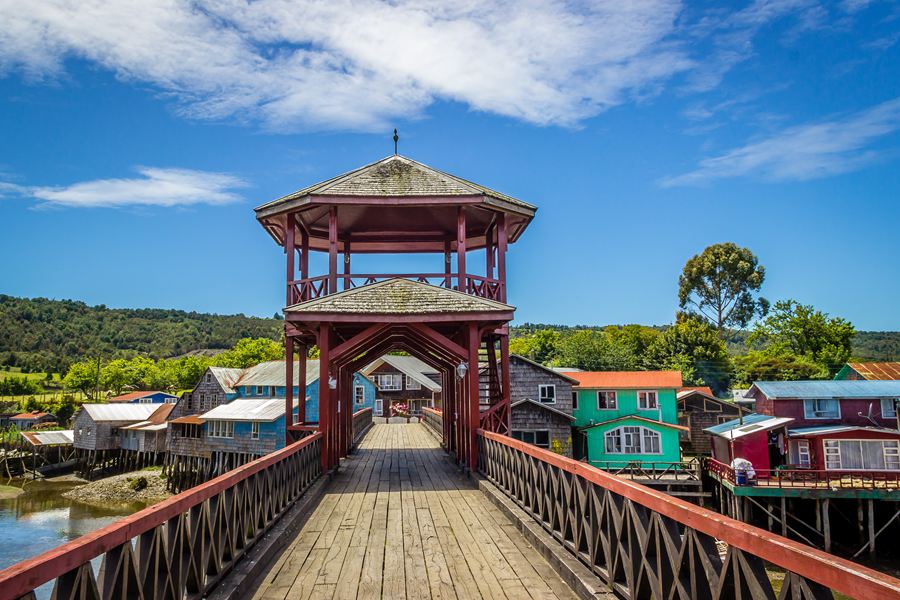
Chiloé Island, located off the coast of southern Chile in the Los Lagos region, captivates with an atmosphere that distinguishes it from the mainland. Green hills, bays, small fishing villages, wooden houses on stilts, and a vast coastline create a landscape where nature and tradition are inextricably linked. Chiloé is Chile's second-largest archipelago and one of those places best experienced at a leisurely pace.
The island's greatest treasures are its distinctive wooden churches, a testament to the archipelago's unique culture. Many were built in the 18th and 19th centuries, as part of a building tradition combining the influence of European missionaries with local craftsmanship. Sixteen of these churches have been designated a UNESCO World Heritage Site. Among the most interesting sites are the churches in Castro, Achao, Chonchi, and Dalcahue. Their simple yet incredibly distinctive architecture blends perfectly with the island's humid, maritime landscape. Castro, Chiloé's largest city, is particularly impressive. Its symbol is the palafitos—colorful wooden houses built on stilts over the water. They are best seen in the Gamboa and Río districts. A walk along the coast allows you to admire the characteristic facades of the houses and simultaneously experience the city's port character. The local market is also worth visiting, where you can sample typical products of the island, especially fish, seafood, potatoes, and other local specialties. Chiloé is also renowned for its incredibly rich culture and folklore. For centuries, the island remained relatively isolated from the rest of Chile, thus preserving its own traditions, rituals, music, and stories. The world of local legends is particularly fascinating, featuring mythical creatures associated with the sea and forests. According to ancient beliefs, the island is home to, among others, the Caleuche – a mysterious ghost ship – and the Trauco, a forest creature and one of the most famous characters in Chilean folklore.
Nature lovers will also find much to delight in. On the island, you can hike through temperate rainforests, birdwatch, and explore the rugged coastline. Chiloé National Park is worth a visit, offering beaches, dunes, forests, and trails through the region's distinctive landscapes. Penguin watching is also a popular activity on the archipelago – trips to the Puñihuil area, home to both Magellanic and Humboldt penguins, are particularly popular. The island is also a key location for Chilean cuisine. One of the most iconic dishes is curanto – a traditional dish made with seafood, meat, potatoes, and vegetables. Traditionally, the ingredients are placed in a hole dug in the ground, on heated stones, and then covered with leaves. It's not just a meal, but also a part of local culture and an opportunity for communal celebration.
The importance of potatoes in Chiloé's history is interesting. The archipelago is considered one of the most important areas of origin and diversity for this vegetable – many local varieties, differing in shape, color, and flavor, are grown on the island. Combined with its wooden architecture, maritime culture, extraordinary legends, and wildlife, this creates Chiloé's unique character.
What is worth seeing in Chile?
If you're wondering what to see in Chile, beyond the most famous sites like Atacama, Torres del Paine, and Valparaíso, it's also worth exploring the country's less obvious corners. Here, you'll find volcanoes, verdant valleys, rugged coastlines, lakes, and areas where nature remains virtually untouched.
One of the most interesting directions is Lauca National Park, located in the far north of Chile, near the border with Bolivia. This high-altitude region is dominated by powerful volcanoes, vast plateaus, and lakes with intensely blue water. One of the most picturesque spots is Lake Chungará, located at an altitude of over 4500 meters above sea level, with the distinctive Parinacota volcano in the background. The park is also a great place to observe vicuñas, flamingos, and other animals adapted to life at high altitude. Lovers of mountain landscapes should also be interested in The Cochamó Valley in the Los Lagos region. Often compared to Yosemite due to its immense granite walls, the scenery here is much wilder and more intimate. Trekking trails lead through the valley, passing forests, rivers, and waterfalls, and the distinctive rock formations create a spectacular backdrop for hikes. This is a good choice for those who want to combine activity with communing with almost untouched nature while traveling in Chile.
In the south of the country it is worth visiting Douglas Tompkins Pumalín National Park, a vast area protecting some of Chile's most valuable temperate forests. Dense forests, fjords, waterfalls, lakes, and volcanoes can be found here, and numerous trails allow you to explore the park on foot. One of the region's symbols are the ancient Alerce trees, which reach impressive sizes and are among the longest-living organisms in the world. An interesting stop along the route may also be Conguillío National Park, sometimes called "Dinosaur Park" due to its extraordinary scenery created by volcanic landscapes and distinctive Araucaria trees. The park is dominated by the Llaima Volcano, one of the most active in Chile. Surrounding it are lakes, lava fields, and forests, which are particularly beautiful in autumn. The park demonstrates how powerfully volcanic activity has shaped the landscape of southern Chile.
It is also worth visiting Hualpén Peninsula, located near Concepción. This relatively unknown area combines Pacific cliffs, beaches, forests, and protected areas. Here, you can enjoy seabird watching, coastal walks, and landscapes that are far from the main tourist trail. Also worthy of note are Colchagua Valley, one of the country's most important wine regions. Its rolling hills, vineyards, and picturesque haciendas create a landscape quite different from the desert north or harsh Patagonia. At local wineries, you can learn about the Chilean winemaking process, visit cellars, and sample the varietals for which Chile is renowned worldwide.

Interesting places in Chile
Chile's tourist attractions include not only its famous national parks, deserts, and glaciers, but also small towns, picturesque regions, and places that allow you to better understand the local culture. One of the points of interest in the southern part of the country is Punta Arenas, a city situated on the Strait of Magellan. Its history has always been linked to navigation, exploration, and trade, and a walk through the center reveals traces of the times when it was one of the most important ports in southern Patagonia. Worth visiting is the city cemetery, considered one of the most beautiful in Chile, and Museo Regional de Magallanes, located in the former residence of the Braun-Menéndez family. Punta Arenas is also an excellent base for further exploration of southern Patagonia and excursions to nearby islands.
Much further north there is Pan de Azúcar National Park, located on the coast of the Atacama region. The desert meets the ocean here, creating a striking contrast between the almost bare hills and the blue waters of the Pacific Ocean. The park is famous for its cactus colonies, rocky shores, and rich marine life. In the area, you can observe Humboldt penguins, pelicans, and sea lions, among others, while enjoying the tranquility typical of less-traveled parts of northern Chile. Another interesting destination is Frutillar, a small town on Lake Llanquihue, overlooking the Osorno Volcano. Its distinctive wooden architecture recalls the German settlers who arrived in the region in the 19th century. A stroll along the lakeshore, among the well-kept houses and gardens, allows you to experience the town's peaceful, almost European atmosphere. Another highlight is the Teatro del Lago, a modern cultural center hosting concerts and artistic events.
Lovers of unusual landscapes should be interested in Azapa Valley near Arica. Tucked away in the desert, this surprisingly green valley has been used for agriculture for thousands of years. Here, you can see ancient geoglyphs, archaeological sites, and traces of cultures that flourished long before the arrival of Europeans. The region is also famous for olive cultivation, and the distinctive, arid landscapes demonstrate how humans have learned to exploit an extremely demanding environment.
In the south it is worth visiting Navarino Island, located south of Tierra del Fuego. This is one of the most isolated corners of Chile, with Puerto Williams as its main center. The island attracts primarily trekking and wildlife enthusiasts. The Dientes de Navarino trail is particularly interesting, leading through mountains, valleys, peat bogs, and desolate areas. The hike allows you to experience a true sense of space and silence characteristic of the farthest reaches of Patagonia. It is also worth visiting Termas Geométricas, a complex of natural hot springs hidden in the forest in the Araucanía region. Wooden walkways and red structures lead between numerous pools fed by geothermal water. Bathing in the hot springs, surrounded by lush greenery, is a unique way to unwind after an active day of sightseeing. This is an attraction that combines Chile's natural riches with an artfully designed space for visitors.
What is worth experiencing in Chile?
Hike the famous "W" trek among the granite towers of Torres del Paine
Hiking the famous "W" trek among the granite towers of Torres del Paine is one of Chile's most spectacular attractions. The route leads through the most picturesque corners of Torres del Paine National Park in Chilean Patagonia, allowing you to see its most important landscapes in just a few days – monumental peaks, turquoise lakes, a glacier, and vast valleys. The trail's name comes from its distinctive shape, resembling the letter W, and the entire route is approximately 70–80km, depending on the selected variant.
One of the most important steps is the approach to Mirador Las Torres, from where there is a view of the three distinctive granite towers of Torres del Paine. They look especially beautiful at sunrise, when the first rays give the rocks intense, warm colors. The next sections lead along Lake Nordenskjöld, through valleys surrounded by peaks and near Gray Lake, where you can admire the mighty Grey Glacier and pieces of ice floating on the lake.
The trek requires good physical fitness, but it is not a technical climb. The trail traverses a wide variety of terrain – rocky paths, forest sections, valleys, and mountain passes. The weather can change rapidly, so you must be prepared for sun, rain, strong winds, and low temperatures. A distinctive feature of the trip is overnight stays in shelters or designated campsites. The trek allows you not only to admire the landscape but also to observe Patagonian wildlife. Along the route, you may encounter guanacos, foxes, condors, and, with a bit of luck, even a puma. The vast expanses mean that even in popular sections of the trail, you can find moments of near-total silence, interrupted only by the wind and the sounds of wildlife.
The most popular trekking season is during the Chilean summer, roughly from November to March, when the days are longer and trail conditions are usually more favorable. However, it's worth remembering that Patagonia is known for its highly variable weather regardless of the season. Before embarking on your trek, check the current park entry rules and accommodation availability, as shelters and campsites can fill up quickly during the peak season.
Stargazing under one of the clearest skies in the world in the Elqui Valley
Stargazing under one of the clearest skies in the world in the Elqui Valley is a unique experience that shows a completely different side to tourism in Chile. Located in the Coquimbo region, the valley is known for its exceptionally dry climate, sparse cloud cover, and low light pollution, making it the night sky here is extremely clearAfter sunset, the landscape transforms beyond recognition – a huge number of stars appear above the dark silhouettes of the Andes, and under favorable conditions, you can see the Milky Way, planets, and characteristic constellations of the southern sky. The Elqui Valley is one of the best places in Chile to begin your astronomy adventure. There are professional observatories here, as well as training centers. evening tours for touristsDuring these events, you can use telescopes, learn more about the constellations visible from the Southern Hemisphere, and discover interesting facts about planets, nebulae, and distant galaxies. Some locations also organize observations led by astronomers or experienced guides.
The uniqueness of this region also stems from its location. The valley is surrounded by arid mountains, and the small number of larger towns means that artificial light doesn't interfere with observations. Many people choose night hikes outside the main towns, where the darkness is even deeper. It's worth bringing warm clothing – even in midsummer, the temperature in the desert can drop dramatically after dark. An astronomical experience can be combined with exploring other attractions in the valley. During the day, it's worth visiting local vineyards and pisco distilleries, stroll through Vicuña or Pisco Elqui, and admire the contrast between the greenery of the crops and the almost desert-like mountain slopes. In the evening, however, one only needs to move away from the buildings to see a sky whose intensity is hard to imagine in large cities.
The exceptional atmospheric conditions of the Elqui Valley have also attracted major scientific projects. The region is home to some of Chile's most important astronomical observatories, and the dry air, abundant cloudless nights, and low light pollution create ideal conditions for space research. This is why the northern and central regions of Chile are among the most important observational locations for modern astronomy.
Watching the sunset over the Salar de Atacama salt flats
Watching the sunset over the Salar de Atacama salt flats is one of those experiences that allows you to fully appreciate the rugged beauty of northern Chile. Situated at an altitude of approximately 2300 meters above sea level, the Salar de Atacama is the largest salt pan in the country and one of the largest in the worldThe vast, almost white surface of the salt contrasts with the dark silhouettes of the Andes and distant volcanoes, creating a truly extraordinary scenery. Therefore, it's worth planning your visit to Chile to allow time for leisurely observation of the local landscape.
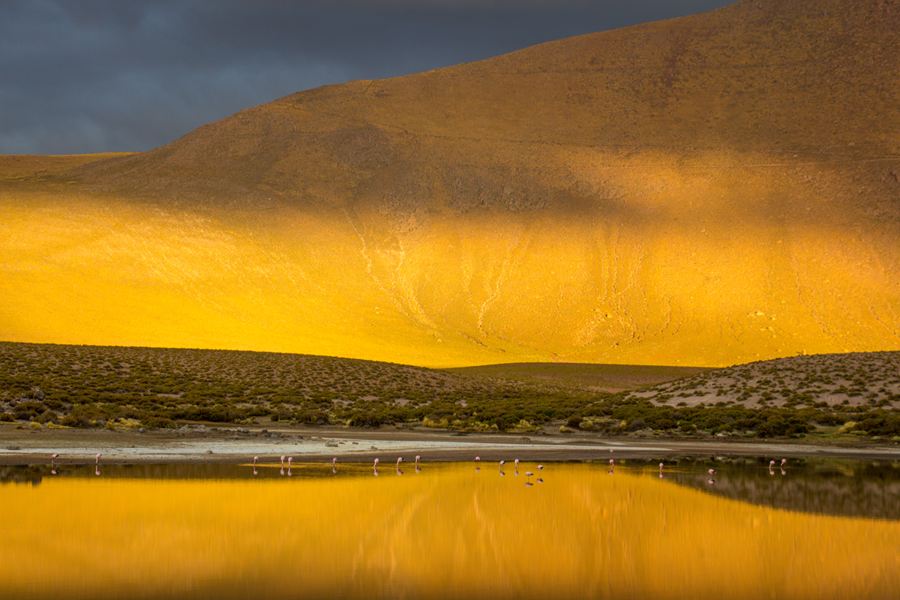
The most characteristic place of the salt pan is Chaxa Lagoon, located within the Los Flamencos Nature Reserve. The shallow waters of the lagoon are surrounded by white and grayish salt formations, and flamingos can be observed nearby. Chilean, Andean, and pink-footed flamingos, among others, feed in the shallow waters rich in microorganisms. The sight of the pink birds against the desert landscape is one of the most extraordinary images of the Atacama. Sunset is the best time to witness the changing colors of the desert. As the sun begins to sink below the horizon, the bright surfaces of the salt flats take on shades of gold, pink, red, and purple. At the same time, the mountains on the horizon darken, creating a striking contrast with the bright sky. Under the right conditions, it can seem as if the desert is changing by the minute.
The Salar de Atacama was formed in a closed basin, into which water flows from the surrounding mountains. However, the water has no outlet to the ocean – intense evaporation leaves enormous amounts of salt and minerals on the surface. This process has shaped the salt flat's characteristic landscape over thousands of years. In some places, you can see a hard, cracked salt crust, which creates geometric patterns. The region is also of great natural and economic importance. The salt lakes and wetlands are a vital habitat for flamingos and other species adapted to extreme conditions. At the same time, the Salar de Atacama is one of the most important areas lithium mining in the world. This raw material, used among other things to produce batteries, is found in brines beneath the surface of the salt pan.
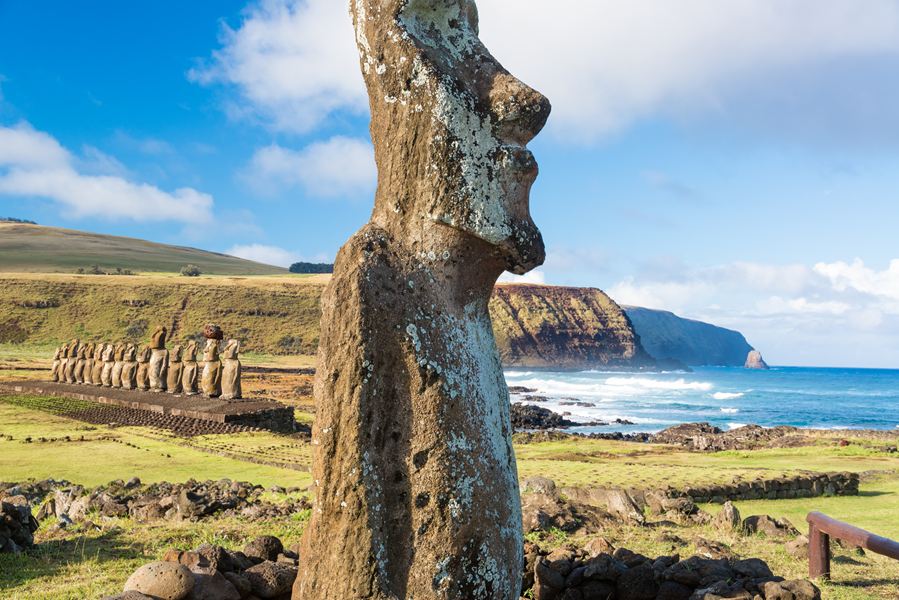
Uncovering the secrets of Easter Island's giant moai statues
Rapa Nui, as the island is known by its indigenous inhabitants, belongs to Chile, although it lies thousands of kilometers from the mainland. Its symbols are monumental stone figures representing ancestors and important figures of the community, built between the 13th and 16th centuries. Some of these figures stand several meters tall and weigh tens of tons, and their presence on this small, isolated island still inspires awe.
The most important place related to the formation of moai is rano raraku, a former quarry located on the slopes of an extinct volcano. It was here that the soft volcanic tuff, from which most of the statues were made, was mined. Dozens of statues can be seen on the slopes – both completed and those left in various stages of construction. Some look as if they were suddenly abandoned, further fueling the atmosphere of mystery. Also worth visiting Ahu Tongariki, the largest restored ceremonial platform on the island. It features 15 monumental moai, arranged in a single row, facing the mainland. The view is especially impressive at sunrise, when the statues appear silhouetted against the illuminated sky. The complex was severely damaged by the 1960 tsunami and subsequently meticulously restored.
One of the biggest mysteries remains method of transport The enormous statues from Rano Raraku were transported to remote parts of the island. Over the years, scholars have presented numerous theories regarding the use of wooden structures, sleds, and rollers. However, modern archaeological experiments suggest that some moai may have been moved vertically, using ropes and swinging the statue from side to side. This method of transportation may have been consistent with local tradition, according to which the statues were supposed to "walk" to their destinations.
Another interesting place is Ahu Tahai, a ceremonial complex located near Hanga Roa. It features several moai platforms, and one of the statues is equipped with a reconstruction of the distinctive red headdress, known as a pukao. Here, you can particularly clearly see what the traditional Rapa Nui places of worship looked like and how the monumental figures fit into the island's landscape.
However, the moai were not erected solely for decoration. They are believed to represent important ancestors and people of special significance to particular communities. They were believed to possess mana, a spiritual force that could protect the living. Statues were therefore placed on ceremonial platforms called ahu, most often facing the settlements, as if to symbolically watch over the inhabitants.
A walk among the colorful houses and cable cars of artistic Valparaíso
A stroll through Valparaíso is a great way to explore one of Chile's most unique cities. Situated on the Pacific Ocean, Valparaíso sprawls across steep hills, making exploring it a bit like exploring a colorful maze. Narrow streets, staircases, viewpoints, small cafés, and mural-covered facades create an atmosphere unlike any other Chilean city. It's best to start your walk in the historic districts of Cerro Alegre and Cerro Concepción, where almost every corner invites you to stop for a moment. The colorful houses are one of Valparaíso's most recognizable landmarks. Many buildings are covered in vibrant colors, and their facades have become a canvas for local and international artists. Murals can be found on large walls, doors, stairs, and small alleyways. Street art isn't just a complement to the city's architecture; it has become part of Valparaíso's identity and one of the reasons the city attracts photographers and culture enthusiasts.
Another characteristic element of the city are the ascensores, i.e. historic railways traversing the steep hillsides. The first of these began to be built in the 19th century, when the rapidly growing city needed a convenient connection between the port and the higher districts. A ride on one of the preserved funiculars is not only a way to avoid the arduous climb, but also a short journey through Valparaíso's history. From the upper stations, there are often beautiful views of the city, the port, and the ocean. During your walk, it's worth checking out Plaza Sotomayor, one of Valparaíso's most important squares, surrounded by representative buildings and located near the port. Then, you can head towards the hills, where the urban landscape quickly changes from a more formal to an artistic and intimate atmosphere. Also worth visiting viewpoints, from which you can see the characteristic panorama of the city - colorful houses literally climb the slopes, and in the distance stretches the vastness of the Pacific Ocean.
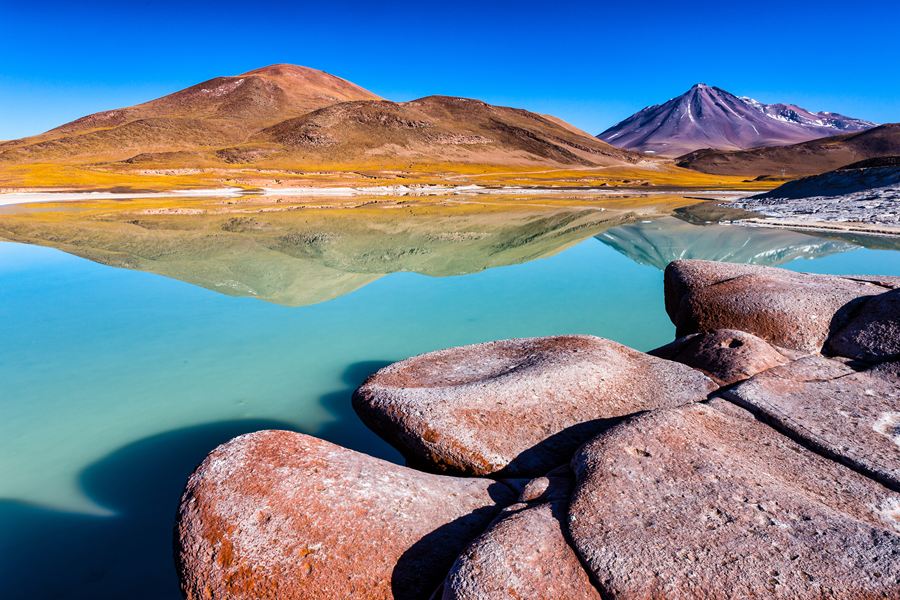
Bathe in the Puritama hot springs amidst the harsh desert landscape
Bathing in the Puritama springs is a unique way to unwind while traveling through the desert north of Chile. The Puritama thermal springs are located in a deep canyon about 30 km from San Pedro de Atacama, at an altitude of about 3500 m above sea level. Water flowing from the underground springs creates natural pools connected by cascades, surrounded by steep gorge walls and sparse vegetation. The contrast between the hot water and the desert landscape makes bathing here unique. The complex includes several natural thermal pools, which are accessed via wooden piers and steps. The water temperature remains at approximately 30-33 ° C, making it comfortable to immerse yourself in even when the air is much cooler. It's especially pleasant in the morning or late afternoon, when the harsh desert sun is less intense. The water is rich in minerals, and the peaceful setting is perfect for relaxation after a day spent exploring the Atacama.
The journey to the springs is part of the experience. The route winds through a desert landscape and then descends into a green, surprisingly fertile gorge. Along the Puritama Stream, you'll see vegetation that, thanks to the constant flow of water, stands out against the almost completely arid surroundings. It's one of the fascinating examples of how a small amount of water can create a completely different ecosystem in the heart of the desert.
Sources also have cultural significanceTheir name comes from the Kunza language and means "hot water." The indigenous people of the region utilized the thermal properties of this place long before the advent of tourism. Today, Puritama is a popular vacation spot, but you can still feel the extraordinary connection between water, the desert landscape, and the centuries-old history of the Atacama.
It's worth combining a visit to Puritama with a stay in San Pedro de Atacama, from where the thermal baths are most easily accessible. Due to the high altitude and intense sunlight, remember to stay hydrated, wear sunscreen, and visit at a leisurely pace. For those still acclimatizing to the altitude, it's also worth being cautious when planning day trips.
A boat trip to the spectacular, shimmering blue Marble Caves
A boat trip to the Marble Caves is one of the most extraordinary experiences you can have in Chilean Patagonia. The Marble Caves are located on Lake General Carrera, in the Aysén region, surrounded by mountains and vast, almost deserted spaces. The imaginative rock formations rising from the turquoise water have been carved by waves over thousands of years, creating a system of natural grottos, tunnels, arches, and columns. Their bright walls take on different hues depending on the weather, time of day, and light intensity.
The most popular way to get to the caves is short boat trip from Puerto Río Tranquilo. Small vessels launch onto the lake and approach the rock formations directly. In calm waters, you can peer into the caves and sail under the natural arches, observing the extraordinary patterns on the walls. The lake's water is so intensely turquoise that, combined with the light limestone, it creates an almost surreal effect. Although the popular name suggests marble, geologically the formations are composed primarily of limestone. Over thousands, even millions, of years, the action of water gradually eroded the rock, giving it its present, remarkably smooth shapes. The complex includes La Catedral, La Capilla, and La Cueva – names referring to the formations reminiscent of sacred architecture.
The caves look particularly impressive in sunny day, when the rays penetrate the rock interior and reflect off the lake surface. However, the intensity of the blues also depends on the water level and the amount of sediment. It's worth remembering that photos taken at different times of year may show the Capillas de Mármol in completely different colors.
It's best to plan a cruise to the Marble Caves during stable weather, as strong winds can cause unfavorable conditions on the lake. Trips are usually operated on small boats, so it's worth preparing for cold and splashing water. In favorable conditions, the trip itself is relatively short but provides an extraordinary experience.
Visit to the traditional wooden churches in Chiloé, a UNESCO World Heritage Site
A visit to the wooden churches of Chiloé allows you to experience one of the most distinctive architectural traditions of southern Chile. The island and its neighboring islets boast preserved churches built primarily in the 18th and 19th centuries as part of missionary activity. Their uniqueness lies in the combination of European sacred patterns with the knowledge and skills of local carpenters, who were able to perfectly adapt the structures to the humid, rainy climate of the archipelago.
Na 16 churches of Chiloé have been added to the UNESCO World Heritage List, appreciating their unique architecture and importance to the development of local culture. The churches were built primarily of wood, often using species available on the island. Characteristic features include tall towers topped with pointed roofs, colorful facades, and simple, harmonious interiors. Each church has a slightly different character, but all share the same unique building tradition. One of the most famous is Church of St. Francis in Castro, whose distinctive yellow-purple facade has become one of the symbols of the island. The temple stands out for its impressive wooden structure and interior made almost entirely of wood. Also worth visiting are the churches in Achao, Chonchi, Dalcahue or Tenaún, because each of them shows a slightly different face of local religious architecture.
Visiting churches is best combined with exploring the small towns where they are located. They often stand in main squares or near bays, surrounded by colorful wooden houses and traditional architecture. This makes the journey between temples an opportunity to explore Chiloé's landscape – green hills, fields, forests, and coastline crisscrossed by numerous bays. An interesting detail is the construction technique known as "Chilot school"Local artisans developed it over generations, creating structures without the need for advanced tools or modern materials. Wooden elements were joined in a way that allowed the buildings to maintain stability even in harsh climatic conditions. The result was a unique form of architecture, unlike churches in other regions of Chile.
Temples still serve religious functions and are an important part of local community life. Therefore, they are not just monuments for tourists – many of them still host religious services and local ceremonies.
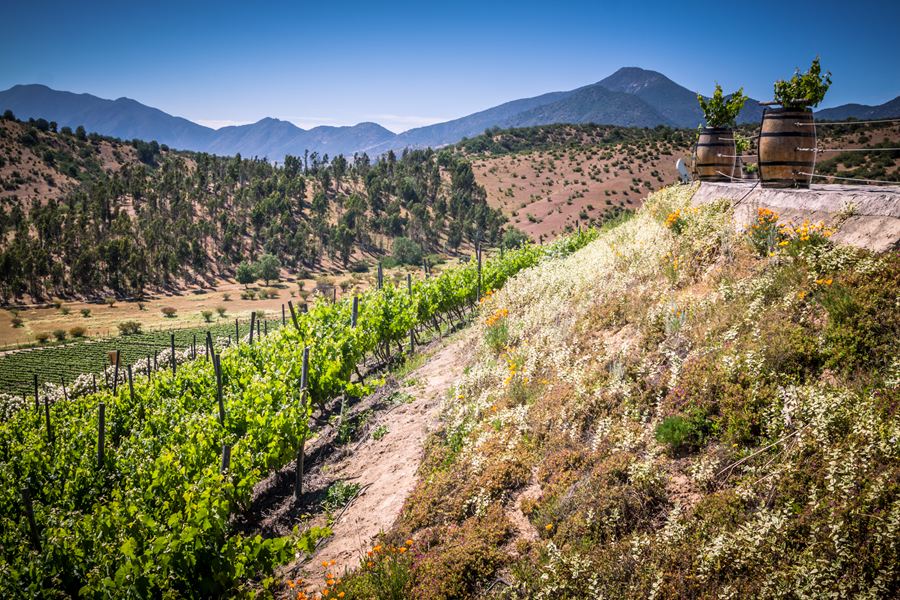
Tasting Chilean Carménère wine in the vineyards of the Colchagua Valley
A Carménère wine tasting in the Colchagua Valley vineyards is an excellent opportunity to experience one of the most distinctive facets of Chilean culture. Located approximately 170 km south of Santiago, the valley is one of the country's most important wine regions. Its mild climate, sunny days, cool nights, and fertile soil create excellent conditions for viticulture. The picturesque vineyards stretching along the foothills of the Andes and the coastal mountain range create a landscape worth exploring at leisure, combining sightseeing with tasting local wines.
It has a special place here Carménère, a grape that has become one of the symbols of Chilean winemaking. Originally from France, it was considered nearly extinct there in the 19th century following the phylloxera epidemic. For decades, Chilean winemakers believed they were growing Merlot, until genetic studies in the 1990s revealed that some of these vines were actually Carménère. Since then, the grape has become one of the most recognizable elements of Chilean winemaking. During a visit to the vineyards, you can not only sample different vintages but also learn about the entire winemaking process. Tours typically include a walk between the vines, a visit to the cellars, and a story about the harvest, fermentation, and aging of the wine. Tastings led by experts highlight the distinctive characteristics of Carménère – its deep color, aromas of dark fruit, spices, and herbs, and often a subtle spiciness.
Many wineries in the Colchagua Valley also offer more extensive experiences. You can take a bike ride between the vineyards, enjoy a tasting lunch, or visit estates where traditional Chilean architecture blends with modern production spaces. Some locations also offer comparative tastings of different varietals, which will help you understand how Carménère differs from Cabernet Sauvignon or Merlot.
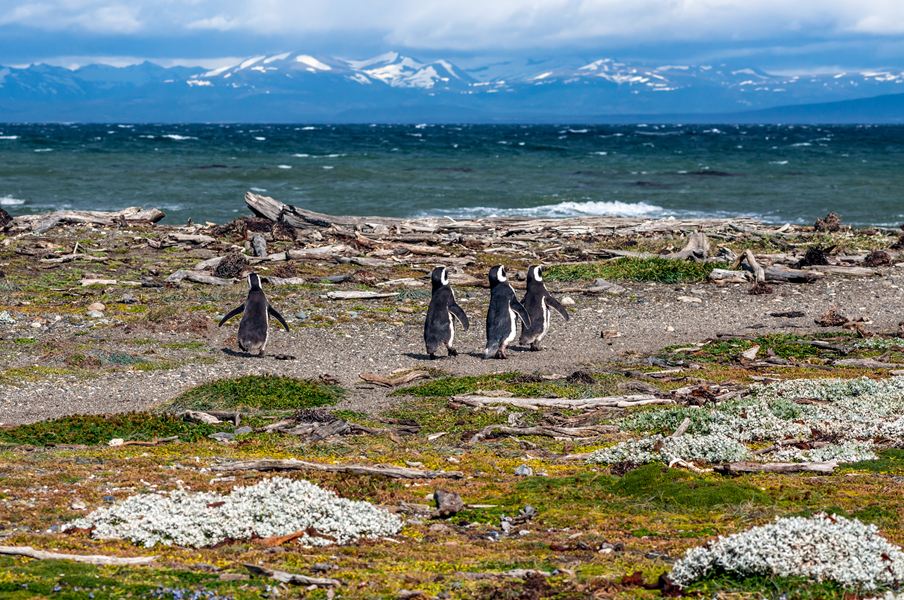
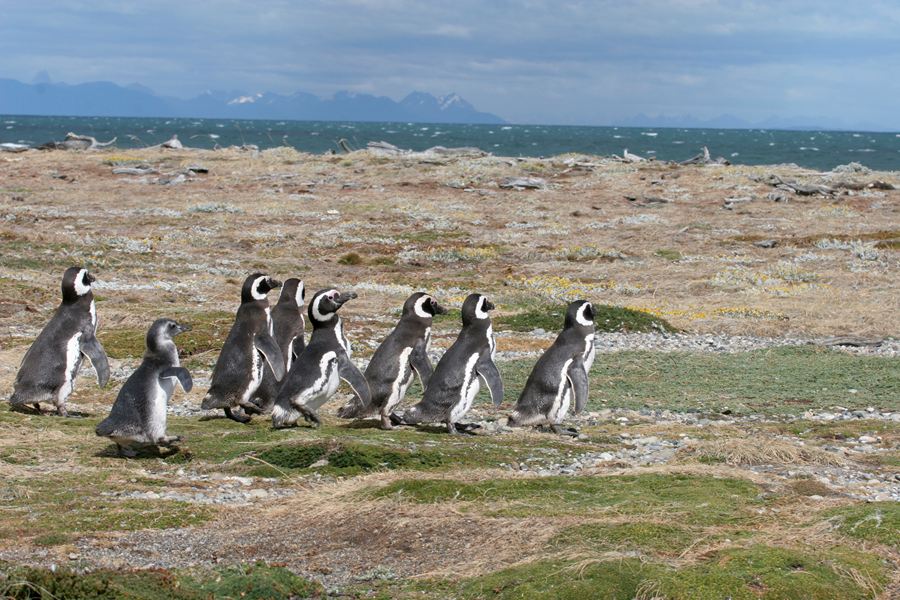
Peeking at the Magellanic penguin colony on Magdalena Island
Penguin watching is one of the most unique wildlife encounters you can have in southern Chile. The small island lies in the Strait of Magellan, about 35 km northeast of Punta Arenas, and is part of the Los Pingüinos Natural Monument. It is home to one of the largest colonies of Magellanic penguins in the region – during the breeding season, you can observe tens of thousands of birds.
The island is most often reached by boat from Punta Arenas. A cruise through the waters of the Strait of Magellan usually lasts about two hours and is an interesting part of the trip in itself. After disembarking, a marked trail leads to the lighthouse, and along the way, you can observe penguins from a short distance. The birds move freely between their burrows, the beach, and the water, so you don't have to look for them for long – their distinctive black-and-white silhouettes are almost everywhere. Magellanic penguins come to the island primarily for during the breeding season, which occurs during the Chilean spring and summer. They build nests in burrows dug into the ground or use natural depressions. During this time, behaviors related to raising young, feeding, and preparing for subsequent trips to the sea can be observed. After the season ends, the birds leave the island and spend most of the year in open water.
One of the greatest benefits of visiting is the opportunity to observe penguins in their natural habitat. The island is neither a large tourist complex nor a zoo – the animals roam freely, and visitors must stick to a designated trail and maintain a safe distance. This allows visitors to observe their daily lives without disrupting the natural rhythms of the colony.
Magdalena Island is also interesting for its history. At its highest point stands a distinctive lighthouse from 1902, which for years aided ships navigating the dangerous waters of the Strait of Magellan. Today, it is one of the island's symbols and a key point on any walking tour. From its surroundings, you can admire the expansive panorama of the strait and the rugged landscapes of Tierra del Fuego.
During your trip, it's important to be aware of the specific weather conditions. Even in summer, the Punta Arenas area can be chilly and very windy, and the weather can change quickly. Warm, preferably waterproof, clothing, and comfortable footwear are essential. Due to the seasonality of the colony, it's also worth checking the cruise dates before planning your trip.
Chile captivates not only with its landscapes, but also with their extraordinary diversity. It's a country where every trip can be completely different – depending on the region, the season, and your own interests. Some will find adventure on the Patagonian trails, while others will be captivated by the desert silence of the Atacama, the Rapa Nui culture, colonial architecture, or the taste of local wine. The best way to experience Chile? Don't try to see everything in one trip. Choose a few places, leave room for spontaneous discoveries, and let this incredibly diverse country surprise you with its own rhythm.

Hotels in Taiwan – where to stay?
Older post
How long is the flight to Singapore? How long does it take to fly to Singapore?
Newer post
October 9, 2026

October 8, 2026
October 7, 2026
October 6, 2026
October 5, 2026
recent posts
- Cambodian cuisine – what is worth trying? October 9, 2026
 Safety in Ecuador. Is Ecuador safe? October 9, 2026