
Get inspired and read about your dream trip on the blog
Top attractions in New Zealand – what is worth seeing?
May 26, 2025
New Zealand is a place like no other, surprising at every turn – whether it’s volcanic trails, heavenly beaches, fjords, glaciers or hot springs. Whether you’re a fan of active recreation, a nature lover, photographer, history lover or simply looking for beauty and peace, New Zealand has attractions for everyone. It’s a river – literally. From turquoise lakes and rushing rivers to peaceful bays and majestic waterfalls – the natural wonders here are unmatched. Importantly, many of them are available at your fingertips, without the need for hours-long expeditions or specialist equipment. You can walk along the beach where scenes from “The Lord of the Rings” were filmed, immerse yourself in natural hot springs, kayak on a glacial lake or stand on an active volcano. Sound like a plan? This is just the beginning!
Wondering what to see in New Zealand? There is no single answer to this question, because the choice of attractions is huge. If you are planning a trip and want to know what is worth seeing in New Zealand, prepare yourself for diversity: the north offers the hot springs of Rotorua, cultural experiences among the Maori and the green hills of Hobbiton, while the south delights with the wilderness of fjords, glaciers, mountains and beaches of the west coast. Regardless of the destination, you can be sure that you will discover something new and unusual every day. Exploring New Zealand is not just a list of places to tick off, it is a real journey through diverse landscapes and climates - so if you are wondering what to see in New Zealand and how to plan your adventure - we invite you!
New Zealand Attractions
Milford Sound
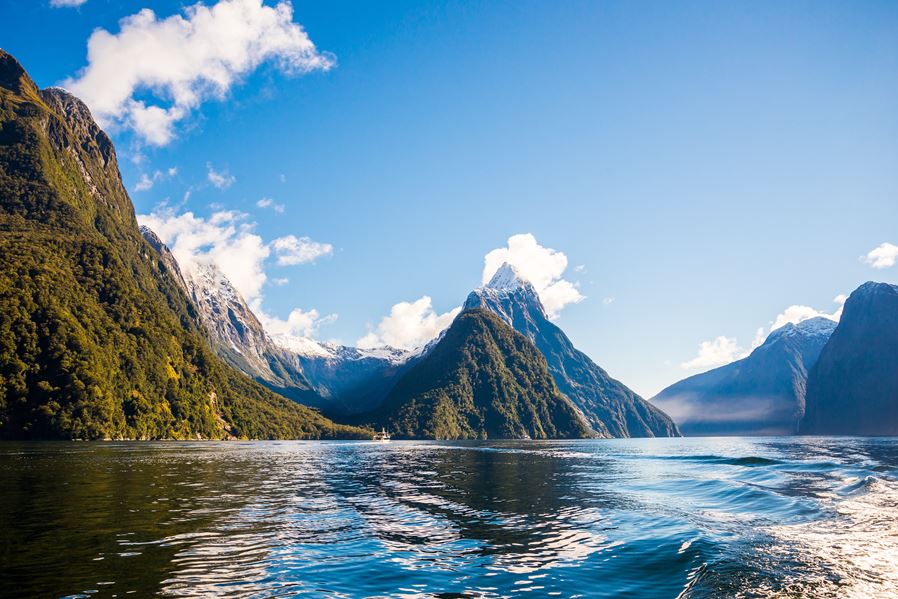
Close your eyes and imagine a place where mountains rise vertically from the ocean, waterfalls cascade from their walls, and mists rise over the water, giving the landscape an almost fairy-tale character. This is what it looks like Milford Sound – one of New Zealand’s greatest pearls and a must-see on any trip to this country. It is located in the southwestern part of the South Island, in the heart of Fiordland National Park, which in turn is part of the Te Wahipounamu area – a UNESCO World Heritage Site. Although called a “fjord”, Milford Sound is technically a glacial bay, created by the retreating glacier that has carved this landscape for millions of years. It is about 15 kilometres long and surrounded by vertical cliffs reaching up to 1 metres. One of the most characteristic points of Milford Sound is Mitre Peak – a mountain with a height of 200 metres, whose silhouette resembles a bishop’s mitre. It is one of the most photographed peaks in New Zealand. During a cruise on the fjord you can see dozens of waterfalls – including the famous Stirling Falls, which falls from a height of 1 metres – almost as high as the Sky Tower in Auckland!
Milford Sound is not only a spectacular sight, but also a place full of life. In the waters of the fjord you can often see New Zealand fur seals basking on the rocks, pods of bottlenose dolphins racing with tour boats, and even orcas and whales occasionally visiting. During the rainy season - and this happens often here, because Milford Sound is one of the rainiest places in the world - the landscape changes into a wonderful mosaic of waterfalls flowing down from every side.
Getting to Milford Sound is an adventure in itself. The Milford Road winds through mountains, valleys and tunnels, offering breathtaking views. Along the way, you can stop at Mirror Lakes, where the mountains are reflected in the water like a mirror, or the Homer Tunnel, a 1,2-kilometre tunnel carved out of solid rock that connects the Hollyford Valley with the fjord itself. For more active exploration, you can rent a kayak and explore the fjord yourself, or head out on one of the nearby hiking trails, such as the famous Milford Track, considered one of the most beautiful treks in the world.
Rotorua
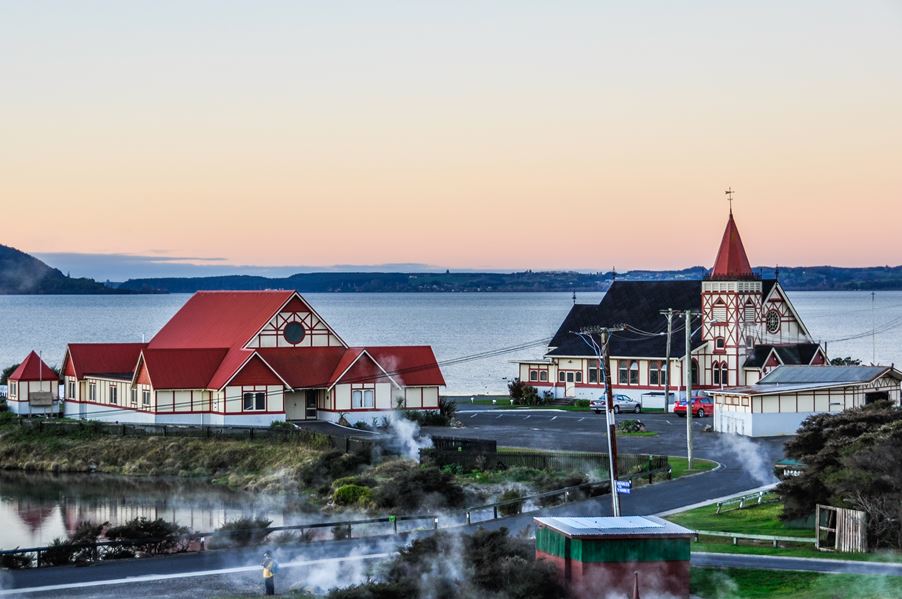
Imagine a place where the earth literally breathes, steam rises from craters and crevices, and the air smells of sulfur - this is not a vision from a science fiction movie, but a reality in Rotorua. If you want to discover unique geothermal phenomena and immerse yourself in the rich culture of the Maori, Rotorua will be an unforgettable experience for you. Located on the North Island, in the heart of the Pacific Ring of Fire, Rotorua is famous for its geothermal activity. There are over 50 geysers, hundreds of hot springs and colorful, bubbling mud pools in the area. The most famous geyser is Pohutu in the Whakarewarewa Valley - it can shoot up to 30 meters in the air, and it does it several times a day! It is a spectacle of nature that is definitely worth seeing with your own eyes.
But Rotorua is not just about geothermal energy – it is also the heart of Maori culture. This is where you can visit traditional villages such as Te Puia and Tamaki Maori Village and experience welcoming rituals, haka performances and a delicious dinner prepared in an earth oven – hangi. You will hear the Maori language, see the craft of wood carving and learn about the strong bond these people have with nature. What’s more, Rotorua is a paradise for lovers of active recreation. Lake Rotorua and a dozen others in the area offer ideal conditions for kayaking, fishing and paddleboarding. And if you like adrenaline, be sure to head to Redwood Park, where you will find world-class cycling trails and a spectacular path in the treetops – Redwoods Treewalk, with suspension bridges and spectacular lighting at night.
Mud baths and hot springs are also among the biggest attractions. Places such as the Polynesian Spa, Hell's Gate or Waikite Valley will allow you to relax your body in waters rich in minerals, which have been used by the Maori for centuries for healing purposes. It is the perfect way to regenerate after a day full of excitement. Rotorua also delights with its colours - in Wai-O-Tapu Park you will see the Champagne Pool with an intensely orange edge, green and yellow lakes, as well as "Bubbling Mud Pools", which resemble boiling chocolate. These natural wonders look like they are from another planet.
Tongariro National Park
Imagine standing on the edge of a volcanic crater, black lava creaking under your feet, and a stark, almost lunar landscape stretching out before you. This is exactly what Tongariro National Park looks like – a place that will transport you to another world. It is not only one of the oldest national parks in the world, but also the heart of the spiritual and cultural history of the Maori. It is located in the central part of New Zealand's North Island, and was established in 1887 as the first national park in New Zealand and the fourth in the world. This is a unique place – not only because of its geology, but also because of the deep spiritual meaning it holds for the Maori. The Tongariro volcano, from which the park takes its name, and the neighboring Ngauruhoe and Ruapehu, are considered sacred mountains.
One of the park’s biggest attractions is the Tongariro Alpine Crossing – a 19,4-kilometre trail considered to be the most beautiful one-day trek in New Zealand. The trail takes you through dramatic volcanic landscapes, past craters, hot springs and vibrant turquoise lakes, such as the famous Emerald Lakes. On this hike, you’ll feel like you’ve stepped into a fantasy world – literally, because this is where Peter Jackson filmed scenes from Mordor in The Lord of the Rings. Mount Ngauruhoe played Mount Doom! But Tongariro isn’t just about raw beauty – it’s also about wildlife. The park is home to many endemic plant and animal species, including an endangered bird species – the brown kiwi. If you’re a nature lover, you can take on other trails, such as the Taranaki Falls Track or the Silica Rapids Walk, which are less demanding but just as scenic.
Remember that the weather in Tongariro can be capricious – you can experience sun, rain, wind and even snow in one hike. It is worth being well prepared and following the forecast. But don't worry – every step in this park is an adventure you will not forget.

Visiting the land of Hobbits
New Zealand | Auckland, Coromandel Peninsula, Rotorua, Napier, Wellington, Nelson, Paparoa National Park, Westland National Park, Queenstown, Lake Te Anau, Dunedin, Christchurch
What to see in New Zealand
Mount Cook/Aoraki
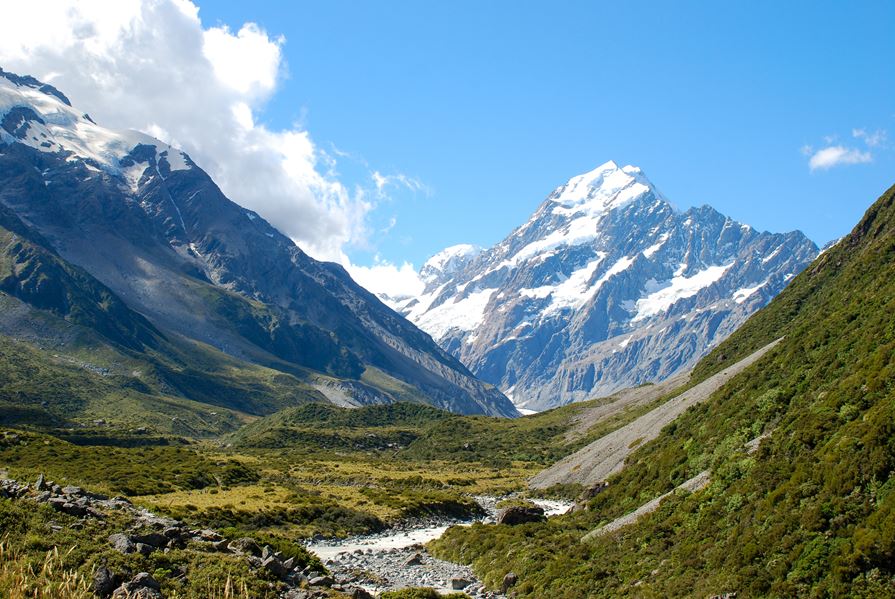
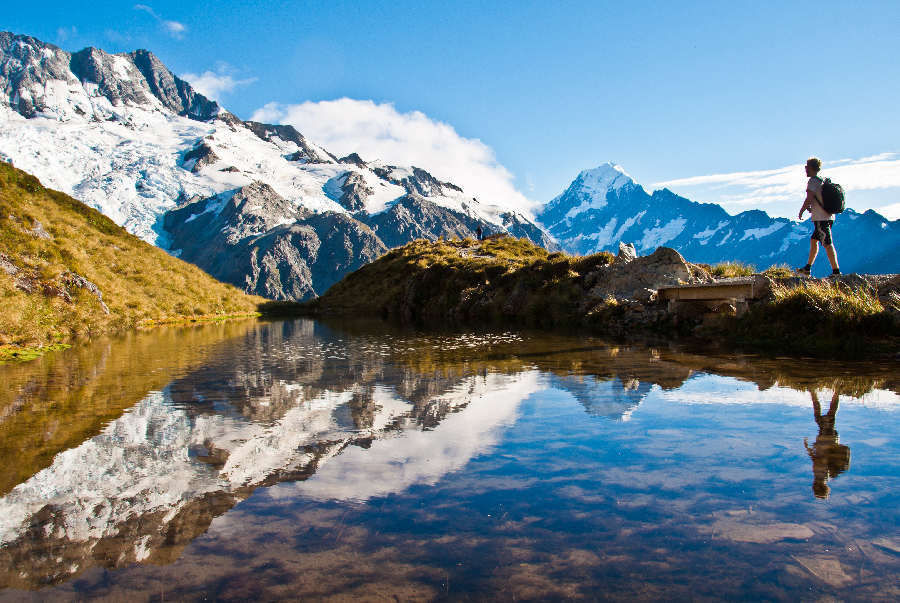
If you are planning a trip to New Zealand and want to see something truly impressive, put this on your list Aoraki/Mount Cook. It is the highest peak in the country, located in the heart of the Southern Alps on the South Island, with a height of 3 metres. The surrounding Aoraki/Mount Cook National Park is one of the most beautiful and characteristic places in the whole country - ideal for lovers of nature, mountain hiking and spectacular landscapes. Mount Cook bears the Maori name Aoraki, which means "Cloud Piercer". For the Maori it is a sacred mountain, and according to their legends it is an ancestor turned into stone. This is a place where you can see as many as 724 of the 19 highest peaks in New Zealand and the largest glacier - Tasman Glacier, measuring about 20 kilometres. You can go on a glacier cruise on Tasman Lake, where floating icebergs often float - up close they look even more impressive than in photos.
One of the most accessible and popular routes is the Hooker Valley Track – it is about a 3-hour return hike. The trail leads over suspension bridges, alpine valleys and ends at a glacial lake with a view of Mount Cook. The route does not require any special preparation, but it gives a great foretaste of what the New Zealand Alps have to offer. For the more advanced, there is the Mueller Hut Track, where after a few hours of climbing you can spend the night in a mountain hut with a view of the glacier and the surrounding panorama.
Mount Cook is also a great place to stargaze. The entire Mackenzie Basin region is a Dark Sky Reserve, meaning there is minimal light pollution. It’s one of the best places in the world to see the night sky, including the Milky Way, planets, and sometimes even the Northern Lights. And if you’re interested in history, it’s worth knowing that this is where Sir Edmund Hillary trained before conquering Everest. The local visitor centre, the Sir Edmund Hillary Alpine Centre, bears his name, and features a museum, planetarium, and cinema.
Coromandel Peninsula
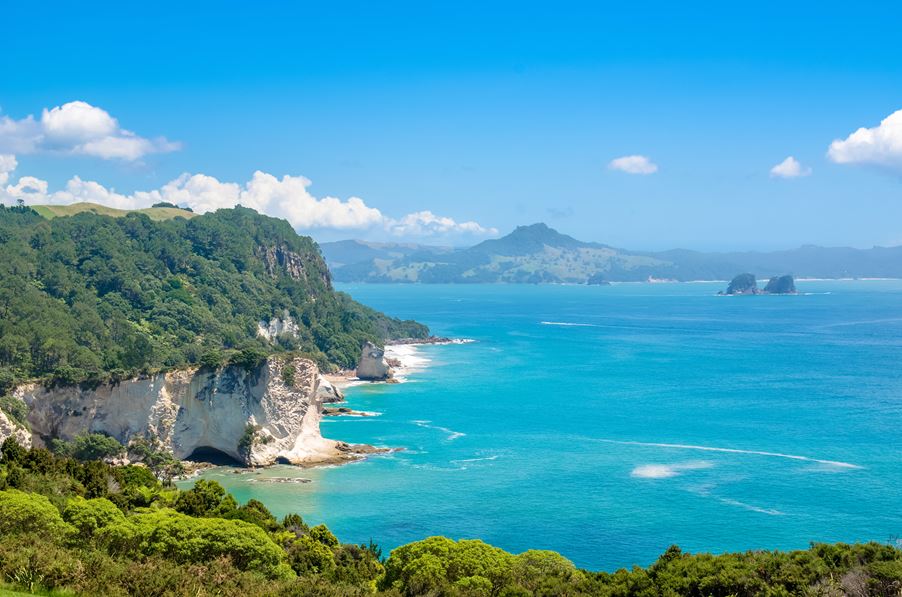
Located on the east coast of the North Island, just a few hours drive from Auckland, Coromandel it is wild forests, golden beaches, spectacular cliffs and hidden bays - in short, the perfect place to relax from the city and get in touch with nature. One of the most famous points on the Peninsula is Cathedral Cove - a bay with a huge, naturally carved rock arch, resembling a Gothic cathedral. You can get there on foot on the trail from Hahei (approx. 45 minutes one way), by boat or kayak. The views along the way - and on site - are absolutely worth the effort. The beach at Cathedral Cove was the setting for the film "The Chronicles of Narnia: Prince Caspian", which only confirms its extraordinary beauty. Nearby is another unique attraction - Hot Water Beach. This is one of the few places in the world where you can dig your own "spa" in the sand. All you need is a shovel, a low tide and a little patience. Hot springs under the surface of the beach mean that after a few minutes you can immerse yourself in naturally heated water, while looking out at the ocean.
For those of you who prefer more active forms of recreation, Coromandel has numerous hiking trails to offer. It is worth climbing to the top of The Pinnacles, from where there is a panoramic view of the entire peninsula. An overnight stay in a shelter on the route is an additional attraction - especially at sunrise. The ascent itself is not technically difficult, but requires good fitness and a few hours of walking.
The peninsula is also famous for its rich history and culture. In the 19th century, it was a centre for gold mining and the harvesting of kauri – huge trees used for shipbuilding. Today, you can visit the remains of former mines and sawmills, including in Coromandel Town and Thames, towns with colonial charm. And don't forget about nature. The peninsula's forests are home to rare birds such as kaka and tui, and dolphins and seals are common on the coast. Also worth a visit is the Driving Creek Railway – a narrow-gauge railway hand-built by a local artist, which winds through the jungle and offers magnificent views.
Auckland
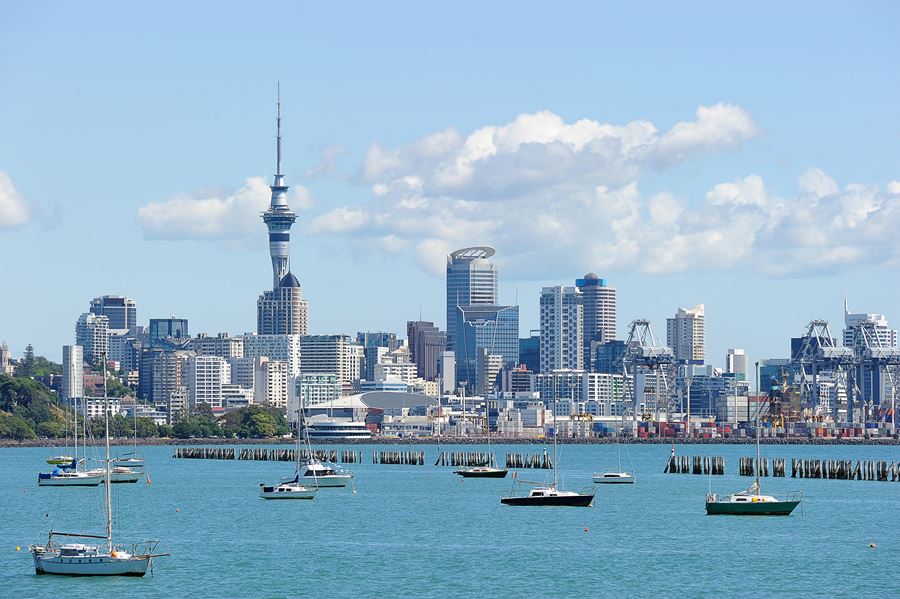
Planning New Zealand tour, sooner or later you will get to Auckland – the country's largest city and an important point on the tourist map. Although it is not the capital, it is here that New Zealand's economic, cultural and social life takes place. Auckland is called the "City of Sails" for a reason – ports, bays and a marina with thousands of yachts create a unique atmosphere that you will feel immediately. It is the perfect place to start your New Zealand adventure – full of contrasts, energy, but also close to nature.
Start with a walk around the city centre. This is where the city's icon is located - the Sky Tower, a 328-metre-high television and observation tower. You can go up to the observation deck, from which there is a panoramic view of the entire metropolis, and in good weather, even distant islands. For the brave, there are attractions such as SkyJump - a rope jump from a height of 192 metres - and SkyWalk, a walk on a narrow platform around the tower. In the heart of Auckland you will also find Viaduct Harbour - a lively port district, full of restaurants, bars and yachts. It is a great place for dinner with a view of the bay, especially at sunset. From here you can also set off on a cruise on the Hauraki Gulf - for example to Waiheke Island, known for its beaches and vineyards, or to Rangitoto Island, an extinct volcano and a great viewpoint of the city.
Auckland is also rich in culture. Set in the beautiful Auckland Domain, the Auckland War Memorial Museum is a great place to learn about New Zealand’s history, from European settlers to the indigenous Maori. You’ll see authentic Maori canoes, houses, carvings and everyday objects, as well as traditional haka dances. Art lovers should check out Auckland Art Gallery Toi o Tamaki, the largest art gallery in the country.
Although Auckland is a metropolis, nature is within reach. There are over 50 extinct volcanoes within the city. One of the most popular is Mount Eden (Maungawhau) - a green hill with a volcanic crater and a view of the city centre. It is also worth visiting One Tree Hill (Maungakiekie) - another volcanic hill, an important place for the Maori and symbolic of New Zealand's history. If you feel like sunbathing, just drive a few minutes out of the city. On the western side, there are wild beaches Piha, Karekare or Muriwai - famous for their black, volcanic sand and strong waves, ideal for surfers. On the eastern side, you will find quieter, golden beaches, perfect for swimming and picnics, e.g. Mission Bay or Takapuna Beach. Muriwai is also home to one of the largest colonies of gannets in New Zealand - an extraordinary place for birdwatching.
Auckland is also a great place for foodies. The city has a very diverse culinary scene, from Maori to Asian (especially Korean and Vietnamese) to modern, signature restaurants. Of note are markets and food halls such as Elliott Stables, Silo Park Food Trucks and Ponsonby Central, where you can try local delicacies.
Interestingly, Auckland is one of the most ethnically diverse cities in the world. Over 200 nationalities live here, and over 40% of the population was born outside of New Zealand. Thanks to this, there is an open, tolerant atmosphere, and the city is alive with festivals - cultural, musical, culinary. Events such as the Pasifika Festival, Lantern Festival and Auckland Arts Festival take place here throughout the year. It is also worth knowing that despite its urban character, Auckland is an excellent base for further travel. In one day, you can travel from here to Hobbiton, Rotorua, Waitomo Caves or north, towards the Bay of Islands and Cape Reinga.
New Zealand – what is worth seeing?
Wellington
If you are planning to visit the capital of New Zealand, Wellington will surprise you with its atmosphere, climate and incredible combination of culture, nature and urban energy. Located on the southern tip of the North Island, Wellington is often called the “smallest big capital in the world” – and deservedly so. Start your exploration of the city from its centre – compact, easy to explore on foot, yet packed with attractions. One of the most important and fascinating is Te Papa Tongarewa, the National Museum of New Zealand. This place you can’t miss – it combines modern technology with interactive exhibitions on history, Maori culture, nature, earthquakes and even contemporary art. Admission is free, and it’s worth setting aside a few hours for the tour.
Wellington is also a true film capital. This is where Weta Workshop is located – the famous special effects studio responsible for the production of “The Lord of the Rings”, “The Hobbit”, “Avatar” and many other world hits. You can visit the studio on a special tour, see props, models and learn how film effects are created. This is a must-see for fans of film and fantasy. The city is also known for its rich cultural and artistic scene: you will find numerous galleries, the National Theatre (Circa Theatre), concert halls and independent cinemas. The streets of Wellington are bustling with life – they are full of musicians, street performers, bars, cafes and restaurants. Cuba Street is especially worth a visit – the creative heart of the city, known for its eclectic boutiques, cafes and atmospheric venues. It is the perfect place to feel the spirit of Wellington and try local specialities. Additionally, the city is surrounded by hills and bays, and walking paths and viewpoints are literally at your fingertips. One of the best such points is Mount Victoria Lookout, which offers a panoramic view of the entire city, the port, and in good weather even the South Island. You can get there on foot or by car, but the most interesting option is a walk through the green urban forests.
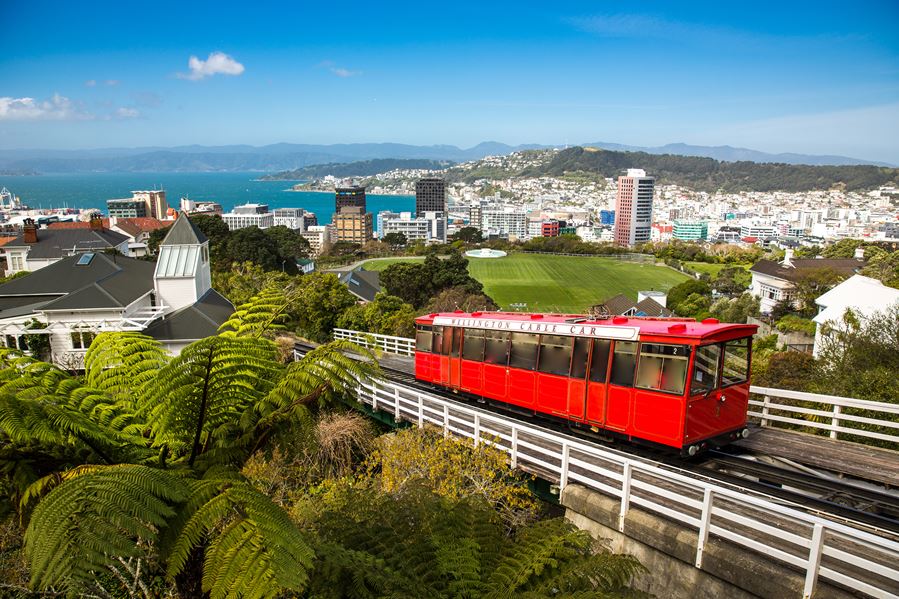
You also can't miss a ride on the famous Wellington Cable Car. It connects the city centre with Kelburn, and at the top you will find not only views but also the beautiful Botanical Gardens, where you can spend hours wandering among exotic and local plants. Entry is free, and the gardens change with each season, always offering something special. If you like wildlife, visit Zealandia - a unique, fenced reserve, the aim of which is to recreate the ecosystem before humans appeared. Here you will meet endemic birds such as kaka, tui, kiwi and takahe, as well as lizards and insects unique to New Zealand. The reserve can be visited both during the day and at night - then the chance of seeing nocturnal animals in their natural habitat increases.
The city also boasts a unique coffee culture. Wellington is considered the coffee capital of New Zealand, and local cafes compete in quality and creativity. If you are a fan of flat white – a popular coffee with milk here – try it in Wellington, where it tastes the best. Although it can be windy – Wellington is called “Windy Welly” for a reason – it is this unpredictable climate and proximity to nature that give it its character. Whether you are interested in museums, mountains, beaches, film, cuisine or art – you will find it here.
Queenstown
Located on the southwestern tip of the South Island, on the crystal clear Lake Wakatipu, overlooking the towering peaks of the Remarkables Mountains, this city attracts lovers of adventure, nature, good food and a unique atmosphere, but above all it is famous as the world capital of extreme sports. It is here that you can bungee jump from the Kawarau Bridge - the place where commercial jumping in the world was inaugurated in 1988. If a jump from a height of 43 meters is not enough for you, try the Nevis Bungy - 134 meters of pure adrenaline! You can also choose the Nevis Swing, the largest swing in the world, or try skydiving with a view of the lake and mountains. If you prefer water attractions, be sure to jump in a jetboat and speed through the Shotover River Canyon at over 80 km/h!
Ale Queenstown it's not just about extreme sports. The city offers plenty of opportunities for nature lovers and relaxation. You can take a walk along Lake Wakatipu - the Queenstown Gardens Walk is the perfect way to spend a quiet afternoon. Another option is to hike to Bob's Peak, from where you can enjoy views of the entire city - you can also take the Skyline Gondola to the top. At the top, you will not only have a spectacular panorama, but also a Luge toboggan run, a restaurant with a view and cycling routes.
There are also many great trekking routes around Queenstown. One of the most beautiful is the Ben Lomond Track, which requires a good level of fitness but rewards with breathtaking 360-degree views of the Southern Alps and Lake Wakatipu. For the less demanding, the route to Moke Lake is recommended – peaceful, picturesque and much less crowded.
Queenstown is also a paradise for foodies. Here you will find numerous restaurants, wineries and cafes. Be sure to try the famous burger from Fergburger - a cult place where queues form from morning to night. It is also worth taking a trip to the Gibbston Valley - a wine region famous for its excellent Pinot Noir. At many wineries you can have lunch overlooking the vineyards and mountains, combined with a tasting of local wines.
Interestingly, Queenstown and its surroundings were used as a film set for many scenes from The Lord of the Rings. Just an hour away is Glenorchy, a place with a truly fairytale landscape that has played the roles of Lothlórien and Isengard. The road from Queenstown to Glenorchy is one of the most beautiful scenic drives in New Zealand. And if you travel in winter, Queenstown becomes the capital of skiing and snowboarding. There are four major ski resorts nearby: Coronet Peak, The Remarkables, Cardrona and Treble Cone. The conditions are excellent, and the season lasts from June to October.

Hobbiton (Matamata)
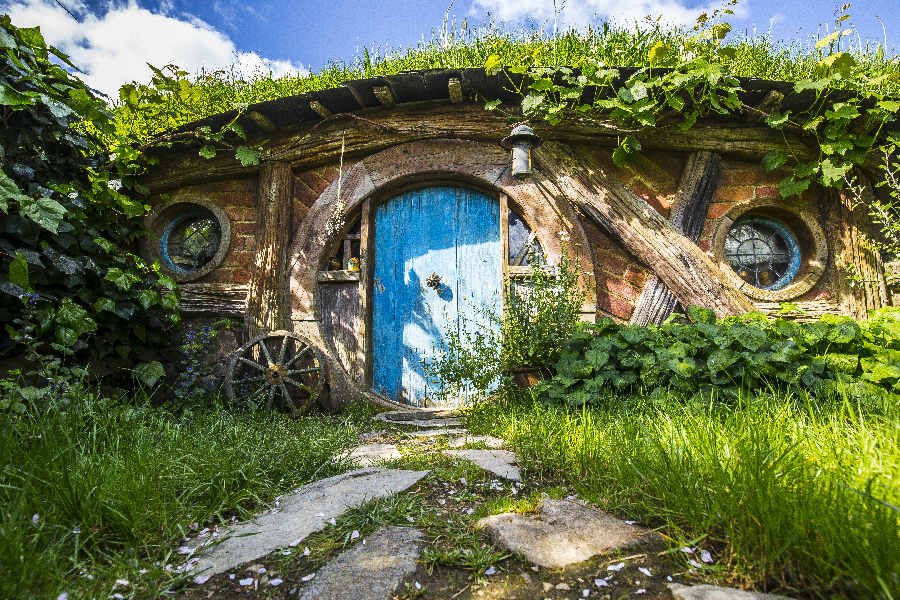
If you are a fan of The Lord of the Rings or are simply looking for a magical place in New Zealand that will allow you to literally step into the world of the film, Hobbiton is a must-see on your trip. Located near the town of Matamata on the North Island, this extraordinary film set has been transformed into one of New Zealand's most recognizable tourist attractions. This is where you can walk through Middle-earth, peek into hobbit holes and feel like the heroes of JRR Tolkien's books. The whole story of Hobbiton began in 1998, when director Peter Jackson was looking for the perfect place to film The Shire - the homeland of the hobbits. The choice fell on the vast farm of the Alexander family, which perfectly fit Tolkien's description: green hills, stretching fields and no visible traces of modern civilization. Construction of the film set began in 1999. After the filming of the Lord of the Rings trilogy was completed, most of the elements were dismantled, but after the huge success of the series and the decision to adapt The Hobbit, the set was rebuilt - this time permanently. Today, you can visit the full-size Hobbiton, consisting of over 40 hobbit houses with characteristic round doors. Each burrow is different - from the modest houses of ordinary hobbits to the elegant house of Bilbo and Frodo Baggins on Bag End Street. You will not find furniture in the interiors (the interior scenes were filmed in studios in Wellington), but the appearance of the houses themselves, their details, garden decorations and tools allow you to feel the atmosphere of this film village.
Your visit begins with a bus ride through Alexander Farm, where your guide will tell you about the making of the set and how you worked with the film crew. Once you arrive, you will take a walk around the village – each tour is led by a guide who will share with you lots of interesting facts about the film set. For example, you will learn that the Bag End tree was created artificially from thousands of hand-attached plastic leaves, and that the baking of bread in one of the cottages was real – just to make the smoke from the chimney look authentic. During the tour, you will also visit the iconic Green Dragon Inn – a tavern where you can enter, sit by the fire and have a traditional beer or cider brewed especially for Hobbiton. It is one of the few film sets in the world where you can taste a drink exactly where the characters did. If you want to experience even more, you can join the Hobbiton Evening Banquet Tour. After exploring the village at dusk, you’ll feast at the Green Dragon, over candlelight and traditional Middle-earth inspired dishes. After dinner, you’ll set off back through lantern-lit Hobbiton – the view is absolutely fabulous.
Interestingly, despite the huge interest, the Alexander farm remains a family business. The family still raises sheep and farms the land – the film set takes up only a small part of the entire property. Hobbiton is visited by about half a million tourists each year. It is worth booking tickets in advance, especially during the summer season (December – February), when the number of visitors is at its highest. Hobbiton is about 2 hours from Auckland and an hour from Rotorua, so it is easy to include it in your North Island travel plan.
New Zealand - what to visit
Pancake Rocks (Punakaiki)
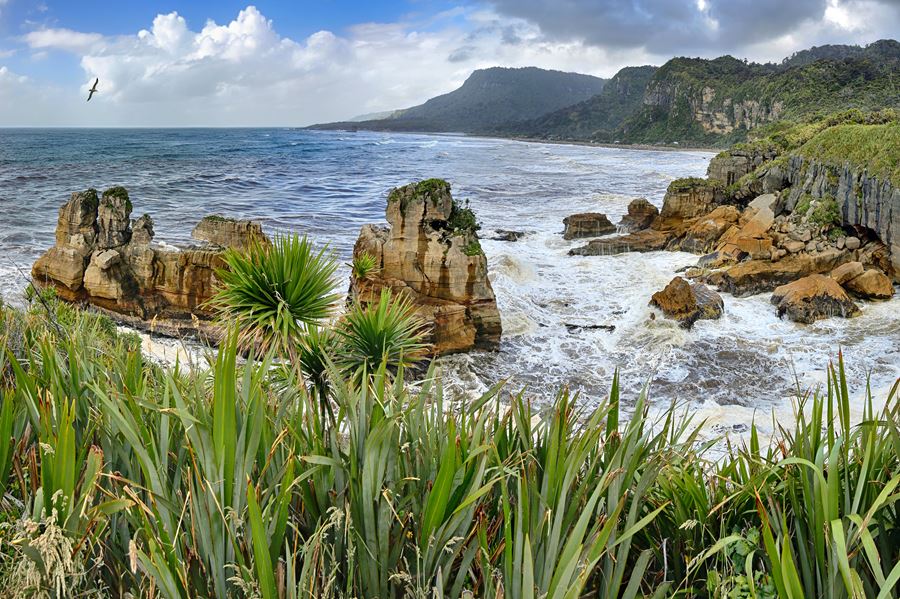
Located on the west coast of the South Island, within Paparoa National Park, Pancake Rocks are one of the most famous and photographed natural wonders in the country – and for good reason. The name itself attracts attention. “Pancake Rocks” – or “pancake rocks” – is no coincidence. Once you see them with your own eyes, you’ll understand why: the limestone rock formations are arranged in layers resembling stacks of thick pancakes. Their unusual appearance is the result of millions of years of geological activity. Around 30 million years ago, this area was a seabed where sediments – limestone and mud – were deposited. Tectonic movements lifted them above sea level, and over the millennia, wind, rain and waves sculpted them into the way you can admire them today.
The best way to see Pancake Rocks is to walk the Punakaiki Pancake Rocks Walk, a well-prepared walk along the cliffs and overlooks. The walk is short, easy (about a kilometre long) and suitable for families with children or the less physically fit. However, it is worth stopping at each information board to learn more about the geology, fauna and history of the site.
The real spectacle of nature begins at the blowholes, or sea geysers. During high tide, especially with strong winds and a rough ocean, waves break into the system of caves and cracks under the rocks, and water and air are thrown upwards with a huge roar and force. The column of water can reach several meters high! The best time to observe blowholes is at high tide - information on tide times is available at the nearby tourist information center.
Punakaiki is not just about Pancake Rocks. It is also a gateway to Paparoa National Park – one of the lesser-known but incredibly picturesque parks in New Zealand. Here you will find tropical rainforests, karst caves, rivers flowing through limestone canyons and plenty of hiking trails. In the area, you can set off on, for example, the Truman Track – a short trail leading through the forest to cliffs and a hidden beach, perfect for a picnic or sunset. If you stay in Punakaiki overnight, you will have another attraction – night-time observation of fireflies. In some places (e.g. near the caves) you can see thousands of tiny points of light illuminating the darkness, which creates an amazing effect.
The history of the region is also interesting – the Punakaiki area was inhabited by the Maori, who used local raw materials and trails. Today, the area is inhabited by a small community, and local culture and crafts are available in small galleries and shops. It is also worth mentioning that the west coast of the South Island – the so-called West Coast – is one of the most wild and inaccessible regions of New Zealand. The road to Punakaiki, a part of the West Coast Road (State Highway 6), is considered one of the most beautiful scenic routes in the country. On one side you have the ocean and dramatic cliffs, on the other – dense rainforests and mountains.
Te Anau
The town, located on the southwestern tip of the South Island, at the gateway to Fiordland National Park, is a great base for exploring Milford Sound, Doubtful Sound and some of the country's most beautiful trekking routes. Te Anau is situated on the shores of the lake of the same name - Lake Te Anau, the largest lake on the South Island and the second largest in New Zealand (right after Lake Taupo). The lake is over 60 km long, has three fjord bays and is as deep as 400 meters in places. Sunsets over the lake are one of those experiences you will remember for a long time - the colors reflected in the water and the silence interrupted only by birdsong create an almost mystical atmosphere.
One of the biggest attractions in the region is the Te Anau Glowworm Caves. Access to them is only possible by water – a short cruise on the lake takes you to the place where the underground cave system begins. There you will walk through tunnels, along underground streams and waterfalls, and then an unforgettable moment – you sail a boat into a dark chamber where hundreds of glowworms (the species Arachnocampa luminosa, found only in New Zealand) light up the cave ceiling like a starry sky.
Te Anau is also the starting point for the famous Milford Road (State Highway 94) – considered one of the most scenic drives in the world. The drive to Milford Sound itself takes around two hours, but it’s worth stopping along the way at places like Mirror Lakes, Knobs Flat and The Chasm. The road can be icy during the winter season, so check the conditions before setting off.
The town of Te Anau itself has a relaxed, friendly feel. You’ll find everything you need here: shops, restaurants, tourist information points, kayak and bike rentals, and even a small museum and cinema showing nature films about Fiordland. Te Anau is also a great place to relax after a strenuous hike – many guesthouses and cottages overlooking the lake offer a relaxing atmosphere and a connection with nature. Wildlife lovers should definitely visit the Te Anau Bird Sanctuary – a small but interesting reserve where you can see local bird species, including the rare and endangered takahe – a flightless bird thought to be extinct until its rediscovery in Fiordland in 1948.
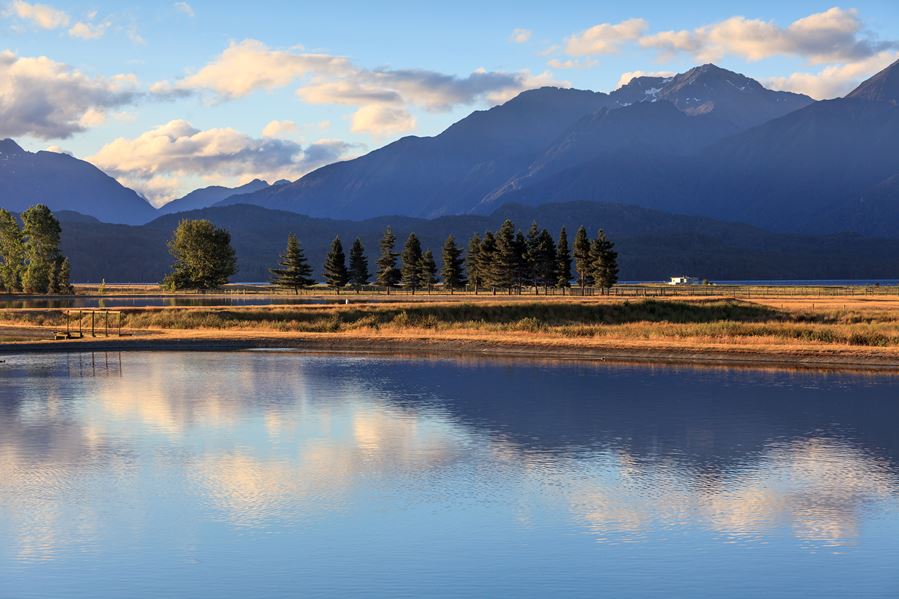
Napier
This coastal city, located on the east coast of the North Island in the Hawke's Bay region, offers something you won't find anywhere else in the country - an unparalleled collection of Art Deco buildings, sandy beaches, great food and a unique, laid-back holiday atmosphere. What sets it apart Napier compared to other New Zealand cities, is its extraordinary history. In 1931, the city was almost completely destroyed by a powerful earthquake, one of the most tragic in New Zealand's history. The quake had a magnitude of 7,8 and lasted only two and a half minutes, but the consequences were catastrophic - over 250 people died, and the city centre was reduced to rubble. However, something exceptional was born from this tragedy: Napier's reconstruction coincided with the heyday of the Art Deco style, thanks to which the city gained the title of "the world capital of Art Deco in the southern hemisphere".
As soon as you walk the streets of the city centre, you’ll understand why Napier’s architecture is so unique. The buildings feature pastel colours, geometric shapes, ornate friezes and distinctive 30s-style details. The best way to see them is to join a guided walking tour or rent an audio guide from the local visitor centre. If you’re visiting in February, you’ll catch the Art Deco Festival – a colourful event where locals and visitors dress up in period costumes, drive vintage cars and party to jazz.
Apart from its architecture, Napier is also famous for its location. The city is situated right on the coast, and the long promenade Marine Parade offers fantastic views of the Pacific. Walking along the ocean, you will come across parks, sculptures, fountains, playgrounds, as well as the impressive Pania of the Reef - a statue inspired by the Maori legend of a beautiful girl - a sea spirit. It is also worth visiting the National Aquarium of New Zealand, where you can see sharks, rays, tuatara and even penguins. Napier is located in the heart of the Hawke's Bay wine region, one of the oldest and most famous in New Zealand. This is the perfect opportunity to visit local vineyards, taste excellent cabernet sauvignon, syrah or chardonnay and have lunch among the vineyards overlooking the surrounding hills. Many wineries offer tastings combined with tours and stories about the winemaking process.
The city also has a lot to offer art and culture lovers. Visit MTG Hawke's Bay (Museum, Theatre, Gallery) – a modern cultural centre housing a regional museum, art gallery and theatre. Here you will find exhibits from the colonial and Maori periods, as well as exhibitions of contemporary art and documents related to the tragic 1931 earthquake.
If you’re more of an active person, you can hire bikes and cycle along the Hawke’s Bay Trails – a network of cycle paths that take you through the coast, vineyards and orchards. It’s a great way to see the area from a different perspective. Also nearby is Cape Kidnappers – a spectacular cliff face that is home to one of the world’s largest colonies of gannets. You can walk there (weather permitting and tide permitting) or take an organised tour.
Napier is also a great base for visiting the neighbouring town of Hastings, famous for its farmers' and fruit markets, particularly apples and peaches. Every Sunday, the Hawke's Bay Farmers' Market is one of the best in New Zealand, selling fresh produce, home-baked goods, preserves and local crafts.
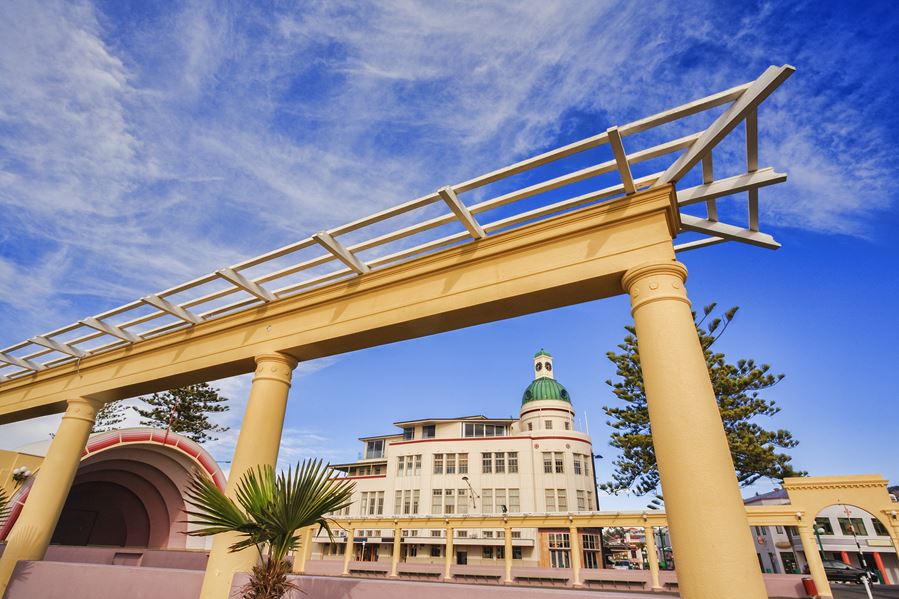
New Zealand - Tourist attractions
Christchurch
Located on the east coast of the South Island Christchurch It is often called the “most English city outside England” – and for good reason. From the very first walk you will feel the atmosphere of colonial elegance: neo-Gothic architecture, the Avon River winding through the city centre, green boulevards and classical gardens create a unique atmosphere. One of the most important points on the city map is the Christchurch Botanic Gardens – a vast park with exotic plants, a rose garden, greenhouses and a beautiful arboretum. Walking along the paths among trees brought from all over the world, it is really hard to believe that you are in the southern hemisphere. But Christchurch is not only about tradition – it is also a modern, dynamically developing city. After the tragic earthquakes in 2010 and 2011, which destroyed a large part of the city centre, Christchurch underwent a transformation. Many historic buildings have been rebuilt or revitalised, and modern structures and public spaces have been built next to them. The result is a unique mix of history and innovative design.
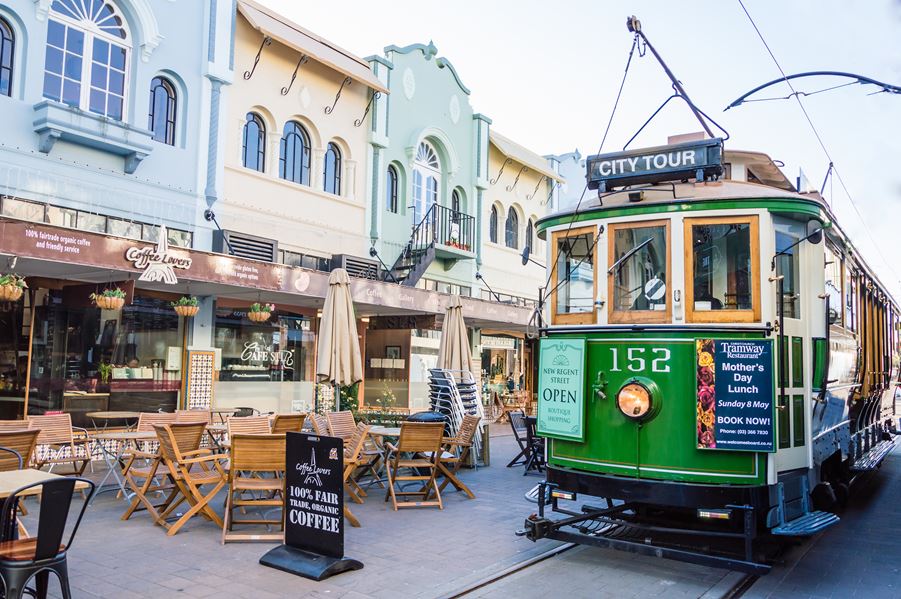
An example of creative reconstruction is the Cardboard Cathedral – a temporary cathedral designed by Japanese architect Shigeru Ban. Made of cardboard tubes and lightweight materials, it is one of the most famous and original buildings in the city. Next to it, it is worth visiting 185 Empty Chairs – an installation commemorating the victims of the 2011 earthquake. Walking along New Regent Street, one of the most charming streets in Christchurch, you will feel the spirit of the 30s – colourful facades, small shops, cafes and trams give this part of the city a unique character. It is worth stopping for a coffee and taking a closer look at how harmoniously the past and the present work together here. The city is also a centre of art and culture. Christchurch Art Gallery Te Puna o Waiwhetu is one of the most modern galleries in the country, presenting both classical and contemporary art. You will also find numerous murals and art installations on the streets – Christchurch is famous for its developed street art scene, which gives urban spaces energy and colour.
For nature lovers and active holidaymakers, Christchurch offers plenty to do. You can walk or cycle to Port Hills, which offers views across the city and Lyttelton Bay, or head to Godley Head, where you’ll find spectacular cliffs, walking trails and relics from World War II. On a clear day, head to Sumner Beach, where you can relax by the ocean or try your hand at surfing.
It is also worth knowing that Christchurch is one of the most important logistical points on the route to… Antarctica. This is where scientific expeditions to the White Continent depart from, and in the International Antarctic Centre you can feel the cold of a polar storm, ride a Hagglund vehicle and see penguins.
Dunedin
Dunedin is a city that combines Scottish history, Victorian architecture, university energy and a wealth of nature. Located in the southeast of the South Island, on the Bay of Otago, Dunedin will surprise you not only with its appearance, but also with its character! It is one of the oldest cities in New Zealand, founded in 1848 by Scottish settlers. The name of the city comes from the Gaelic "Dun Eideann", meaning Edinburgh - hence the term "Scottish capital of New Zealand". These influences are still visible today in the architecture, street names and local culture. Walking around the city centre, you will come across historic sandstone buildings, stained glass windows, stone churches and elegant squares, which create an atmosphere completely different to most New Zealand cities.
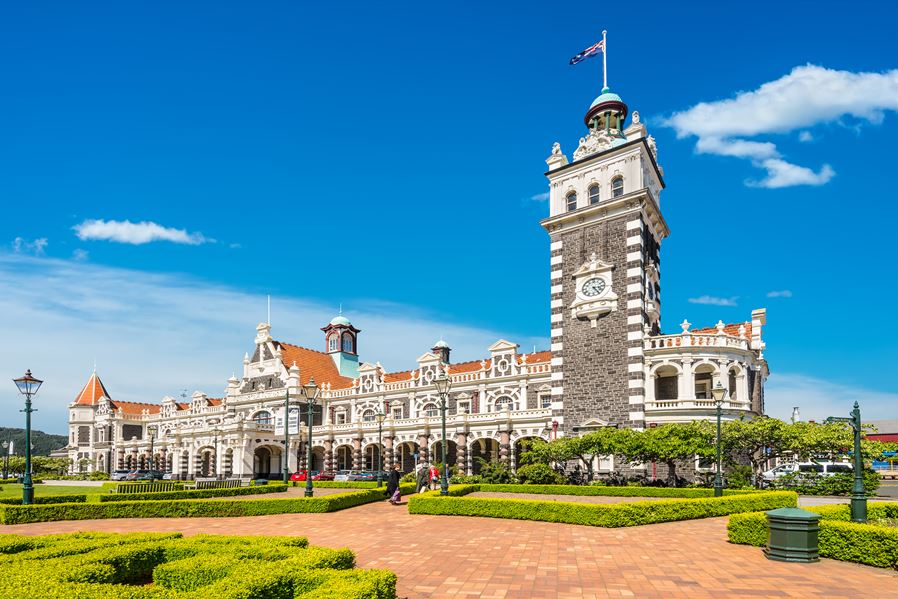
One of the most recognizable buildings in Dunedin is the Dunedin Railway Station. It is a true gem of Edwardian architecture, designed by George Troup, known as "Gingerbread George". Its ornate facade, mosaic floors and clock tower make it one of the most photographed buildings in the country. Next door you will also find the Dunedin Public Art Gallery, where you can see both contemporary New Zealand art and classical European works. Dunedin is also a university city - it is home to the University of Otago, the oldest university in New Zealand, founded in 1869. The campus is bustling with life, and its neo-Gothic buildings with gardens and courtyards are very impressive. The presence of students also affects the atmosphere of the city - you will find many cafes, bookstores, bars and cultural events here.
However, Dunedin's real treasure is its location - especially the Otago Peninsula. This is where you can find some of the most interesting encounters with New Zealand nature. The peninsula is home to the world's largest land colony of royal albatrosses (Royal Albatross Centre), as well as yellow-eyed penguins - some of the rarest penguins in the world. In turn, at Pilots Beach, in the evening you can watch blue penguins come out of the water and march to their nests. It is also worth visiting Larnach Castle - the only castle in New Zealand, built in the 35th century by entrepreneur and politician William Larnach, and today you can visit its chambers, observation tower and beautiful gardens overlooking the bay. For those of you who like physical activity, Dunedin offers many opportunities. One of the most interesting points is Baldwin Street, considered for many years the steepest street in the world - its slope reaches XNUMX%. Climbing the mountain is a good workout, but also great fun, and from the top there are views of the city and surrounding area.
Dunedin also doesn’t disappoint beach lovers. The area has wild, almost deserted shores, such as Tunnel Beach, which is accessed via a tunnel carved into the rock by a 19th-century landowner. The reward for descending is picturesque cliffs and rock arches, perfect for a picnic or photos. Other beaches worth visiting include St. Clair and Aramoana, popular with surfers and walkers.
The city also offers great food and drink. Dunedin has a thriving craft brewery scene – you can visit Emerson's Brewery for example and try some of the locally brewed beers. Local restaurants and cafes often rely on fresh produce from local farms – try lamb, seafood or classic fish and chips on the beach.
Abel Tasman National Park
It is the smallest of New Zealand's national parks, but definitely one of the most stunning. Located on the northern tip of the South Island, between Tasman Bay and the Nelson hills, it offers everything that travellers love the most: contact with nature, beautiful landscapes and endless opportunities for active recreation. The park was established in 1942, on the 300th anniversary of the arrival of the Dutch explorer Abel Tasman, from whom it took its name. Although Tasman was the first European to see New Zealand (in 1642), he never set foot here - his crew was attacked by Maori near today's Golden Bay. Paradoxically, the park named after him has become a symbol of peace, adventure and harmony with nature.
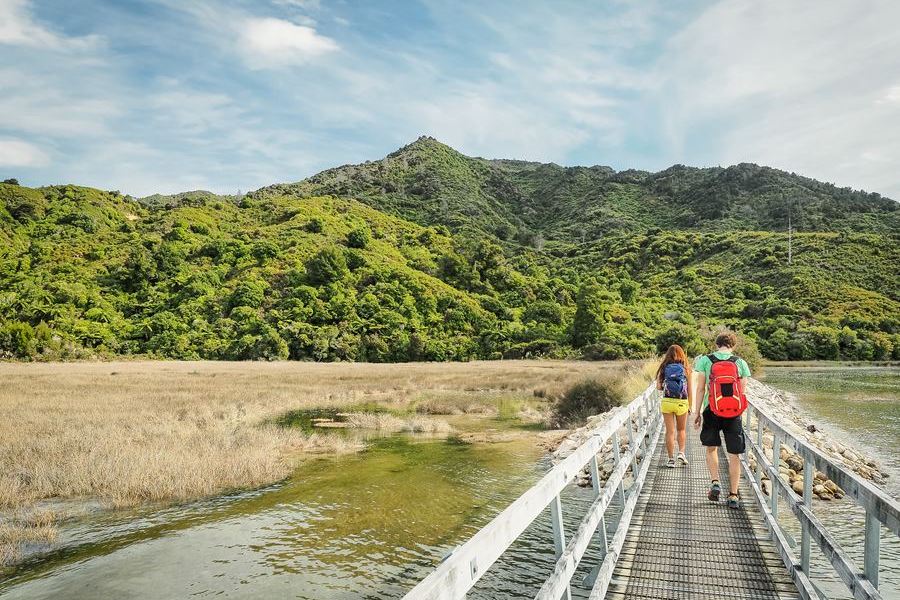
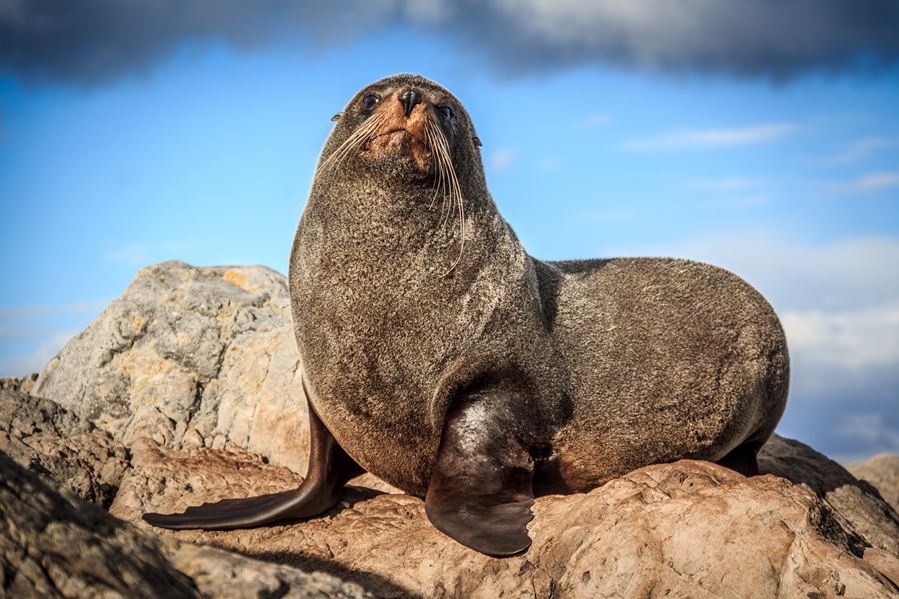
Abel Tasman is best known for one of the most beautiful walking trails in the country – the Abel Tasman Coast Track. This 60-kilometre trail runs along the coast, through golden beaches, forests with native trees, cliffs and coves. The trail can be completed in 3-5 days, but you can also choose one of its sections and return by water. The trail is well-maintained, does not require any special physical condition and is ideal for your first multi-day hike in New Zealand. One of the most unique elements of hiking the Abel Tasman is the possibility of combining trekking with water transport – water taxis and sea kayaks are essential elements of this adventure. You can paddle to a chosen point in a kayak and then return on foot – or vice versa. Many companies offer organised kayaking trips, often with a guide who will tell you about the history and nature of the region, and during the tour you will encounter plenty of wildlife. In Anchorage Bay, Bark Bay and Torrent Bay you can often see New Zealand fur seals (kekeno) basking on the rocks or swimming in the bays. In summer you can also see dolphins and, less frequently, blue penguins – the world's smallest penguins. On land you will come across colourful birds, many of which are unique to New Zealand. You will also come across tall rimu trees, kahikatea and nikau – New Zealand's only native palm. The trail also leads through areas of rainforest, tree fern gorges and picturesque viewpoints with panoramic views of the sea and nearby islands, including Adele Island.
For those of you who would like to spend the night in the park, there are many options available, from Department of Conservation (DOC)-run campsites and huts to private lodges overlooking the ocean. Spending the night in the middle of nature, under a starry sky, is an unforgettable experience, especially with the sounds of the ocean and night birds.
Getting to the park is easy – the nearest larger town is Nelson, and the main entrances are in Marahau and Kaiteriteri. There are buses and tourist buses from Nelson, and the local infrastructure (hostels, outdoor shops, kayak rentals) is well-prepared to serve tourists.
Top attractions in New Zealand
Franz Josef Glacier
Located on the west coast of the South Island, within the Westland Tai Poutini National Park, this impressive tongue of ice is one of the few places in the world where a glacier descends almost to the level of the rainforest – and is accessible so close to the coast. Franz Josef Glacier (Maori name: Ka Roimata o Hine Hukatere, or "the tears of Hine Hukatere") is now about 10-12 kilometres long, although at the time of its greatest expansion it extended much further. It was given its European name by Austrian geologist Julius von Haast in 1865, in honour of Emperor Franz Joseph I of Austria. It is one of the most famous glacial sites in New Zealand and one of the most accessible glaciers in the world - and although its area decreases year by year, it still makes a huge impression. You can walk to the front of the glacier along the Franz Josef Glacier Walk, which leads through a river valley formed by the retreating ice. The walk is relatively easy (about 1,5 hours both ways), but the experience is extraordinary - along the way you pass giant boulders, waterfalls, and in the background looms a huge, blue-white wall of ice. For something even more spectacular, you can take a helicopter glacier trek (so-called heli-hike). This tour includes a scenic flight over the glacier and a landing on its surface, where, accompanied by a guide, you will put on crampons and set off on a walk among ice cracks, tunnels and ice sculptures. This is an unusual opportunity to stand on a glacier, listen to its crackles and feel the cold of eternal snow under your feet.
It is interesting that Franz Josef is a dynamic glacier – in the past it has recorded both rapid retreats and unexpected growths. In the 80s and 90s, the glacier retreated, but there were also short periods of renewed growth – which is rare in conditions of global warming. Today, its length is decreasing by an average of several dozen meters per year, which makes it all the more worth seeing now, while it is still accessible.
In the area, it is also worth visiting the West Coast Wildlife Centre, which runs conservation programmes for rare kiwis, including the most endangered subspecies – the grey kiwi. This is one of the few places where you can see these nocturnal, flightless birds up close and learn more about their biology and conservation. Lovers of relaxation will appreciate the Glacier Hot Pools – a complex of thermal pools hidden among ferns and rainforest. After a day full of excitement, you can immerse yourself in the warm water and relax, listening to the murmur of the stream and the birds singing. For photographers and wildlife lovers, the area around Franz Josef is a real paradise – sunrises and sunsets over the glacier, reflections of the mountains in lakes Peters Pool and Lake Mapourika, as well as paths through lush rainforest create landscapes that will take your breath away.
The drive to Franz Josef Glacier is along the winding but incredibly scenic State Highway 6, which runs along the entire west coast. It is part of the Wild West Coast – one of New Zealand’s most untouched regions, where mountain ranges meet almost directly with the Pacific Ocean.

Paparoa National Park
paparoa, one of New Zealand's least crowded but most diverse national parks, is located on the west coast of the South Island, in the West Coast region. It was established in 1987 and today covers over 430 km². The name "Paparoa" comes from the Maori language and means "long rocks", which perfectly describes the distinctive, steep limestone rock formations that dominate the landscape. The most famous feature of this park is undoubtedly the Pancake Rocks in Punakaiki - rock formations resembling stacks of pancakes, carved by millions of years of water, wind and sea salt.
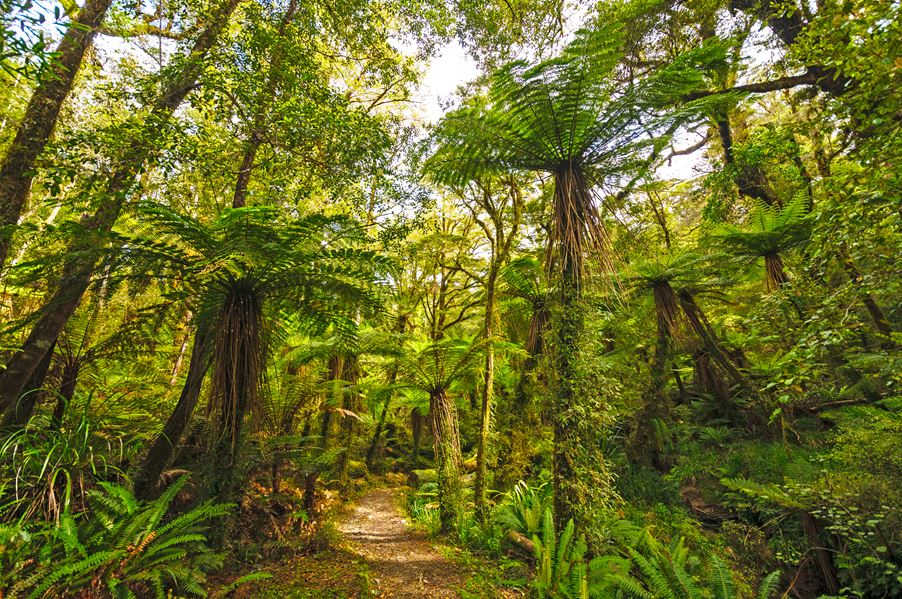
But Paparoa is much more than just its famous rocks. The park stretches from the coastline to the alpine ridges of the Paparoa Mountains. It’s the only place in New Zealand where you can walk through rainforest, explore karst caves and climb limestone cliffs with panoramic views in one day. Paparoa offers hikers exceptional trails, the latest of which is the Paparoa Track – the official Great Walk, one of the most prestigious and best-maintained trails in the country. It opened in 2019 in memory of the victims of the 2010 Pike River Mine Disaster. The 55km trail runs from Blackball to Punakaiki. The trail usually takes 2-3 days to complete and offers breathtaking views – from mountain ridges to river valleys to views of the Tasman Sea. Paparoa is also a paradise for cavers and geology enthusiasts. Here you will find some of the most impressive karst caves in New Zealand – including Cave Creek and Truman Track Caves. You can take an organised cave tour, where you will learn the fascinating history of their formation and see glowworms, which shine like stars in the dark. It is worth knowing that some caves are only accessible with a guide, to protect the delicate ecosystem.
Paparoa Park National Park is accessed via State Highway 6, which runs along the entire west coast. It is one of New Zealand's most scenic drives, taking in the coastline, cliffs, rivers and lush forested hills.
kaikoura
Kaikoura, a town located roughly halfway between Christchurch and Picton, is best known for whale watching. Thanks to its unique geographical location – just off the coast is a deep ocean trench, the so-called Kaikoura Canyon – these waters are incredibly rich in nutrients, attracting numerous marine species. Sperm whales can be seen here all year round, and in season, humpback whales, orcas and blue whales – the largest animals on Earth. By choosing a cruise with one of the local companies, such as Whale Watch Kaikoura, you have an almost 100 percent chance of seeing these majestic mammals in their natural habitat. In addition to whales, you can regularly see dolphins, which often accompany the boats and perform acrobatic jumps. There are also numerous seal colonies near the coast – especially on the Kaikoura Peninsula, where you can observe them up close while walking the scenic Kaikoura Peninsula Walkway. This walk takes you along cliffs, with views of the mountains, ocean and seabird nesting sites – a great option for an afternoon of relaxation.
For those of you who dream of an even closer encounter with nature, there are opportunities to swim with dolphins, dive with seals or cruise in search of albatrosses – the largest flying birds in the world, whose wingspan can exceed 3 metres. Kaikoura is one of the best places in the world to observe them.
But Kaikoura is not only about nature – it is also a place with a rich history and culture. The Maori name of the city literally means “lobster meal” (kai – food, koura – lobster), which is not accidental – this region has been known for centuries for its abundance of seafood, and today you can try fresh lobsters, served in local restaurants and bars, and there is no shortage of Kiwi classics – fish and chips, Maori dishes and cuisine inspired by Asia and the Pacific.
Kaikoura is easy to reach by car – the journey from Christchurch takes about 2,5 hours, and from Picton (where ferries arrive from the North Island) about 2 hours. The drive follows the coastline and is an attraction in itself – full of bends, cliffs and places where the ocean almost touches the road. You can also get there by the Coastal Pacific train, which connects Christchurch with Picton and offers breathtaking views from the panoramic windows.
Interesting places in New Zealand
Nelson
Nelson, one of the country's most charming cities, boasts the distinction of being New Zealand's sunniest city, with an average of over 2 hours of sunshine per year. New Zealand Weather makes it an ideal place for both active recreation and blissful laziness. But it's not just the climate that makes Nelson so charming - it's also its location. The city is located near three national parks: Abel Tasman, Kahurangi and Nelson Lakes. Thanks to this, you can choose from mountain hikes, swimming in turquoise bays or walks on alpine lakes every day - and all this within a few dozen kilometres.
One of the main reasons people visit Nelson is its proximity to the Abel Tasman National Park – the most beautiful coastal reserve in the country. Just an hour away, you can find golden beaches, bays accessible only by boat, dolphins, seals and the clearest blue you can imagine. So Nelson is a great place to start your adventure in the park – you can hire kayaks, book a boat trip or start trekking along the Abel Tasman Coast Track.
The city itself has a lot to offer. Nelson is famous for its art scene – you will find numerous galleries, workshops, boutiques with local crafts and jewellery. One of the most famous places is The Suter Art Gallery – one of the oldest art galleries in New Zealand, also worth a visit is the Nelson Saturday Market, which takes place every week in the city centre – it is a real feast for the senses: fresh produce, local specialities, organic cosmetics, pottery, wooden sculptures and conversations with artists who sell their work here.
Interestingly, it was in Nelson that the famous ring from “The Lord of the Rings” was created. It was designed and made by a local jeweler – Jens Hansen Gold & Silversmith – whose shop you can visit in the city centre.
There’s plenty for the more active too. There are plenty of cycling trails around Nelson, notably the Great Taste Trail, which connects vineyards, farms and coastal landscapes. You can spend the day cycling through the rolling hills, stopping for wine, cider and cheese tastings. The Nelson Tasman region is renowned for its excellent sauvignon blanc, pinot noir and craft beers – and there are plenty of micro-breweries where you can enjoy locally brewed beers. And speaking of food, Nelson is a paradise for foodies. Local cuisine is based on fresh seafood, organic vegetables and regional cheeses. Restaurants and cafes often use locally sourced produce, giving each dish a unique character. Try freshly grilled fish, Maori hangi or New Zealand tropical fruits such as feijoa and tamarillo.
Nelson is also a place with deep-rooted history. European settlement began here in the 40s, and its remnants include colonial buildings in the center and numerous monuments. On the hill rises Christ Church Cathedral, whose architecture and peaceful gardens encourage a moment of reflection. Interestingly, the geographical center of New Zealand is located not far from the cathedral - you can go for a short walk there and take a photo at the symbolic landmark.
From North to South
New Zealand | Auckland, Matamata, Rotorua, Christchurch, Mt. Cook, Wanaka, Queenstown, Milford Sound, Franz Josef, Punakaiki, Greymounth, Kaikoura
Lake Taupo
This is the largest lake in New Zealand, located almost in the centre of the North Island, with a surface area of around 616 km² – larger than the whole of Warsaw – and offers endless ways to spend your time. Whether you are a fan of water sports, hiking, fishing or just want to enjoy beautiful views and clean air, Taupo has something for you. The lake was created as a result of one of the largest volcanic eruptions in Earth's history – the eruption of the Taupo supervolcano around 26 years ago. The most recent major eruption took place around 500 AD and was so powerful that its traces can be found in lake sediments in China and Greenland. It is the remnants of this catastrophe that today's lake is a deep caldera filled with crystal clear water. Although it sounds dramatic, today this place exudes peace and beauty.
The town of Taupo, located on the northern shore of the lake, is an ideal base for exploring it. You will find everything you need for travelers here - good accommodation facilities, restaurants, sports equipment rentals, tourist information centres and a wide range of tours and attractions. One of the biggest attractions of the region is Huka Falls - powerful waterfalls, through which about 220 litres of water flow per second every day. The water flows down the narrow gorge with great force, creating a spectacular spectacle. You can admire it from several viewpoints, go for a walk along the Waikato River, or even get close to the waterfall by motorboat during a jet boat cruise - it's a guaranteed adrenaline rush!
Taupo is also a paradise for anglers. The lake is famous for its rainbow trout, which were introduced here from California in the early 70th century. The conditions are so favourable that today some of the largest trout in the country are caught here. You can rent a boat or join an organised expedition with a guide – and in the evening cook freshly caught fish on a barbecue on the lake shore. Fans of water sports will also not be bored – you can swim, sail, dive, use kayaks, paddleboards or jet skis. One of the most interesting attractions is a kayak trip to the famous Maori sculptures in Mine Bay – giant faces carved into the cliff in the XNUMXs by the artist Matahi Whakataka-Brightwell. This is a unique work of art that can only be seen from the lake. And if you are looking for views from above, you can take a sightseeing flight over the lake and the surrounding volcanoes. You can also… jump out of a plane! Taupo is one of New Zealand's most popular places to skydive - and for good reason. The views of the lake, the volcanoes of Tongariro National Park and the green hills of the Waikato region are breathtaking. The geothermal side of the region is also not to be missed: in the area around Taupo you will find hot springs, geysers and mud volcanoes. One of the best places to relax is the Wairakei Terraces - a complex of thermal pools, fed by water from natural springs. After a day full of excitement, you can immerse yourself in hot water and relax under the stars.
If you have ever wondered whether New Zealand is worth visiting – the answer is: definitely yes! This extraordinary country is a true paradise for all those who love adventure, nature and spectacular landscapes. Every bend in the road, every trail and every bay hides something unique that will take your breath away. Imagine starting your day on a mountaintop overlooking a turquoise lake and ending it in natural hot springs under a starry sky. Sounds like a dream? In New Zealand, it is everyday life! Here, you can swim with dolphins, hike on a glacier, dive by a coral reef or discover magical caves glowing with thousands of fireflies. This is a country made for exploration, and the best thing is that you don't have to plan every step - just let yourself be carried away by the road. Every day is a new adventure, new views and new stories. It is really hard to get bored in New Zealand - regardless of whether you are looking for peace in nature or an adrenaline rush.
So – don't wait for someone to tell you what it was like there. See for yourself. Take the first step, book a trip and let New Zealand enchant you. We guarantee – you will want to come back!

Travel to Vietnam - how to prepare?
Older post
Vaccinations before traveling to Namibia – recommendations and requirements
Newer post
November 13, 2026
November 10, 2026
November 9, 2026
November 6, 2026
November 5, 2026
November 4, 2026
recent posts
- Honeymoon trip to Morocco November 13, 2026
 International driving license – when is it needed? November 12, 2026
- The most beautiful lakes in Asia – where is it worth going? November 10, 2026