
Get inspired and read about your dream trip on the blog
Instagram Vacation Spots: Where to Take the Most Beautiful Photos?
October 9, 2026
Are you looking through your friends' vacation photos and wondering where those shots were taken, the ones you can't tear your eyes away from? Instagram vacation spots have one thing in common – they're so vibrant that even a photo taken with a phone looks like a postcard. White houses above the caldera, hundreds of balloons over rock chimneys, a salt desert that reflects the sky like a mirror. However, the most beautiful photos are also determined by a well-chosen time, a little patience, and respect for those who live there. We invite you on a journey from the Mediterranean to the Pacific, to places where it's worth knowing when to bring your camera and what rules to keep in mind.
The most Instagrammable places in the world
What makes one place appear on thousands of profiles, while another, equally beautiful, goes unnoticed? The most Instagrammable places in the world usually have a single, powerful motif that can be captured in a square or vertical frame: a gate, a wall in a single color, a solitary tree, the horizon line. Contrast is key – the red of the rocks against the sky, the blue of the domes against the white of the walls, dark tree trunks against the orange sand. These are often also places where the human subject in the photo emphasizes scale: they appear tiny at the foot of a rock-hewn facade or between the columns of a temple.
Cool Instagram locations aren't just for postcard views, though. We're increasingly looking for snapshots of life—a tannery full of dye vats, a street awash in evening light, a colorful market. Such photos tell a deeper story about a journey than just another sunset photo, and they also force you to stop and look around. Many of these places have their own daily rhythm: they can be empty at dawn, crowded at noon, and change color in the evening. Those who know this rhythm return with better photos than those with a better camera.
Where to look for perfect Instagram shots?
Imagine places that make your camera jump out of your pocket—from Greek islands to Pacific atolls. Instagrammable spots have one thing in common: each has a time of day when it looks its best.
Santorini, Greece
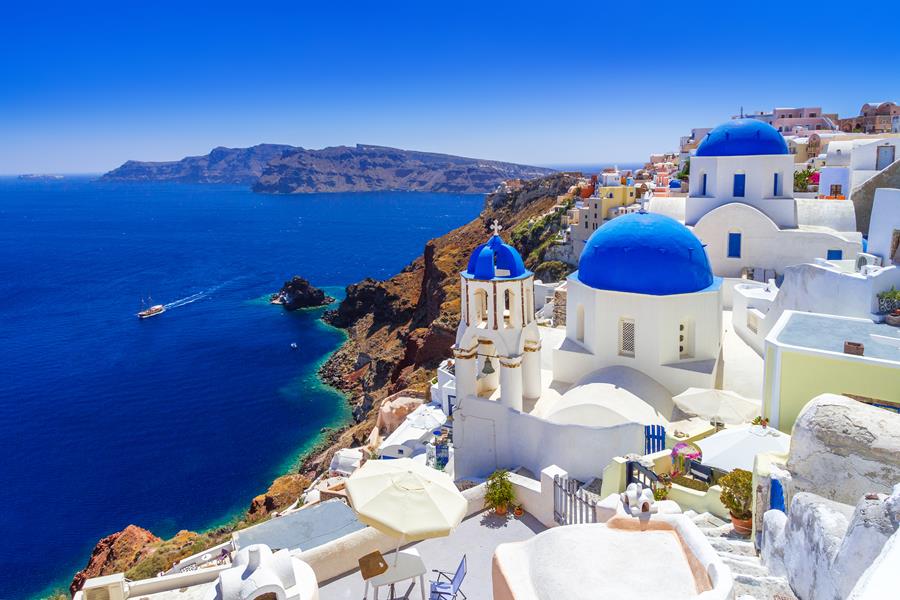
Santorini this is one of the most recognizable views Greece: white houses and blue church domes suspended above the caldera, a volcanic crater flooded by the sea. The most famous shots are taken in Oi, on the northern tip of the island, where hundreds of people wait in the evening for the sunset over the sea. For photos without the crowds, visit Oi's narrow streets early in the morning – the white walls look just as good in the soft morning light, and the steps and terraces are still empty.

Remember that many picturesque terraces and rooftops belong to hotels and private homes. Climbing onto them for a photo is not only rude but also a surefire way to get in trouble with the owner. The best views of the caldera are available from public paths, such as the walking trail between Fira and Oia. For more sightseeing ideas, check out our guide to the best attractions in Santorini.
Bali, Indonesia
Bali He has several shots that have gone viral around the world. The most famous is the "Gateway to Heaven" at the Pura Lempuyang temple in the east of the island: a stone gateway, through which, in clear weather, Mount Agung can be seen. The reflection, as if in a water surface, is actually a mirror held up to the lens of a local photographer's phone. Waiting times are often several hours, and the session itself lasts about a minute – it's worth having your poses prepared. Modest attire is required at the temple, with shoulders and knees covered, and you'll be provided with a sarong upon entry.

Bali culture & relaxation on Gili and Lombok
Indonesia, Indonesia – Bali | Ubud, Batur volcano, Bangli, Gili
You can take more peaceful photos at the Tegallalang rice terraces nearby Ubud or on the cliffs Nusa Penida on Kelingking Bay. If you're looking for a hotel where the session starts by the pool, check out this list instagrammable hotels in Bali.

Cappadocia, Türkiye
Hundreds of balloons floating at dawn over the rock chimneys are a scene that many people go to Cappadocia in the middle TurkeyThe best way to view them is from the viewpoints around Göreme or from the terrace of a hotel nestled in a rocky grotto. Then, the balloons are in the background, not overhead, and you can frame the scene with rugs, pillows, and a cup of tea in the foreground. balloon flight over Cappadocia in turn, it gives photos from above, in which the valleys look like the surface of another planet.
The balloons only take off in good weather. Each morning, the Turkish Civil Aviation Authority decides on the flight, and in cases of strong wind, fog, or precipitation, all balloons remain on the ground. In the first half of 2026, they flew for only 90 days, so plan to spend at least two or three mornings in Cappadocia. We suggest interesting places in the area in our guide to Turkey's biggest attractions.

Amalfi Coast, Italy
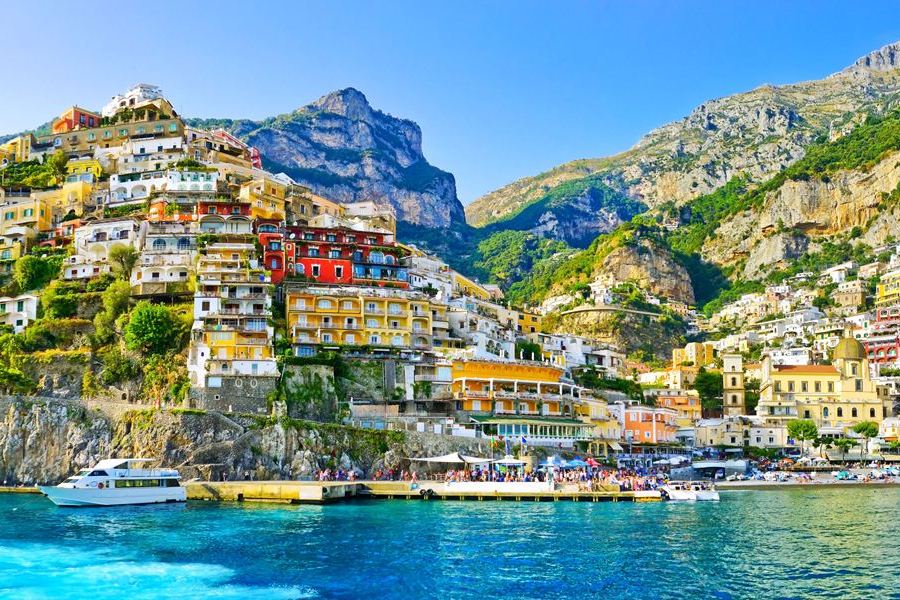
Amalfi Coast in the southern Italy It features pastel-colored houses clinging to steep slopes, lemon groves, and a winding road suspended above the sea. The most famous sight is Positano – a town descending in terraces to the beach, best photographed from the road above or from a boat. In Ravello, located higher up the coast, you'll find villa gardens with balustrades overlooking the entire bay.
In summer, the narrow coastal road can be very crowded, and parking is expensive and difficult to find. It's more convenient to travel by ferry or bus and plan your photos for the morning before the tour groups arrive in the towns.
Marrakesh, Morocco
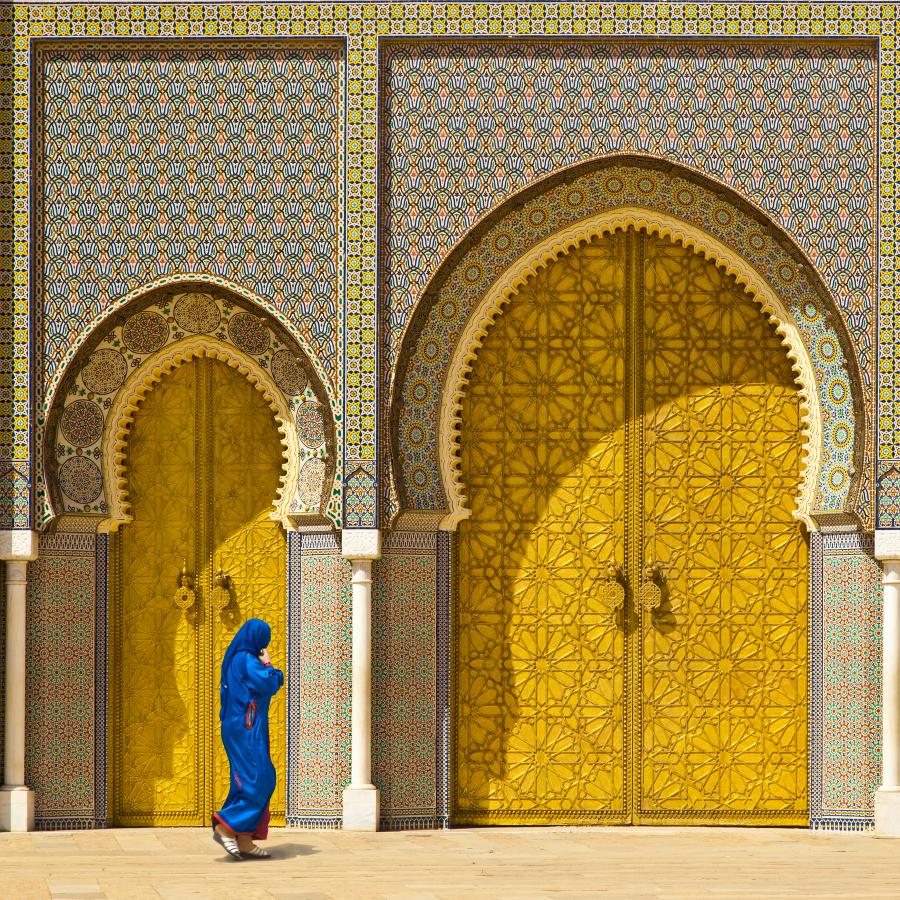
Marrakech It's a city of color and light, where photos are taken at almost every corner. The iconic Majorelle Garden, with its intensely blue villa and cacti, was founded by painter Jacques Majorelle and later renovated by Yves Saint Laurent and Pierre Bergé. Pictures of the medina are dominated by carved doorways, mosaics in the Bahia Palace, and courtyards of traditional riads with fountains.

Morocco: from Marrakesh to the sands of the Sahara
Morocco | Marrakech, Ouarzazate, Merzouga, Skoura
In the evening, it's worth visiting Jemaa el-Fnaa Square, when the smoke from the street kitchens mixes with the last light of the day. However, remember that snake charmers, monkey trainers, and street musicians expect payment for photos, and many locals don't want to be photographed. Always ask for permission. For practical tips for your stay, see the article about the biggest attractions of Marrakesh, and a general overview Maroka – in the ranking best attractions in Morocco.

Chefchaouen, Morocco
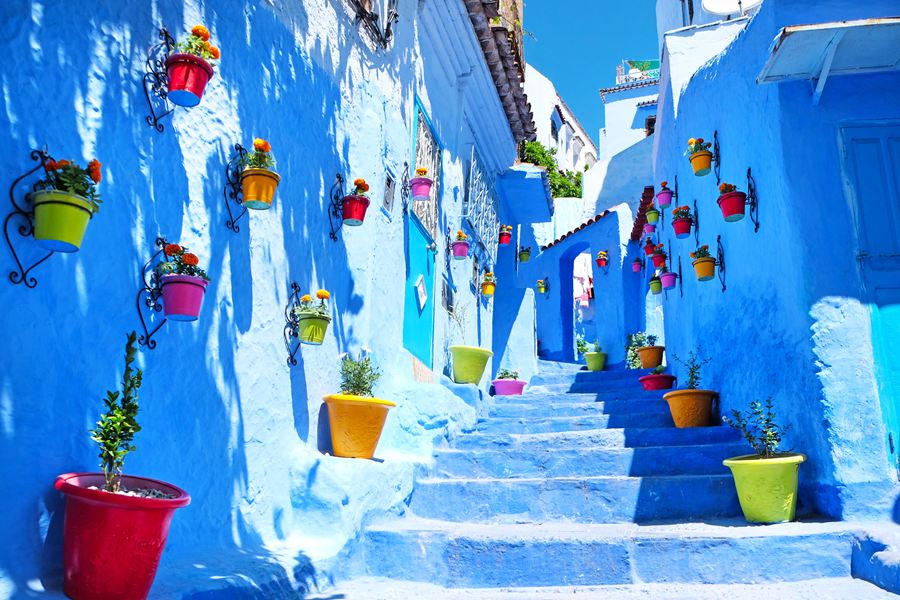
Chefchaouen In the Rif Mountains, this town is almost entirely blue: walls, stairs, doors, and flowerpots. It's effortless to photograph—just turn any street in the medina. The light is most beautiful in the morning, when the blue is a cool, clear hue, and the streets are still sparse.
Romantic Morocco – from the blue of Chefchaouen to the imperial Fez
Morocco | Tangier, Chefchaouen, Fes, Casablanca
For a panoramic view of the entire town, head to the so-called Spanish Mosque on a hill in the evening, from where you can see the blue medina against the backdrop of the mountains. Remember that in Chefchaouen, people simply live there, and the doorsteps and steps of their houses are their private space. Don't sit on them for photos without permission, and don't take close-up photos of residents without asking.
Kyoto, Japan
Kyoto, the former capital Japan, gives shots that look like they're from another era. The orange torii gates stretching along the mountainside are Fushimi Inari Temple of a Thousand Gates, open 24 hours a day and free of charge. You can photograph the empty corridors of the gates early in the morning or in the evening, and the higher you go, the fewer people you will encounter. It's similar in Arashiyama bamboo forest – at dawn, before the arrival of the tour groups, the tall stems create a green tunnel.

Strict rules apply in the Gion district. Signs on private streets in the southern part of the district prohibit entry and photography, and warn of fines of up to 10,000 yen. Geishas and geisha apprentices are not allowed to be accosted or blocked for photos. More places in the city are described in the article about Kyoto's biggest attractions.

Petra, Jordan
Petra w Jordanians It begins in the narrow Siq gorge, whose rock walls suddenly part to reveal the Treasury – a facade carved into pink sandstone. It's one of the most iconic landmarks in the Middle East, and it's worth getting there as early as possible, before the gorge fills with groups. The Treasury can also be seen from above, from a vantage point reached by a trail over the rocks.

Jordan and Egypt – The Middle East in a Nutshell
Egypt, Jordan | Cairo, Luxor, Amman, Petra, Dead Sea
The second iconic site is the Ad-Deir Monastery, accessed by several hundred stone steps – the ascent usually takes 45 minutes to an hour and a half. In the afternoon, the façade takes on a warm color, and the summit is much quieter than at the Treasury. Several evenings a week, Petra by Night takes place, when the path through the Siq and the square in front of the Treasury are lit with candles. You can read more about this place in the inspiration about Petra, the ancient city carved into the rock, and about the whole country - in the guide to best attractions in Jordan.

City Palace in Jaipur, India
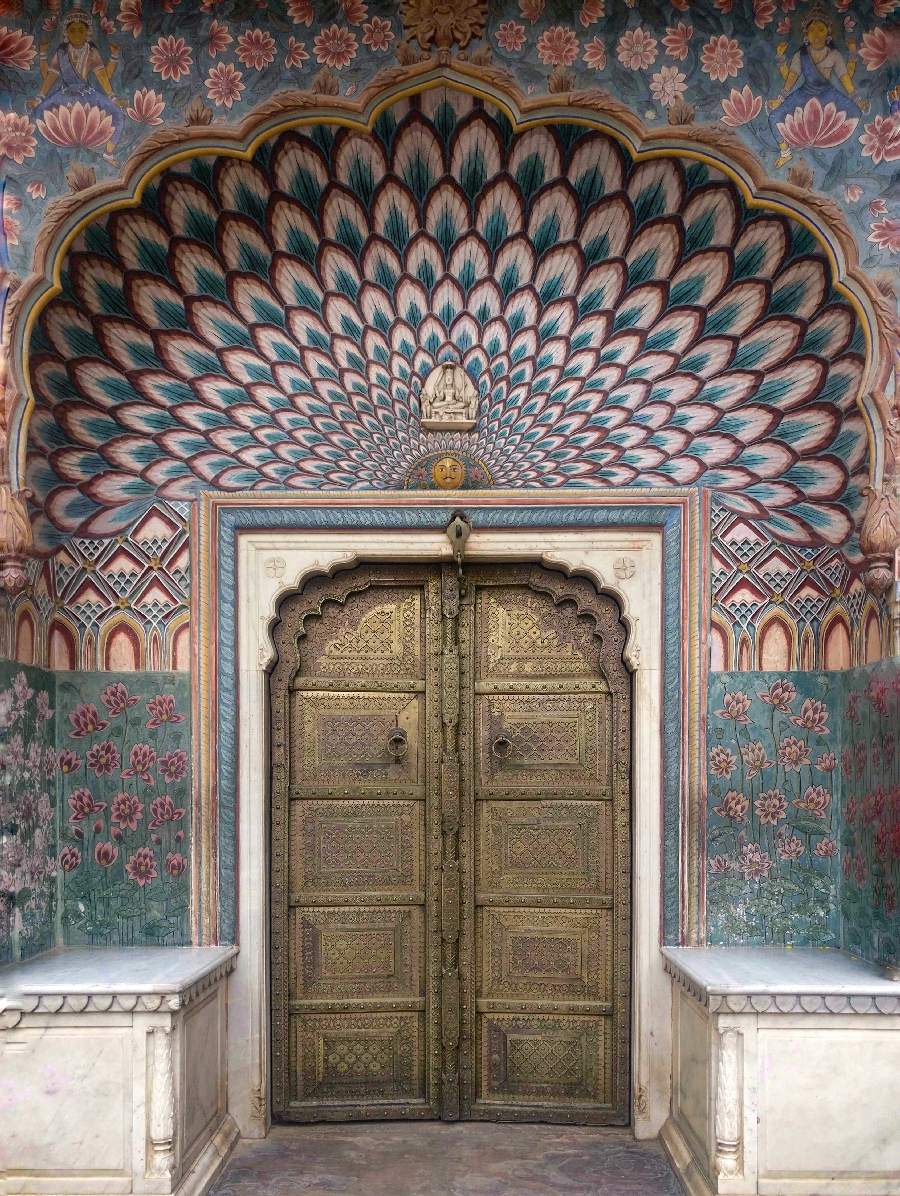
City Palace in Jaipur, the capital of Rajasthan in India, is a palace where some rooms are still occupied by the family of the former maharajas. The most photographed spot is the Pitam Niwas Chowk courtyard, with its four ornate gates, each symbolizing a different season. The most famous of these is the Peacock Gate, symbolizing autumn, with its peacock motifs in shades of green.

The courtyard can be crowded, especially during the middle of the day, so arrive shortly after opening or late in the afternoon. The private rooms of the Chandra Mahal Palace, including the famous blue interior, can only be seen on a paid guided tour, which requires a separate ticket. We've compiled other photo-worthy spots in our guide to attractions and monuments of India.
Karnak, Egypt
Karnak Temple in Luxor is one of the largest temple complexes of ancient times EgyptThe most photogenic is the Great Hypostyle Hall, with its 134 columns, the tallest of which, in the central nave, measure some 21 meters. Standing among them, it's easy to understand why a photograph with a person in the frame conveys more scale than any description.

The best light is in the morning, when the sun streams between the columns, highlighting the preserved bas-reliefs, and the heat isn't yet oppressive. After several years of renovation, many of the columns have regained their original color, having been covered in dirt for centuries. If you'd like to see what our clients' journey through the country looked like, check out photo report from Egypt.

Chouara Tannery in Fez, Morocco
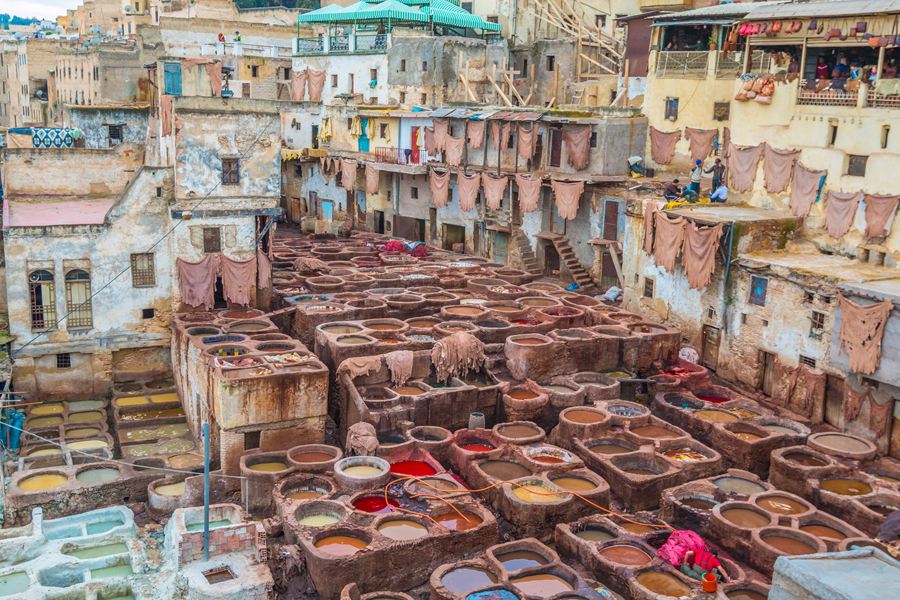
Chouara Tannery in the Medina Fez This is one of the oldest operating tanneries in the world. From above, it looks like a painter's palette: dozens of stone vats filled with dyes in shades of red, yellow, and brown, between which tanners work. The best view is from the terraces of the leather goods shops that surround the tannery.
Upon entering, vendors often hand out a sprig of mint, as the aroma from the vats is so intense. Entering the terrace usually involves an invitation to enter the shop – you don't have to buy anything, but it's nice to say thank you or leave a small tip. It's best to arrive before noon, when the vats are in full sun and the work is in full swing.
Dead Vlei, Namibia
Dead Vlei in Namib-Naukluft National Park w Namibia It's a white, dry basin surrounded by orange dunes. Black acacia trunks stand within it, having died some 600–700 years ago when the dunes cut off the water. The dry air prevented them from rotting—a photo of them looks like a surreal painting.

Self drive around Namibia
Namibia | Kalahari Desert, Fish River Canyon, Lüderitz, Namib Desert, Swakopmund, Spitzkoppe, Damaraland, Etosha National Park, Waterberg Plateau, Windhoek
The best time is early morning, when the dunes are illuminated and the basin is still in shade – this is when the color contrast is greatest. The park's main gate in Sesriem opens at sunrise. Guests staying at the state-owned Namibia Wildlife Resorts behind the gate can enter an hour earlier. There are approximately 60 kilometers of paved road from the gate to the parking lot for standard cars, and the last few kilometers of sand to the basin can be covered by a 4x4 or shuttle bus, so set off as early as possible. We've described more places in the country in our list. Namibia's biggest attractions.

Avenue of the Baobabs, Madagascar
Avenue of the Baobabs in the west Madagascar It's a gravel road lined with about 260 meters of baobab trees, a species endemic to the island. The trees grow to about 30 meters tall, and their smooth trunks, with a small crown at the top, look as if they were planted upside down.

Madagascar with the Avenue of the Baobabs and the beaches of Mauritius
Madagascar, Mauritius | Anatananarivo, Morondava, Kirindy, Bekopaka, Le Morne
Most people come here for sunset, when the baobabs silhouette themselves against the orange sky, and their trunks reflect in the puddles along the road. Sunrise is equally beautiful, but much more peaceful. The avenue is nearby. Morondavy, from where it is easiest to organize transport. We show what a photographic expedition around the island looks like in the report from a photographic journey through wild Madagascar.

Antelope Canyon, USA
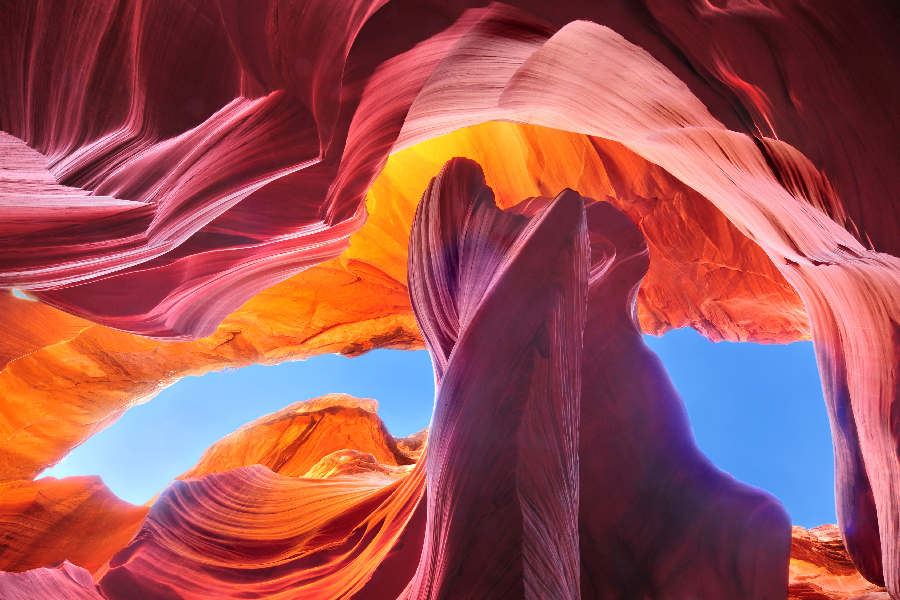
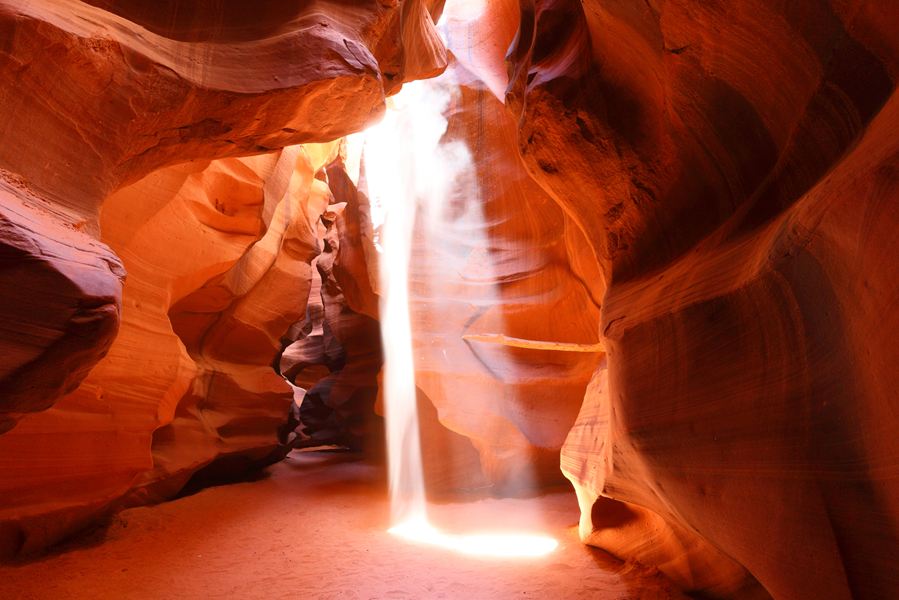
Antelope Canyon in Arizona is a narrow crevice in the red sandstone, carved by water and wind into undulating walls. Located on Navajo Nation land, it can only be entered with a licensed Navajo guide. Self-guided tours are prohibited, and drones are prohibited on Navajo land and may be confiscated. The most famous photographs depict shafts of light streaming from above into the Upper Canyon—they appear around noon, roughly from late March to early October, and are most visible from May to September.
The most beautiful US parks and Californian beaches
USA | Las Vegas, Grand Canyon, Monument Valley, Antelope Canyon and Lake Powell, Zion National Park, Death Valley, Los Angeles and Santa Barbara
Tours during the light beam season sell out months in advance, so book as soon as you set your departure date. The narrow corridors are dark and crowded, so a phone that can handle low light is useful. The canyon is located in the same part of the country as Grand Canyon Colorado w USAYou can find other landscapes worth taking photos in the list below. the most beautiful national parks in the USA.
Salar de Uyuni, Bolivia
Uyuni Salt Flats w Bolivia It's the world's largest salt desert, covering over 10 square kilometers at an altitude of approximately 3650 meters. So it's best to spend the first few days calmly, acclimating to the altitude. It's so flat and white that photos from it look like they're from another planet. During the dry season, the famous perspective photos are taken here—people standing on their hands or climbing out of bottles.
Natural Treasures of the Andes: An Incredible Journey Through Latin America
Bolivia, Chile, Peru | Lima, Arequipa, Colca Canyon, Puno, Lake Titicaca, Copacabana, Isla del Sol, La Paz, Salar de Uyuni, San Pedro de Atacama, Santiago de Chile
The most famous shot, however, is taken during the rainy season, when a thin layer of water transforms the salt flat's surface into a giant mirror. You'll most likely see this effect from late January to early March. You can read more about this place in the inspiration about the largest salt pan in the world and in the guide to the best attractions in Bolivia.

Moai statues on Easter Island, Chile
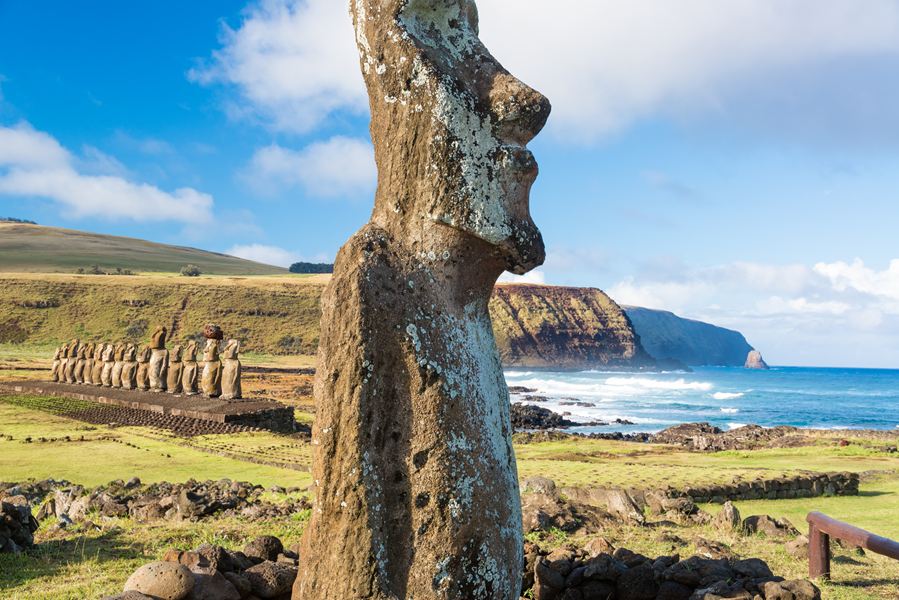
Easter Islandbelonging to Chile, is one of the most isolated inhabited places on Earth. Its symbol is the stone moai statues. The most famous shot is taken at sunrise at Ahu Tongariki, where 15 statues stand on a single platform. Equally photogenic is the slope of the Rano Raraku volcano, where the statues were carved – many of them still protrude from the ground. Most of the sites are located in Rapa Nui National Park. A 10-day ticket is required, and the sites are accessed with a licensed local guide. Rano Raraku and the village of Orongo can only be entered once, so plan your visits for the best weather. The statues and stone platforms are not allowed to be touched or climbed. You can read more about them in the inspiration about the mysterious moai statues on Rapa Nui
Rainbow Mountain, Peru
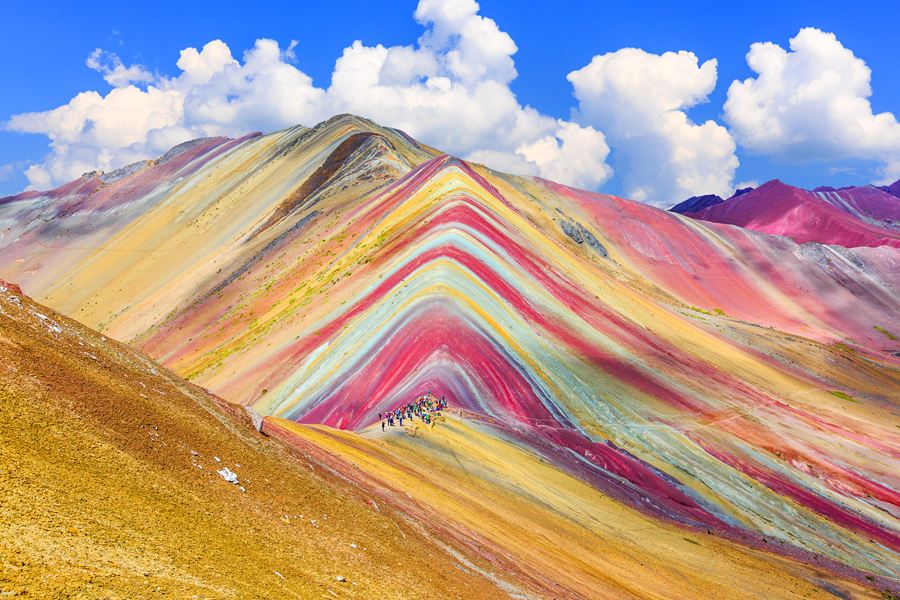
Rainbow Mountain, or Vinicunca, is a mountain in the Andes in Peru, whose slopes are streaked with red, ochre, and green. The colorful layers are sediments rich in various minerals, exposed by erosion. The viewpoint lies at an altitude of over 5000 meters, so several hours of walking in thin air can take their toll, and altitude sickness affects even those in good physical condition.
Tours usually depart very early in the morning from the surrounding area. CuzcoBefore your trip, spend a few days acclimatizing, and bring warm clothing for the trail, as the weather at this altitude changes quickly. Colors are most vibrant when the slopes are clear of snow and fog. We describe other places in the country in our guide to the best attractions in Peru.
Gardens by the Bay, Singapore
Gardens by the Bay in Singapore These gardens look like the set of a science fiction movie. Their symbol is the Supertrees – 18 steel "supertrees" ranging from 25 to 50 meters tall, covered with plants. During the day, you can take interesting photos from a walkway suspended between the treetops, while the Flower Dome and Cloud Forest greenhouses offer a waterfall surrounded by tropical vegetation.

The most spectacular moment is the evening Garden Rhapsody light show at 19:45 and 20:45 p.m., when the Supertrees light up to the beat of the music. The show is free and is best viewed from the ground under the trees. The hotel can be seen in the background. Marina Bay SandsOther places worth taking photos are described in the text about Singapore's biggest attractions.

Bora Bora with a view of Mount Otemanu
Bora Bora w French Polynesia It's synonymous with tropical paradise: a turquoise lagoon, bungalows on stilts, and above it all, the verdant peak of Mount Otemanu. At 727 meters, this extinct volcano is the island's highest point. The best views are from the islets surrounding the lagoon, where most of the luxury hotels are located—from there, the mountain rises straight out of the water.

A journey through the four most beautiful islands of French Polynesia
French Polynesia | Tahiti, Moorea, Huahine, Bora Bora
The most beautiful photos are taken in the morning, when the water is calm and the peak is often still in the clouds, and at sunset from the bungalow terrace. You can also take interesting shots while cruising the lagoon. You can read more about the island in the inspiration about a true paradise in Bora Bora and in the guide to the best attractions of French Polynesia.

What is worth capturing in photos?
The best vacation photos aren't always the ones everyone has seen—sometimes they're the shots no one else has noticed. Famous views are worth having in your album, but the real story of your trip is told in the details. Here's what to pay attention to:
- Light: The golden hour just after sunrise and before sunset creates warm, soft light and long shadows. At midday, colors fade and shadows become harsh, making it a good time for interiors, shady streets, and ravines.
- People and everyday life: A market, a street food, a craftsman at work. Always ask for permission, and if someone refuses, respect it. In many places, like Marrakesh, street performers expect payment for a photo.
- Details: Carved doors, mosaics, the texture of a wall, or a pattern on a fabric. Such shots perfectly complement wide panoramas and don't require waiting for an empty square.
- Food: Local dishes, colorful fruit stands, morning coffee with a view. These are the photos that, years later, most vividly recall the taste of travel.
- Scale: A man at the foot of a column, a tiny silhouette on a dune, a boat in the middle of a lagoon. The figure in the frame shows how vast the place is.
- Reflections: Puddles after rain, calm water at dawn, windows and mirrors. The mirrored views of Salar de Uyuni can be replicated in miniature in many places.
- Moments, not just places: Balloons taking off at dawn, lanterns lighting up, fishermen returning to port. Such moments last only a few minutes, so it's worth having a camera handy.
How to prepare for a photo shoot on vacation?
A vacation photoshoot works best when you start preparing at home – out of the way, in a crowd, with a dead phone. A few simple steps will save you from disappointment:
- Check hours and reservations: Sunrise and sunset times, park and temple gate openings, and show times. For some places—like Antelope Canyon or Rapa Nui National Park—you'll need a ticket or a guide booked in advance.
- Plan to have some extra time: The weather isn't always perfect, and hot air ballooning in Cappadocia or the mirror on Salar de Uyuni depends on the conditions. A single free day in your schedule can often determine whether you return with the desired shot.
- Learn the rules of the place: In temples, clothing usually covers shoulders and knees, in some places tripods or taking photos of interiors are prohibited, and in the Gion district of Kyoto – photos on private streets are prohibited.
- Be careful with the drone: Regulations vary from country to country. Drones can only be brought into Morocco with government permission and must be declared at the border—otherwise, they risk confiscation. In Egypt, using and possessing a drone requires a permit from the Ministry of Defense, tourists in India must obtain government approval and register the device, and on the Navajo Nation in the United States, where Antelope Canyon is located, drones are completely banned. If you're unsure, leave your drone at home.
- Prepare your equipment: Charged batteries, power bank, spare memory card, lens cloth. Power banks are only allowed in carry-on luggage – the rules are described in the guide on hand luggage.
- Stay connected: Offline maps and local internet help you reach the viewpoint before dawn. We compared the options in the text about Internet and SIM cards abroad.
- Think about the outfit: The uniform, bold colors contrast well with the white walls of Santorini or the blue of Chefchaouen. Comfortable shoes will come in handy on the steps of Petra and the trail to Rainbow Mountain.
- Don't risk it for a photo: A cliff edge, a busy road, or a railing over a precipice are not good backgrounds. No frame is worth an accident.
The best photos come from a journey where there's time for wonder, not just for the next shot. Choose a place that truly moves you, and get up at least once before dawn—they'll help you plan the rest of your trip. Planet Escape programs.
How long is the flight to Canada? How long does it take to fly to Canada?
Older post
Safety in Ecuador. Is Ecuador safe?
Newer post
November 13, 2026
November 10, 2026
November 9, 2026
November 6, 2026
November 5, 2026
November 4, 2026
recent posts
- Honeymoon trip to Morocco November 13, 2026
 International driving license – when is it needed? November 12, 2026
- The most beautiful lakes in Asia – where is it worth going? November 10, 2026