Get inspired and read about your dream trip on the blog
Hotels in Taiwan – where to stay?
August 25, 2026
How do you choose a hotel in Taiwan to make the most of your time while experiencing the character of this diverse country? Is it better to stay in a modern hotel in Taipei, a cozy guesthouse in the mountains, or perhaps a luxurious complex by a lake or hot springs? Hotels in Taiwan can be surprising – from designer properties in large cities to unique complexes nestled amidst forests, mountains, and tropical nature. In this article, we'll advise you on how to choose the right standard and location, what to look for when booking, and which regions are best for specific types of travel. We'll also take a look at unique properties that can become a highlight in their own right. Taiwanese trip – from luxury addresses in Taipei to thermal complexes and mountain hotels overlooking the island’s extraordinary landscapes.
How to choose a hotel in Taiwan?
Choosing a hotel in Taiwan should depend primarily on the nature of your trip. You'll want a different place for your first stay in Taipei, a different one for a tour of the island, and yet another if you're planning a few days of relaxation by the ocean or among the mountains. Taiwan offers a wide variety of accommodations – from modern high-rise hotels, through intimate guesthouses, to luxurious complexes with extensive spas. So how do you choose a place that will actually facilitate sightseeing, not just look good in photos?
Location first and foremost
In Taiwan, a hotel's location is crucial, especially if you're planning a trip using public transportation. In Taipei, it's best to look for a hotel near an MRT station, which will provide easy access to major attractions, as well as the train station and high-speed rail station. The Xinyi, Zhongzheng, Da'an, and Zhongshan areas are worth considering – they're well-connected, offer a wide selection of restaurants, and allow for convenient exploration of the city. If you're planning a tour of Taiwan, it's wise to choose hotels located near train stations rather than relying solely on hotel standards.
Taiwan: Hotels to suit your travel style
Accommodation options are diverse, so it's worth considering what you expect from a hotel before booking. Large cities are dominated by modern business establishments and high-standard city hotels, often with restaurants, gyms, and swimming pools. In smaller towns, however, you can find intimate guesthouses and family-run guesthouses that allow you to experience the local atmosphere. On the coast and in mountainous regions, resorts focused on relaxation play a more prominent role, often offering spas, hot springs, and extensive recreational facilities.
When is it worth choosing a higher class hotel?
A luxury hotel isn't always necessary on a road trip where you'll be spending most of the day out of your room. However, it's worth considering one in Taipei at the beginning or end of your trip, as well as in areas famous for hot springs, such as the Beitou area or Yilan. In these locations, the hotel itself can be part of the experience – with private hot spring baths, spas, good restaurants, and mountain views. If you're planning a few quieter days, a higher standard may be more important than if you're doing a lot of sightseeing.
What should you pay attention to when booking?
Beyond location and standard, it's worth checking a few practical things. It's worth checking whether the hotel offers breakfast, luggage storage, and early check-in or late check-out, especially if you're traveling between cities. When choosing a hotel in smaller towns, the availability of restaurants nearby can also be important. If you plan to use the train, check the actual distance from the station—"close to the center" doesn't always mean convenient access to transportation.
Hotel as part of the trip
In Taiwan, it's worth varying your accommodations depending on the region you're visiting. In Taipei, good transport links will be key; on the east coast, location and views; in mountainous regions, access to trails or hot springs; and when touring the island, convenient access and luggage storage are paramount. This means hotels aren't just a place to stay overnight, but will fit the rhythm of your entire trip. The best choice isn't necessarily the most luxurious property, but one that suits your sightseeing plans, budget, and leisure time.
Hotel standards in Taiwan – what to expect and what to watch out for?
What standard can you expect from a hotel in Taiwan? Does three-star rating mean the same here as in Europe? And does an attractive price really equate to a good standard? Taiwanese accommodations are very diverse, yet they are also subject to official regulations and a classification system. It's worth knowing how to read hotel labels and what details to look for to avoid disappointment.
- Stars have specific meanings: Taiwan has an official hotel rating system ranging from one to five stars, with the highest category being "Excellent Five-Star." The ratings take into account not only amenities but also quality of service, cleanliness, safety, and the range of services offered. This means that official star ratings are much more reliable than random labels appearing on online booking sites.
- Three stars is already a quite comfortable choice: The official three-star category assumes comfortable accommodations, dining options, and adequate levels of cleanliness, safety, and hygiene. Therefore, a three-star property shouldn't automatically be considered basic accommodation. In practice, it can be a very reasonable compromise between price and comfort, especially during a scheduled trip.
- It is worth distinguishing between a hotel and a guesthouse or guesthouse: A hotel in Taiwan may be part of the officially rated hotel industry, but there are also other types of accommodations, including guesthouses. Their character varies widely, from simple, family-run places to very stylish boutique properties. Therefore, it's not worth judging every accommodation solely by its star rating.
- Standard may be very modern, but it does not always mean a large room: Many city hotels pay special attention to the functionality of the space. A room can be well-appointed, perfectly organized, and very clean, yet still be small. It's a good idea to check the room size before booking, especially if you're traveling with a lot of luggage or planning a longer stay.
- The bathroom needs a closer inspection: In the descriptions, it's worth noting whether the room has a full bathroom, a shower or bathtub, and whether the toilet is in a separate room. In some more unusual, designer properties, the bathroom layout may be partially open to the room, which isn't to everyone's taste.
- Don't assume that an older hotel means a lower standard: In Taiwan, you can find both new, impressive properties and hotels located in older buildings. The state of maintenance and renovations are key. Before booking, it's worth checking the date of the last renovation and the latest photos of the rooms, rather than relying solely on the appearance of the facade.
- Air conditioning is more important than you might think: Taiwanese climate It's hot and humid for much of the year, so efficient air conditioning is definitely a basic amenity. In older properties, it's a good idea to read recent guest reviews about air conditioning performance, noise levels, and air quality in the rooms.
- Breakfast can be completely different from European ones: Hotel restaurants often offer both Western and Taiwanese breakfast options. Expect a wider selection of savory dishes, including rice, noodles, vegetables, and eggs. If you're looking for a classic European breakfast, it's best to check the specific hotel's menu beforehand.
- High standards often mean very good common spaces: In higher-class hotels, you can expect restaurants, conference rooms, recreational spaces, and extensive guest services. The official four-star rating includes comfortable accommodations, dining, conference, and recreational facilities, while five stars denote an even higher level of amenities and service.
- Check the legality of the facility: This is especially important when choosing very cheap accommodation found online. In Taiwan, operating a hotel requires proper registration, and the relevant administrative bodies are responsible for overseeing the industry. Therefore, before booking, it's worth making sure the property is officially operating and has the appropriate signage.
- Guest reviews are a good complement to the official classification: Star ratings can say a lot about amenities and service levels, but not necessarily about how quiet a particular room is, how fast the Wi-Fi is, or how well the walls block out noise. That's why it's worth reviewing recent reviews before booking and paying attention to recurring comments, rather than isolated, extreme opinions.
The most important rule? Don't choose a hotel in Taiwan solely based on price and star rating. Check the room size, the property's age, recent photos, bathroom amenities, and reviews from recent guests. This will make it easier to find accommodation that's not only attractive in photos but also comfortable and well-suited to your travel needs.

Taiwan – Visiting the Beautiful Island
Taiwan | Taipei, Taroko National Park, Sun Moon Lake, Alishan, Guanziling, Tainan
In which area is it worth choosing a hotel in Taiwan?
Taiwan may be a small island, but the diversity of its landscapes and the character of its individual regions mean that choosing a place to stay can completely change the way you experience the country. You might need a different hotel for the intense sightseeing in Taipei, another by the tranquil Sun Moon Lake, and yet another in the Alishan Mountains or in the tropical south. A well-planned base allows you to reduce the time spent in transit and make the most of your stay. So which places are worth considering?
- Taipei – the best choice for your first stay: The capital is the most convenient base for those looking to combine sightseeing, shopping, dining, and city attractions. It's worth looking for a hotel near an MRT station, especially in the Zhongzheng, Zhongshan, Da'an, or Xinyi districts. Zhongzheng and the area around Taipei Main Station are particularly convenient for a detour, as it offers easy connections to long-distance trains, the HSR, and the Airport MRT.
- Xinyi – for lovers of modern Taipei and luxury: If you're looking for glamorous hotels, restaurants, shopping malls, and views of Taipei 101, this part of the city is worth considering. It's one of the best locations for those who want to experience Taiwan's metropolitan atmosphere while enjoying elegant restaurants and bars in the evenings.
- Da'an and Zhongshan – a quieter alternative to the city center: These neighborhoods are perfect for a longer stay. You'll find more intimate streets, restaurants, cafes, and shops here, while still being close to the main attractions. Da'an is a good choice for those who prefer to return to a quieter, more local area after a day of sightseeing.
- Jiufen – if you want to experience the atmosphere of old Taiwan: Jiufen, nestled on the mountainsides, is known for its narrow streets, teahouses, traditional architecture, and coastal views. Most travelers visit as part of a day trip from Taipei, but an overnight stay here makes sense if you want to experience the town in a more tranquil setting after the day trippers have departed.
- Sun moon lake – for a few days of rest in the mountainsTaiwan's largest freshwater lake is one of the best choices for those seeking a reconnection with nature after a day of city sightseeing. Hotels on the shores allow you to combine relaxation with cruises, bike tours, and walks. It's also a place worth investing in a more unique hotel – some properties offer rooms with lake views, swimming pools, spas, and extensive recreational facilities.
- Taichung – a convenient base in the central part of the island: This is a good compromise for those who don't want to limit their travel to Taipei alone but still want to explore the city's hinterland. Taichung is a great base for exploring central Taiwan, and its numerous restaurants and night markets, including the famous Fengjia Night Market, are a plus.
- Alishan – for lovers of mountains and spectacular viewsThis high-altitude region is famous for its forests, tea plantations, sunrises, and ancient trees. In this case, it's worth choosing a hotel primarily for its location—close to trails and viewpoints. A stay in Alishan offers a completely different experience than a city stay, and a good example is Alishan House, located near hiking trails and also offering spa facilities.
- I think – the best region for people interested in history and cuisine: Taiwan's former capital delights with temples, monuments, traditional streets, and local delicacies. It's worth staying in the historic center, which allows for many sightseeing spots on foot. Tainan is a particularly good choice for those who want to see a more traditional side of the island and combine sightseeing with culinary exploration.
- Guanziling – for a unique stay in hot springs: If you're looking for a place to relax instead of just another city hotel, this is the place to look. Guanziling is famous for its hot mud springs, so local properties often combine accommodation with thermal baths and wellness options. It's a great stopover between exploring the south and staying in Tainan.
- Hualien and surrounding areas taroko – for those traveling along the East CoastHualien is a natural base for exploring the spectacular landscapes of the Taroko Gorge. If you're choosing a hotel in this part of the island, it's crucial to check the current road and trail accessibility and access conditions, as the region is still reeling from the effects of the 2024 earthquake. Taroko National Park itself remains one of Taiwan's most important natural destinations.
- Kaohsiung – for a southern, more relaxed rhythmTaiwan's second largest city is a good choice for those looking to combine a city break with a seaside atmosphere. The port area and the artistic Pier-2 Art Center are worth exploring, as are the districts well-connected to the city's MRT. Kaohsiung can also be a convenient base for further exploration of the island's south.
- Kenting – if the beach is your priorityThe southern tip of Taiwan offers a completely different experience than the north: tropical vegetation, coastline, beaches, and water sports. It's worth choosing a hotel in this part of the island if you're planning a few days of true relaxation, rather than just intense sightseeing. Kenting National Park is one of the most important natural regions in southern Taiwan.
In practice, Taiwan: it's best to choose hotels based on your itinerary, not just price or category. Taipei is the most versatile for a first stay, Sun Moon Lake or Kenting for relaxation, Tainan for history and cuisine, and Alishan for the mountains. If you're planning a detour, it's worth combining several completely different locations: this way, you'll see both the modern metropolis and mountain landscapes, traditional towns, and the tropical coast in a single trip. Taiwan is also well-connected, so carefully selected accommodations allow for comfortable travel without changing hotels every day.
What should you pay attention to when choosing accommodation in Taiwan?
When choosing accommodation in Taiwan, it's worth considering more than just the star rating and price. The specific facility's operating procedures, amenities, check-in times, and additional fees are also important. The variety of accommodations is particularly interesting – from large hotels to small, family-run guesthouses, which can be a great way to experience a more local side of the island. What should you consider before booking?
- Check if the facility operates legally: This is one of the most important considerations, especially when the price seems particularly attractive. In Taiwan, both hotels and guesthouses must be registered and display appropriate signage. In the case of hotels, the registration number should also be included in advertising, and the certificate should be prominently displayed.
- Consider whether a hotel or a B&B would be better.: Taiwanese guesthouses, referred to as Minus, have a slightly different character than traditional hotels. They are often small, run in a more family-friendly atmosphere, and tied to the local character of the place. Their idea is to provide guests with the opportunity to connect with the local culture and surroundings. If you're looking for a more individual experience, such accommodation may prove to be a more interesting choice than a large chain hotel.
- Please pay attention to the check-in rules: In smaller properties, reception isn't always open 24/7. If you're planning a late arrival, especially after a train or plane trip, be sure to check check-in times and key collection procedures. This is a small detail that can make a big difference after a long day of traveling.
- Check if the price includes all fees: Before booking, it's worth carefully reading the terms and conditions of your stay: whether breakfast is included, whether there are any fees for extra guests, late checkout, or cleaning. Taiwanese regulations require hotels to disclose room rates and not charge more than the advertised price.
- Don't assume that every room will have European sockets.: in Taiwan you will find two- and three-pin sockets, and the voltage can be 110 or 220 V. It is therefore worth taking a universal adapter, especially if you are traveling with several electronic devices.
- Read the description of the beds carefully: In Taiwanese hotels, room configurations may differ from those you'd expect based on European descriptions. Instead of a classic double bed, you might find two single beds, so it's worth checking their number and size before booking. This is especially important for families and those traveling with three or four people.
- Check if the hotel provides luggage storage: You might not want to travel with large suitcases when touring the island. Being able to leave your luggage before check-in, after check-out, or for a short trip to the mountains can make travel planning much easier.
- In smaller towns, pay attention to access to foodA hotel beautifully situated on a mountainside or by a lake may be far from restaurants and shops. In this case, it's worth checking if the property has its own restaurant, offers breakfast, or allows you to order meals. In a city, the lack of a hotel restaurant won't be a problem, but in a remote area, it can be a significant factor.
- If you are traveling by car, check the parking lot: Finding a parking space in large cities can be much more difficult than in hotels located outside the city centers. Therefore, it's not enough to simply state that the hotel "has parking" – it's worth checking whether it's free, private, covered, and requires advance reservation.
- When going to the mountains, there is more to it than just the view from the window.: In Alishan, Taroko, and other mountainous regions, accessibility, luggage storage, and up-to-date information on road and trail accessibility are particularly important. In such places, even the best-rated hotel won't be a good choice if getting there is complicated by your travel plans.
- Check out the amenities you'll really use: Laundry or dry cleaning services are a common feature in business hotels. On a longer trip to Taiwan, this can be much more useful than a swimming pool or extensive spa. Therefore, it's worth choosing amenities based on your travel style, not just the list of amenities.
- Pay attention to the rules regarding children: Some properties have restrictions on the number of people in a room, the age of children, and the type of extra beds available. When traveling with a family, it's worth checking this information before purchasing, as the room rate itself doesn't always indicate the availability of an extra person.
- Don't miss out on information about silence and acoustics: In the city, a hotel might be located on a busy street, near a night market, or near a train station. While this location is very convenient, it can also mean increased noise. It's worth checking guest reviews for information on room soundproofing, especially if you're looking for a good night's sleep.
A good accommodation in Taiwan should, above all, be tailored to your travel style. Luggage storage, laundry facilities, and flexible check-in hours will be useful during your tour; in the mountains, a restaurant and easy access to trails; and in the city, efficient Wi-Fi, adequate soundproofing, and convenient check-in procedures. It's also worth remembering that the Taiwanese accommodation market is well-regulated, so the legality of the property, its registration, and the actual conditions of your stay should be just as important as photos and reviews.
Hotels worth staying in Taiwan
Kimpton Da An
Located in the trendy Da'an district, in a quiet street near Zhongxiao Fuxing MRT, Kimpton Da An The hotel combines a boutique feel with modern style and Taiwan's signature attention to comfort. This intimate hotel in Taiwan emphasizes individuality, designer interiors, and a tranquil space perfect for unwinding after a busy day of sightseeing in Taipei. The interiors reflect local aesthetics but are elegantly designed in a contemporary, elegant manner, ensuring the hotel fits seamlessly into the district's vibrant urban atmosphere. The hotel offers 129 rooms and is conveniently located for easy access to the capital's top attractions, as well as restaurants, shops, and cafes.
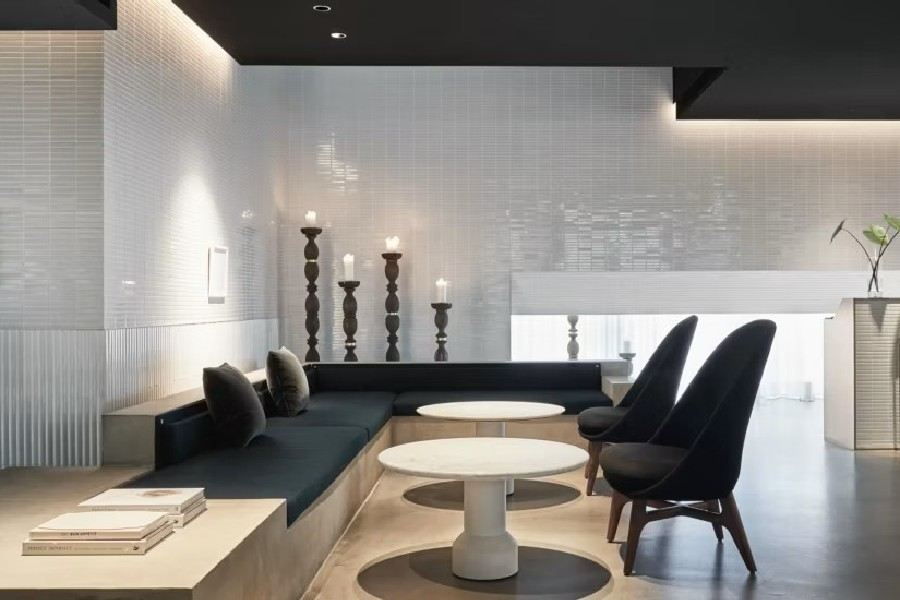
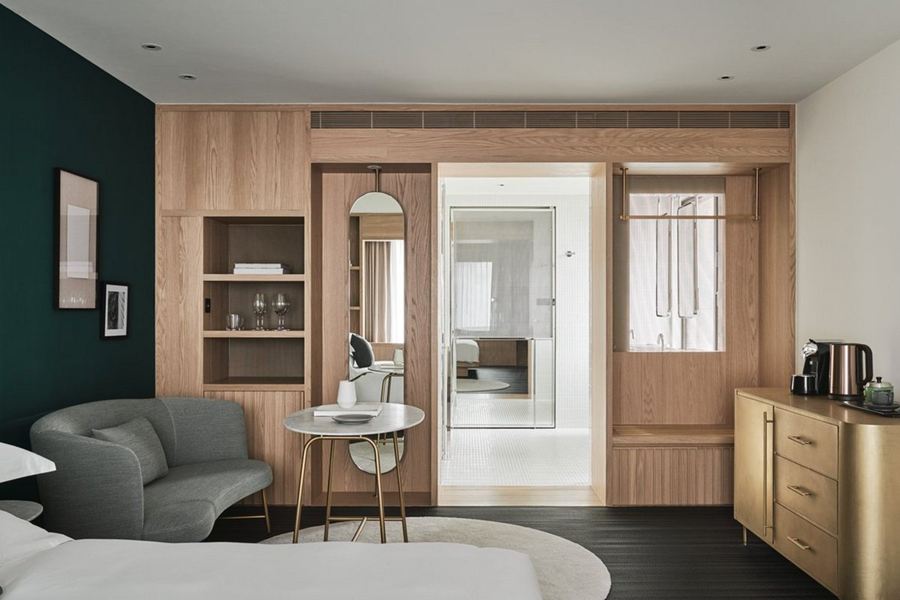
The rooms are designed to be peaceful, comfortable retreats amidst the bustle of Taipei. Choose from Essential Rooms 32–38 m², equipped with a king-size bed, and a larger Premium Rooms with an area of 37–38 m², available with one king-size bed or two single beds. The most spacious option is Suite with an area of 58 m², also with a king-size bed. Each room features a 50-inch LED TV, free Wi-Fi, a capsule coffee machine, a minibar, a small refrigerator, a safe, a desk, air conditioning, and Atelier Bloem toiletries. Bathrobes, slippers, a sound system, and a bedtime prep service enhance your stay.
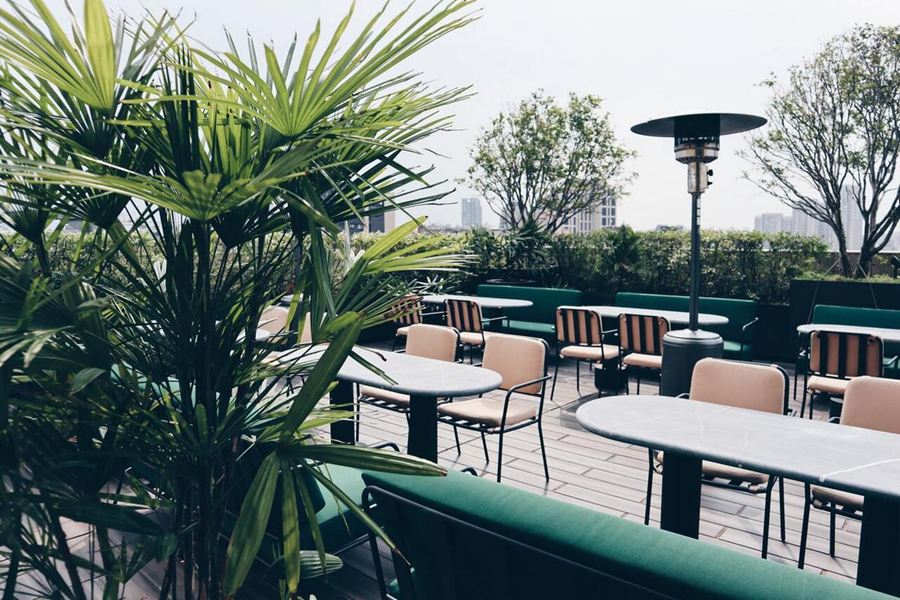
A stay at Kimpton Da An is more than just a comfortable room. Start your day with breakfast in the lobby and enjoy a wine hour in the evening. The Tavernist restaurant is on-site, and the hotel also offers a fitness center and a rooftop terrace with views of the Taipei skyline. Guests can also use the hotel's bicycles to explore the city from a local's perspective. The hotel is also pet-friendly and offers free parking for guests.
The Kimpton Da An Hotel is perfect for those seeking something more distinctive than a typical city hotel during their stay in Taipei. Its intimate atmosphere, refined interiors, comfortable rooms, and excellent location in Da'an make it a place that seamlessly combines convenient sightseeing with the opportunity for a peaceful retreat. The hotel has been recognized one key MICHELIN Guide in 2025, which further confirms its high level and boutique character.
Mandarin Oriental
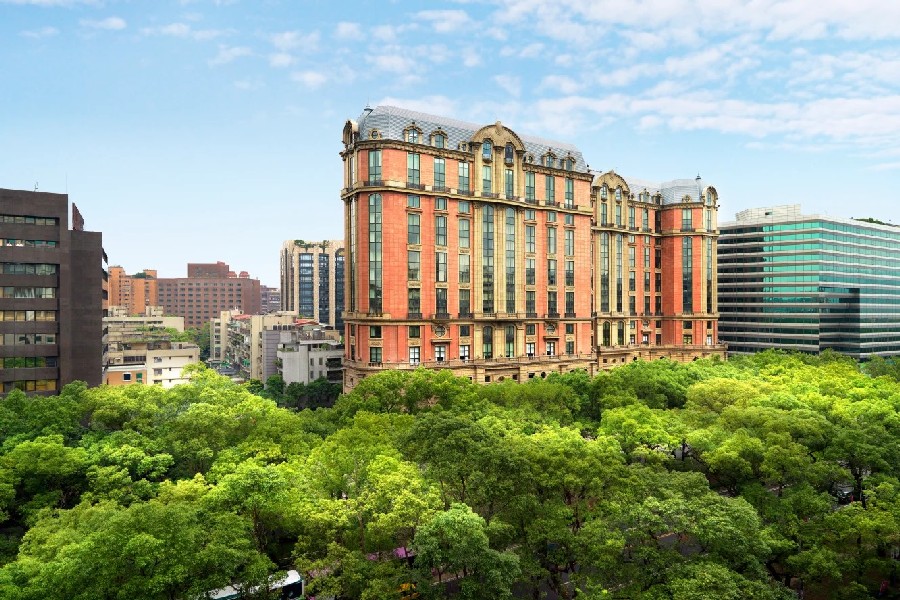
Located on the wide Dunhua North Road, in one of Taipei's most prestigious areas, the Mandarin Oriental impresses with its blend of European architecture, classical elegance, and contemporary comfort. Its monumental façade and striking interiors with crystal chandeliers and ornate details give it a distinguished character, while remaining a convenient base for exploring the city—the Taipei Arena and Nanjing Fuxing MRT stations are approximately a 10-minute walk away. The Xinyi District, Taipei 101, and major business centers are approximately 10-15 minutes away by car. This hotel is ideal for those seeking not only a prime location but, above all, spaciousness, discreet service, and the highest level of luxury during their stay in Taipei.
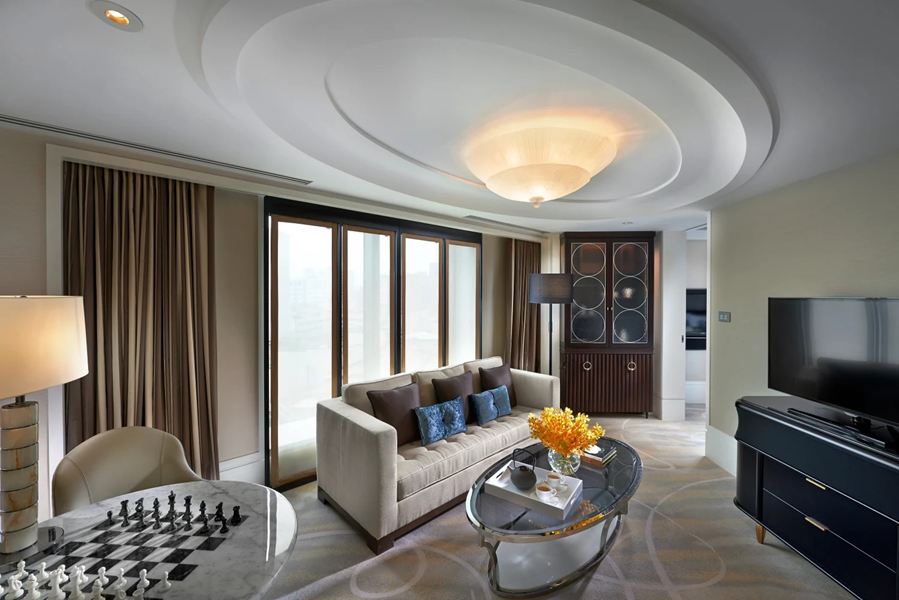
Mandarin Oriental offers 256 rooms and 47 apartments, decorated in a style that combines classic inspirations with modern accents. Even the basic rooms are exceptionally spacious – Deluxe Room is 55 m² – and provide the comfort of an elegant city residence. Interiors feature dark woods, soft carpets, subdued fabrics, and ambient lighting, while tall floor-to-ceiling windows let in ample light. Marble bathrooms with separate bathtubs and walk-in showers are a particular highlight, while rooms also feature a Nespresso machine, minibar, high-speed Wi-Fi, air conditioning, down bedding, and a pillow menu. Suites are particularly noteworthy, offering significantly more space and amenities. Club City Suite has a separate bedroom, living room and spacious marble bathroom, while Mandarin Suite additionally features a dining room, kitchen, work room, and private entertainment space. The most exclusive Presidential Suite occupies the top floor and includes a living room with a fireplace, a dining room for eight people, a kitchen, a private gym, a dressing room, a bathroom with a bathtub and a steam room, as well as access to the Oriental Club and butler service.
One of the biggest advantages of the hotel is The Spa, spread over two floors and offering 12 treatment rooms, including dedicated VIP suites. Guests can enjoy treatments inspired by both traditional and contemporary wellness methods, as well as an extensive thermal zone with a sauna, steam room, and other aquatic experiences. Outside, there's a 20-meter heated swimming pool, and a 24-hour fitness center and yoga studio complete the offerings.
The culinary offerings here are also top-notch. The hotel boasts Ya Ge, a one-Michelin-starred Cantonese restaurant, as well as Bencotto, specializing in Italian cuisine, and Café Un Deux Trois, serving international cuisine. In the evenings, head to the elegant MO Bar, and for afternoon tea, head to the Jade Lounge. The Mandarin Cake Shop, offering handmade pastries, breads, pralines, and desserts, completes the experience.
Mandarin Oriental, Taipei is one of the most prestigious addresses in Taiwan's capital – particularly suitable for those seeking large, elegant rooms, excellent dining, and an extensive wellness area. Combining classic décor with modern amenities, the hotel retains a timeless character, and its location allows for a convenient combination of a luxurious stay and exploring Taipei.
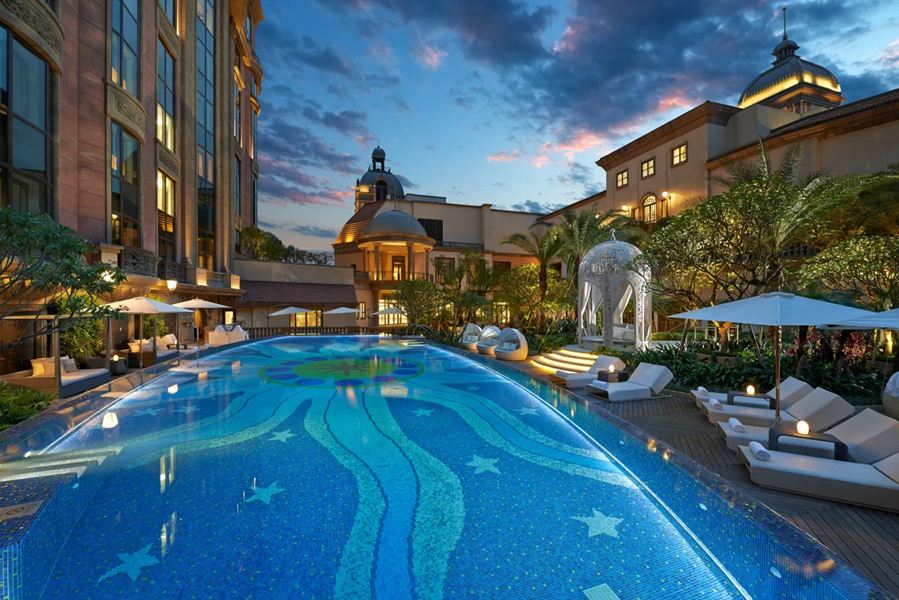
RegentTaipei
In the heart of Zhongshan District, one of Taipei's most elegant and vibrant districts, lies the Regent Taipei, a luxury hotel that combines the capital's urban character with timeless elegance. Its location on Zhongshan North Road allows for easy exploration of the city: trendy restaurants, shops, and galleries await nearby, while the famous Dihua Street, Huashan 1914 Creative Park, and Shilin Night Market are just a short distance away. This is one of the best locations to consider when browsing luxury hotels in Taiwan.
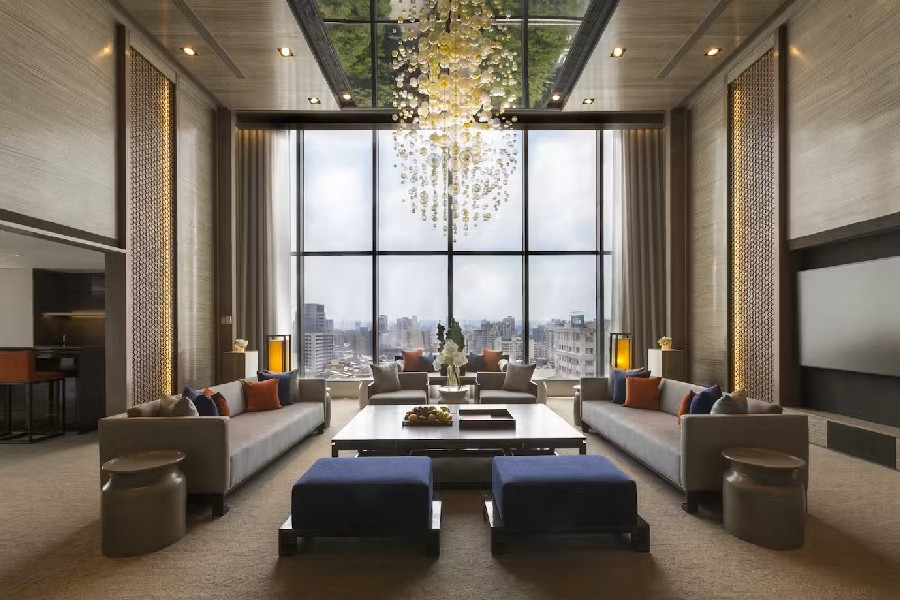
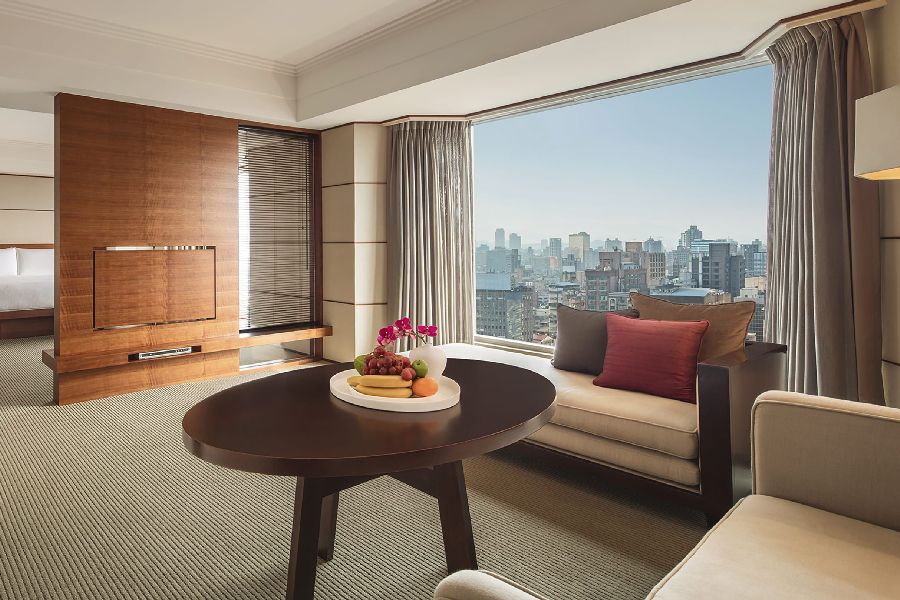
Regent Taipei is located 538 rooms and apartmentsDecorated in calming, elegant colors and equipped with spacious marble bathrooms. The basic Superior Room measures 39 m², while the Deluxe Room is 45 m², and the Premier Room is as much as 56 m². Depending on the category, rooms feature a king-size bed or two single beds, a lounge area, and large windows with panoramic city views. The Balcony Room, measuring 56 m², is an attractive option, featuring a private balcony, walk-in closet, and seating area. The suites offer even more space. The Junior Suite is 65 m² and has an open layout with large windows, the Corner Suite is 110 m² and features a separate sleeping area, living room, and dining area, and the Garden Suite, measuring 126 m², boasts a private outdoor living area. On the top floor is the impressive Presidential Suite, measuring 210 m², with five-meter ceilings, high windows, and custom-designed furniture.
A major advantage of the hotel is its extensive wellness offerings. On the 20th floor, there is a Wellspring Spa with eight single and two double treatment rooms, as well as a relaxation area. Guests can enjoy a sauna, a gym with modern equipment, yoga classes, and a heated rooftop pool with panoramic views of Taipei. Also located on the same floor is the Sky Studio, which is designed for yoga and functional training, among other activities.
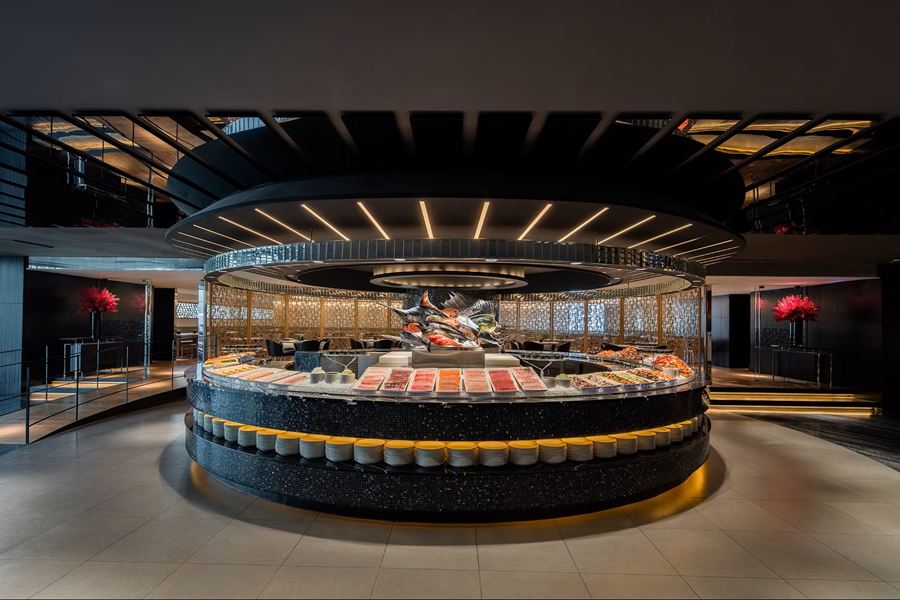
Regent Taipei also boasts an exceptionally wide range of dining options. The hotel boasts several restaurants, offering Cantonese, Japanese, Italian, international, and teppanyaki cuisine. The Brasserie offers an extensive buffet with Chinese, Italian, Japanese, and Western dishes, Mihan Honke specializes in Japanese hot pot, and Robin's Grill specializes in grilled meats and seafood. In the evenings, visit Azie, where you can enjoy live music alongside your meal.
Also worth mentioning are the amenities for guests choosing higher room categories. Tai Pan Lounge Designed for guests staying on the Executive Floors, it offers 24-hour lounge access, breakfast, snacks, beverages, and butler service, among other amenities. The hotel also offers a 24-hour concierge, room service, laundry, on-demand childcare, and the ability to organize tours and activities.
Regent Taipei is a proposition for people who want to combine their stay in the capital of Taiwan excellent location, spacious rooms, high-class catering and extensive wellness facilitiesRather than being limited to a convenient base, the hotel itself offers plenty of reasons to spend part of the day here—from relaxing by the rooftop pool to spa treatments to dining at one of the many restaurants.
The Lalu
Situated on the forested Hanbi Peninsula, directly on the shores of the famous Sun Moon Lake, The Lalu is one of the most unique addresses in Taiwan. The hotel occupies nearly 10 hectares of land and is surrounded by a tranquil landscape of lake and mountains, giving the location itself a relaxing atmosphere. Its history dates back to the early 20th century – in 1901, a small wooden guesthouse was built on the peninsula, and in 1923, the site was expanded and chosen as the official residence of Japanese Crown Prince Hirohito. After 1949, the property served as a vacation residence for President Chiang Kai-shek and a venue for receiving foreign leaders. Today's hotel was created after a comprehensive renovation completed in 2002, during which key structural elements of the historic building were preserved, giving the entire structure a minimalist, Zen-inspired character.
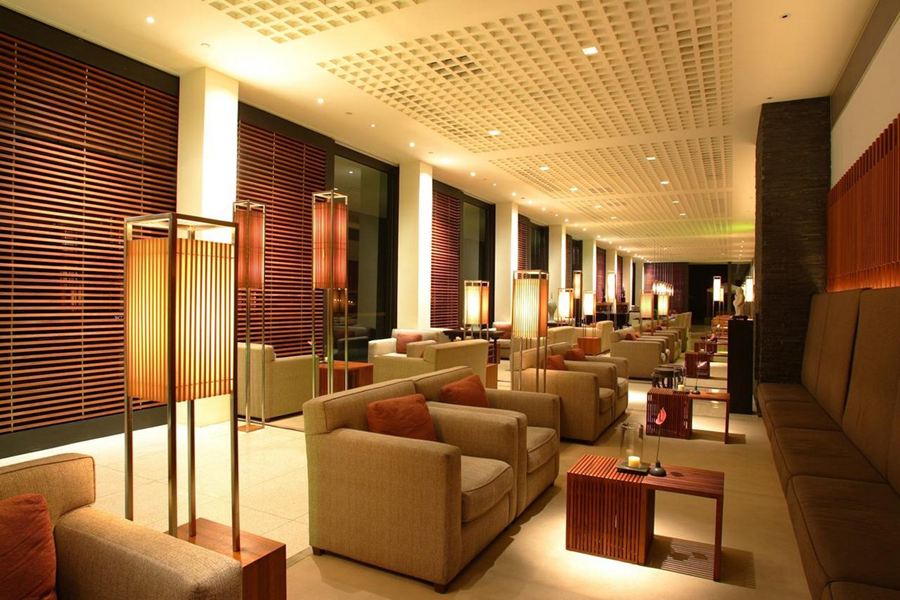
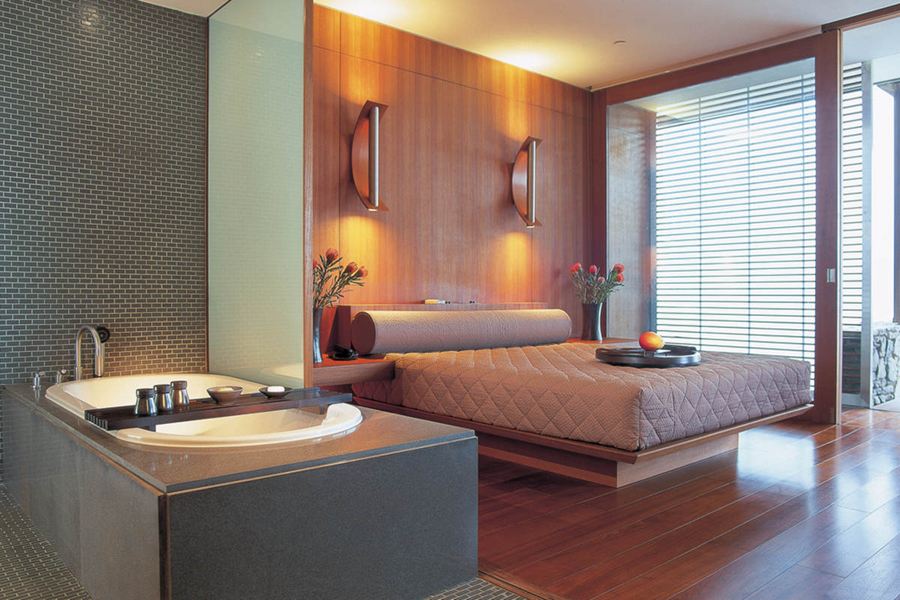
The accommodations have been designed to make the most of the lakeside location. The main building A houses rooms and suites, while a separate section of the complex houses villas. The interiors are designed in The Lalu's signature minimalist style, dominated by natural materials, simple forms, wood, and large windows overlooking the tranquil waters of Sun Moon Lake. The lake panorama is one of the rooms' greatest assets, and the tranquil setting promotes relaxation and allows for the focus on the surrounding nature.
The Lalu is also a place designed for relaxation. In Section B of the complex, there is SPA, fitness center, sauna, jacuzzi and Members Club, and the hotel also takes advantage of the lake's tranquil surroundings for its wellness programs. Offerings include yoga, tai chi, beauty treatments, and massages, allowing you to combine your stay with a conscious respite from intense sightseeing. The hotel also offers special packages for exploring the surroundings of Sun Moon Lake.
The dining options are also noteworthy. The Oriental Brasseries, located on the seventh floor, serves contemporary Chinese and Western cuisine, also using local produce, with a focus on the dining setting and lake views. The restaurant is open all day, offering breakfast, lunch, afternoon tea, and dinner.
The Lalu is a great option for travelers who want to experience the island's more tranquil side. Among Taiwanese hotels, it stands out above all for its location on Sun Moon Lake, minimalist architecture, unique history, and extensive wellness offerings. It's a place worth planning not just an overnight stay, but at least a few days of relaxation – with time for lakeside walks, a cruise, exploring the surrounding temples, and simply admiring the mountain landscape from the hotel terrace.
Hoshinoya Guguan
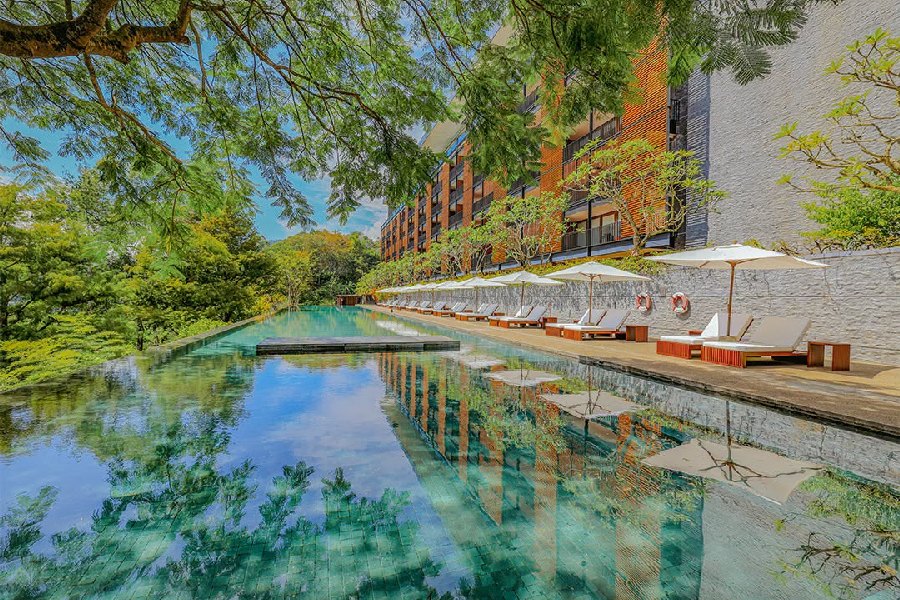
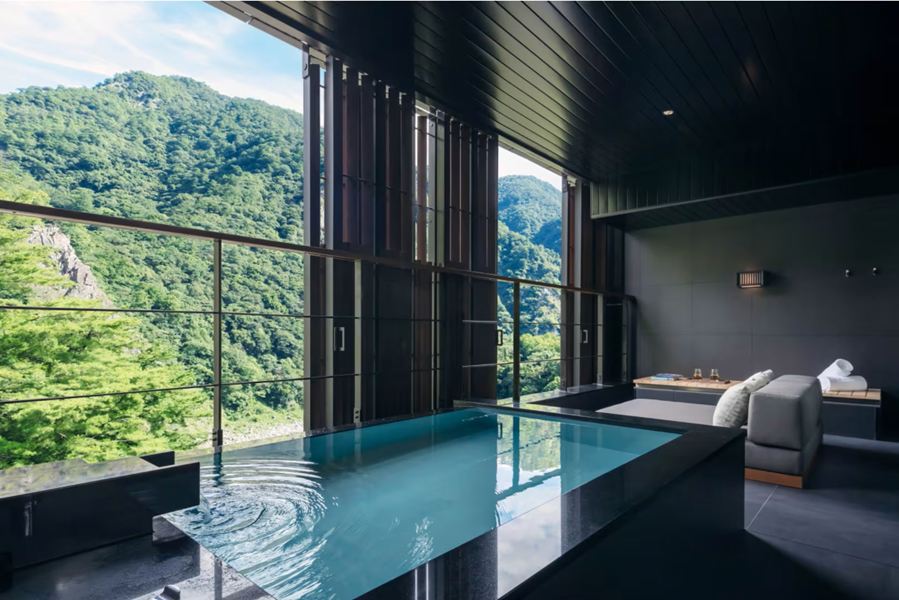
Located in the mountain-fringed Guguan Valley, approximately 2,5 hours from Taipei, HOSHINOYA Guguan is a luxury resort designed for relaxation amidst nature and hot springs. The property takes advantage of its unique location at the foot of the Xueshan Range, where peaks reach over 3000 meters above sea level, and the architecture and gardens are designed to maintain a constant connection with the water, forest, and mountain landscape. All 49 rooms feature private, semi-open thermal spring baths, ensuring relaxation begins before you even leave your room. This is one of the most compelling hotel destinations in Taiwan for those seeking to combine a luxurious stay with nature and local culture.
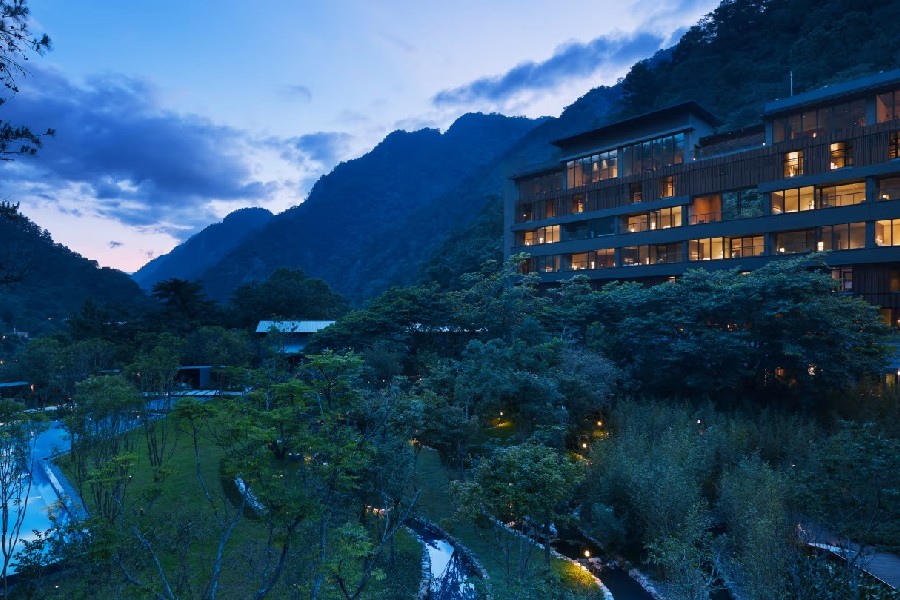
The biggest advantage of the complex is, of course, hot springsThe rooms feature private baths, and guests can also enjoy public baths with indoor and outdoor thermal pools. The water has the characteristic properties of slightly alkaline bicarbonate thermal water, and the outdoor bathing area is designed to allow guests to relax while observing the surroundings as they change with the seasons. The complex also features a blue pool nestled among greenery and a spa offering relaxing treatments.
The most interesting part of the stay, however, are activities prepared by the hotel, which allow you to experience Guguan much better than during a typical stay at the resort. Those who enjoy exercise can start the day with a peaceful stretch combined with breathing exercises in the Water Garden, surrounded by greenery. During the summer season, afternoon walks through the garden are also organized, with stories about local plants, and in the evening, you can take part in a half-hour relaxation session under the stars, during which participants focus on their breathing and the sounds of the mountain valley. It is also worth taking time for learning about the culture of the Atayal people, which has been associated with the Guguan region for generations. The hotel organizes traditional weaving workshops, during which you can learn the techniques used by the Atayal and make your own small fabric on a traditional loom. Another experience is The Atayal's Secret Musical Notes, dedicated to a traditional instrument resembling a Jaw harp. Guests learn about its importance in Atayal culture, and then make and learn to play the instrument themselves. There are also plenty of nature-related activities. One of the most interesting options is Forest in a bottle – a workshop on creating your own miniature forest from living plants. You can also take a walk through the water garden, observe the insects and vegetation of the valley, or use the nearby trails. A trail starts right at the resort. Shaolai Trail, approximately 1,3 km long and leading to a viewpoint; the hike takes about 90 minutes. Depending on the season, the trail delights with cherry blossoms or autumn colors.
HOSHINOYA Guguan also allows you to explore the story of Guguan himselfThe hotel organizes walking tours of the village, exploring its past and development as a thermal spa. Other nearby attractions include Guguan Hot Spring Park, with its suspension bridge over the Dajia River and public footbaths, Guguan Temple, and Basianshan National Forest Recreation Area. This makes it easy to combine your stay with short hikes and explorations of the Taichung mountain region.
HOSHINOYA Guguan is much more than just a luxury hot springs hotel. It's a place where Thermal baths, trekking, exercise, nature and Atayal culture create a coherent program of stayIt's especially well-suited for those who, after an intense tour of Taiwan, want to slow down and spend a few days in the mountains without sacrificing a high standard. However, it's worth planning your stay in advance – some activities require advance reservations, and availability varies depending on the season.
Silks Place Taroko
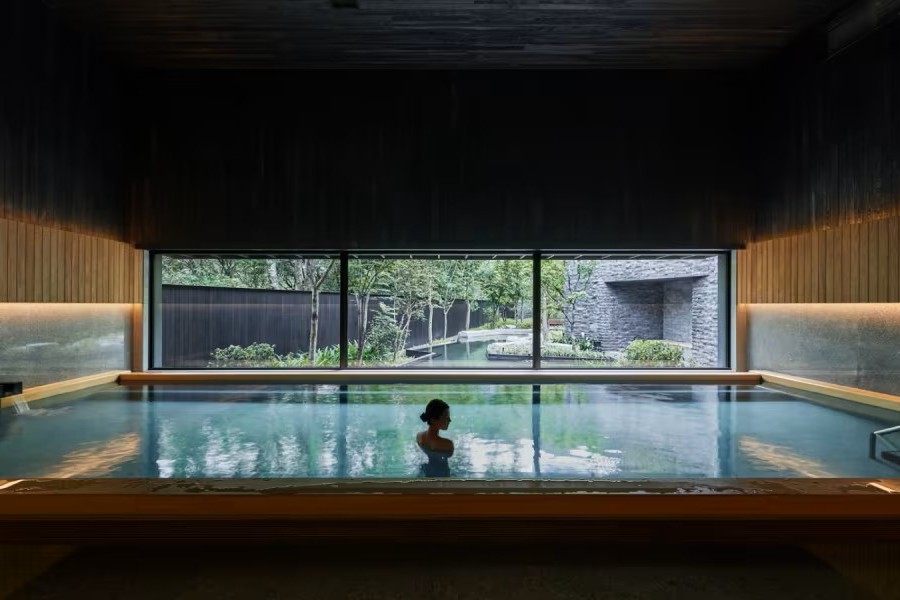
Located in the heart of the spectacular Taroko Gorge, Silks Place Taroko is one of the most unique hotels on the island. Located in Tianxiang, the property is surrounded by steep marble walls, dense forests, and the rushing Liwu River, making the journey to the hotel a truly immersive experience. It's a unique destination for those seeking to combine the comfort of a luxurious resort with proximity to one of Taiwan's most important natural landscapes. The hotel was designed to blend harmoniously with its mountainous surroundings, and its tranquil atmosphere allows for relaxation after a day spent exploring the gorge. Among Taiwanese hotels, this location truly stands out – instead of city views, it offers mountains, forests, and the sound of a flowing river.
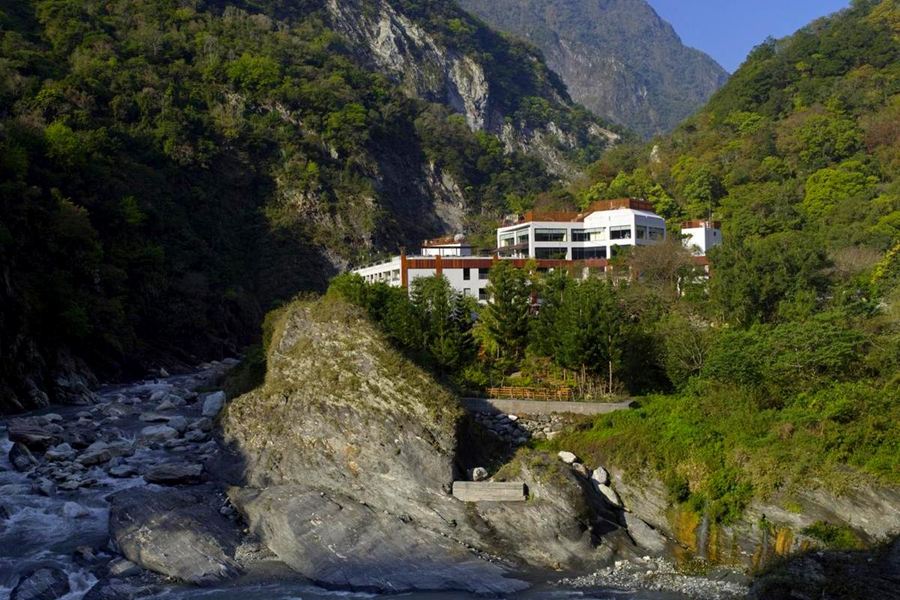
The rooms and suites are elegantly yet discreetly decorated, blending seamlessly with the surrounding natural beauty. Extensive glazing allows for mountain views, while spacious interiors ensure comfort for multi-day stays. The hotel offers both double rooms and larger suites for families or those seeking extra space. One of the more interesting options is the Wenshan Suite, which offers a more expansive lounge area and allows you to fully utilize the hotel's unique location.
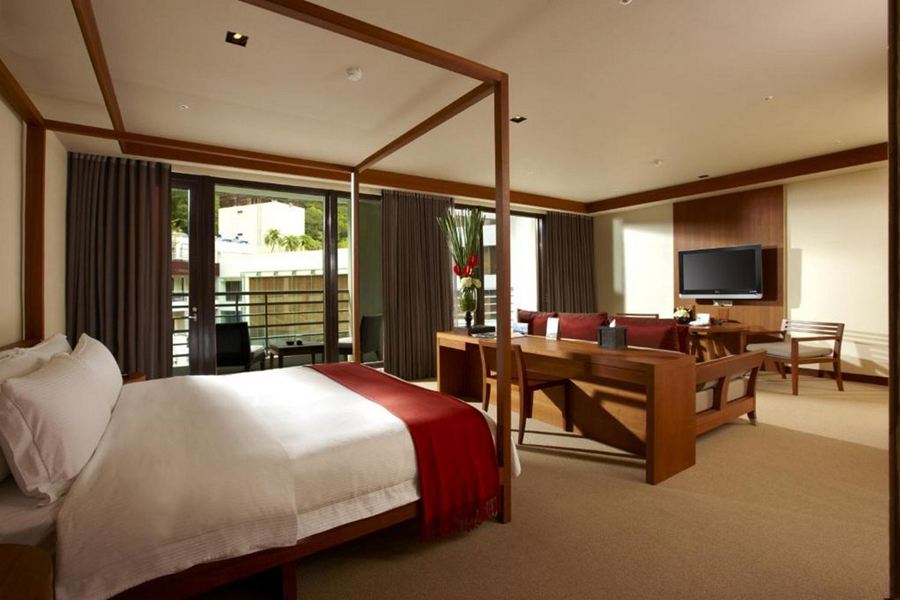
The biggest draw of Silks Place Taroko, however, is the opportunity to combine your stay with active mountain exploration. The hotel organizes and provides information on tours and trails in the area, and its location in Tianxiang makes it easy to explore one of Taiwan's most picturesque regions. It's worth planning time for mountain walks, viewpoints, and exploring the Liwu River Valley. Before your trip, be sure to check the current accessibility of trails and roads—conditions in Taroko can change, and some infrastructure is dependent on ongoing work and restrictions in the region.
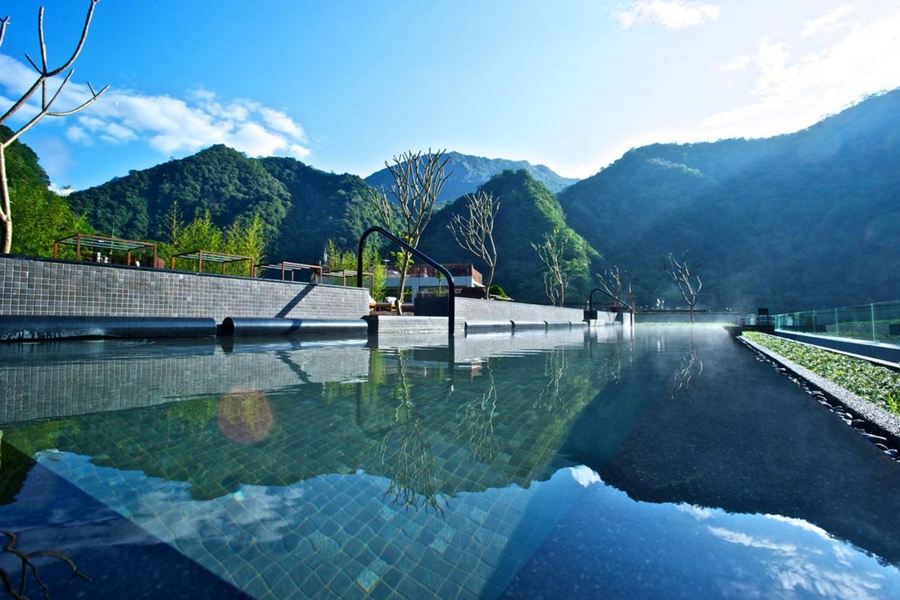
After an active day, you can return to the hotel and take advantage of its recreational facilities. Guests have access to: swimming pool, sauna, fitness center and spa, so your stay doesn't have to be limited to trekking alone. A particularly pleasant way to unwind is a treatment at the hotel spa – the offer includes massages and aromatherapy treatments. The hotel also offers several on-site activities. You can use the pool, relax in the garden, take a walk in the surrounding area, or simply spend an evening admiring the mountain scenery. For those traveling without a car, the hotel also offers a great convenience, connecting the hotel with locations such as the Taroko Gorge Visitor Center and Hualien Train Station. However, it's worth checking the transfer schedule and availability before your trip, as they may change depending on traffic conditions.
Silks Place Taroko is primarily a hotel for those who want swap the city rhythm for a few days in the mountainsThe greatest value here isn't the number of hotel amenities, but rather its unique location and the opportunity for direct contact with nature. It's a good choice for those planning to trek and explore the Taroko Gorge, but also for those who, after a busy day exploring Taiwan, dream of a peaceful stay in a unique setting. It's worth allocating at least two nights to have time to both explore the area and enjoy the resort's amenities.
Alishan Hotel
Situated at an altitude of approximately 2200 m above sea level, in the heart of Alishan National Forest Recreation Area, Alishan Hotel is one of the most distinctive places to stay in Taiwan. Its history dates back to 1913, when the Alishan Forest Farm Club was established on this site, constructed from local cypress wood. Today, the historic part of the hotel retains over a century of architecture, while the modern wing offers contemporary comfort and spectacular views of the mountains and sea of clouds. The hotel's location is a unique advantage – the hotel is an excellent base for exploring Alishan's top attractions, including Giant Trees, Sisters Ponds, Zhaoping Station, and numerous mountain trails.
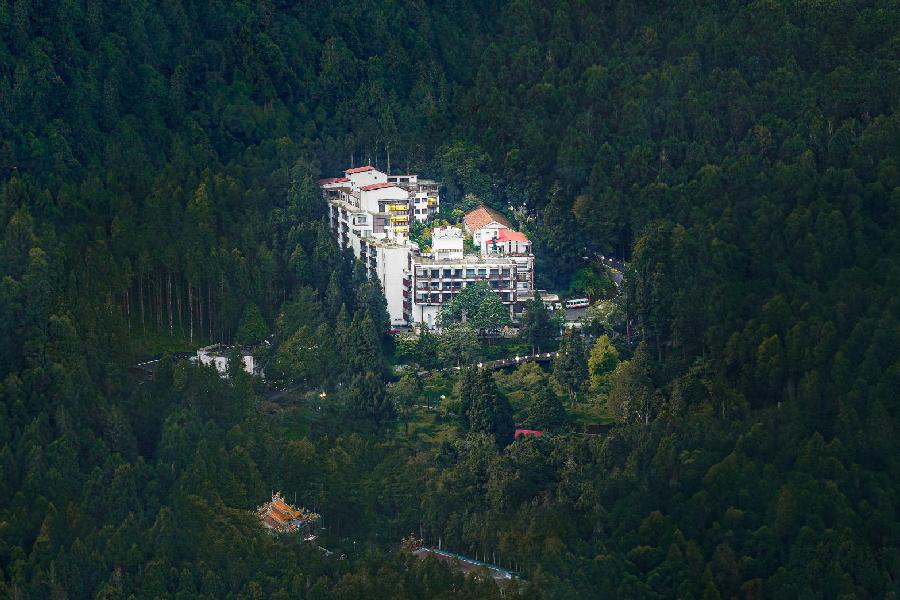
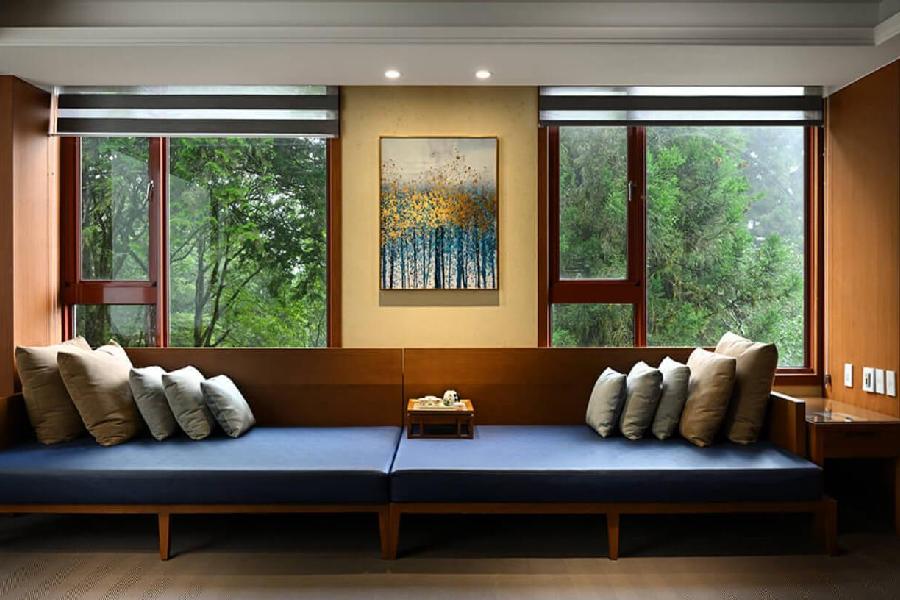
The hotel blends two distinct worlds. The historic building retains its century-old cypress wood structure and the ambiance of the former Alishan Club, while the modern section boasts more contemporary rooms with large windows overlooking the mountain landscape. Guests can choose from double rooms ranging from 23 to 40 square meters, family rooms, and larger suites. A particularly attractive option is the new Grand Mountain View DoubleRoom on the 10th floor, measuring 40 square meters and featuring a private balcony overlooking the forest and mountains. The suites are particularly noteworthy. The 66-square-meter Japanese Executive Suite combines a king-size bed with a traditional tatami (tatami) space, while the Western Executive Suite offers two double beds, a spacious living room, and a balcony. The most impressive are the 198-square-meter Signature Suite and the 158-square-meter Principal Suite, with private balconies and panoramic views of the Dada Mountains, a Tsou people's mountain range, and the Mianyue Trail. Guests staying in selected categories can also count on a minibar, winter clothing rental, luggage service, wake-up calls and hotel transfers.
The greatest experience during your stay, however, is contact with high-mountain natureThe hotel organizes information and programs related to observing sunrises and sunsets, as well as exploring the Alishan forests and local fauna. Throughout the year, you can observe, among other things, the Mikado pheasant, admire the blooming magnolias and orchids, and in spring, the famous Alishan cherry blossoms. It is also worth planning a ride on the historic Alishan Forest Railway, which connects the most important points of the region. A particularly unique attraction is the sunrise over the mountainsFrom the hotel, you can walk to the Zhushan Observation Deck – a one-way walk of approximately 1-1,5 hours and 2,8 km. Alternatively, you can take the hotel's shuttle to Alishan Station, where you can transfer to the famous forest railway. The hotel's sunrise shuttle requires reservations, and departure times are announced the evening before.
It is worth remembering that Alishan Hotel is located in the area under the control of the forest administration and does not have its own parking lot – Please leave your car at the Visitor Service Center and then use the hotel's shuttle service. Entry to the Alishan Forest Recreation Area is also included in the entry fee.
Alishan Hotel is primarily for those who want to experience Taiwan's high mountains during their travels, rather than just see Alishan on a day trip. The historic architecture, views of the sea of clouds, proximity to hiking trails, sunrises, and the option to ride the forest railway make the stay itself part of the journey. If you're planning a stay in Taiwan in a unique setting, Alishan Hotel is definitely worth considering.
Hotel Royal Chiaohsi
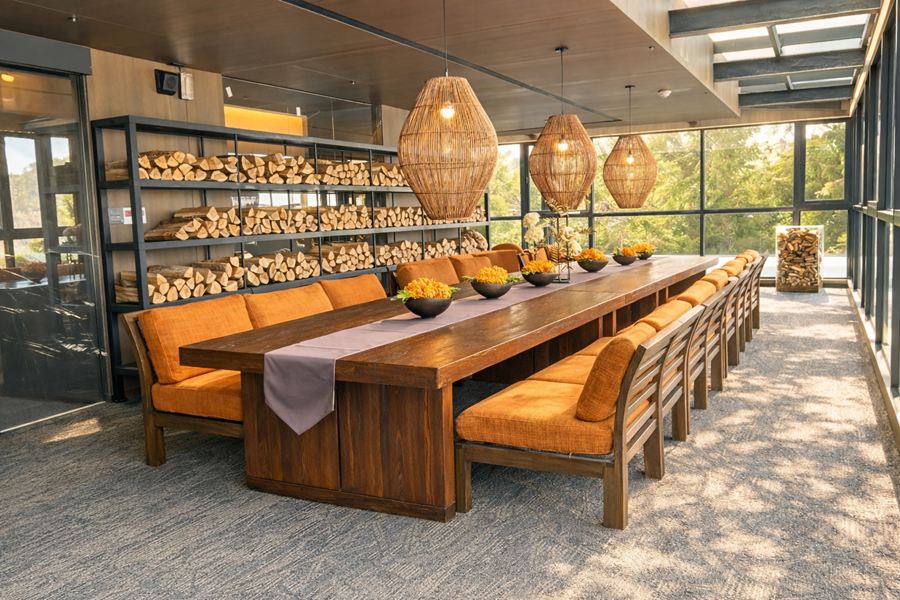
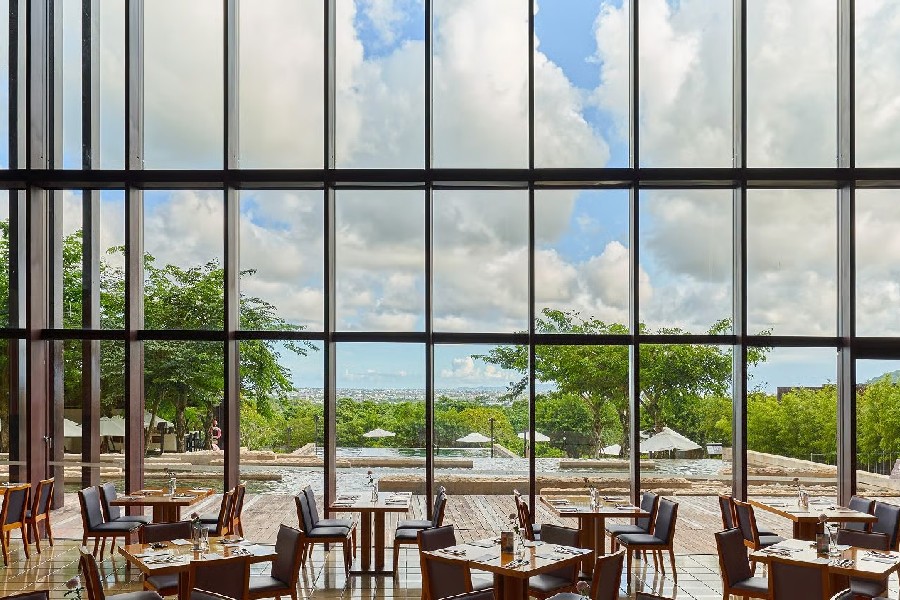
Located in the picturesque area of Wufengqi, nestled in the mountains above the Lanyang Plain, the Royal Chiaohsi Hotel is one of Taiwan's most fascinating thermal spa complexes. Just a 50-minute drive from Taipei, the atmosphere here is completely different – instead of the bustle of the city, there are mountains, lush gardens, and natural thermal springs. The hotel was conceived as a place of rejuvenation, combining a comfortable stay with the benefits of hot springs, local cuisine, and activities inspired by the natural beauty of the Yilan region. Its location overlooking the Lanyang Plain and the extensive, carefully landscaped gardens are particularly noteworthy.
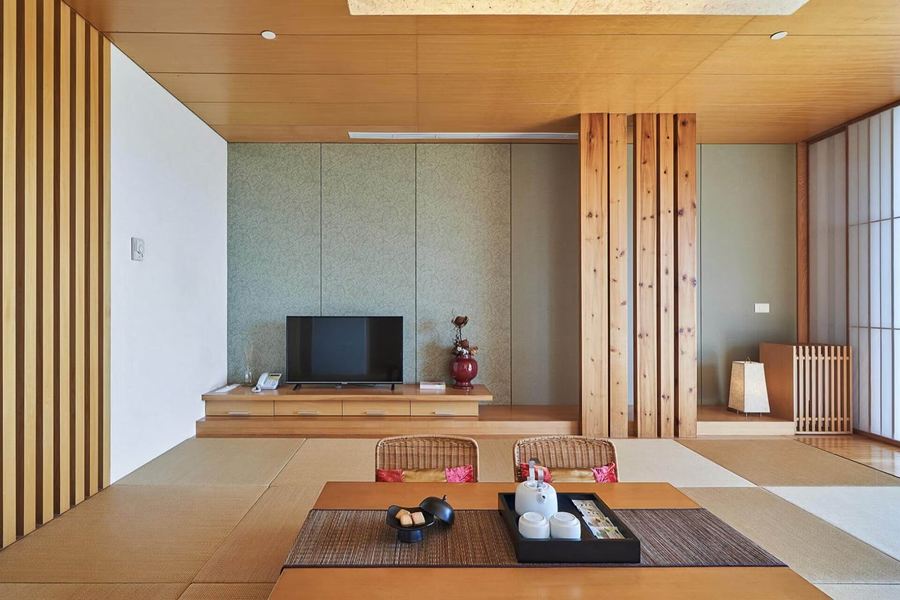
The hotel offers 10 types of rooms and apartments, from the 40-square-meter Western Suite and Western View Suite to the spacious 116-square-meter Deluxe Royal Suite. Families can enjoy the Japanese Suite and Japanese View Suite, which can accommodate up to four people, while those seeking more space can choose the Junior Penthouse Suite, Deluxe Penthouse Suite, or one of the Royal Suites. Interiors are elegant and tranquil, and select categories offer panoramic views of the mountain landscape and Lanyang Plain. Breakfast, dinner, and use of hotel amenities are included in the rate, making the complex ideal for a multi-day stay.
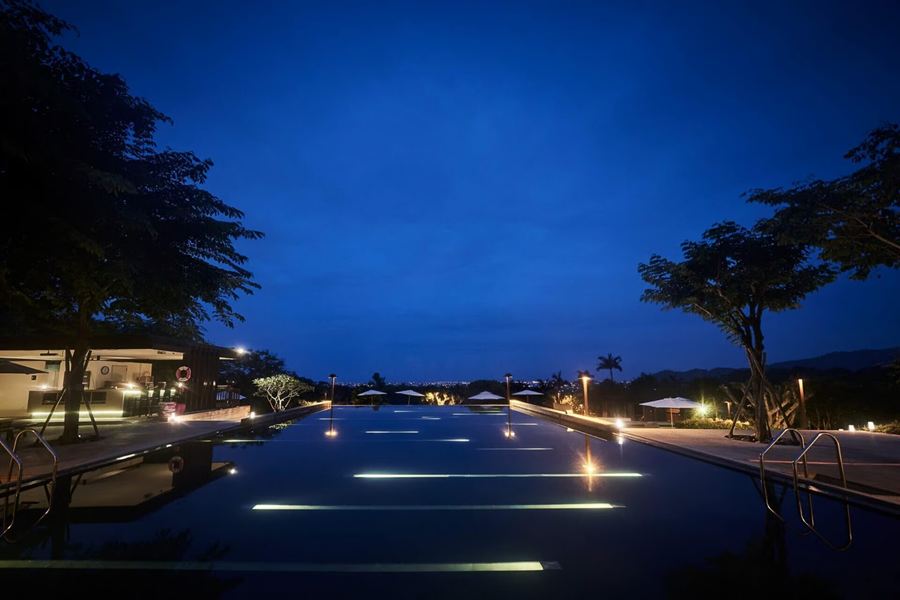
The biggest advantage of the hotel is natural hot springsThe thermal water is bicarbonate and is used in the extensive bathing complex. Guests have access to outdoor thermal pools, hydrotherapy baths, separate areas for men and women, and four themed pavilions with different types of baths. The Spa Complex is particularly impressive, with its Japanese character accentuated by Izu stones and local Yilan rocks. An outdoor bath allows you to admire morning views of the Lanyang Plain or the evening landscape in moonlight.
You can diversify your stay with a rich program activities and experiences related to the Yilan regionThe hotel organizes morning walks and guided trekking tours around Wufengqi, as well as exercise classes. Cooking workshops and creative DIY activities are also included in the program. Depending on the season, guests can participate in picking local fruit, learn the secrets of organic farming, or participate in activities designed especially for families.
Active recreation enthusiasts can also take advantage of Royal Sky Park Golf Course, and those looking for relaxation can enjoy the Quan Spa and its relaxing treatments. The hotel also operates its own Sky Park Campsite, located about a five-minute walk from the main complex. A major advantage is the ability to combine various forms of relaxation: from thermal baths and massages, through mountain walks, to culinary activities and outdoor activities.
Hotel Royal Chiaohsi is a perfect choice for those who want to take a break from the city life and discover the city while traveling. a more natural face of TaiwanThe combination of hot springs, mountain scenery, local experiences, and comfortable apartments makes this complex a truly unique destination, not just a place to stay overnight. It's recommended to plan at least two nights here to enjoy both the hot springs and local activities. The hotel also offers a free round-trip shuttle to Jiaoxi Railway Station.
Choosing a hotel in Taiwan should be considered part of your overall trip planning, not just a place to stay. Modern hotels in Taipei make exploring the city easy, resorts on Sun Moon Lake allow for relaxation amidst the mountains, and properties in Alishan and Guguan offer access to a completely different, more natural side of the island. It's worth tailoring your accommodations to your route, planned activities, and personal travel style, paying attention not only to the standard but also to the location, available amenities, and character of the property. A well-chosen hotel can make your experience of Taiwan more comfortable, peaceful, and much more complete.


Best attractions in Ecuador – what is worth seeing?
Older post
Best attractions in Chile – what is worth seeing?
Newer post
October 9, 2026

October 8, 2026
October 7, 2026
October 6, 2026
October 5, 2026
recent posts
- Cambodian cuisine – what is worth trying? October 9, 2026
 Safety in Ecuador. Is Ecuador safe? October 9, 2026