
Get inspired and read about your dream trip on the blog
What can you pack in your carry-on luggage? Rules and limits
April 17, 2026

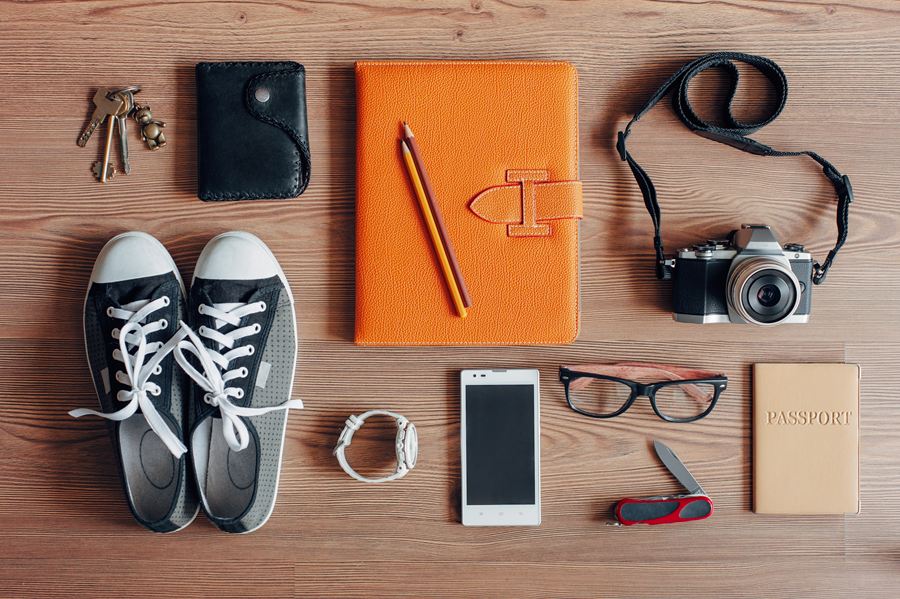
Planning a trip is an exciting process, but the moment you finally close your suitcase often becomes a source of unnecessary stress. You stand in front of your open luggage and wonder, "Will this make it through the security gate?" The key to a smooth start to your vacation is knowing how to pack for the plane to avoid the nerve-racking repacking in the middle of the airport concourse. Properly selected carry-on suitcases are your personal treasure trove, needing to accommodate everything you need while adhering to strict safety standards. In this article, we'll comprehensively guide you through the maze of airline regulations. You'll learn what you can take on the plane in terms of electronics—from laptops to power banks—and how to strategically approach packing liquids. We'll also explain what food will save you from starvation in the clouds and how to safely transport medications and essential medical supplies. We'll also provide specific information on what you can't take in your carry-on luggage to avoid confiscation of your favorite items. Finally, we've prepared a list of dimensions and weights for the most popular airlines, which will help you avoid hefty surcharges. With us, your carry-on luggage will become a model of organization, and you will be able to focus on what matters most – the upcoming adventure!
Liquids in hand luggage – how many ml can you take and how to pack them?
For years, preparing for a flight was associated with one ironclad rule: "the magic hundred." Everyone has stood in the bathroom at least once, pouring their favorite shampoo into miniature bottles just to meet strict safety standards. However, the world of travel is evolving, and what can be taken on a plane is beginning to depend not only on general regulations but also on the technology available at a given airport. Understanding the current rules will help you avoid stress at the gate and ensure your carry-on is packed expertly.
Traditional Limits: The 100ml Rule
Most airports around the world still have regulations in place, introduced in 2006. According to these regulations, liquids, gels, and aerosols in your carry-on luggage must be in containers no larger than 100 ml. All these containers should be placed in a single, transparent, resealable container with a maximum capacity of one liter.
It's worth remembering that the definition of "liquid" for security services is very broad. It includes not only water and perfume, but also toothpaste, lip gloss, creams, and even jams. If you plan to bring such products, make sure their packaging meets the requirements—otherwise, you'll have to say goodbye to them during a security check.
Modernity in Poland
You may have already heard about the revolution slowly reaching Polish airports. Thanks to the installation of modern CT (computed tomography) scanners, some airports have lifted burdensome limits. Currently, the following airports in Poland boast such improvements:
- Chopin Airport in Warsaw – at selected security checkpoints you can carry liquids in containers larger than 100 ml.
- Poznań-Ławica Airport – this airport was the first in Poland to introduce this technology on a large scale, allowing passengers much greater freedom.
- Krakow Airport (Balice) – also systematically implements modern scanners, which makes it easier to pass through the checkpoint.
Why are the rules different at these airports? CT scanners create a three-dimensional image of the bag's contents and can precisely distinguish safe substances from those that pose a threat. This not only allows you to bring larger cosmetics or full-size water, but also eliminates the need to remove them from your bag during security. This is a huge time-saver and a huge convenience.
What can you take on a plane regardless of limits?
Regardless of whether an airport has the new technology or not, there are some exceptions to the 100ml rule. These include, in particular:
- Liquid medications – necessary for the passenger during the journey (it is worth having a medical certificate with you).
- Baby food – milk, sterile water and juices for the youngest passengers.
- Liquids purchased in the duty-free zone – provided they are packed in a special STEB bag with visible proof of purchase.
How to pack liquids strategically?
Even if you're flying from a restricted airport, your carry-on luggage can be a model of organization. It's best to place liquids at the top or in a side pocket so you can unload them onto the conveyor belt in one go. If you're traveling together, you can divide toiletries between your bags to maximize your allowance.
Before you start packing your belongings, check which airport you're departing from. If you're lucky enough to be flying from Warsaw, Krakow, or Poznań, your carry-on luggage can accommodate full-size cosmetics. Otherwise, stick to the tried-and-true "hundreds" and enjoy your upcoming flight without any disruptions.
Electronics on a plane – how to transport a laptop, phone and power bank?
In the age of ubiquitous digitalization, it's hard to imagine flying without devices that entertain you, allow you to work, or stay in touch with loved ones. When planning a trip, your electronics become one of your most valuable pieces of equipment. However, what can be carried in carry-on luggage is strictly regulated by security regulations, and improperly packing a laptop or phone can result in delays at the gate.
Laptop, tablet and e-book reader
Computers, tablets, and e-readers are the items most often found in your cabin bags. When considering what you can take on a plane, remember that larger electronics require special handling during security checks. You'll typically be asked to remove your laptop or tablet from your backpack and place it in a separate tray. Interestingly, smaller devices, such as e-readers, can often remain inside your bag, but it's worth keeping them on the outside in case of additional security checks.
It's worth investing in a decent case or backpack with a padded compartment. During the flight, your carry-on luggage can be stowed in the overhead bins, and proper protection will protect the delicate screen of your e-reader or laptop from cracking. Also, remember to keep your devices charged—in some countries, security officers may ask you to turn on your device to prove it's not a fake.
Telephone and rules of use on board
Smartphones accompany you everywhere, even in the clouds. Carry-on luggage includes phones, of course, but their use is subject to certain restrictions. After closing the plane door, you must switch your devices to "flight mode." Most airlines allow Wi-Fi or Bluetooth during the flight, but cellular data must be turned off. Before departure, it's a good idea to download your favorite playlists or movies so you can enjoy entertainment without an internet connection.
Powerbank – key safety rules
If you're wondering what you can take on a plane in terms of power, a power bank is a must-have, but also the most problematic. For fire safety reasons, all lithium batteries and power banks must be kept in the passenger cabin only. Never place them in checked baggage, as if they overheated or caught fire in the hold, the crew wouldn't be able to intervene. Pay attention to the capacity of your portable chargers. Most carriers accept devices with a capacity of up to 100 Wh (approximately 27 mAh). If you have a larger power bank, you should inform the airline before your trip, as special approval may be required.
Cable and accessory organization
To prevent your carry-on luggage from becoming a tangle of cables, it's a good idea to group accessories into small organizers or pouches. Having chargers, power adapters, and headphones in one place will make life much easier in a cramped airplane seat. If your plane has seat-mounted USB ports, you can charge your phone or e-reader directly from the in-flight entertainment system, which is a huge convenience during long flights.
Food in hand luggage – what can you take on board a plane?
When planning a flight, you often wonder how to avoid high prices for airborne snacks and whether homemade sandwiches will be confiscated during security. Although security regulations are often associated with prohibitions, the list of food items allowed in carry-on luggage is actually quite long. The key to success is distinguishing between solids and those considered liquids by airport security.
The rule is simple: if something isn't liquid, gooey, or spreadable, it can usually go in your bag without any restrictions. When thinking about what you can take on a plane, feel free to pack homemade sandwiches, hard cheeses, cold cuts, fruits, vegetables, nuts and energy barsThese snacks are a great way to save money and ensure you're eating exactly what you like. Even homemade cakes or pastries will pass inspection without a problem, as long as they're not filled with large quantities of liquid filling.
Problems start where there is gel or cream consistencyMany products you normally consider food become "liquids" in the eyes of border guards. This category includes:
- yogurts, cottage cheeses and puddings,
- jams, honey, chocolate creams (e.g. Nutella) and peanut butter,
- liquid sauces, dressings and soups.
If you plan to pack these treats in your luggage, they must meet strict liquid requirements – a container of up to 100 ml placed in a clear bag. Exceptions include baby food and products purchased after passing through security in the duty-free zone.
When your journey goes beyond beyond the borders of the European Union, the matter becomes a bit more complicated. While the rules for what you can take on board a plane to eat during the flight remain similar, bringing leftover food into another country can result in a hefty fine.
Many countries, such as the USA, Australia, but also non-EU countries in Europe, use strict phytosanitary regulationsThere's often a complete ban on bringing in fresh fruit, vegetables, meat, and dairy products. Customs officers use this to protect the local ecosystem from diseases and pests. Therefore, it's best to adopt a rule of thumb: consume all fresh supplies before landing or dispose of them in special containers at your destination airport.
To avoid problems with your carry-on luggage, pack food in airtight, preferably transparent containers or zip-lock bags. This will prevent your clothes from getting dirty, and during a customs inspection, the contents will be immediately visible. If you're traveling with fruit, choose firmer varieties, like apples, that won't squash in a tight suitcase.
Medicines in hand luggage – how to pack medical devices and prescriptions?
For many people, preparation is a permanent element packing the first aid kitWhile aviation regulations can be strict, when it comes to pharmaceuticals, the law is on the passenger's side. However, it's crucial to understand the difference between what can be carried in carry-on luggage and what should be left in the hold to avoid unnecessary questions at security.
The basic principle you should adopt is keeping all necessary medications close to youYour carry-on baggage is the only safe place for your regular medications. Checked baggage can be lost, delayed, or exposed to extreme temperatures in the hold, which could destroy the chemical structure of some medications (e.g., insulin). Therefore, everything crucial to your well-being should be kept in the cabin.
When considering what you can take on a plane in your checked luggage, it is worth placing only spare hygiene products, large packages of disinfectants (over 100 ml) or dietary supplements, the absence of which for one day will not negatively affect your health.
Liquid medications and safety limits
The biggest convenience for passengers is that liquid medications (syrups, drops, solutions) are exempt from the general volume limits. If you need medication larger than 100 ml, you are allowed to take it, as long as it is essential for your trip. However, remember that such products must be declared to the security officer before your bag is scanned. What can be carried in carry-on luggage without additional certification are typically commonly available painkillers or vitamins, but caution is advised when it comes to specialized medications.
Prescriptions and documentation
While it's rare for border guards to ask for medical records within the European Union, they are essential for international travel. If you're carrying prescription medications, needles, syringes, or specialized medical devices (e.g., inhalers or glucose monitors), you should carry a doctor's note. Ideally, it should be in English. This document should confirm that the medication is assigned to a specific person and must be included in their carry-on luggage. This will avoid suspicion of carrying prohibited substances.
Medical products and equipment
Carry-on baggage also includes health-related devices. CPAP machines for sleep apnea, blood pressure monitors, and electronic thermometers (mercury-free!) can travel with you in the cabin without any problems. If you use crutches or supports, don't worry – you can use them until you board, and the crew will help you safely stow them in the overhead bin.
How to organize a travel first aid kit?
To pack efficiently, keep medications in their original packaging, along with their leaflets. This makes it easier to identify the substance during security checks. It's a good idea to put all your medications in a single, transparent bag, which will speed up the bag inspection process. If you're planning what you can take on the plane in your checked luggage, only pack items that are heavy and don't require immediate access, like a supply of gauze pads or heat ointments.
What can't be taken in hand luggage?
Packing for a trip is usually a joyful countdown to takeoff, but security checks can effectively test your knowledge of airport regulations. While the carry-on baggage list is extensive and allows you to pack almost everything you need for a comfortable flight, there are a number of items that, for safety reasons, must be left at home or placed in the hold. Understanding the line between "useful trinkets" and "prohibited items" is key to a smooth passage through security.
Sharp objects – the most common cause of seizures
Everyday items with sharp edges usually raise the most concerns. While they may seem harmless, the regulations are merciless. You can't bring knives (even small, pocket-sized ones), scissors with blades longer than 6 cm (measured from the point of contact), or straight razors into the cabin.
If you're wondering what's not allowed in carry-on luggage, sharp-tipped metal files and knitting needles are on the blacklist. Interestingly, disposable razors with a shielded blade are usually accepted, but classic razor blades are absolutely not. If you plan to bring tools like screwdrivers or wrenches, they must also travel in checked luggage, as they may be considered dangerous.
Explosive and flammable substances
This is a category where there's no room for compromise. While carry-on luggage includes standard power banks (which we mentioned in the context of electronics), any flammable substances are strictly prohibited. You're not allowed to bring lighter fluid, spray paint, solvents, or camping fuel.
It's also worth remembering the restrictions regarding lighters – you're typically only allowed to carry one lighter, and you should keep it "on your person" (e.g., in your pocket), not directly in your bag, although these rules may vary by airport. Jet lighters (blue flame lighters), which generate very high temperatures, are absolutely prohibited.
Sports and camping equipment
Planning an active vacation? You should also be vigilant here. Most sports equipment that could be used as a blunt instrument will not pass inspection. The list of prohibited items in carry-on luggage includes:
- trekking poles and ski poles (unless they have rubber protection, but the final decision always rests with the ranger),
- tennis rackets (although some airlines accept them, it is safer to check them in),
- baseball bats, golf clubs or hockey sticks,
- tents with metal pegs – pegs are considered dangerous spikes.
Weapons and their imitations
It's obvious that firearms aren't allowed on a plane, but it's worth knowing that the ban also applies to replicas. If you're traveling with children, make sure their backpacks don't contain water pistols or realistic-looking toy guns. Such items cause unnecessary alarm and will be immediately confiscated. The same applies to self-defense accessories like pepper spray or stun guns – possessing them at the airport can result not only in the confiscation of the item but also in a fine or arrest.
Packaging Strategy – Avoid Doubt
Before you close your suitcase, check it over once more. If you have any doubts about whether a particular item fits the description of what's allowed in carry-on luggage, it's best to put it in your checked baggage or leave it at home. Remember, airport security has the final say, and even if an item isn't explicitly on the prohibited list, but is deemed a potential threat, you won't be allowed on board.
Dimensions and weight of hand luggage – how to avoid surcharges at the airport?
Planning your dream trip is an exciting process, but it's often put to the test the moment you pack your suitcase. Everyone has probably felt that slight stress at the airport scale at least once. Choosing the right carry-on bag is only half the battle; the real challenge is staying within the strict limits that each carrier sets at its own discretion. Knowing how to pack for a plane to avoid costly gate fines is crucial to maintaining your vacation budget and peace of mind.
Variety of limits – what to watch out for?
Analyzing the data from different airlines, you'll notice huge variations in how much weight you can bring on board. While some carriers, like Air France and Vietnam Airlines, are quite generous and allow 12 kg, others, like Bangkok Airways and Air Madagascar, limit you to just 5 kg. This is a huge difference, considering that an empty suitcase can weigh between 2 and 3 kg.
You should be especially vigilant with budget airlines like Ryanair and Wizz Air. Here, weight limits are often strictly enforced, and exceeding even half a kilogram can result in a fee exceeding the value of your ticket. It's also worth remembering that free baggage often consists of only a small backpack that fits under your seat, while larger cabin bags require an additional fee.
|
Airline |
Max. hand luggage weight |
Standard dimensions (approximate) |
|
Air France |
12 kg |
55 x 35 x 25 cm |
|
Vietnam Airlines |
12 kg |
56 x 36 x 23 cm |
|
GOL/Latam/Avianca |
10 kg |
55 x 35 x 25 cm |
|
Ryanair |
10 kg (Priority option) |
55 x 40 x 20 cm |
|
Wizz Air |
10 kg (WIZZ Priority option) |
55 x 40 x 23 cm |
|
LOT/Lufthansa/Finnair Turkish Airlines |
8 kg |
55 x 40 x 23 cm |
|
Emirates/FlyDubai |
7 kg |
55 x 38 x 20 cm |
|
Qatar Airways |
7 kg |
50 x 37 x 25 cm |
|
Vietjet/Jetstar/Garuda Indonesia/Thai Airways/Malaysia Airlines |
7 kg |
56 x 36 x 23 cm |
|
Bangkok Airways/Air Madagascar/Druk Air |
5 kg |
56 x 36 x 23 cm |
Worth knowing: in higher standard lines, such as Emirates Qatar Airways, the weight limits for hand luggage (7 kg) apply to Economy Class. In Business and First Class, passengers can usually take two pieces of hand luggage with a total weight of up to 14-15 kg. In turn, in FlyDubai It is worth keeping an eye on the dimensions, because this carrier can be very meticulous at the gates.
Warning: On Ryanair and Wizz Air, free baggage (without the Priority option purchased) has smaller dimensions (40 x 30 x 25 cm) and must fit under the seat.
How to cheat the scale without breaking the rules?
If, after packing, you discover your bag weighs a kilogram too much, don't panic. There are a few proven ways to slim down your luggage at the last minute:
- put on your heaviest clothes, such as a jacket or sweatshirt, during check-in,
- You can temporarily put heavy items like power banks, cameras, or chargers in your pocket. Electronics are usually not included in the weight if you hold them in your hand or pocket,
- Invest in a small, handheld electronic scale. Checking the weight of your suitcase at home or in your hotel will help you avoid repacking in the middle of the airport concourse.
Avoiding airport surcharges requires a bit of math and strategic planning. When choosing carry-on luggage, always check the specific carrier's current requirements, because – as the table shows – the difference between 5 and 12 kg is enormous. Knowing how to pack wisely for a plane can help you spend the money saved on fines on the most enjoyable things: local food and travel souvenirs.

The best souvenirs from Mauritius – what is worth bringing back?
Older post
The best souvenirs from Botswana – what is worth bringing back?
Newer post
October 9, 2026


October 7, 2026
October 6, 2026

October 5, 2026


recent posts
 Honeymoon trip to Portugal October 12, 2026
 Cambodian cuisine – what is worth trying? October 9, 2026
- Safety in Ecuador. Is Ecuador safe? October 9, 2026