
Get inspired and read about your dream trip on the blog
Safety in Ecuador. Is Ecuador safe?
October 9, 2026
Giant tortoises on Galapagos Islands, colonial Quito sandwiched between volcanoes and jungles where rivers flow towards the Amazon – all in one small country. You dream of such a trip, but the question keeps coming back to your mind: Ecuador Is it safe? We understand your concerns, as headlines about gangs and states of emergency can be discouraging. When planning a trip to Ecuador, however, it's worth separating facts from emotions, as this country now has two very different faces.
The answer requires honesty: Ecuador has changed dramatically in recent years. Since January 2024, the authorities have been waging an open war against drug gangs. However, violence is concentrated in ports and coastal cities, in the border strip with Colombia and on the outskirts Guayaquil, i.e. away from the main tourist routes.
Galapagos, the Andes and the historic centers of Quito and Cuenca Visiting today is relatively easy – provided you know the rules. Safety in Ecuador is, in practice, a matter of carefully planning your route. In this guide, we'll tell you how to protect yourself from theft and scams, which areas to avoid, and where to rest peacefully. We'll also explain water and food safety, and how to prepare for altitude and tropical illnesses. Ready for adventure? Ecuador awaits!
Safety rules for tourists visiting Ecuador
Before you pack your backpack, adopt a simple rule: it's not worth appearing like a wealthy tourist in Ecuador. Pickpocketing and purse snatching occur daily in large cities – on buses, at train stations, airports, and in shopping malls. In Quito, thieves operate especially in the Old Town and at transportation hubs, and bags and phones have also been snatched by passengers on passing motorcycles. If someone tries to rob you, don't resist.
Leave your passport in the hotel safe and carry a printed copy of the page with your photo and entry stamp – the law requires you to carry an ID. Poles don't need a visa for tourist stays of up to 90 days, but your passport must be valid for at least six months from the date of entry. An ID card doesn't validate entry. Payments are accepted in US dollars, and cards are mainly accepted in cities.
Thefts, robberies and express kidnappings
One of the most serious threats to tourists is express kidnapping, the number of which has increased significantly since 2022. Criminals lure victims into a car—often a taxi stopped on the street—and cruise the city, forcing them to withdraw cash from ATMs or make transfers. Gangs sometimes collaborate with drivers. Therefore, never get into unmarked cars, even those whose driver pretends to be a police officer.
Violent robberies are also occurring outside banks, targeting people who have just withdrawn money. Use ATMs inside banks and shopping malls, avoid withdrawing cash after dark, and only carry what you need for the day. Leave expensive cameras and jewelry at the hotel. Hiking trails, beaches, and parks also require caution, as robberies have also occurred there.
Scopolamine and adding substances to drinks
It sounds like the plot of an action movie, but in Ecuador, it's a real risk. Criminals slip victims the intoxicating drug scopolamine into their drinks or food, then rob them of their money and cards. In the first seven months of 2026, 60 disappearances in Ecuador were linked to this substance, half of which were in Quito. Gangs operate in shopping areas and online dating settings, among other places. Don't accept drinks, food, or chewing gum from strangers, and don't invite people you just met into your room.
Also, be careful with alcohol from an unreliable source. Even a small amount of methanol, which can be found in counterfeit alcohol, can kill, and it's impossible to taste or smell. Order drinks from reputable establishments, preferably from a closed bottle, and don't leave a glass unattended. If you suddenly feel unwell after drinking alcohol, seek help immediately.
Taxis, Apps and Buses
Transportation is one of the easiest areas to mitigate risk. Before getting in your car, complete a quick checklist:
- order a taxi through your hotel, a trusted company or an app, never from the street,
- the official taxi has orange plates (or white with an orange stripe), a city registration sticker and cameras inside,
- in Guayaquil and other cities, agree on a price before the ride, because taxis there operate at fixed rates,
- write down the driver's name and license plate number, and do not share the trip with strangers.
App-based transportation is considered safer, although incidents have occurred there at night. It's best to avoid city and long-distance buses. In Guayaquil, they're prone to robberies, and at Quito train stations, fake uniformed "controllers" tell you to put your luggage on a rack, where an accomplice will retrieve it. Ecuador also has one of the highest road accident rates in Latin America, so avoid driving at night.
State of emergency and curfew
Since January 2024, Ecuador has formally been in a state of "internal armed conflict" with gangs, with authorities declaring new states of emergency every few weeks. A decree of September 15, 2026, introduced a 60-day state of emergency in the provinces of El Oro, Esmeraldas, Guayas, Los Ríos, Manabí, Pichincha (from Quito), Santa Elena, and Santo Domingo de los Tsáchilas, as well as in three cantons: Camilo Ponce Enríquez, Las Naves, and La Maná. During this time, the military and police can search homes, ban gatherings, and set up checkpoints.
From September 17 to 30, 2026, a curfew from midnight to 5:00 a.m. was also in effect in the provinces of Guayas, Manabí, Los Ríos, and El Oro. Similar restrictions have been reinstated several times this year, so expect them during your stay. In practice, this means traffic jams, blockages, and delays – plan your transfers with plenty of time. Avoid demonstrations, which can erupt without warning, and follow the instructions of the authorities.
Volcanoes, earthquakes and El Niño
Ecuador lies in a zone of high seismic activity, and several volcanoes are active in the country. In 2026, Sangay and Reventador were the most active, while Cotopaxi remains under constant observation. Falling ash can close the airport overnight, and around the glacier-covered Cotopaxi, the greatest threat is lahars, or mud and rock flows. On the coast and in the Galapagos, pay attention to tsunami evacuation routes, and check your hotel's earthquake instructions.
In the fall of 2026, El Niño joined the threat list. Ecuadorian authorities have issued a red weather alert, warning that the phenomenon could reach exceptional strength from September 2026 to January 2027. This means a risk of heavy rains, floods, and landslides, especially in the mountains, as well as higher temperatures. Landslides can close roads for hours, so plan a day in advance. Even in a normal year, the rainy season in Ecuador usually lasts from October to May, and during the dry season, forest fires frequently break out in the provinces of Pichincha, Loja, Azuay, and Cotopaxi. Avoid crossing rivers during heavy rains.
Beaches, mountains and adventure sports
The ocean off the coast of Ecuador can be treacherous: strong, rapidly changing currents can pull swimmers away from shore. Most beaches lack lifeguards or warning flags, so ask locals about conditions before swimming and don't swim alone. For rafting, kayaking, zip-lining, or diving, choose only licensed operators – fatal accidents have occurred during these activities in Ecuador.
In the mountains, dangers include altitude, exposure to cold, and storms. It is illegal to enter glaciers without an accredited guide, and Chimborazo You can only set off with an agency or an accredited club, after registering several days in advance. On the Rucu Pichincha above Quito, where the trail leads from the upper cable car station at nearly 4000 meters, hikers were dying of hypothermia. Set off early, with warm, waterproof clothing.
Women traveling alone
Women traveling alone may encounter harassment, and foreign tourists have been assaulted, even when traveling as a couple. Choose accommodations with good reviews and security, avoid couchsurfing, and don't accept rides from strangers. At night, use pre-booked transportation, and if you feel strange after a drink, seek help immediately. You can report an assault by calling 911 or the prosecutor's office, or online.
Law and emergency number
Drug smuggling and possession in Ecuador carry harsh prison sentences, and prison conditions are very harsh. Never transport packages from strangers—smugglers even recruit "couriers" through social media, tempting them with free vacations to South America. Be careful with souvenirs containing coca leaves: tea or candy purchased legally locally may be banned in your next destination.
Same-sex relationships are legal in Ecuador, but outside of large cities, customs can be conservative, and displays of affection in public can draw unwanted attention.
In any emergency, call 911 – it's the single number for police, ambulances, and fire departments. Report the theft at the police station and ask for confirmation of the report, which will be needed by your insurance company. Quito, Guayaquil, and Cuenca have tourist police, and calling 911 allows authorities to locate your phone, even in remote areas.
Areas of Ecuador that are best avoided
Dreaming of surfing the Pacific or a border expedition? Before planning your route, check which provinces it passes through. Most of the violence in Ecuador occurs between gangs fighting over cocaine trafficking routes, which run through coastal ports and border areas. The strictest warnings are currently in effect for the Colombian border strip, most coastal provinces, and much of Guayaquil – travel to these areas is best avoided. The good news: there are safer alternatives for each of them.
Border with Colombia
A 20-kilometer-wide strip along the border with Colombia in the provinces of Carchi, Esmeraldas, and Sucumbíos is an area to avoid at all costs. Armed groups linked to cartels and Colombian guerrilla factions operate here, and the army conducts operations against them. The exception is the main border crossing in Tulcán on the Pan-American Highway. When arriving by land from Colombia or Peru, be aware that authorities may request a certificate of good conduct from the last five years, and make sure your passport has an entry stamp – lacking one could result in a fine for illegal residence and problems upon exit. Sucumbíos is also a province of the Cuyabeno reserve – if you dream of the Amazon, lodges in the area are a safer base. Puyo i Misahuallli.
Coast: Esmeraldas, Manabí, Santa Elena, Los Ríos and El Oro
The coastal provinces are currently the most volatile part of the country. In Manabí, rivals took over a significant portion of territory after the arrest of one of the gang leaders in 2025, and in El Oro, on the border with Peru The number of homicides in the first seven months of 2026 increased by more than 60 percent compared to the previous year. Machala and Huaquillas in El Oro, Quevedo and Babahoyo in Los Ríos, and the areas south of the city of Esmeraldas are particularly dangerous. The provinces of Santa Elena and Santo Domingo are also at high risk.
Popular resorts like Montañita and Salinas are located in Santa Elena. Montañita has been the site of serious attacks on foreign tourists, so if you're going there anyway, choose reputable accommodations and avoid going out after dark. However, if the beach is your destination, a safer bet is to relax in the Galapagos, where the white sand and sea lions don't require you to look over your shoulder.
Guayaquil and Durán
Guayaquil is the country's largest port and one of the centers of gang warfare. On October 14, 2025, a car bomb exploded near the Mall del Sol shopping center and the Sheraton Hotel in the northern part of the city. The highest risk areas are the Nueva Prosperina and Pascuales districts, the southern and port areas of the city, the city center after dark, and the neighboring canton of Durán and nearby Milagro.
If Guayaquil is just a layover for you, choose to fly via Quito—both cities have connections to the Galapagos Islands—or stay within the airport's transit zone. Warnings apply to the entire city and province of Guayas, so plan an overnight stay only if unavoidable: choose a more affluent, secure area, such as Samborondón, and travel exclusively by hired transportation. In the first eight months of 2026, the homicide rate in Guayaquil dropped by 18 percent, but peace is still far from over.
The border with Peru
In the southeast, a 2-kilometer strip from the Peruvian border in the cantons of Chinchipe, El Pangui, Nangaritza, and Yantzaza remains strewn with mines. Stay on the roads and official border crossings, and never ignore warning signs.
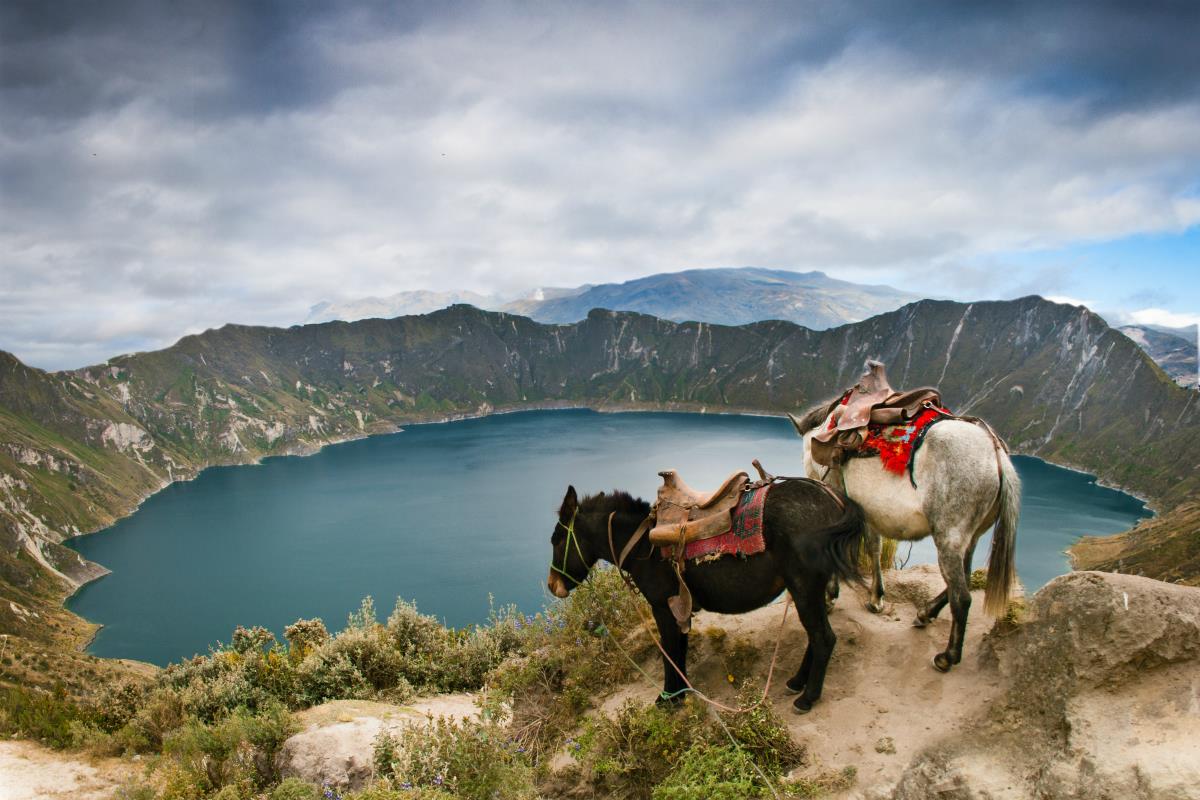
Ecuador & Galapagos Tour
Ecuador | Quito, Cotopaxi, Baños, Chimborazo, Riobamba, Nariz del Diablo, Ingaprica, Cuenca, Guayaquil, Galapagos
Safer places in Ecuador
Want to see the most beautiful Ecuador without constantly looking over your shoulder? Paradoxically, most of the country's treasures lie far from the violence—in the mountains, cloud forests, and islands. Here, too, keep an eye on your belongings, but the dangers are of a completely different nature.
Galapagos Islands
The Galapagos Islands are considered the safest corner of Ecuador – simple precautions, as with any trip, are sufficient. Strict national park regulations ensure order: a licensed guide is required on every trail, and you must maintain a distance of at least 2 meters from animals, even with a camera. The park entrance fee is $200 for adult foreigners, and a $20 Transit Control Card (TCT) must be purchased before departing for the islands – either online or at the airport counter in Quito or Guayaquil.
The greatest risk here is boat accidents between the islands. Not every vessel has a license, passenger limit, and sufficient life jackets, so choose reputable carriers and check the equipment before boarding. Also, remember that medical evacuation from the islands can take up to 48 hours. You can read more about the archipelago itself in the inspiration about expedition to the Galapagos Islands.
Quito
The capital lies at an altitude of approximately 2800 meters above sea level, making it one of the highest in the world. The city's tourist heart – the Old Town with Independence Square and La Ronda Street – is patrolled by police and is open to visitors during the day. It's best not to wander the side streets alone after the shops close. Take a taxi or a tour guide to El Panecillo Hill, as robberies have been reported on the pedestrian path.
The La Mariscal district is famous for its bars and clubs, but robberies can occur after midnight, so rent a car to get back to your hotel. Quito is an easy place to take day trips, including to Mindo in the cloud forest or to the Indian market in OtavaloQuito is under a current state of emergency, but the September curfew did not apply to the city.
Cuenca
Cuenca, with its colonial old town and cathedral domes, is one of Ecuador's most peaceful large cities. The September state of emergency in the Azuay province only affected the remote canton of Camilo Ponce Enríquez, and Cuenca was not placed under a curfew either. Tourist police are active in the city. The usual rules still apply: be careful in crowds, avoid walking on dimly lit streets at night, and don't carry large amounts of cash. Cuenca is close to Cajas National Park, where it's best to hike with a guide.
Andes and Volcano Alley
The Andean areas around Chimborazo Volcano and Cotopaxi National Park lie outside the crime warning zones. Here, the greatest challenge lies in nature: altitude, weather, and active volcanoes. Evacuations can be announced without notice in the Baños area, near Tungurahua Volcano, and the Latacunga area and valleys east of Quito are particularly vulnerable to lahars from Cotopaxi. Follow the latest news and use the services of experienced guides. Find inspiration for your itinerary in the overview. best attractions in Ecuador.
Food and Water Security in Ecuador
Shrimp ceviche, potato pancakes (llapingachos), and fresh fruit juices – can you eat anything without worry? Almost. Eating in Ecuador doesn't require any special precautions; the same rules you apply on any tropical trip are sufficient. Choose busy restaurants, wash your hands before meals, and eat hot food.
The water utilities in Quito and Cuenca assure that tap water meets drinking water standards, but the condition of pipes in buildings varies, and breakages can occur there as well. Outside of these cities, do not drink tap water. Bottled or boiled water is the safest option – even for brushing your teeth if you have a sensitive stomach. Only use ice in drinks in reputable restaurants and hotels.
At market stalls, choose fried or cooked dishes, and peel fruit yourself. Be careful with raw salads and seafood in untrustworthy places. After heavy rains and floods—especially during El Niño—the risk of diseases transmitted by contaminated water increases. Do not bathe in freshwater of unknown origin and do not wade in floodwater.
Healthcare while traveling in Ecuador – tips
Think of Ecuador as one destination? Health-wise, it's three distinct journeys: the high Andes, the tropical coast, and the humid Amazon. Each requires different preparation, and a trip combining all three will require vaccinations, insect repellent, and insurance with a high coverage for medical expenses.
Vaccinations
Before leaving, complete your basic vaccinations, especially against measles. Vaccinations against hepatitis A and B are also recommended, and if you're staying in rural areas or for more than a month, against typhoid fever. It's worth considering vaccination against rabies, as the vaccine after a bite is sometimes only available in large cities. You can find general rules in the guide about vaccinations before holidays abroad.
Yellow fever vaccination is recommended before traveling east of the Andes, below 2300 meters above sea level, such as to the provinces of Morona Santiago, Napo, Orellana, Pastaza, Sucumbíos, and Zamora Chinchipe. It is not recommended for Quito, Guayaquil, or the Galapagos Islands. As of August 2025, Ecuador no longer requires a vaccination certificate for travelers from Colombia, Peru, Bolivia i Brazil, but the disease still occurs in the Amazon.
Malaria, dengue and mosquitoes
Malaria occurs below 1500 meters above sea level in the Amazonian provinces of Morona Santiago, Orellana, Pastaza, and Sucumbíos, in low-lying parts of Cotopaxi, and on the coast in Esmeraldas. It is not present in Quito, Guayaquil, or the Galapagos. Before your jungle trip, consult a travel doctor about preventative measures—some medications need to be started before departure. Fever during travel or within a year of your return requires immediate medical attention.
Dengue fever is a year-round threat, and mosquitoes also carry the Zika, chikungunya, and oropouche viruses. Repellent, long-sleeved clothing, and a mosquito net are essential, especially during El Niño, when stagnant water favors insects. You can check out a list of useful items in the guide about first aid kit for the trip.
Height and sun
Upon arrival in Quito, many people experience symptoms of altitude sickness, locally known as soroche: headache, nausea, and fatigue. These symptoms usually subside after about 24 hours. For the first few days, plan light meals without alcohol, drink plenty of water, and don't push yourself too hard. People with heart conditions should consult a doctor before departure. At high altitude and on the equator, the sun is very strong, so sunscreen with high SPF and a hat are essential.
Medical care and insurance
Private clinics in large cities are of good standard but expensive. A doctor's visit costs around $100, and a day in the hospital ranges from $200 to $1200, with doctors often demanding payment in advance. Outside the cities, care can be significantly poorer, and medical transport, for example, from the Galapagos or the jungle, is very expensive. Insurance covering the costs of treatment, evacuation, and mountain rescue is therefore essential.
Be careful with ayahuasca ceremonies offered to tourists in the Amazon region. They are unsupervised, take place far from hospitals, and participants—including foreigners—have died after taking them. The risk of assault and theft also increases after taking these substances.
Ecuador is a country where, in a single trip, you'll see glaciers on the equator, cloud forests, and animals unafraid of humans. It demands more attention today than it did a few years ago—but is that a reason to give it up? With a well-planned route, away from the coast and border areas, you'll discover a country that can surprise you at every turn. Choose your travel time based on the text about weather in Ecuador, accommodation with a guide about it, where to stay in Ecuador, and ready-made, well-thought-out routes can be found in Planet Escape programsSee you at the equator!
Instagram Vacation Spots: Where to Take the Most Beautiful Photos?
Older post
Cambodian cuisine – what is worth trying?
Newer post
November 12, 2026

November 9, 2026

November 4, 2026
November 2, 2026
October 30, 2026
recent posts
 Honeymoon trip to Morocco November 13, 2026
- International driving license – when is it needed? November 12, 2026
 The most beautiful lakes in Asia – where is it worth going? November 10, 2026