
Get inspired and read about your dream trip on the blog
Trip to Peru – 13 reasons to go on an unforgettable journey!
April 15, 2019
Peru is a destination mainly for tourists who enjoy active leisure. It is not a good place for sunbathing – despite the fact that the entire western border lies on the Pacific Ocean, the water is not very warm. Peru offers a wealth of nature (the Amazon Rainforest and the Amazon Basin, numerous species of plants and animals – including alpacas, llamas and condors) and landscapes (the Seven Color Mountain, the Andes, the Colca Canyon). The ruins of Inca buildings and cities will be of interest to both mountain and trekking enthusiasts, as well as lovers of culture and art. Peru also hides many secrets, such as Machu Picchu, the Nazca Lines or the Paracas Candelabra. Descendants of Indians, Spanish colonizers, tribes, and the Uros and Takilians live here. Peru is the place where potatoes originate (we probably forget too often what continent they come from!), but also a country where guinea pigs were a delicacy long before they became pets.

There are three climatic zones in Peru:
Coastal (Lima) has a mild climate, foggy winters and pleasant summers. The weather is spring-like most of the year, but due to the Pacific current it almost never rains. In winter (June - September) the sky is overcast, there is fog and high humidity, but even in the coldest month, August, temperatures range between 15 and 18˚C. In summer (December - April) temperatures reach an average of 26 degrees, although mornings are foggy and it is often cloudy.
Andean (Machu Picchu, Arequippa, Cusco, Lake Titicaca) separates the coastal zone from the Amazon – the Andes stretch the entire length of Peru. Here, temperatures depend on the height and inclination of the slopes. In the lower areas, classified as highlands, the rainy period falls from September to May (in February the trail to Machu Picchu is closed), and the dry period from June to July. At that time, it is much sunnier here than in the coastal zone and the sun is very hot during the day – for example, in Cuzco the average highest temperature occurs in October and November (21˚C), but from January to July inclusive the average highest temperature during the day is only two degrees lower.
Amazonian located in the Amazon basin and covered with tropical forests, it is hot and humid, with constant rains. Relatively little rain falls in winter. The average highest temperatures for the whole year are 30-32 degrees (Iquitos).
There is really no single period where the weather in all three parts is the best at the same time. The most favorable period for holidays in Peru is from June to August inclusive: the best weather is then in the Andean and Amazonian zones, in the coastal zone there is a lot of cloud cover, but nevertheless warm.
TRIP TO PERU – DO I NEED TO GET VACCINED?
There are no vaccinations necessary for travel to Peru, although vaccination against yellow fever is recommended when traveling to some regions.
The problem (which goes away after a few days) may be altitude sickness, i.e. mountain sickness. It most often manifests itself in headaches and sleep disorders. To avoid this, it is best to plan the trip so that you first visit the lowest places possible - and gradually increase them.
Poles going on a trip to Peru do not need a visa if their trip lasts less than 90 days.
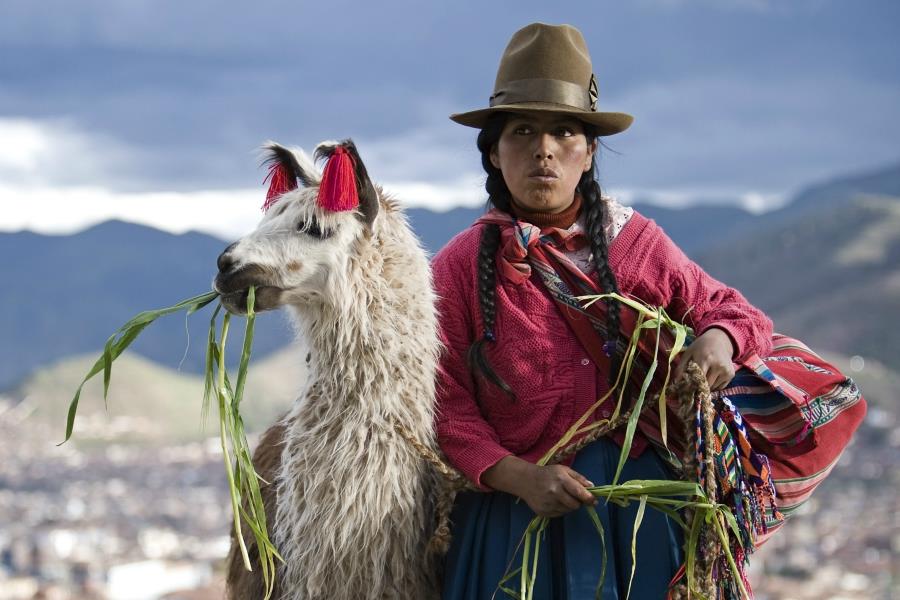
Journey to Peru - Inca Trail to Machu Picchu
"Camino Inca" is one of the most popular trekking routes in South America. Walking through picturesque valleys among high Andean peaks, you will reach the gates of Machu Picchu - one of the seven wonders of the world.
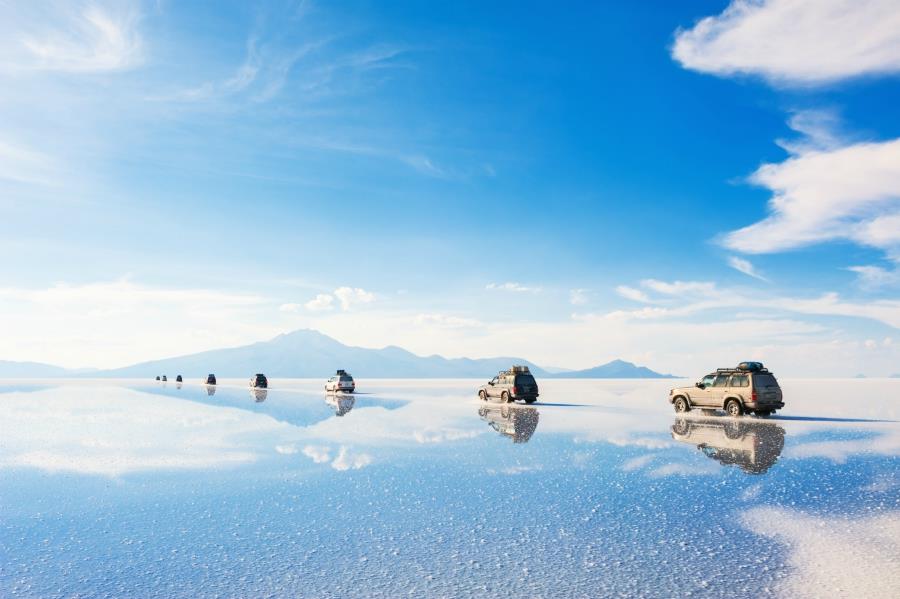
Natural Treasures of the Andes: An Incredible Journey Through Latin America
Traveling through three South American countries will allow you to discover the differences and similarities between Peru, Bolivia and Chile. You will visit the three capitals of these countries and the most popular attractions that attract tourists to these beautiful and picturesque areas.
SAFETY IN PERU AND TRAVEL WITH CHILDREN
In Peru, you should beware of thieves and pickpockets: do not carry large sums of money and be careful when withdrawing money from an ATM. It is better to use marked taxis, because sometimes people impersonating taxi drivers rob tourists.
If you take the above precautions, you can go on a trip to Peru with your children without any problems. This is not just our opinion – it is confirmed by many parents who have been there with their children (some even claim that their children, unlike them, did not have altitude sickness).
TRIP TO PERU WITH PLANET ESCAPE
Planet Escape prepares individual trips for each client. It doesn't matter if you want to go alone or with your close and distant family: on the indicated date we will prepare a trip for you that takes into account what you want to see (we invite you to get inspired by the list below!) and what you like to do, we will offer you the best solutions adequate to your budget. If you want, we will also combine your trip to Peru with a trip to Bolivia and/or Chile! We do not offer our clients accommodation in large, international chains, but local, boutique hotels.
Sample programs holidays in Peru:
Journey along the Inca Trail to Machu Picchu
Natural Treasures of the Andes: An Incredible Journey Through Latin America
13 REASONS TO TAKE A TRIP TO PERU

Peruvian Amazon
The Amazon Rainforest is most associated with Brazil, but did you know that Peru is the second country (after the aforementioned Brazil) within whose borders lies its largest area? This is the richest forest in the world in terms of plant and animal species. It is hard to imagine, but there are still tribes there that have not had contact with civilization - it is estimated that there are about fifteen of them. Although the forest covers as much as 60% of Peru's surface, it is inhabited by only 5% of the country's population. The Peruvian Amazon, on the other hand, is home to the largest number of bird species in the world, as well as a great many species of mammals, butterflies and orchids - currently very popular in our homes in potted versions.
Since the Amazon covers a very large area of Peru, modern cities have also been built there. The largest of them is Iquitos, located on the Amazon River. Interestingly, Iquitos, known as the capital of the Peruvian Amazon, can only be reached by water or air (there is an international airport here) – apart from the road to the town of Nauta, 100 kilometres away, no road leads to Iquitos. It is the largest city in the world without a road connection. Since the end of the XNUMXth century, the city has benefited greatly from the export of rubber trees – the most impressive historic villas in Iquitos were built by the “rubber barons”. The times of prosperity ended when (clever or sneaky – your choice) the British took rubber tree seeds from here and planted them in Malaysia.
Iquitos is of course the base for trips to the Amazon. You can also take day or multi-day boat trips on the Amazon from here. The Museo Etnográfico has life-size statues of Amazonian tribesmen, and the Casa de Fierro (Iron House) was designed by Gustave Eiffel (as his name suggests, the designer of the famous Eiffel Tower in Paris), built in France and brought here.
On the southeastern outskirts of the city are an unusual slum called Belén: huts built on rafts, sometimes rising higher, sometimes lower – depending on the river level. As many as 7 people live in these huts! Between the rafts, kayaks run, from which vendors offer their products to the inhabitants of the raft-huts. You can rent a kayak and sail among these floating houses, and after disembarking, go shopping at the market located opposite the raft town: Belén mercado. Don't forget to try the regional dish juan – wrapped in a leaf: rice, meat, boiled egg, olives and spices.

Arequipa
2) Arequipa – City of Volcanoes
Arequipa, the former capital of Peru, is the second largest city in the country – although Peruvians joke that you need a separate passport to enter (Lima, the capital and largest city, is ten times larger). The city offers a magnificent view of three volcanoes: the still active El Misti and the extinct Pichu Pichu and Chachani. Arequipa borders the Andes to the east, which is why it is located high – an average of 2328 meters above sea level (for comparison, the average elevation of Krakow is 219 meters above sea level). The Arequipa region is seismically active – but don’t let that put you off visiting, because the last major earthquake hit the city a dozen or so years ago – in 2011. Fortunately, the city’s monuments, mostly built during Spanish rule, are generally spared from earthquakes.
In Arequipa you will find one of the most interesting religious buildings in all of Peru – the Monasterio de Santa Catalina, or the Monastery of St. Catherine, founded by a wealthy Spanish widow in the 300th century. For the first 20 years of its existence (until the reform of the monastery), it mainly housed wealthy women who could afford to pay a dowry to the monastery and who moved in with their servants. Currently, only a few live here – about 20 nuns, most of the buildings have been converted into a museum. The monastery is huge (it has XNUMX thousand m2!) – it is practically a city within a city. It is worth seeing the three main courtyards, the nuns’ cells, the Profundis room (from the abyss in Latin) – the place where the nuns prayed after the death of one of them, and the kitchen. One of the rooms also houses an art gallery with temporary exhibitions. The monastery makes an impression, even on the non-religious.
The main point of the city is Plaza de Armas. The square does not resemble a concrete desert – there is a lot of greenery here. On three sides it is surrounded by buildings with balconies-cloisters, and on the fourth side by the cathedral dominating the square, stubbornly rebuilt after each fire or earthquake. In one of the streets leading off the square is the Museo Santuarios Andinos, dedicated to one heroine – Juanita, called the “Ice Maiden”. The perfectly preserved, 500-year-old remains of a girl (12-14 years old) were found in the Andes in the 90s. Judging by the grave, Juanita was sacrificed by the Incas to the gods. Her remains are currently kept in a glass refrigerator.
While in Arequippa, be sure to sample some of the local delicacies: stuffed rocoto (peppers stuffed with hard-boiled eggs and baked with cheese), shrimp soup (shrimp soup) or green sauce ocopa. We would like to remind literature lovers: this is where the writer who won the Nobel Prize for Literature – Mario Vargas Llosa – was born.

View of the Plaza de Armas in Cusco
3) The Navel of the World – Cuzco
In Quechua, the official language of the Inca Empire, "Cuzco" means "navel of the world." This city was the capital of the Inca state, so the name is quite appropriate. As the legend goes, Cuzco founded by the first Inca king – Manco Capac in the 1533th century. In XNUMX, the Spanish conquistador, Francisco Pizarro, captured the city, and the Inca king Atahualpa was murdered – an attempt to bribe the invaders with silver and gold (although Pizarro, of course, took the valuables) did not help. Although several hundred years have passed, in the vicinity of the city you can still see the ruins of Inca buildings, and it is these, as the most interesting ones, that attract the most tourists.
The most famous ruins are Sacsayhuaman (the name can be translated as "spotted eagle" or "spotted head"). It is not known what the building was used for - it was probably a fortress or a temple. The latest theory is that the Incas built Cuzco in the shape of a puma's body, and Sacsayhuaman was supposed to be its head. It consists of three zigzagging walls, arranged one on top of the other, creating terraces. Today's ruins are only 20% of the original structure - the rest was dismantled by the Spanish, who built houses from the stones obtained in this way... Even looking at what is left, it is hard to believe that it was created without advanced technology - the heaviest stone weighs 350 tons (the largest stones in the Cheops pyramid are 15 tons! And the Incas, like the ancient Egyptians, did not know the wheel). Similar to the construction of the Egyptian pyramids, the stone blocks were joined together without mortar – they were perfectly fitted together.
Sacsayhuaman is the most worth seeing Inca remains in the area, but in one day you can also see: Tambomachay (called the "Inca's Bath" - several levels of stone blocks with spring water flowing down them), Pukapukara (ruins of square buildings - you can decide which theory of what they were used for suits you best: military forts, buildings for hunters, shelter for travelers or maybe a structure for guards?), Q'enqo (a place of worship built around natural rocks, connected to a cave).
Unfortunately, we will no longer see the buildings built by the Incas in their original form, but the Cuzco built by the Spanish has survived to this day. The city's main point is the square - Plaza de Armas, on which two flags fly: the Peruvian and the Inca Empire (do not confuse it with the LGBT flag - in addition to the rainbow, it is also white). On the site of the former Inca palace stands a cathedral built from the stones of Sacsayhuaman, partially demolished by the Spanish - despite this, its construction took a hundred years. The cathedral has the largest collection of colonial paintings in the city, including the oldest painting, which shows the landscape of the city in 1650 during the earthquake - residents walking around the city square with crosses, praying for the element to stop. If you are interested in what plants Peruvians used for medical, religious and, of course, intoxicating purposes, visit the Museo de Plantas Sagradas, Mágicas y Medicinales (the exhibition is in Spanish only, but for 4 PEN you can get an English-speaking guide).

Huacachina – an oasis in the desert
4) Oasis in the Desert – Huacachina
Would you like to see a mini-city surrounded by desert? Go to the oasis of Huacachina in Peru, only 4 kilometers from the city of Ica. The oasis town was built around a small lake surrounded by palm trees. You can rent a room in one of the hotels and indulge in sand madness: sandboarding (i.e. sliding down the dunes on a board), which can be made easier by buying a trip in a special car adapted for driving on sand (areneros) - the driver will take you to the top of the dune and then pick you up at the bottom (maybe they will build ski lifts here someday?). Local legend says that the water in the lake has healing properties (some people deliberately cover themselves with its mud), but the not-so-clean water discourages bathing. Instead, you can rent pedalos or boats, and to cool off, use the hotel pool.

Huaraz - a glacial lake
5) Lake 69
Turquoise water in the mountains is something you will see in Peru! The lake is located in the Cordillera Blanca mountains (translated into English as "White Cordilleras"), in the Huascarán National Park. The park has about 600 glaciers and 300 lakes - those that did not have names when the park was established were simply numbered - hence Lake 69.
Depending on how much time you have and whether you like hiking, you can try to see other nearby mountain lakes or head straight for the trail leading to 69. Even in the latter case, you will pass lakes and waterfalls along the way. After a few hours of climbing, the effort is rewarded with an amazing view of the turquoise water of the lake against the background of snow-capped peaks – probably one of the most beautiful mountain landscapes you have ever seen. It is not without reason that guidebooks describe 69 with phrases like “the jewel of the Cordilleras”.

Lake Titicaca
6) Magical Lake Titicaca
Titicaca is the most famous place in Peru. And it's not because you can break your tongue pronouncing the name - it's simply the largest lake on the continent. It's no wonder that the Andean people living around the lake believed that this was where the Sun was born. You can get there by bus, but we definitely recommend the scenic train route.
The lake waters are cold – they do not exceed 14˚C, so they are not really suitable for swimming. However, if you sail to one of the islands, know that it is the highest navigable lake on Earth, where you can use a ferry and other floating means of transport (over 3800 meters above sea level).
On Titicaca, near Puno, there are about 60 extraordinary islands. They are artificial, because they were created by man, but they are made of a natural raw material - reeds, and they float on the lake. The people living on them from the Uros tribe use reeds growing in the shallow parts of the lake cattail they build not only islands, huts, but also decorative boats. New layers of reeds have to be added to the surface of the island constantly, so that they replace those rotting in the water from below. On the island of Khantati you can even spend the night, and on all the others - buy beautiful crafts from the natives.
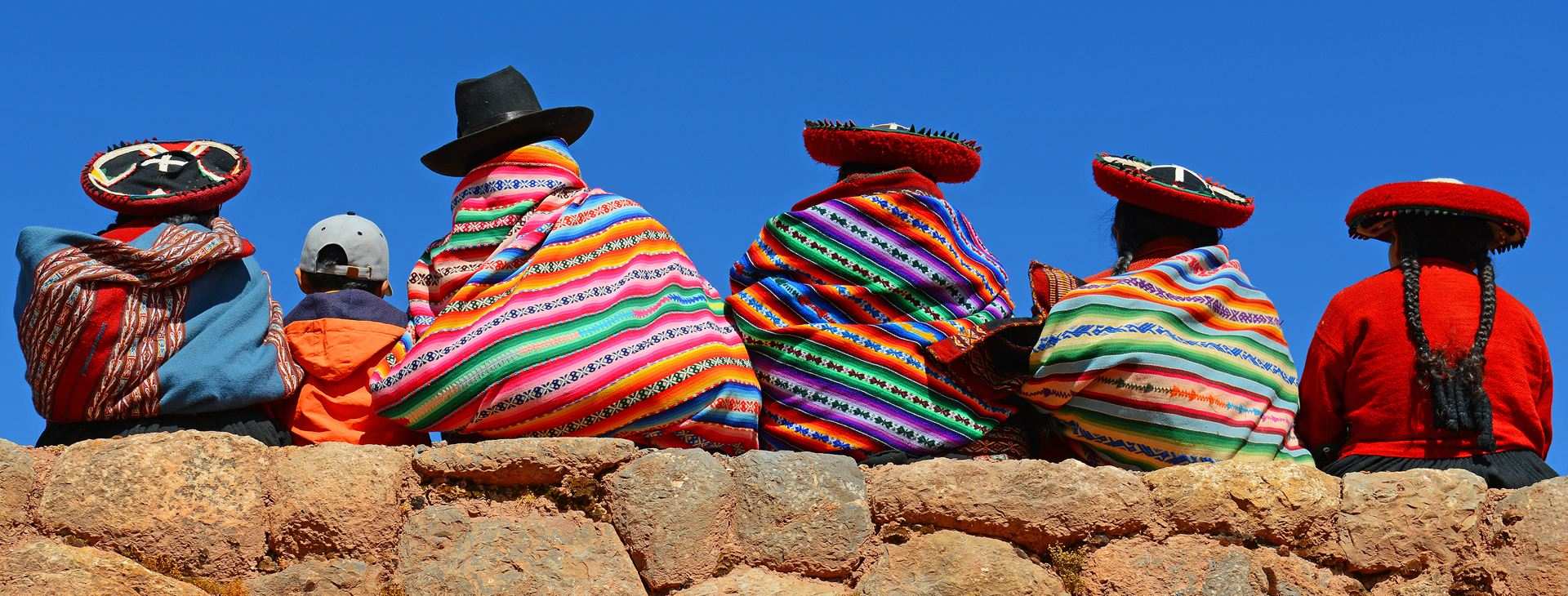
If you want to see groups of men in public places doing handicrafts, visit another island in the lake – Taquile. Its inhabitants are famous for crocheting (men) and weaving (women). The tight, hanging hats worn by the men (of course handmade) reveal their marital status (red – married, white and red – single) and social status. Women wear skirts consisting of many layers. The clothes made by the Takil have been added to the UNESCO World Heritage List and can be purchased during a visit to the island.

Colca Canyon Observation Deck
7) Colca Canyon – the kingdom of condors
You have certainly heard about the Grand Canyon in the USA, but have you heard about Colca Canyon in Peru? Meanwhile, Colca is a canyon twice as deep as its famous cousin – and the second deepest in the world (32700 m). Colca amazes with the richness of its landscapes: in addition to the characteristic rocky cliffs, you will see here steppes and agricultural terraces, and in some places even palm trees, ferns and orchids.
The 100-kilometer-long canyon is guarded by condors, and they are no ordinary guards: Andean condors are the largest flying birds in the world. Their wingspan can exceed 3 meters and they weigh up to 15 kilograms. They can live to be 70 years old, but they are still threatened with extinction. If you visit the Colca Canyon during your vacation in Peru, you will definitely see condors circling above it. These large birds impress not only tourists, but also the inhabitants, and in fact the entire continent: the Andean condor is the national symbol of many countries: Argentina, Bolivia, Chile, Ecuador, Colombia, Peru... The indigenous people of the Andes believed that condors were related to the Sun.
In addition to condors, you will probably also see viscachas – rabbit-sized rodents related to chinchillas, and with a bit of luck – hummingbirds that dip their beaks in flowers. Interestingly, the Colca River, which flows through the canyon, was first kayaked by Poles in 1981.

View of the Miraflores district of Lima
Lima is the capital of Peru and its largest city. It is located on the Pacific coast, which is why Francisco Pizarro expanded the city – he exported gold to Europe by ship. The city centre – Plaza de Armas – was created at that time. The square is surrounded by the Presidential Palace (Palacio de Gobierno), guarded by two men in special costumes (the guard changes every day at noon!) and the Archbishop's Palace (Palacio Arzobispal). Next to the archbishop's residence is a cathedral, the façade of which still remembers Pizarro's times – the rest comes from different periods, usually following earthquakes that hit Lima. The cathedral also contains a chapel with the remains of Pizarro himself, who (ironically) was not killed by the Incas, but by another Spaniard.
The Monasterio de San Francisco is a baroque monastery, famous especially for its catacombs, where there are about 70 thousand remains (!), and even skulls and bones arranged in geometric patterns.
As for museums, we especially recommend the Museo Larco, located in a colonial villa surrounded by flowers. The museum's collection includes a large collection of ceramics, including items produced by the Incas and other pre-Columbian cultures. You will also see jewelry, gold, mummies, and even a pre-Columbian collection of quite explicit erotic drawings, from which you will even learn about sexually transmitted diseases.
In addition to the city center, head to the coastal Barranco, an artists' district with colonial villas called mansions and many murals. Visit the Museo de Arte de Lima, Lima’s most important art museum, with collections from 3000 years ago to the present, and the Museo Pedro de Osma, where you can see colonial furniture, silver jewelry, and art. Barranco has many bars, restaurants, cafes, and clubs with live music, so everyone can find something to their taste. Puente de Los Suspiros, the Bridge of Sighs, which was built over a river that no longer exists, is considered the most romantic place in Lima, an inspiration for artists and composers. A bit further on is Vernacula, an art gallery and designer clothing and shoe store.
In Lima you must try it ceviche – the national dish of Peruvians. It is fish or seafood marinated in lemon juice, onion, cilantro and chili served with boiled corn and sweet potatoes.

Machu Picchu
If you would like to see one of the seven wonders of the world (it made it to the list in an online vote in 2007), and at the same time a mysterious place that has so far hidden many mysteries, during your vacation in Peru do not forget about the ruins of the best preserved Inca city - Machu Picchu. The Incas built it on a hill below which the Urubamba River flows. Unlike Cuzco, the Spanish did not find Machu Picchu – The Incas left it on their own in mysterious circumstances, and it is not known exactly when. Researchers see this place as a political, religious and administrative center, although a theory has recently emerged that it was the estate of a ruler named Pachatucec.
The city consists of an upper part, where there is a central square, the royal tomb, the main temple, the temple of the Sun (the main Inca deity), the Temple of the Three Windows, the house of the high priest. In the lower part there are residential houses and production workshops, and even lower - agricultural terraces, where mainly potatoes, corn and of course coca - the Inca stimulant - were grown.
Machu Picchu is dominated by Wayna Picchu (also known as Huayna Picchu), from where you can see the entire city. The climb to the top is varied and includes stairs, a ladder and a cave. We recommend the view of the city-citadel from the so-called Machu Picchu Montaña – great photos guaranteed.
If you have more time, you can do the four-day Inca Trail. Along the way, you will pass Inca ruins, snowy peaks, forests, and even orchids.

Nazca
10) The Mysterious Nazca Lines
It's another Peruvian mystery, even more mysterious than Machu Picchu: What do these drawings represent? How and when were they made?
The drawings are found on stones that cover the Nazca desert and stretch over an area of 50 kilometers. Individual drawings are from 40 cm to over a meter wide and depict various geometric figures, animals (spider, fish, hummingbird, condor, monkey, llama, lizard), flowers and trees, and even a human. It is believed that they were made by the people of the Nazca culture between 500 BC and 500 AD, but it is not known how and for what purpose. There are various theories as to why they were drawn: to mark where the sunlight falls at different times of the year, for the gods to see from heaven, as looms for weaving (only lines and trapezoids), as agricultural calendars, and even to mark a landing site for aliens.
The drawings are best observed from a bird's eye view (helicopter, plane). There is an observation tower nearby, but only three figures can be seen from it: a lizard, a tree, and hands (although some say it's a frog).

Local women in the town of Ollantaytambo
11) Shopping at Ollantaytambo
If you would like to buy authentic, locally made souvenirs from Peru and have a large selection, and even the certainty of buying fair trade, we invite you to Ollantaytambo. It is true that this place is best known for its Inca fortress, but one does not exclude the other.
Visit the Mercado Artesanal, located right next to the Inca ruins (in Spanish, “mercado” means market) – and browse the stalls for goods such as alpaca scarves, bone pipes, clothes, and various Peruvian handicrafts.
A more sophisticated place is ALQA – Gallery of Andean Expressions, where you can buy furniture, photography, cutlery, scarves, and minerals. The couple who run the gallery will be happy to answer your questions and serve local beer and tea.
We especially recommend the Awamaki organization's shop. Here you can buy only products made by local women. Because the organization is non-profit and the shop is staffed by volunteers, shopping here you can be sure that each craftswoman will receive a fair wage for her work. The organization also offers services for tourists: trips to places where handicrafts are made (hats, scarves, ponchos, bags and others). You can then buy them directly there.

Mountain of Seven Colors
12) The Mountain of Seven Colors – Vinicunca
Looking at the photos of this mountain, it's sometimes hard to believe they're real. And yet: The Mountain of Seven Colors is about a two-hour drive from Cuzco and is on National Geographic's list of "100 Places You Must See Before You Die."
This place is a relatively new attraction and you won’t find its description in older guidebooks: until recently, the mountain was covered in snow year-round. When it melted a few years ago, it turned out to be hiding a real treasure: a pink-red-white-green-blue-brown-yellow-gold mountain. Each color is due to different minerals, which have been arranged in layers. In the indigenous Quechua language, the name of the place is Vinicunca, which simply means “colored mountain.”
The mountain is 5200 meters above sea level and the trek, during which you will meet many llamas and alpacas, takes about three hours. The climb is worth the effort, but if you get tired, you can rent a horse at almost any time.

The Ballestas Islands are often called the Little Galapagos
If you are a penguin lover or want to see the birds that produce guano for export, take a trip to the Ballestas Islands. Known as the “Peruvian Galapagos Islands,” the rocky islands off the coast of Paracas are home to Humboldt penguins (found only in Peru and Chile), sea lions, beautiful red-beaked Peruvian terns, and species of bird whose droppings, called guano, are sold as fertilizer: cormorants, gannets, and Peruvian pelicans. You can sail around the islands by boat: they are uninhabited by humans and are protected as a national park. You can also spot dolphins off the coast. During the trip, you will also see another prehistoric drawing, the Paracas Candelabra, resembling a three-branched candlestick. As with the Nazca Lines, it is not known who made it, when, or why—although there is a theory that it was meant to be a sign to sailors.
We hope that the above list has inspired (or will inspire) you to take a trip to Peru. It is a country where you will see a whole range of landscapes (from jungle to mountains to desert), where Inca traditions intertwine with colonial ones, and tribes unaware of these changes live in the jungle.


Holidays in Indonesia - photo report by Kamila and Kamil
Older post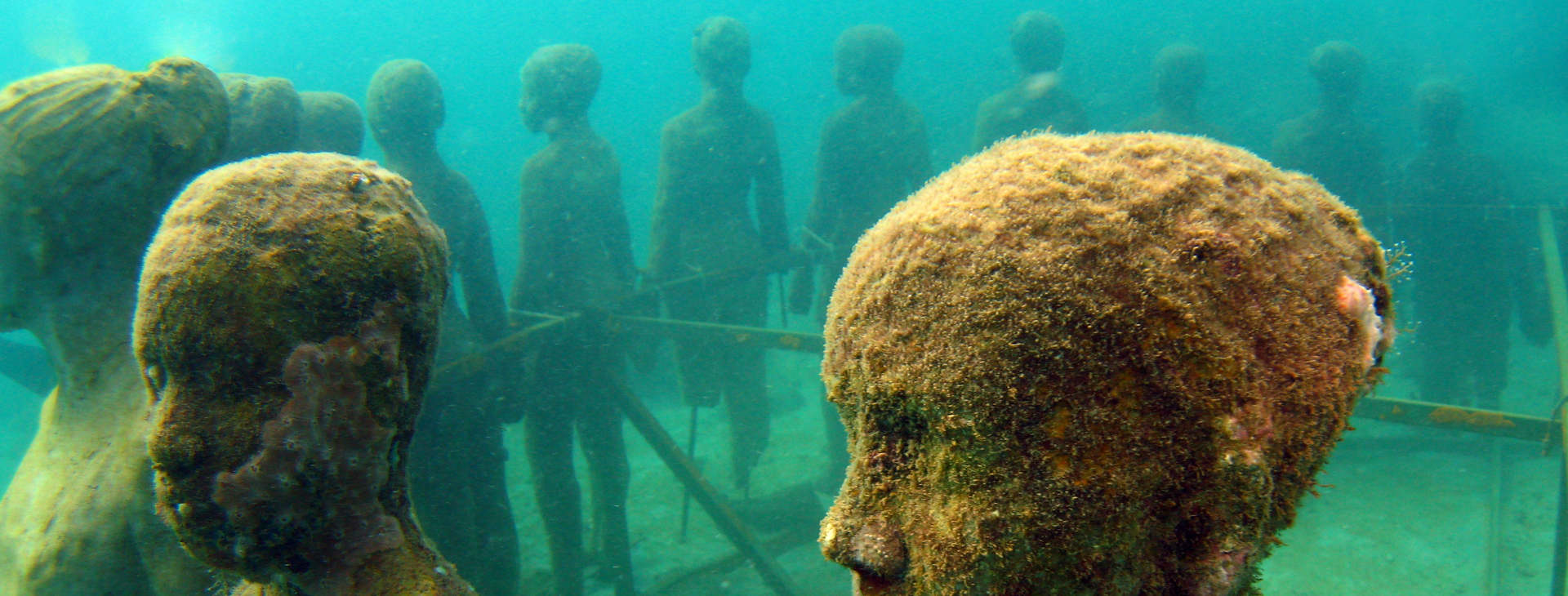
The strangest and most interesting museums in the world
Newer post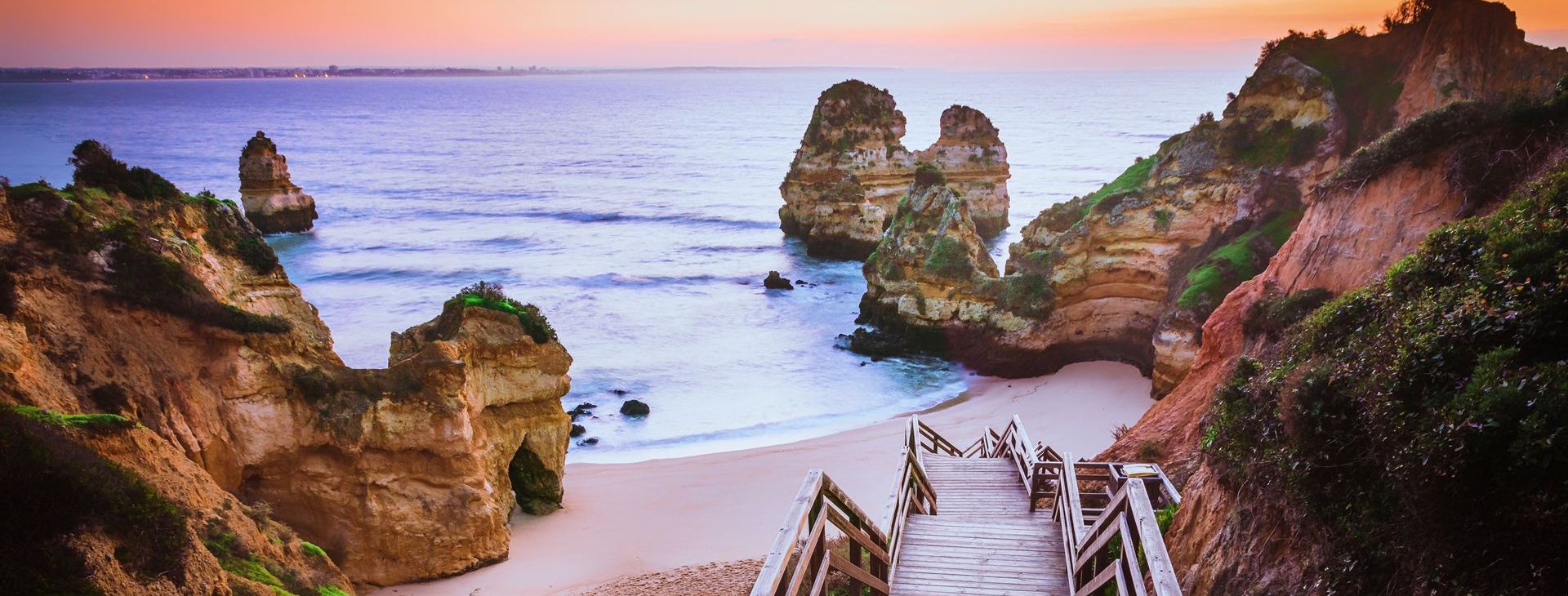
October 12, 2026
October 9, 2026
October 8, 2026
October 7, 2026
October 6, 2026
recent posts
- Honeymoon trip to Portugal October 12, 2026
- Cambodian cuisine – what is worth trying? October 9, 2026
 Safety in Ecuador. Is Ecuador safe? October 9, 2026